
Rwanda

In March 2024, the University of Aberdeen generously funded a research trip to Rwanda for Michel, Fransiska, Erin, and Jerome, who had previously worked with Erin on several projects. They visited commemorative sites dedicated to preserving memory and educating the public about the 1994 genocide against the Tutsi. During their visit, second-generation Holocaust survivor Michel formed a strong bond with Jerome, a Rwandan genocide survivor, who agreed to share his story. It soon became evident that Jerome’s story, combined with Michel’s artwork, would create a powerful narrative. Jerome introduced the team to his wife, Nina, who also had her own survival story, adding another important perspective to the project.
In October 2024, the team gathered in Belgium for a series of interviews with Jerome and Nina, facilitated by Fransiska and Michel. The process of creating the visual narrative based on Jerome and Nina’s story was documented by Marc Ellison. This interaction then continued online bringing the team together to work on transcribing, editing, and reflecting on the interviews to ensure that Jerome and Nina were comfortable with the material to be published. Based on this lively collaboration between survivors, artist, and researchers, Marc produced a short film “Why We Dance” providing context for Jerome’s and Nina’s stories and showcasing the creative process behind the graphic novel adaptation.
Getting to know Jerome
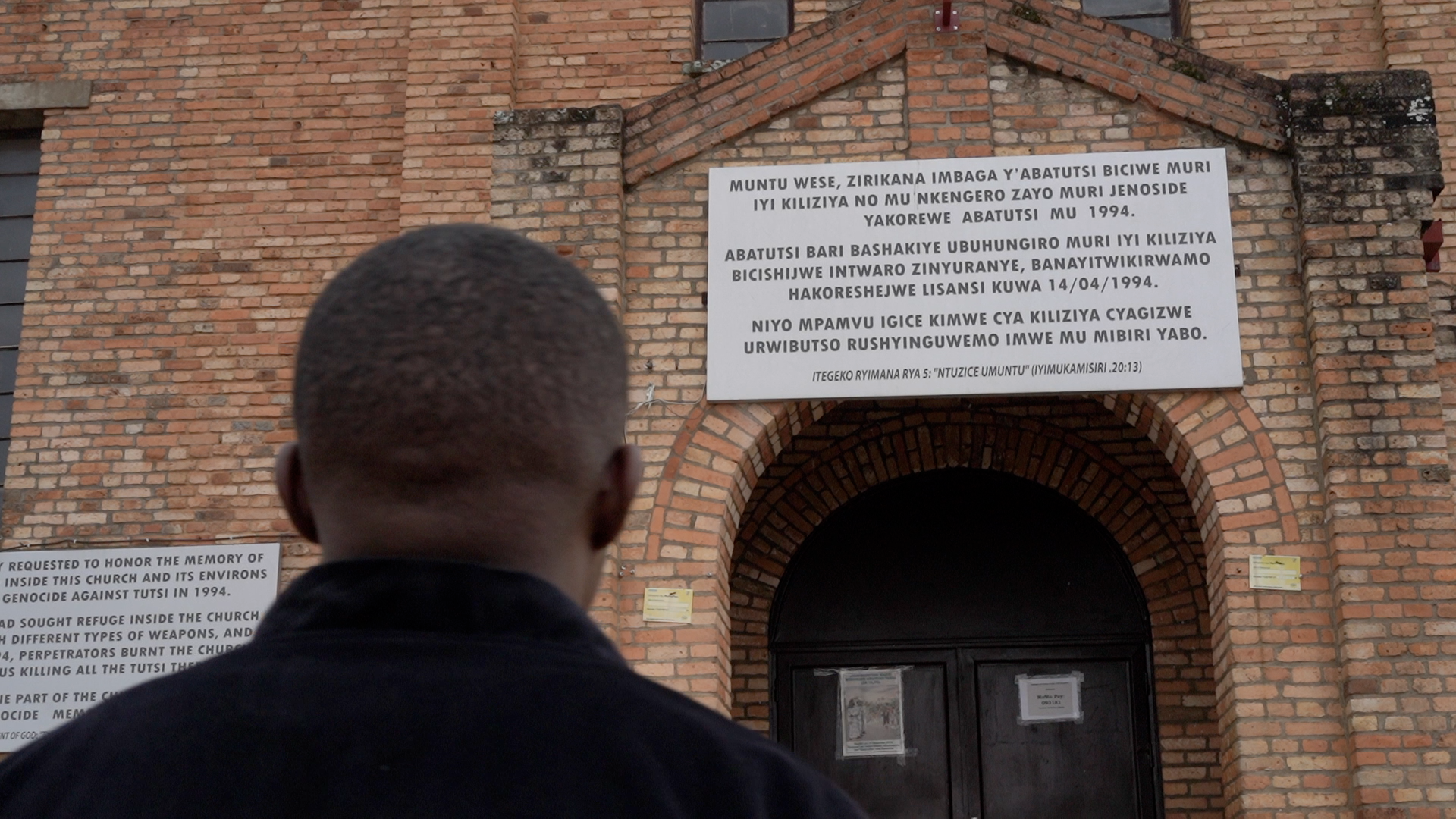
Jerome returning to the local Kibeho church where he and his family sought refuge during the 1994 genocide. Image from documentary film ‘Why We Dance’ by Marc Ellison.
Jerome Irankunda was born on 27th June 1988 in Nyaruguru, a district in the southern province of Rwanda. As a child of the Abenegahaya lineage of the once royal Abanyiginya clan, his family were primarily cattle farmers whose pastures spread over the Ramba and Mashetsa hills. He has fond memories of his early childhood, when he would drink fresh milk with the other children and sing songs about the cows. While he was aware of official discrimination against Tutsi from an early age, he also recalled playing freely alongside the children in his area, irrespective of their ethnicity.
On the 10th April 1994, though, word reached his family that Tutsis’ houses were being burned, and Tutsi men and boys were being massacred. Five-year-old Jerome was told to put on a dress to protect him, and he then fled with his family to the nearby Kibeho church, which had served as a sanctuary during previous periods of political violence. Soon after, the local Hutu Power extremists laid siege to the church, and on 13th April, Jerome fled the massacre with his uncle, leaving behind his parents and extended family, who he never saw again. Jerome and his uncle went with many other Tutsi survivors to Burundi, witnessing additional crimes of genocide en-route. They eventually settled in a refugee camp where they survived in precarious conditions for several months, before returning to Nyaruguru.
Meeting Nina
As a child survivor of the genocide, Jerome’s story speaks to the experiences of a generation of Tutsi whose lives were devastated in just over three months. Growing up as an orphan in Rwanda dedicated to the project of unitarian reconciliation, he was supported by an ‘artificial family’ of fellow genocide survivors and with scholarships to pursue higher education. Today, he is a community leader and a lecturer at the University of Tourism, Technology, and Business Studies (UTB) in Rwanda. He is married to Nina Uwera and is a proud father to two sons, both named after family members murdered during the genocide.
Nina has played a central role in Jerome’s life and in his contributions to this project. She has joined him for the interviews that are shaping the graphic novel that artist Michel Kichka is creating based on Jerome’s experiences. Nina’s grandparents had fled to Burundi as refugees in 1959, when – as Rwanda prepared for independence from its Belgian colonizers – Hutu political extremists seeking control of the new government began attacking and forcing the mostly-Tutsi monarchists out of Rwanda. Nina’s parents were born in Mushiha, Burundi, and later moved to Nyamitanga, where Nina was born in 1992. Nina’s family returned to Rwanda in 1995, one year after the genocide against the Tutsi. Nina and Jerome met in 2019 in Kigali, married in 2020, had their first son in 2021, and second son in 2023. They now live in Kigali where Nina has a small shop selling groceries.
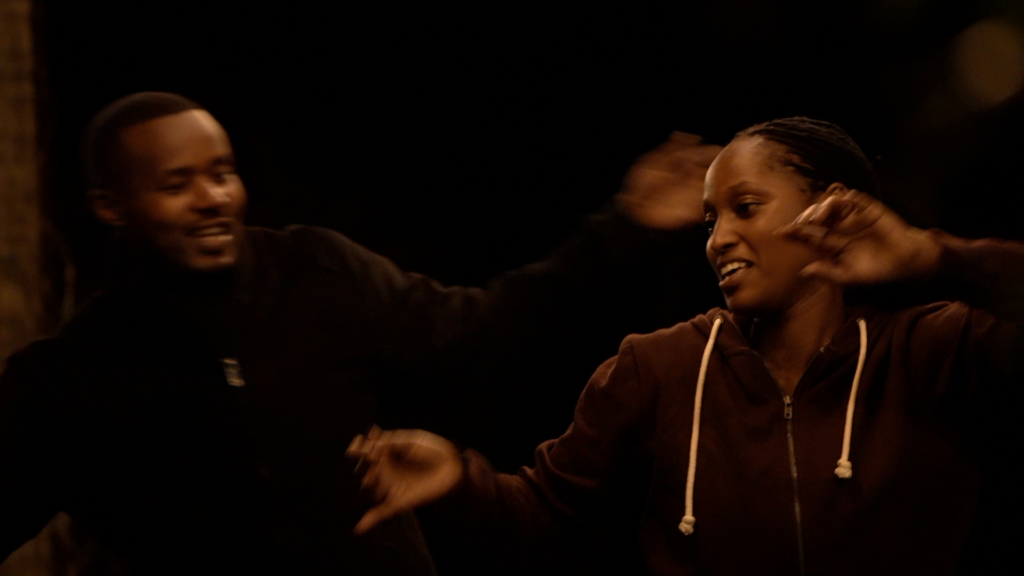
Nina Uwera dancing with her husband Jerome. Image from documentary film ‘Why We Dance’ by Marc Ellison.
Developing Jerome's story
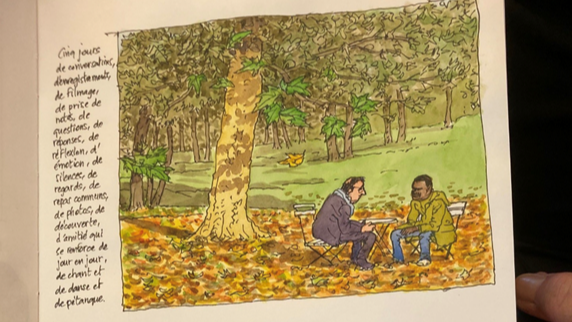
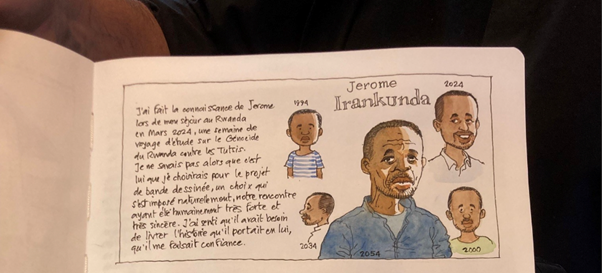
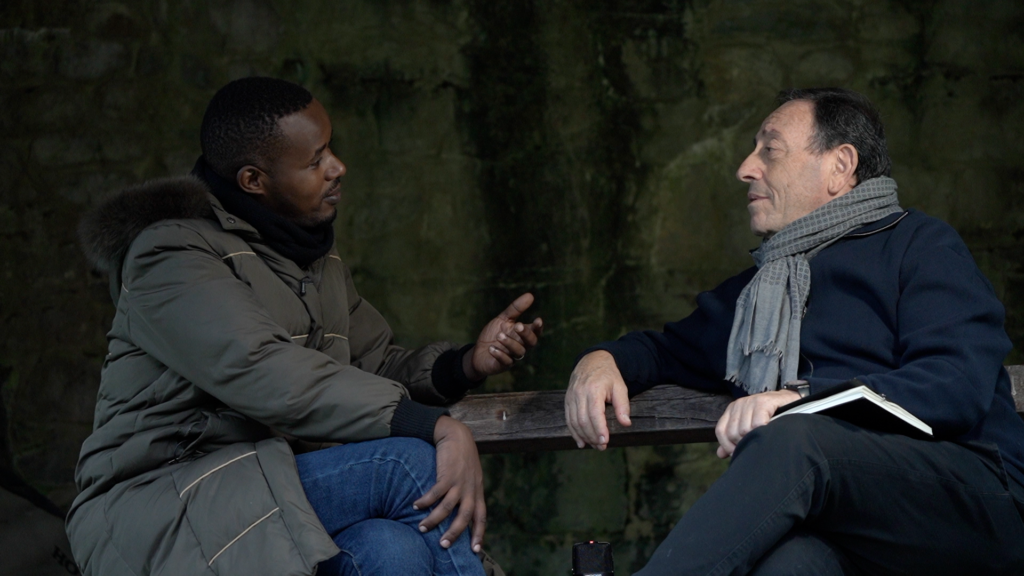
Top left: Sketches by Michel Kichka, documenting his conversation with Jerome during their meeting in Anseremme, Belgium, October 2024.
Top right: Jerome and Michel in conversation. Image from the documentary film ‘Why We Dance’ by Marc Ellison.
Left: Sketches by Michel Kichka, documenting his impressions of Jerome during his visit to Rwanda in March 2024, and during their interviews in Anseremme, Belgium in October 2024.
In March 2024, the University of Aberdeen kindly provided funding to allow Michel and project leads, Fransiska and Erin, to travel to Rwanda to visit commemorative sites dedicated to preserving memory and educating the public about the 1994 genocide against the Tutsi. They were accompanied by Jerome, who had worked with Erin as a researcher on several previous projects. During this visit, Jerome forged a strong bond with Michel, himself a second-generation Holocaust survivor, and agreed to share his story as a survivor of the 1994 genocide against the Tutsi. It became apparent that Jerome was committed to sharing his story of survival through Michel’s artwork, and that, between them, they had a deeply compelling story to tell. After this visit, Jerome also introduced the team to his wife, Nina, whose story intertwines with Jerome’s narrative in significant ways. While Michel was initially interested in Nina’s story from the perspective of a ‘second generation’ survivor, it became clear during their discussions that Nina had her own story of survival to tell. Her voice has been welcomed onto the project alongside Jerome’s, providing an important dimension in its own right.
In October 2024, the team travelled from their respective homes in Rwanda, the UK, and Israel to meet in a rural retreat in Anseremme, Belgium. Over five days, Fransiska and Michel interviewed Jerome and Nina, taking turns asking questions while Michel made notes and preliminary sketches. Filmmaker Marc Ellison worked alongside them, capturing the essence of their interviews and other interactions on film. Since then, the team has maintained an online dialogue, supported by survivor liaison Sean Callaghan. With the assistance of transcription software, Jerome transcribed the interviews. During this process, he and Nina took time to consider which parts of these exchanges they were comfortable with being made public and/or archived. This process also enabled Jerome and Nina to reflect on the narrative that was taking shape to inform the graphic novel Michel was creating based on their story. Marc, meanwhile, distilled footage from the Belgium retreat and a subsequent visit to Rwanda in December 2024 into a trailer and short film that conveys the context for Jerome’s and Nina’s stories, and the process through which their stories are emerging as graphic art. As with the interviews, Jerome was able to help guide the filming in Rwanda and provide feedback on the storyboard, final trailer, and film ahead of their public release.
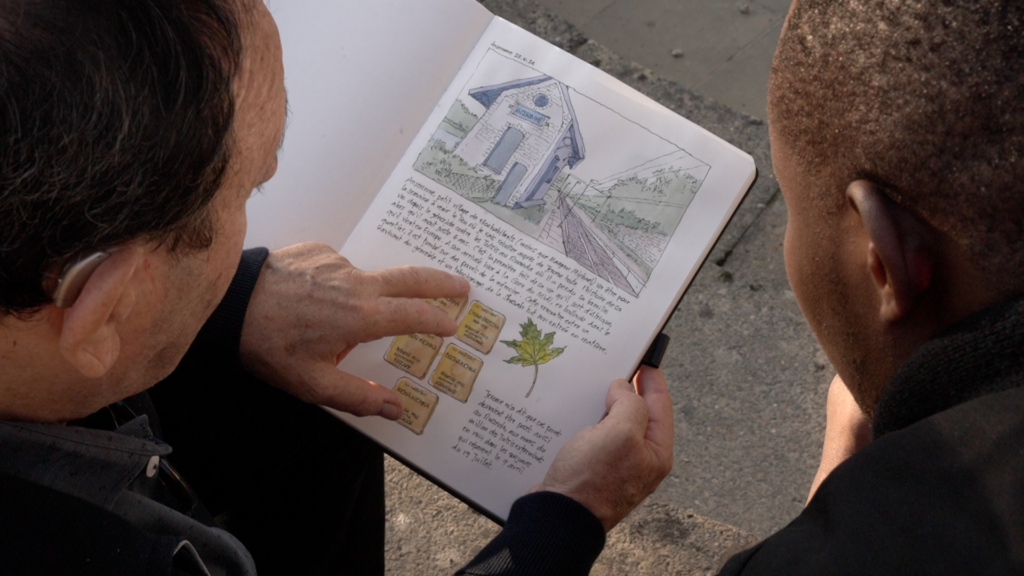
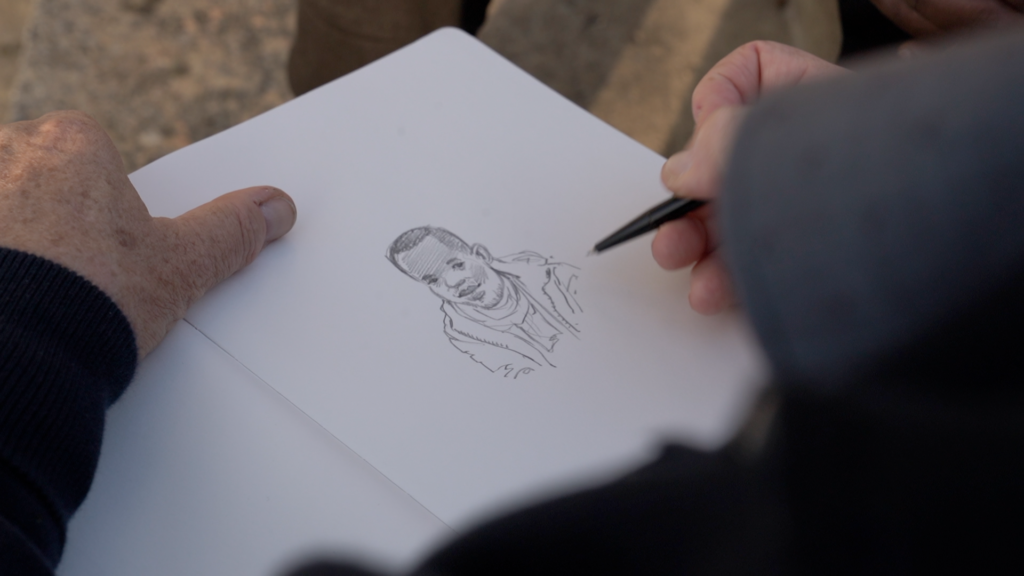
Michel Kichka and Jerome Irankunda reviewing initial sketches (October, 2024). Photos by Marc Ellison.
Documentary Film
‘Why We Dance’ (2025)
The documentary film about Jerome’s story and his involvement in the project is by Marc Ellison, a photojournalist with extensive experience of filmmaking projects across Africa and the UK. Marc has known Jerome and Nina for years through Erin’s broader research in Rwanda. In December 2024, he accompanied Erin on a trip to Rwanda to explore with Jerome and Nina what aspects of their past and present lives they would be comfortable sharing with public audiences. Jerome was keen to document some of the key landmarks from the narrative he shared with Michel in Belgium, including Kibeho church, the site of his first home, and the avocado tree under which his family first gathered to decide how they might best try to survive the looming genocide, so that Michel could get a better sense of how to depict southern Rwanda’s distinctiveness. In the resulting short film, Marc melds insight into the places and past that inform Jerome’s everyday life with a keen sense of the trauma and resilience that drives his present-day existence and investment in the graphic novel project, alongside the hopes and dreams that animate his and Nina’s future together. Marc’s efforts are complemented by original music composed by the celebrated Rwandan inanga player, Esther Niyifasha, whose instrumental and vocal tracks perfectly capture the shifting emotions – from heartbreak to joy – underpinning Jerome’s life story.