Our Vision
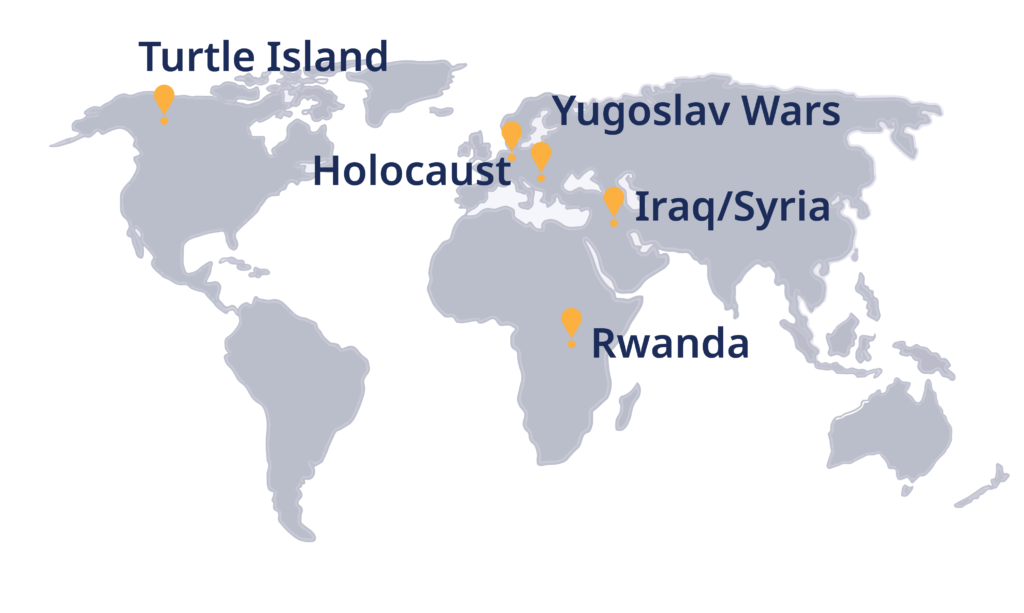
Our Survivor-Centred Visual Narratives project honours the integrity of survivor voices from a wide range of genocides and mass atrocities in the global past and present. While each survivor voice is unique, the visual narratives generated through this project undoubtedly share a united message: that genocide and mass atrocities are to be unequivocally condemned, wherever and whenever they occur. Our network of diverse teams spans varied genocide contexts, remembrance communities and cultural contexts around the world, but they have a shared commitment to arts-based, trauma-informed and survivor-centred research, which also renders us a community of care. Collectively, our work highlights similarities and interconnections between experiences, while also recognizing contextual differences and nuances that are important for honouring the full complexity of genocide history, experience and memory. Thus, the project fosters dialogue across different memory communities, underscoring that recognizing one atrocity does not diminish acknowledgment of another, but instead deepens our collective understanding of cultural erasure, resilience, and the shared imperative to remember.
In this way, it can be said that the project operates within a dynamic tension between universalism—the humanistic conviction that all genocides and mass atrocities, without exception, are equally heinous and deserving of moral and historical attention—and particularism, an inward-looking stance that emphasizes uniqueness and contextual specificity. Rather than forcing a binary choice or treating memory as a zero sum game, the project therefore embraces an encompassing, multi dimensional approach to remembrance.
The work of the Survivor-Centred Visual Narratives project is, by way of its subject matter, always difficult, but it operates in the hope that survivor voices of past genocides may also alert us to emerging and future genocides to aid in their prevention. One sobering lesson from the past is that “never again” is a rallying cry, but not a political reality. Thinking forward, our aim is to support the agency of survivors and to develop methodologies that might prove useful when it comes to documenting mass crimes, raising awareness and addressing the trauma, wounds, and losses that genocide perpetrators inflict on their victims and communities. By listening to and honouring survivor voices with care, nuance and integrity, we seek pathways through our difficult present in which collective agency and shared responsibility may positively shape social, political and personal realities in the future.
Approach
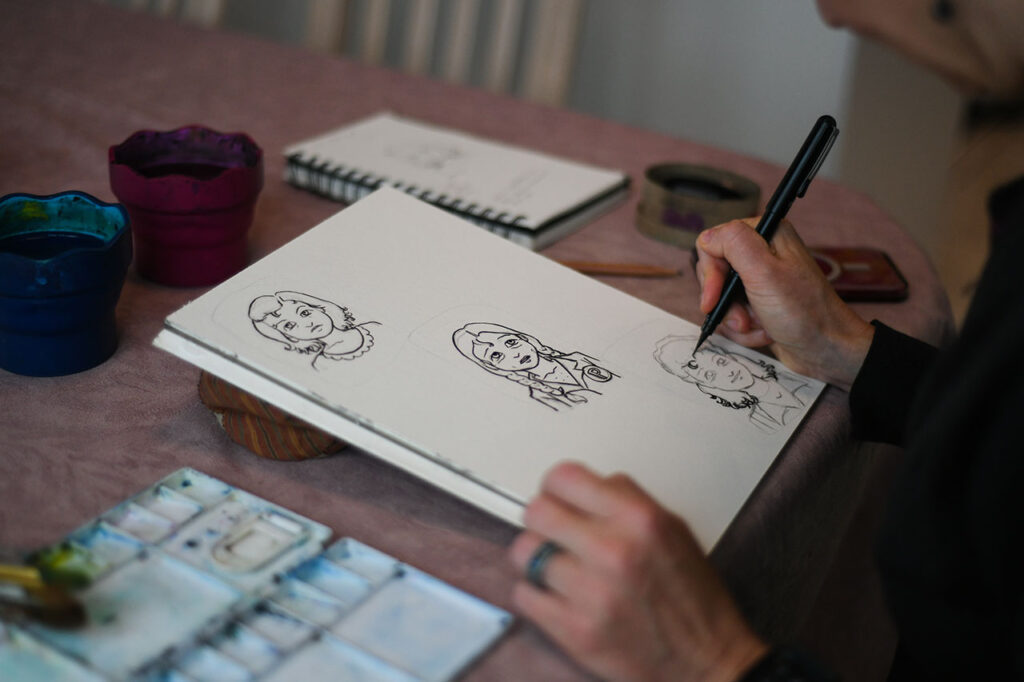
Stories have the power to connect us and to remind us of the experiences we hold in common. The SCVN project is grounded in drawing and graphic novels as a means of sharing stories, forming better relationships between researchers and survivors, and developing empathy in our communities.
Leadership
The circular leadership structure of the SCVN project prioritizes collaboration. As the project unfolds over the next several years, the various committees overseeing key aspects of the work will be formed from the international and interdisciplinary scholars who have joined together to make this project a reality.

Community
The international scope of the SCVN project provides the opportunity to collaborate with and learn from scholars, artists, and survivors all over the world. We are committed to working together, despite the challenges many of our team members are facing.
A graphic novel may not save the world, but when we continue to sit down together, to listen, and to learn, we can shape space for stronger communities to emerge.
Survivor-Centred Visual Narratives is an international project funded by the Social Sciences and Humanities Research Council of Canada under the title “Visual Storytelling and Graphic Art in Genocide and Human Rights Education” (SSHRC Partnership Grant #1154242; 2022-2029).