Iraq / Syria
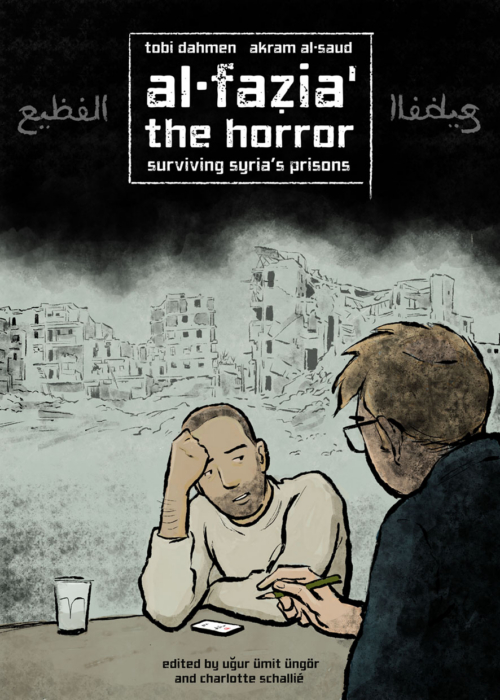
Al-Faẓia' الفظیع – the Horror: Surviving Syria's Prisons
RETURN TO IRAQ/SYRIA PAGE →
VISIT IRAQ PAGE →
Survivor
Akram Al Saud
Artists
Tobi Dahmen
Team
Research Cluster Co-Leads:
Uğur Ümit Üngör (PhD), Kees Ribbens (PhD), Kjell Anderson (PhD)
Film Director & Photographer: Lidija Zelović
Cinematographer: Susan Koenen
Additional Funding
Government of the Netherlands – Ministry of Health, Welfare and Sport
Share
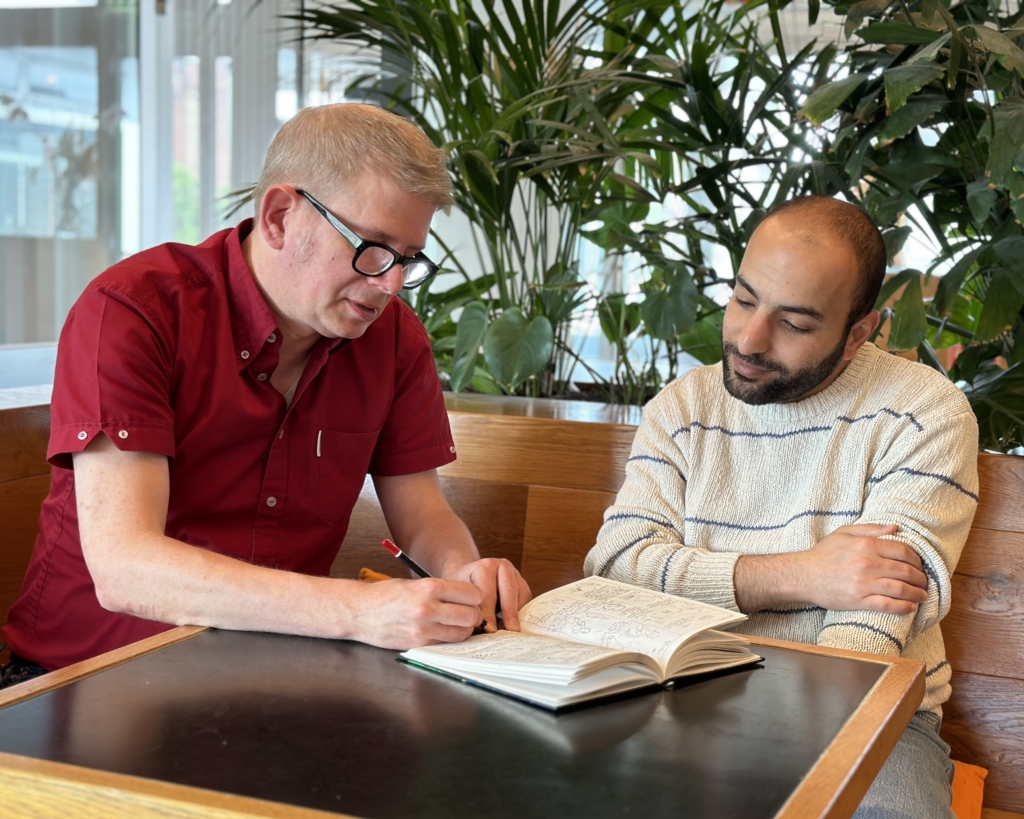
In February 2023, Professor of Holocaust and Genocide Studies at NIOD, Uğur Ümit Üngör, introduced Syrian survivor Akram Al Saud to our project team. Üngör has worked with Akram for many years, as his unique story of surviving a series of Syrian prisons is featured and mentioned in the book Syrian Gulag: Inside Assad’s Prison System (London: I.B. Tauris, 2023). They met with graphic artist Tobi Dahmen in the Dutch cities of The Hague, Utrecht, and Amsterdam, allowing Tobi and Akram to connect and get to know each other within the project. As the Netherlands is small country with short distances, Tobi and Akram were able to meet quickly, in a rapid series of interviews, both at their home residences and at various cafés.


Beginning Conversations
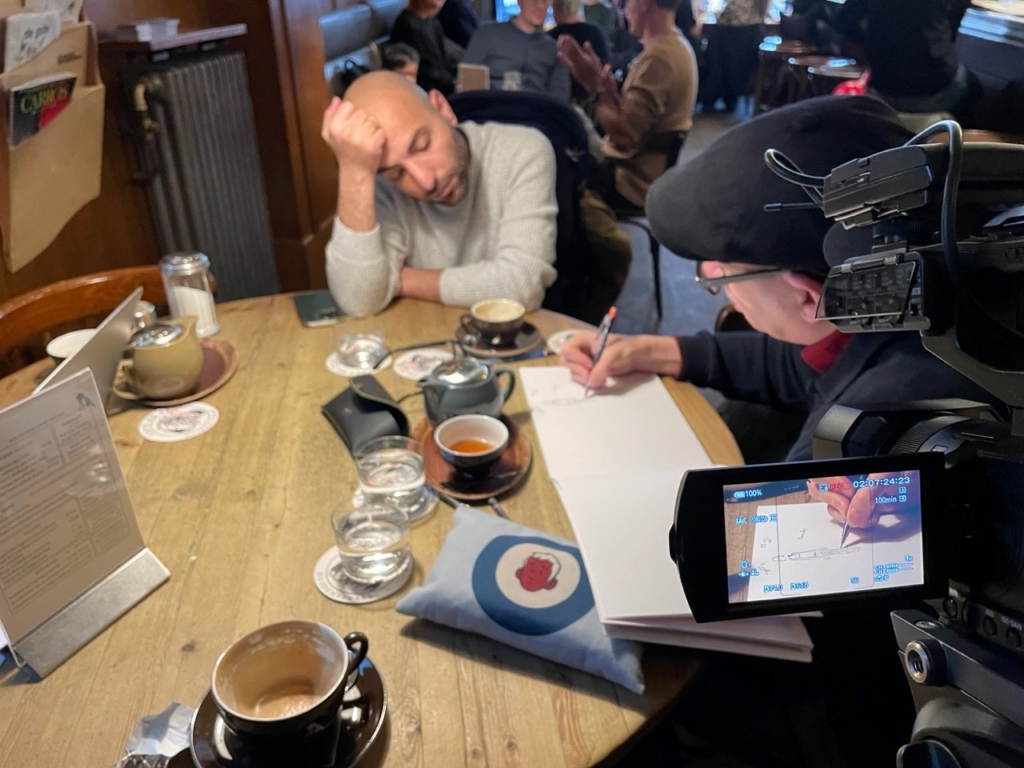
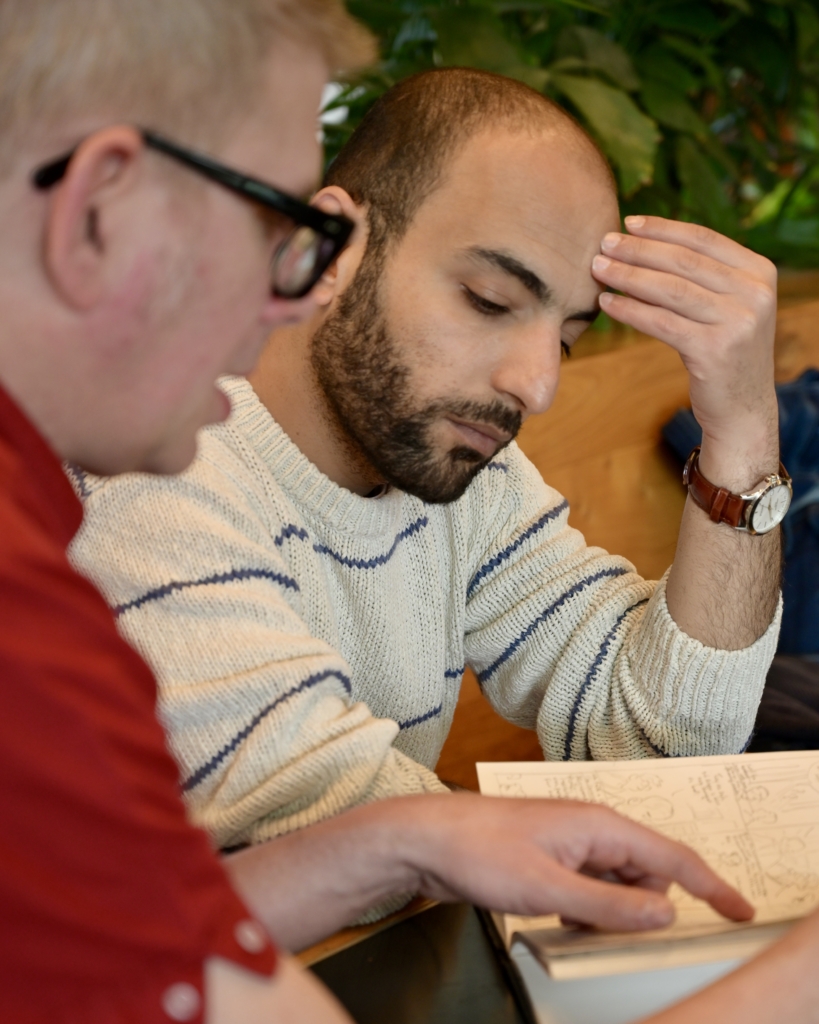
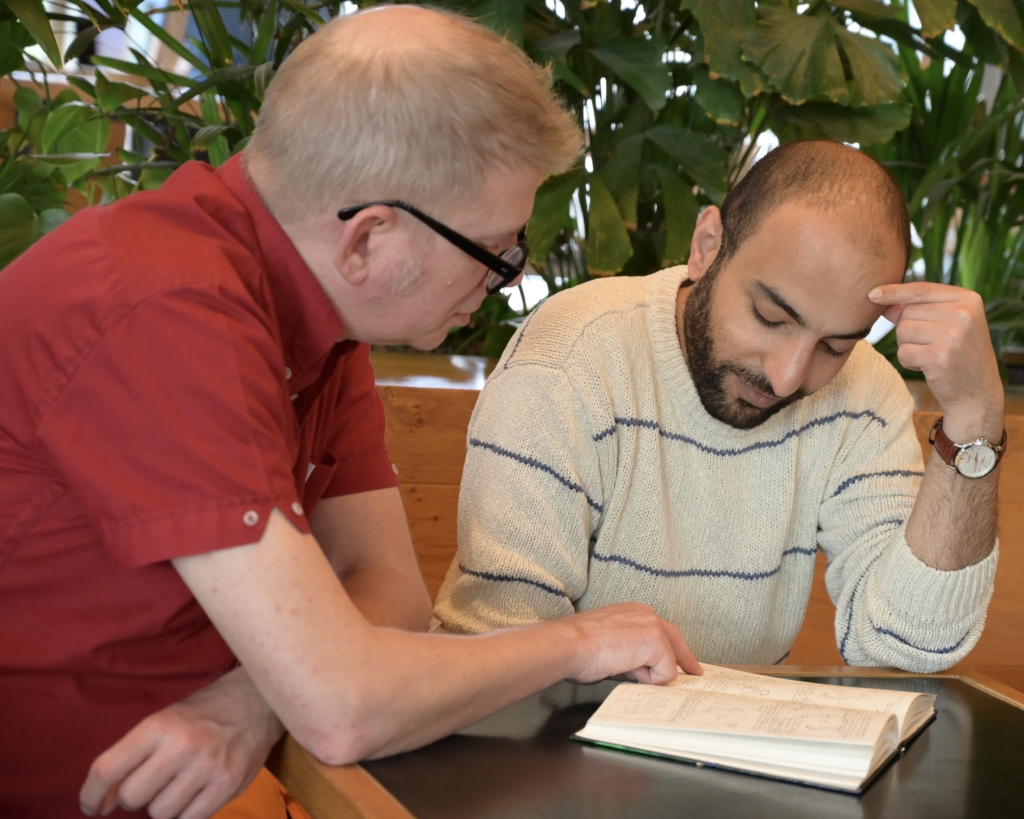
Akram, Uğur, and Tobi were filmed in conversation at the NIOD Institute for War, Holocaust and Genocide Studies in Amsterdam and a local coffee shop in November of 2023. This was part of filmmaker Lidija Zelović’s process of developing the documentary film about Tobi and Akram’s collaboration, as well as filming interviews for the project archive.
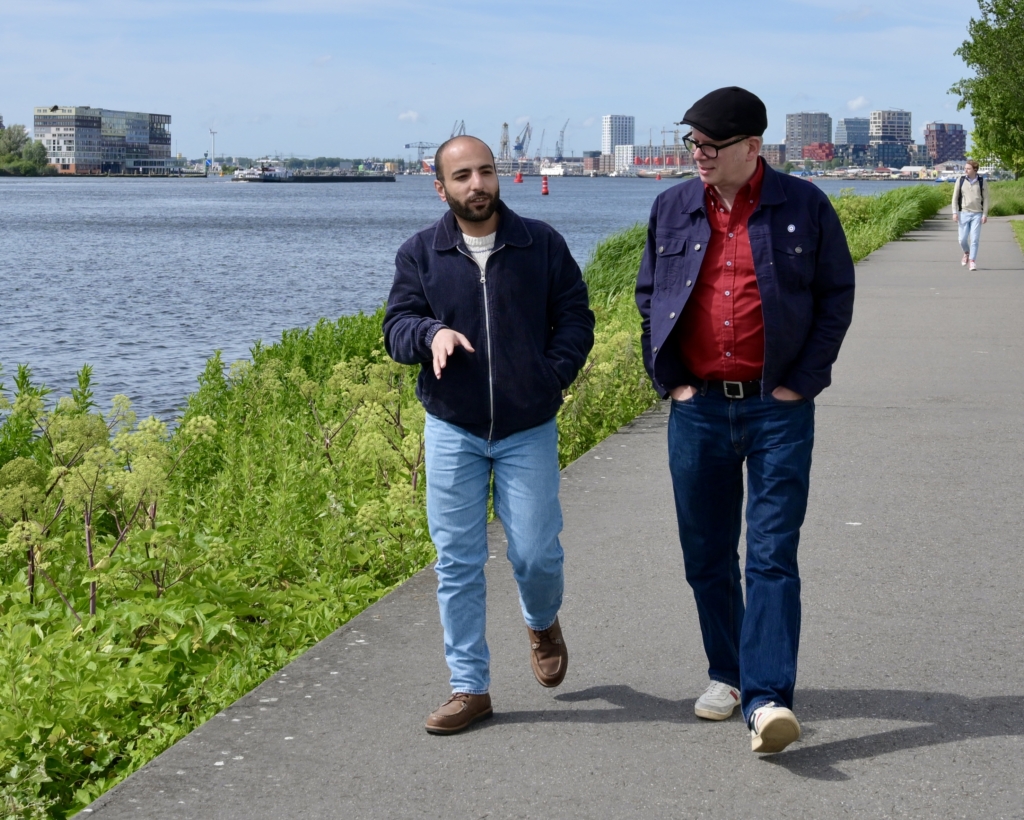
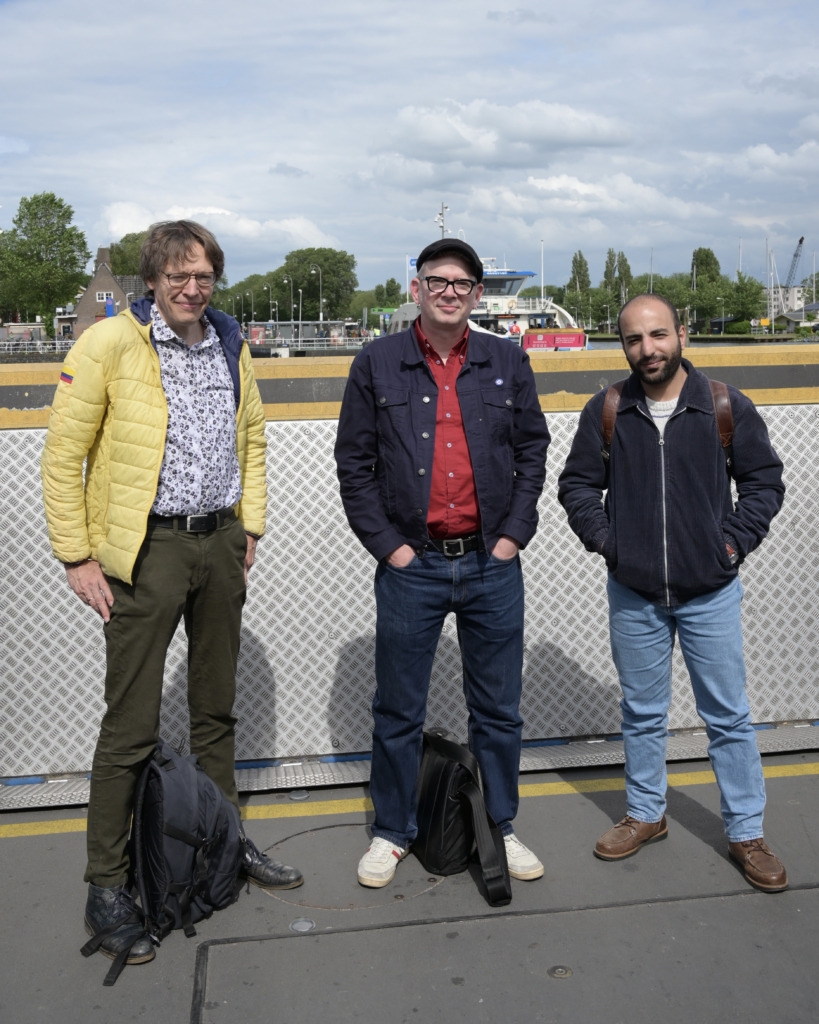
The photographs in this carousel were taken by Susan Koenen and Tobi Dahmen.
Putting the methodology to the test
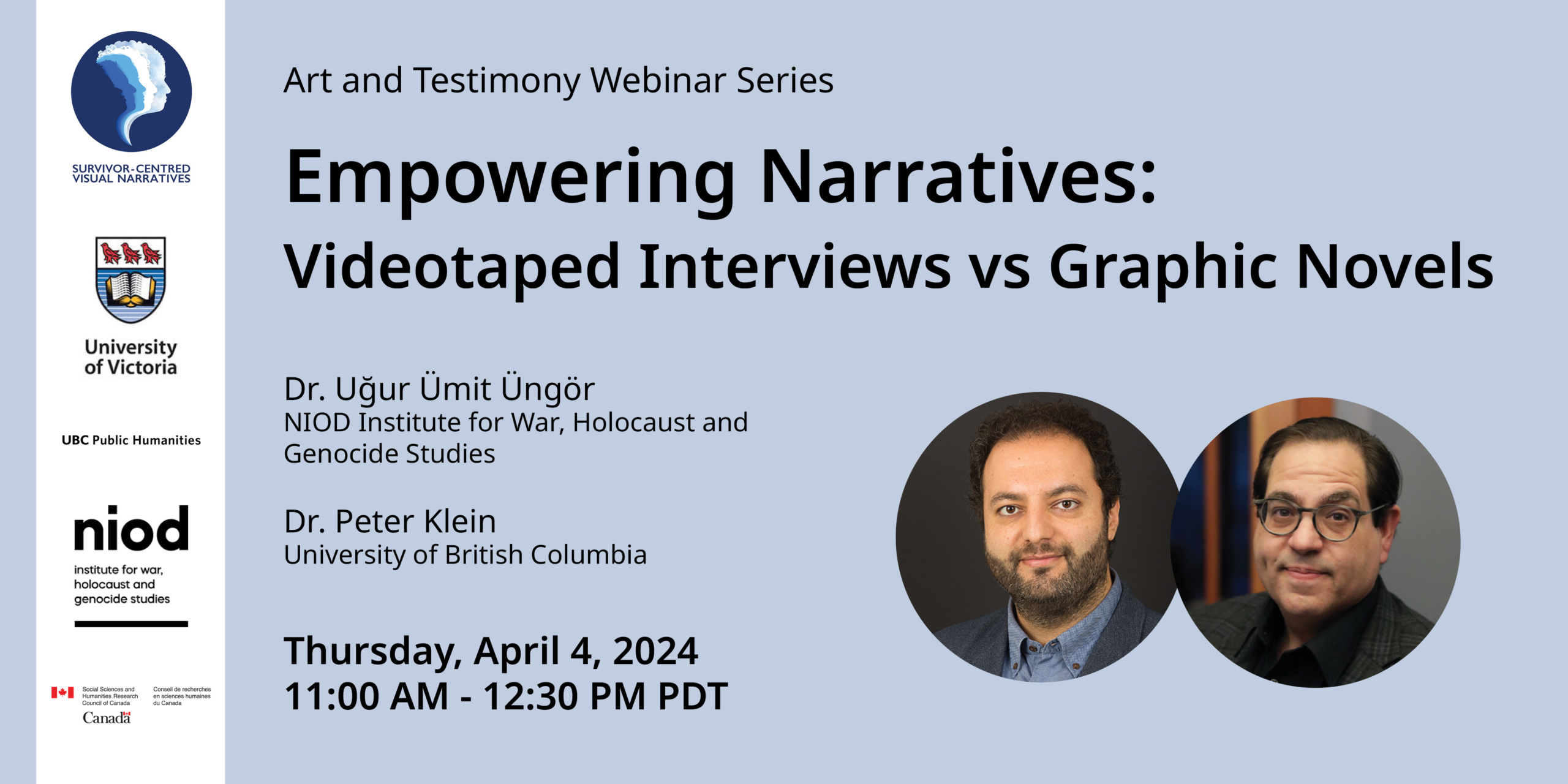
In April 2024, Uğur Ümit Üngör and Peter Klein (University of British Columbia) joined us for a conversation about the challenges of visual communication as part of our Art and Testimony webinar series co-hosted with the University of British Columbia’s Public Humanities Hub.
When is the camera a tool of violence? How can the creation of graphic novels uphold the agency of the survivor and what does this look like in practice? These questions guide the ongoing work of the Research Cluster’s focus on Syria.
Connecting in Amsterdam
On May 28, 2024, Tobi Dahmen, Charlotte Schallié, Akram al-Saud, Leyla Ferman, Kees Ribbens and Uğur Ümit Üngör gathered in person at the NIOD Institute for a panel discussion on “Witnesses of Violence: Stories of Genocide Survivors in Graphic Novels”. The researchers, artists, and witnesses gathered to reflect on the ways in which graphic novels can be used to gather stories about violence and genocide. These stories are not universal or encompassing of every detail of these atrocities, but rather they present the individual narratives of those who survived them.
Graphic Novel
After working closely together over the course of two and a half years with the team – engaging in additional interviews, sharing illustrations and storyboards, developing essays and finalizing the manuscript – the graphic novel is now complete!
Al-Faẓia’ – The Horror: Surviving Syria’s Prisons was first published in German with Carlsen Verlag on May 26, 2026, and will be in English by the University of Toronto Press in November 2026.
As Tobi and Akram begin their book tour with Carlsen in Germany this spring, the first media features are starting to appear, including “The Art of Survival” by Ella Rendtorff at the German daily newspaper taz (Die Tageszeitung) on May 29, 2026:
A year and a half after the collapse and overthrow of the Assad regime, the process of coming to terms with the reign of terror is only just beginning. And it is accompanied by the question: How can the horror be depicted without reproducing it?
Tobi Dahmen is aware of this artistic tightrope walk: “Comics are largely about what you don’t show.” By suggesting more than depicting, he succeeds in creating a sensitive visual language for the traumatic experiences of his counterpart.
Documentary Film
How to Draw Darkness? A story from Syria (2025)
On November 21, 2023, Tobi, Akram, and Uğur met at the NIOD Institute in Amsterdam to begin their first day of filming interviews together for the short documentary film. Coordinated by filmmaker Lidija Zelović, the interviews were between Uğur and Akram, with Tobi drawing sketches and Susan Koenen taking photos. Additional interviews and conversations were filmed at local coffee shops where Akram and Tobi would frequent when getting to know each other and discuss the project. We are very fortunate that Tobi and Akram established a close relationship, and Uğur’s two-decade friendship with Lidija facilitated the group to spend time together, while the cameras were not running. Akram spoke of his childhood growing up in Damascus and visiting his grandfather’s farm in a village near the eastern Syrian city of Deir ez-Zor. He recounted how regional, class, sectarian, and ethnic differences were not a problem in and of themselves, but were mobilized by the Assad regime in a complex interplay of cooptation of supporters and coercion against potential dissidents. Part of that coercion was the Assad regime’s vast system of arrest, imprisonment, and torture. With the camera often being used as a weapon against truth by the regime, this documentary is an important part of sharing what happened in Syria, and sharing Akram’s experiences through his collaboration with Tobi developing their graphic novel.