
Bringing ‘Indians Do Cry’ to life online: SCVN partnership with Emily Carr University
A key goal of the Survivor-Centred Visual Narratives (SCVN) project is to restore agency to survivor narratives. This is especially important whenever a story transforms: from interviews and archival materials to a graphic novel, and subsequently into other formats. Each new design can extend a story, but every step must be handled with care.
This year, our Turtle Island Research Cluster did this transformative work in collaboration with Emily Carr University of Art + Design (ECU).
From graphic novel to interactive website
Indians Do Cry: A Father and Son and the Medicine of a Game is the working title of a graphic novel in our Turtle Island Research Cluster. It shares the story of the late George Kenny, an Anishinaabe journalist, author and residential school survivor from Lac Seul First Nation, and his son, Mike Auksi, who, together, found healing in hockey. The graphic novel is written by Duncan McCue, and features art by Joshua Mangeshig Pawis-Steckley. Auksi and Samantha Stevens work as research assistants on the book project.
Duncan McCue is an Anishinaabe member of the Chippewas of Georgina Island First Nation, a longtime CBC journalist, and an Associate Professor and Director of the Certificate in Journalism in Indigenous Communities (CJIIC) at Carleton University. He is Co-Lead of SCVN’s Turtle Island Research Cluster and is working with Emily Carr University of Art + Design (ECU) on an interactive website to accompany the book.
During a recent interview with SCVN Digital Communications & Website Lead Alyssa Logie, Duncan discussed the partnership with ECU and the upcoming interactive website, Hockey Survivor Stories (working title).
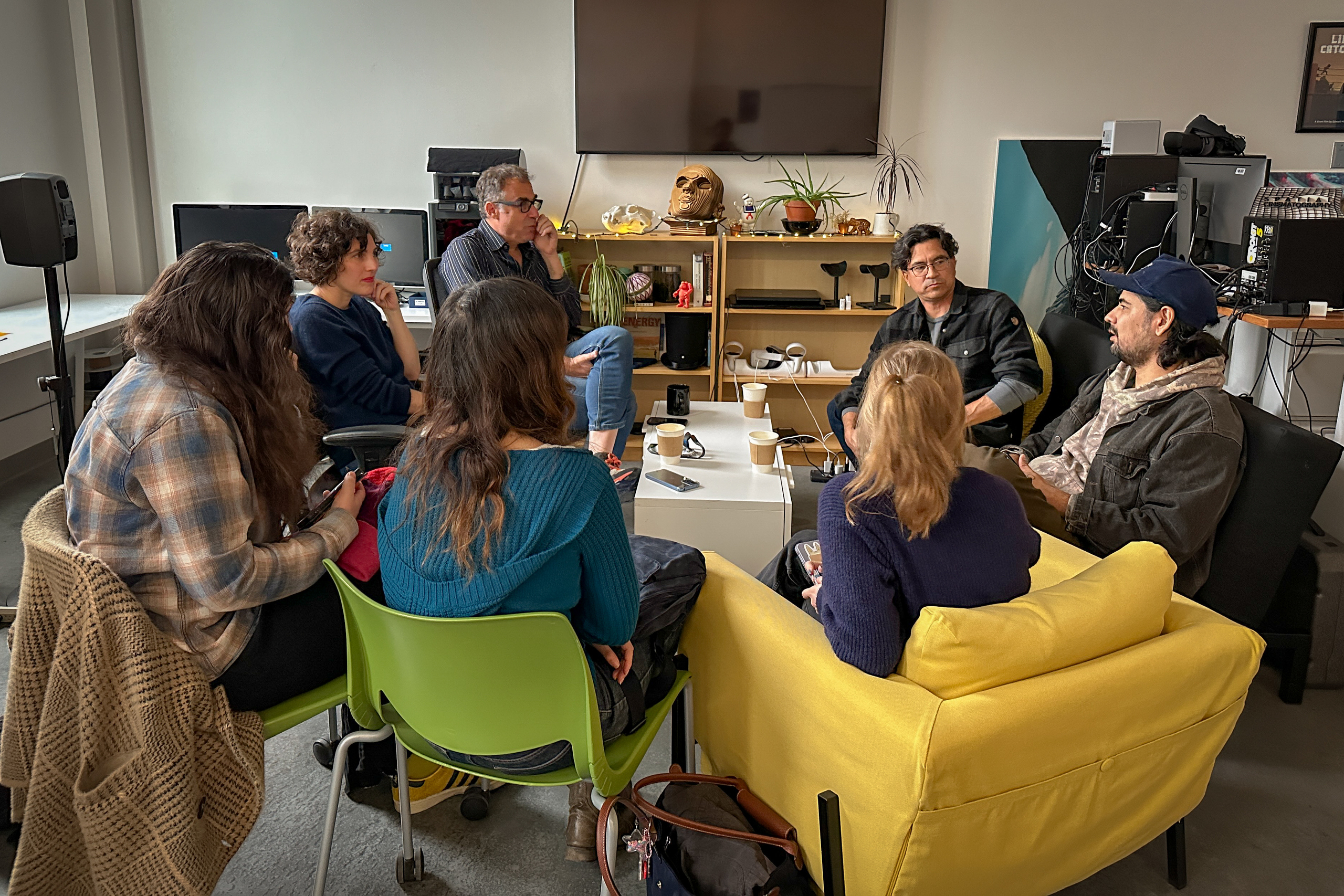
Students in consultation with Éléonore, Alan, Duncan and Mangeshig (2025). Photo courtesy of Duncan McCue.
Working with ECU
Over six months, ECU faculty member Éléonore Goldberg led a team of student research assistants—Inanna Cusi, Leo Martinez and Hannah Strocel—with support from ECU Industry Liaison Alan Goldman. By working with the archival images and audio interviews that Duncan had gathered while working with George and Mike, the team identified narratives to adapt, created a visual identity and developed a model for how these materials could come to life on a website. Hannah’s illustrations were developed in alignment with Mangeshig’s artwork. The students also paid attention to their own emotional responses to the material as they decided what might resonate most with audiences.
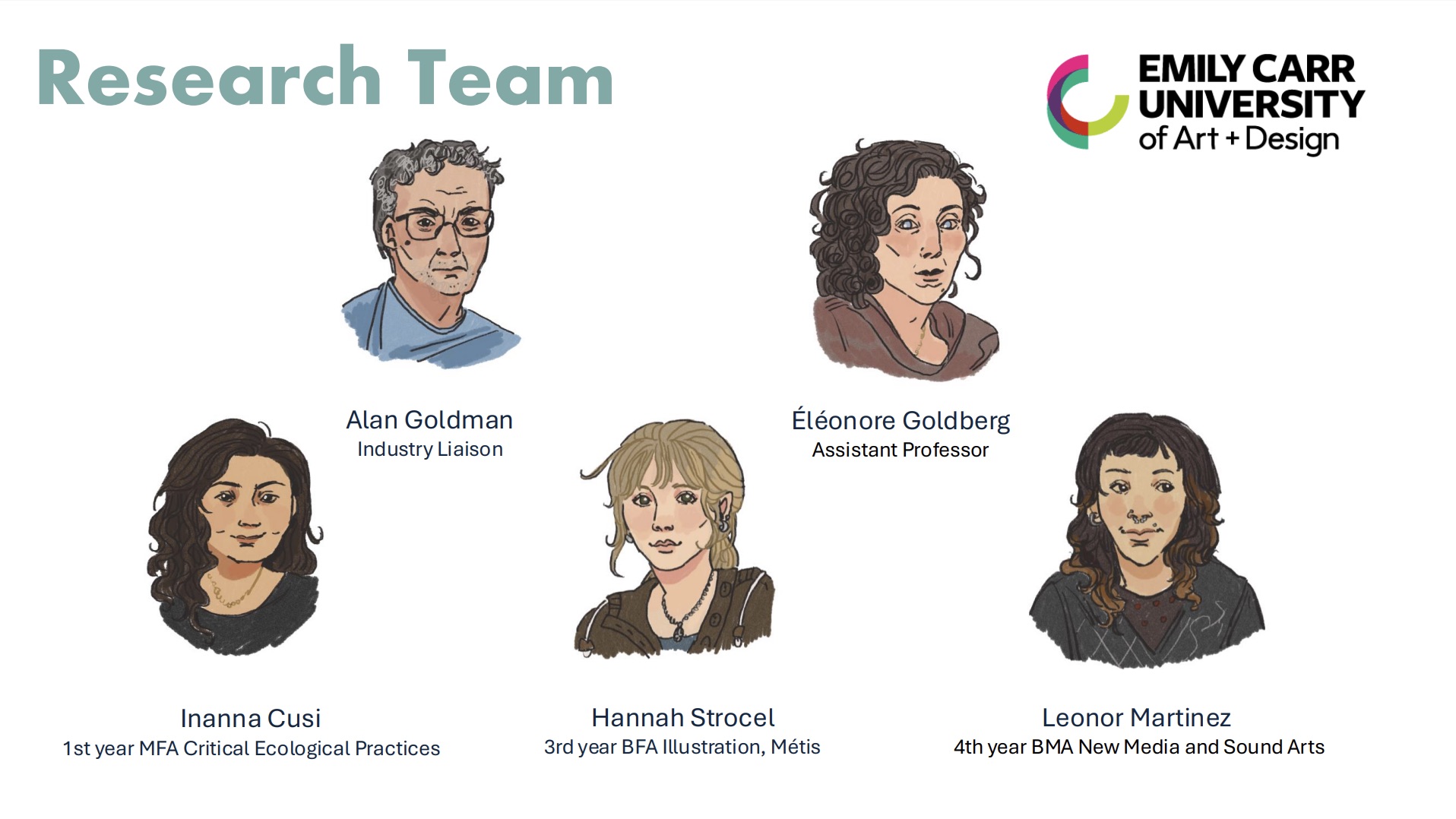
The ECU’s Research Team. Art by Hannah Strocel.
Why an interactive website?
The idea began as a request for animation. “We initially teamed up with Éléonore Goldberg and her team from Emily Carr because we were seeking some help animating Mangeshig’s wonderful drawings,” Duncan says.
“We thought that having some students from Emily Carr do some of the work, bringing those stories to moving visual life, would help share a new medium for the graphic novel.”
The students proposed something different. “The student team… came up with what I thought was a brilliant proposal, which was to design a website that was interactive for the user and allowed for multimedia components,” Duncan explains.
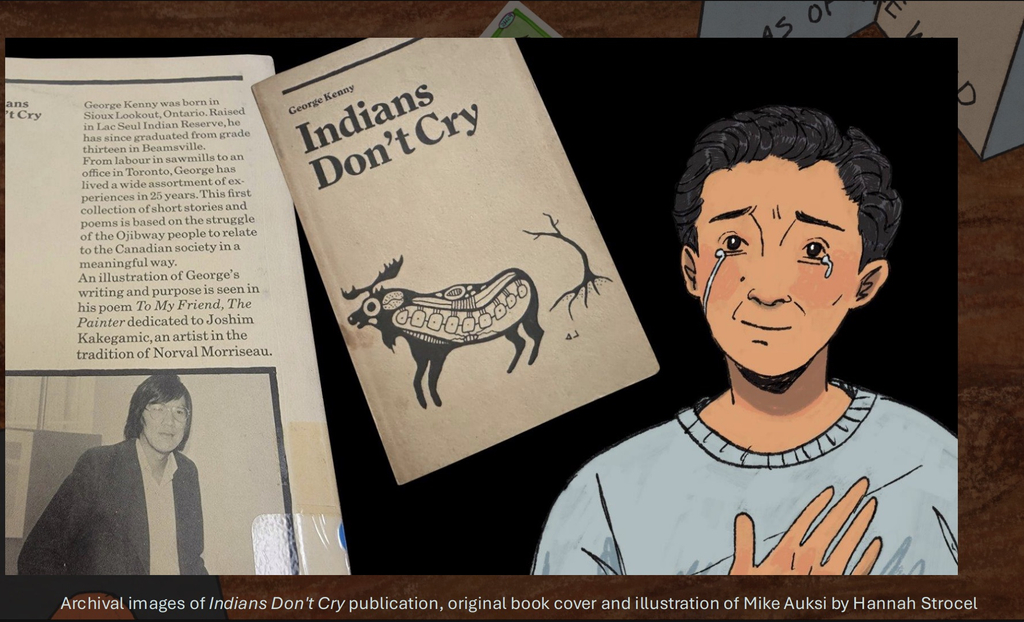
Their storytelling symbol is a deck of hockey cards. Users click the deck, the cards spill out on a table, and each card opens a multimedia story. Some of the cards reveal “a little bit of George’s testimony or Mike’s testimony, based on the actual audio from the interviews I had with them.” Other cards depict “some of Mangeshig’s drawings, some archival photos, and in some cases there will be animatics.”
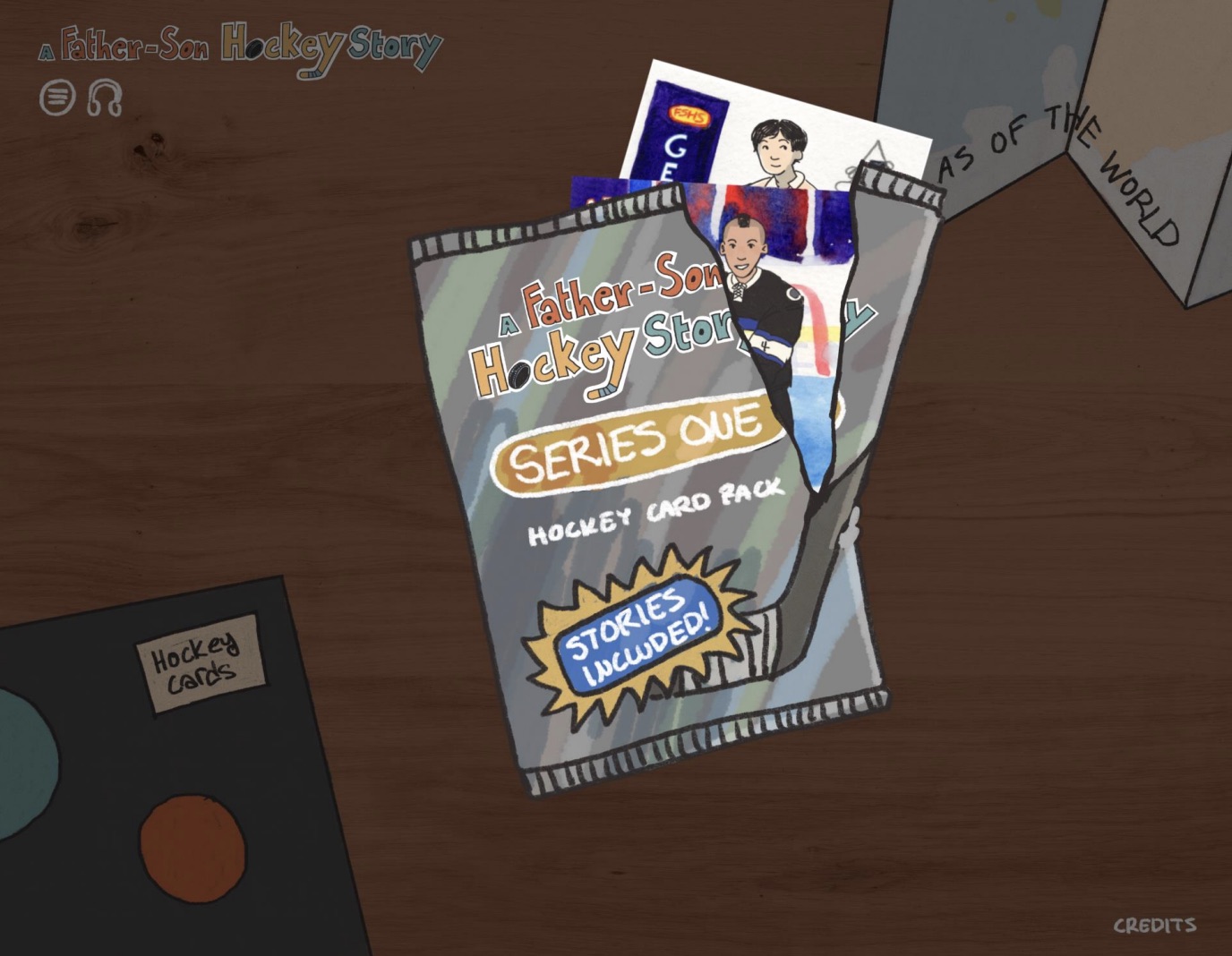
Screenshot of Hockey Survivor Stories interactive website (to be published September 2027). Art by Hannah Strocel.
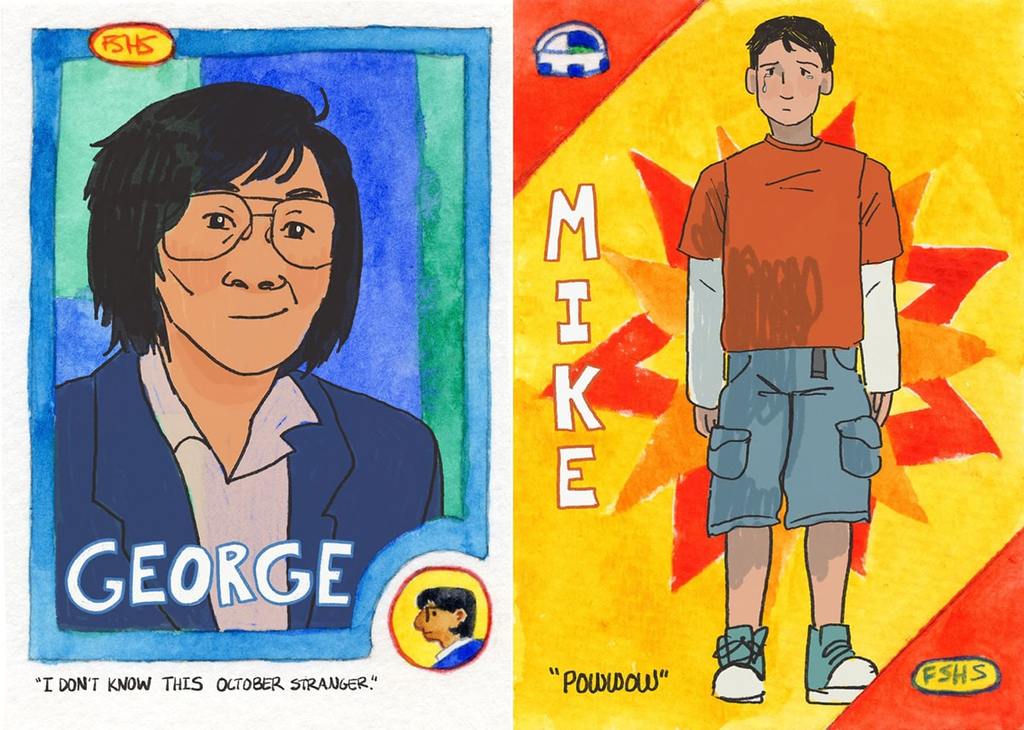
Hockey cards featuring George and Mike for the Hockey Survivor Stories interactive website. Art by Hannah Strocel.
For Duncan, the website offers something the book cannot. “Literally, the manuscript is based on their words. But it is an abbreviation,” he says. “There’s a great deal in their story that is not in the pages of the graphic novel.”
“I think this [website] will allow a user to experience firsthand George and Mike’s story in the same way that I heard it, sitting in their living rooms.”
Duncan credits the team with expanding what the project could be. “I’m going to give all the credit here to the fabulous students at Emily Carr University,” he says. He also recalls how Éléonore, an animator and graphic novelist, helped him rethink his own expectations. “I kind of imagined maybe a three-minute cartoon movie. But even something that small requires an incredible amount of time and resources, and Eleanor very patiently explained that to us.”
Indigenous student involvement was also important to Mangeshig, and Duncan is pleased the team made it happen.
“[The team has] done the hard work of making sure that at every aspect of the project thus far, there have been Indigenous students involved. So we really hope that we’re helping light a fire under young Indigenous creators and helping them explore and grow their own opportunities.”
Beyond trauma
Duncan’s aim for this project is to carry George and Mike’s stories beyond accounts of foundational trauma. It is a story of a father and son, and their healing journey—it is ultimately full of hope.
Keeping the project survivor-centred is central to that aim. “It’s in the name [of the SCVN project].. It’s very important that it is survivor-centred,” Duncan says. “That means making sure that we operate in a trauma-informed way, and this can be at times difficult material. All of those things are delicate, but we’re trying to make sure that we’re staying within the spirit of the project, which is to make sure that these are stories that survivors stand by and feel proud about.”
We are deeply sad that George passed away before the website concept took shape, but sharing his story widely was always his wish. Duncan says:
“He really did want this story to be shared widely, and I feel very fortunate that we got him when we did and are able to carry on his legacy in this way.”
Mike remains closely involved in making sure the work meets his and his father’s goals.
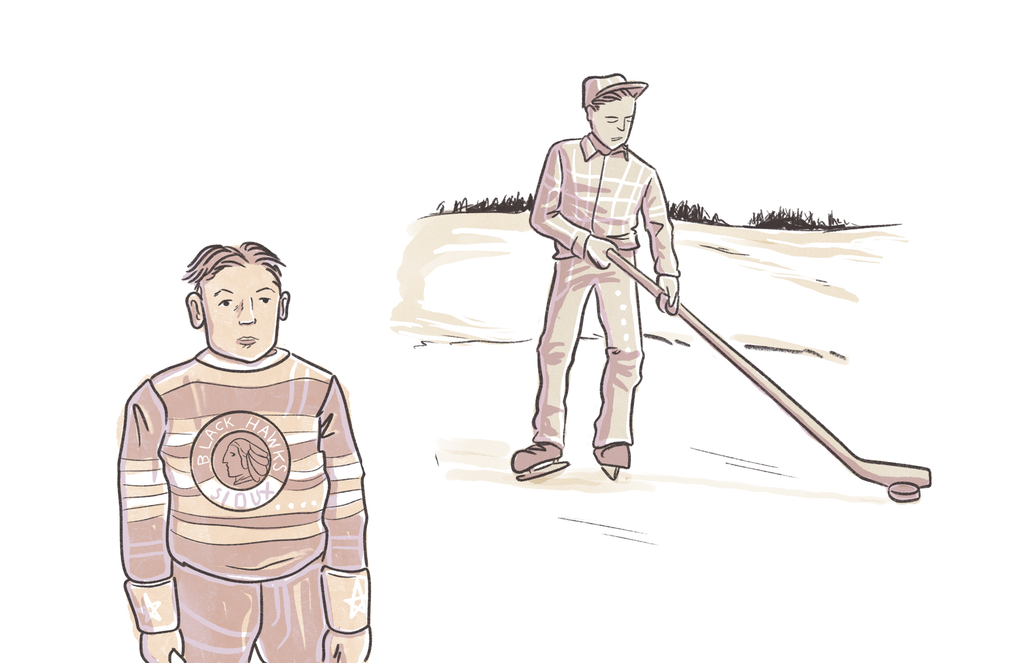
Sketches of a young George by Joshua Mangeshig Pawis-Steckley. Image from SCVN archives.
What’s next?
Éléonore and Alan have been awarded an NSERC Mobilize Grant for the next phase of research and development with Duncan and Education Without Borders. They hope to launch the interactive site, currently titled Hockey Survivor Stories, in September 2027, alongside the book.
The students are now building their prototypes into a working site, and Duncan is eager to see the result. He sees a natural fit with the educational resources SCVN is planning for secondary students:
“The combination of drawings, hockey, and the first-person stories of both George and Mike. I think that’s going to be very potent for accessing young audiences.”
We are grateful to the ECU team for their care and commitment, and to George Kenny and Mike Auksi for sharing their stories with us. ECU has also shared its own account of the collaboration. Read more here: ECU Students, Faculty Help Bring Agency to Survivor Stories.
SCVN’s forthcoming graphic novel Indians Do Cry: A Father-Son Hockey Story and the interactive website Hockey Survivor Stories are set to be released in September 2027. Learn more about SCVN’s Indians Do Cry here.
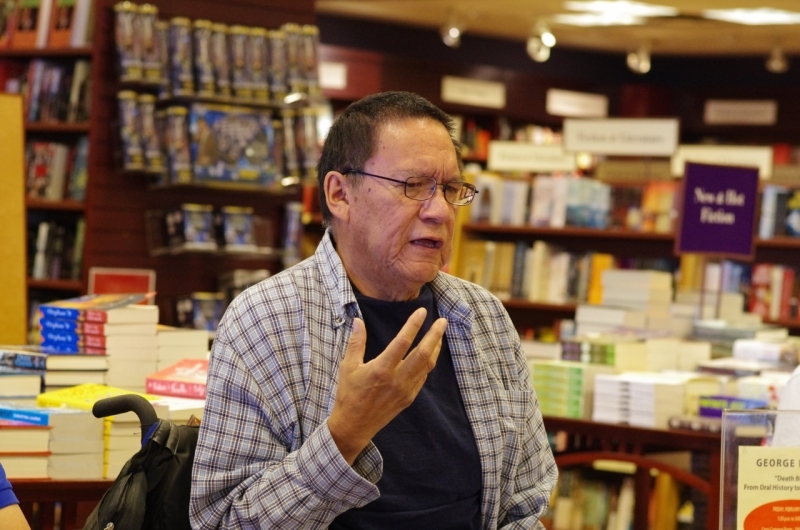
George Kenny signs books and shares stories at Chapters in Thunder Bay, 2015. Photo source: wawataynews.ca
We gratefully acknowledge the financial support of the Social Sciences and Humanities Research Council of Canada (SSHRC), the Canada Council for the Arts, and the NSERC Mobilize Grant awarded to Emily Carr University of Art + Design, which have made this work possible.