Survivor-Centred Visual Narratives

Category: student engagement

‘Our dignity grows through connection’: HUMA 180 students interview SCVN Research Assistant Lucie Kotesovska

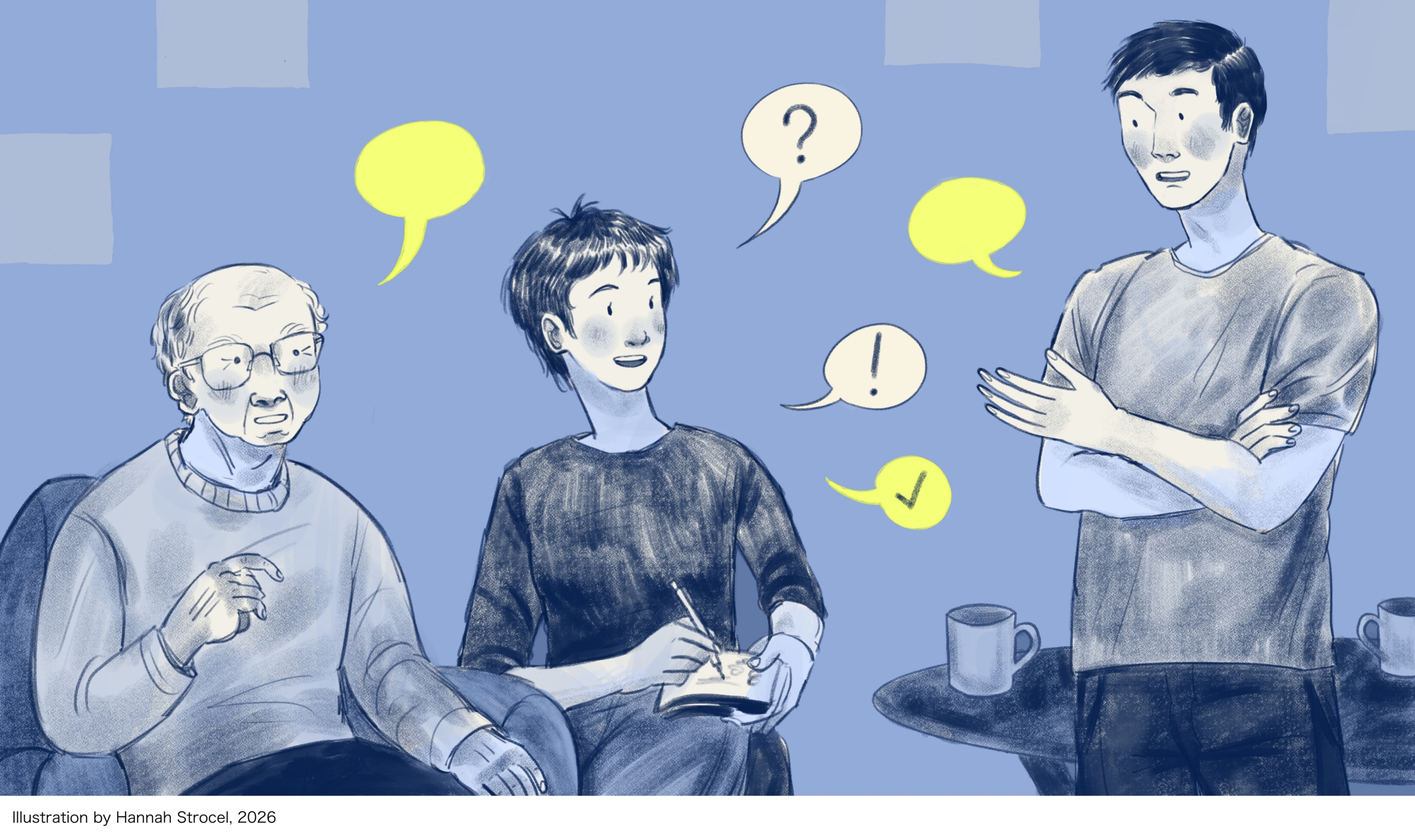
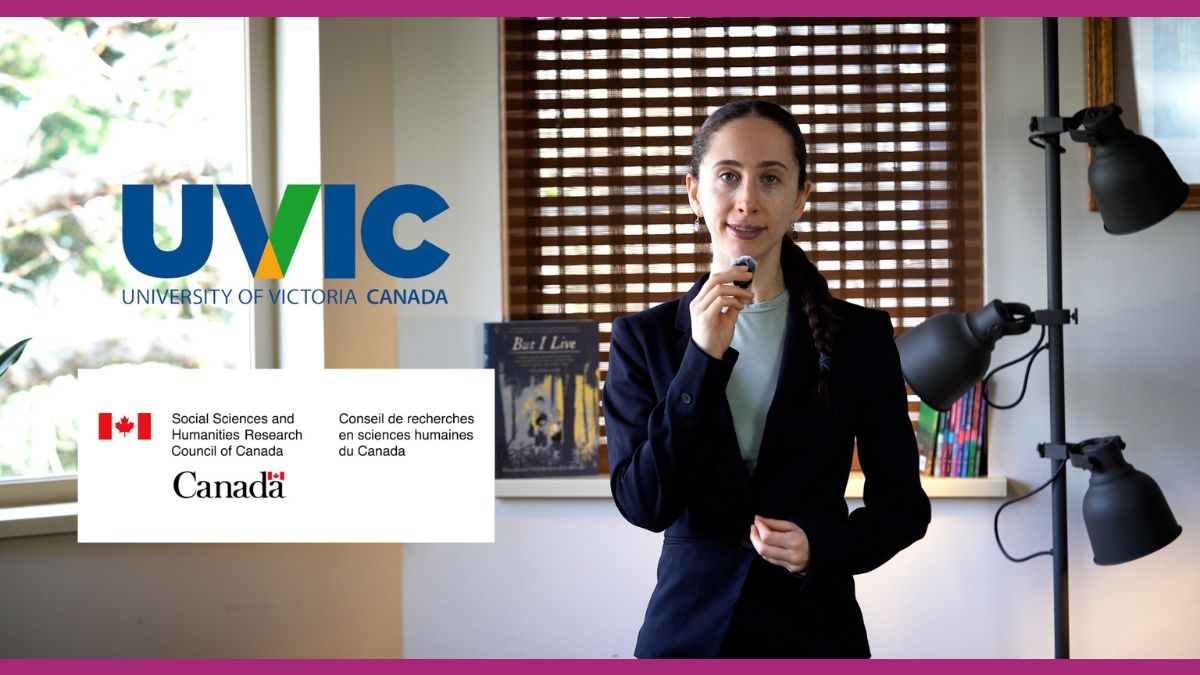
On November 5, University of Victoria students Ananiah Bartsch and Lily Schaefer interviewed Survivor-Centred Visual Narratives (SCVN) research assistant Lucie Kotesovska. The interview took place online and was conducted as part of a practicum for HUMA 180: Encountering Humanities Research, one of the three courses that make up UVic’s Humanities Scholars program. This is the fourth time SCVN has had the pleasure of welcoming practicum students from HUMA 180. In this interview Lucie reflects on her involvement in the project, the realities of working with difficult stories, and the lessons she learned from her work as a research assistant.

Ananiah: We’ll just start with an easy question. Lucie, how did you become involved with this project and with Charlotte’s work?

Lucie: I was hired in summer 2024 as a research assistant for the project, and it happened through my home department, which is the English department at UVic. My official role was media communication and administration assistant. I think the team was specifically looking for somebody with strong editing and communication skills. They were seeking somebody to help them with the textual production and presentation of the project in textual terms. I was hired as a research assistant on these terms. Besides being an English major, I also had quite a rich previous experience with academic and professional writing, editing, copy editing, reviewing texts and translating. I forgot to mention that my first language is Czech, it’s not English. I’ve been moving between languages my whole life and it’s been a great passion and source of joy for me to be tinkering with words and learning new words and growing into new languages.  

Lily: What drew you to the work of this project?

Lucie: That’s a great question. As I said, I’m passionate about working with and through the written and spoken word. That’s my primary tool in exploring the world and making sense of it for myself and others. So, to have this chance to pursue that passion and bring use to a large project was very attractive and meaningful to me.  

Second, I was really excited about working as a part of a team, and supporting the team. I have to say that my PhD work was really lonely. It was quite an isolating experience because for a couple of years you’re just focused on this very niche area or super-specific subject. For me it was Irish poetry from the 1960s up to now. You start to miss human connection during this extensive research and writing project. Even though, of course you are connected with the selected poets quite deeply and intimately, but still … It’s natural for us as human beings, and also as humanists, to connect with people. So, I started to really, really miss that kind of interaction. And this was something which I found as a member of the project and this team. What also drew me to this teamwork was the appreciation of all kinds of talents and levels of expertise. The SCVN project hires junior researchers who just entered the field. So, there are team members like you and then senior researchers, professional scholars, who work in the field of trauma, genocide, history, human rights and so on. There’s this vast scale of various abilities and experiences. So, the team aspect was really a huge plus for me.  

And third, I could sense a very strong humanistic mission in this project. You probably talked about the 4 pillars of the humanities mission at UVic in HUMA 180? 

“Enrich human dignity” is the first one. And that’s very obvious with this project because of its focus on the survivors. It most emphatically contributes to making us feel and appreciate human dignity, especially in places and times when it was tread upon.  

“Provoke critical inquiry” is the second pillar. This project has consistently critiqued some of the traditional scholarly approaches to history and memory. It has brought a new perspective, and a new medium because it is primarily visually oriented. 

“Engaging myriad voices” the third pillar, is a very fitting one, because this project over a couple of years of its existence, has become global. Starting with Holocaust research, it has now spread to former Yugoslavia, Rwanda, Turtle Island and also Syria and Iraq. It comprises several research clusters while engaging many people globally – researchers, journalists, community members, and artists. 

And there’s the fourth pillar, “inspire innovative expression, including the full plurality of media”. This project is really a great example of that. Searching for new ways to communicate messages and research to the wide public, not just the academic community, but to the public worldwide, to people of various generations and ages and milieus. 

And I should not forget about the fourth reason that drew me to the project. I felt I could keep learning new things while being a part of it. That was a big one for me as well. I could just keep learning, and I was continually encouraged to do so as I was getting new tasks beyond my initial contract, but we’ll probably talk about that a bit later on. 

Ananiah: You’ve touched on this briefly already, but what did your work, and what has your work entailed with the project?  You’ve been working on a bunch of things, so could you tell us a little bit about what that’s looked like?

Lucie: As I said, it entailed various tasks, both short- and long-term ones. I think my major initial contribution and something I’m quite proud of still was the editing of transcripts from two webinar series which were organised by the project and the Public Humanities Hub at the UBC as a joint initiative. These were two series of talks with scholars, artists, journalists, and other professionals on the topics of trauma-informed research and art and testimony. 

And my main goal was to make these webinars accessible through these transcriptions. These texts were posted online, and I tried to make their formats standardized across all the different episodes, speakers and topics. 

Another major undertaking was working with students from HUMA 180 last academic year. Last fall, I was tasked with onboarding three HUMA students and with training them in transcribing while sharing my experience and some of the best practices. They each picked a webinar and transcribed the whole episode which is a substantial amount of work. Beside the transcription, they edited it all through making sure that all the names were spelled correctly, and all the places were correctly identified. It was a wonderful way of sharing what I learned on the project.  

I also created content for the project’s blog. I wrote blog posts covering various events like exhibitions and upcoming talks, award ceremonies for artists on the project, film releases, and other things as well. I updated content for three of the project’s research clusters: Rwanda cluster, Holocaust cluster, and former Yugoslavia cluster. 

It was my first time tinkering with website design. Speaking of learning things, I was really thrown into deep water here, but I enjoyed it immensely.

Ananiah: You wore all the hats!

Lily: Jack of all trades.

Lucie: Yes! Forrest Gump; that’s what I would say, Forrest Gump. But Jennifer Sauter, my supervisor, would say no, no, it’s like – think about it more like a Swiss knife: versatile and excellent in all circumstances.

Lily: What was something you found difficult while participating in the project?

Lucie: Sometimes it was prioritising, as I was often assigned several tasks at the same time. For instance, I felt very reluctant to break the blog-writing rhythm in order to go and fill in a travel reimbursement form or go and copy edit somebody else’s work, somebody else’s style while drafting my text. As a graduate student, I was constantly busy with other things as well. I tried my best to juggle several jobs at the same time. While I was working on this project as a research assistant, I was hired as a teaching assistant in the English department, and also as a tutor by the Academic Skills Centre, and during this whole time I kept working on my dissertation. Plus, I had a couple of kids at home. 

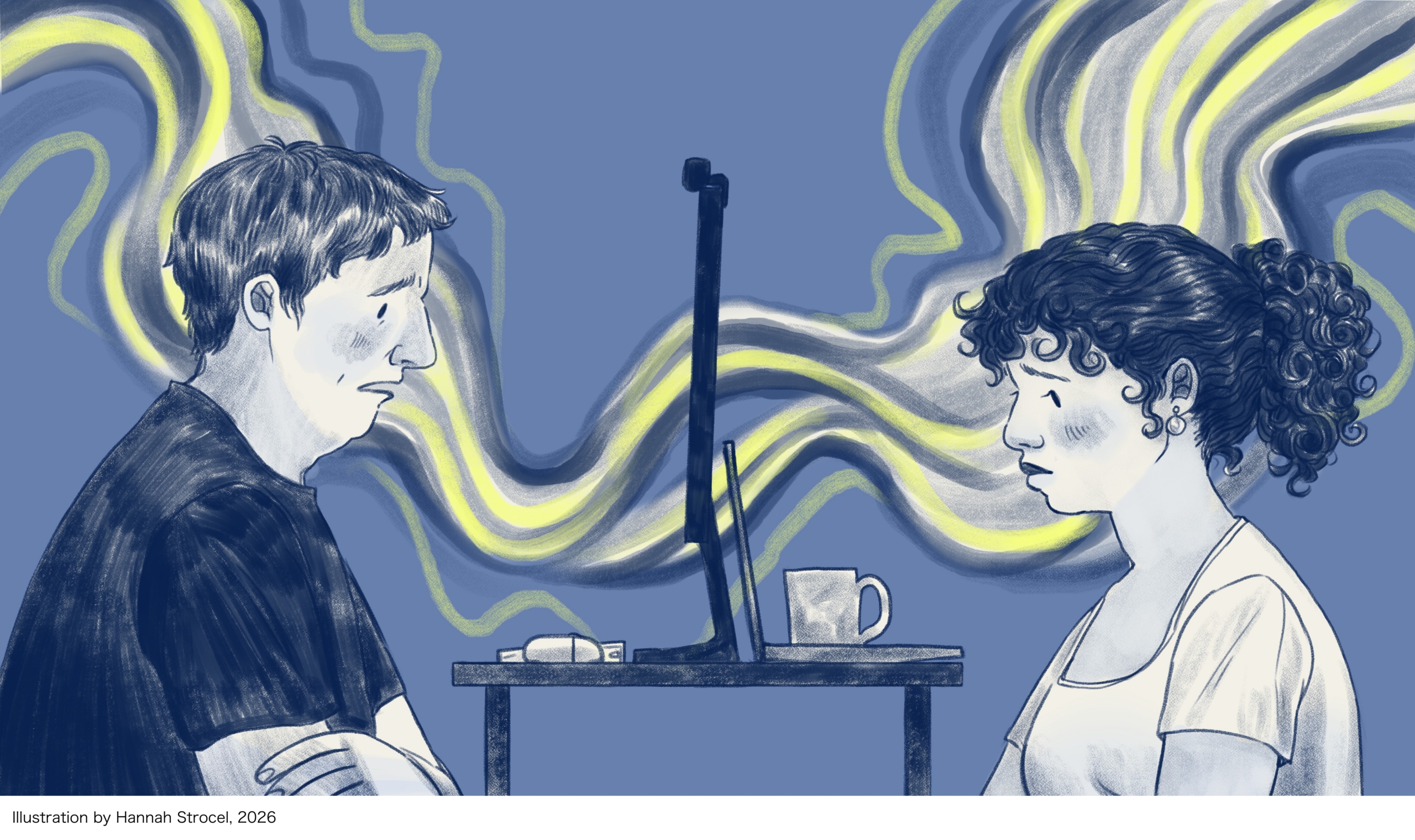
Also, speaking of difficulty, I think it’s quite obviously the sheer amount of human suffering you face working through various materials and media across the project. It’s even more difficult given the fact that violence and social division and victimisation keep going on and on in the world. I’m not the only one saying this regarding work on this project. This is an issue that I notice every team member has to deal with. Historically speaking, we live in a very difficult moment for our world right now. There seems to be no end to the trauma inflicted. Working on this project makes you painfully aware of this fact. 

Ananiah: Lucie, how is it that you take care of yourself when you’re involved in a project that has so much human suffering? How are you looking after yourself to make sure that you were not being crushed or consumed by the weight of the project?

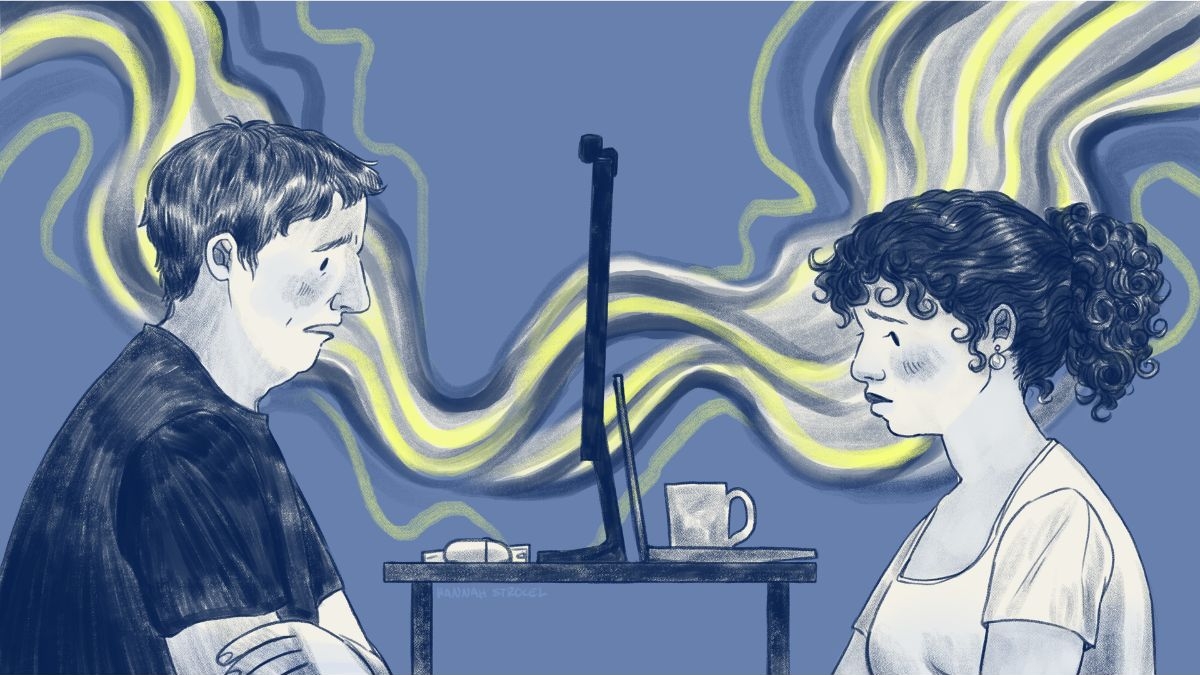
Lucie: That’s such an important question. I talked to people on the project about this and it helped sharing these concerns. We were advised to take breaks from the materials, like those transcriptions. We are speaking of dozens of pages of text on very heavy things. We were encouraged to take breaks and talk to other team members or stop working for a week or two in order to process the feelings that were coming up as we needed to. I would say this is also something that I’ve been asking myself as a literary scholar for a long time, because I focus on Irish poetry that was written during the time of The Troubles in the second half of the 20th century.  

You’ve probably heard about this conflict in Northern Ireland. It was a very violent one, tearing up families and communities. It is still hard for me to believe that it went on in Europe during my childhood years. So I’ve been thinking a lot about this question and honestly, I came to the conclusion that while we can never completely escape these traumas, personal, generational or cultural ones and stay unharmed, it’s essential that we learn to be aware of our feelings, and also learn to be responsible for the way we handle them; how we express them as well as whether and how we communicate them further.  

As I mentioned, I grew up in the Czech Republic in a culture which, as a heritage of the forty years of Communist regime, was emotionally repressive to say the least. I realized this fact only years later in my early adulthood.  

To compensate for this, I actively made efforts to learn to feel–not just feel, because this is the part that comes to us naturally–but to be able to notice these feelings, to describe them to myself, label them, and express them safely and, when I am lucky, creatively. Literature has been a tremendous help in this sense. Being a literary scholar, I have been able to see what is going on inside other people and how they handle their emotions. It is not an exaggeration to say that literature helps us stay sane and stay alive.  

I’m trying now to share this vocabulary I learned with my kids. For example, we read books on this topic together. One of our favourites is called In My Heart and it’s about a girl naming her emotions and has beautiful illustrations that help children explore big feelings such as anger or sadness. It will say “I’m angry,” and explain visually what that means. I also plan to teach emotional literacy in one of my courses in spring, in the English department. 

For me, this is an essential skill for us as human beings, because we’re connected through and in the heart. So, coming back to your question, I think that this emotional self-awareness has helped me greatly when I was dealing with this sensitive and almost soul-crushing material. Another thing has been helpful besides taking long walks in Victoria, which is a great, great town for solitary walks, and that’s reading. While engaged on the project, I did some reading that was really helpful to me.  

I’ll mention just one title. I’m reading it right now, actually. I realised early on that there’s a link between my work on the project and how I felt about it, and this reading. The title of the book is Saved from Sacrifice: A Theology of the Cross and was written by S. Mark Heim. 

It has helped me to understand the sacrificial mechanism in practically all human civilizations, and also, how truly transformational and revolutionary it is when the victim can find a voice or can be given the voice and also has a name and is remembered through their narrative.  

Lily: Self-documentation.

Lucie: Yes, right. And this is exactly what the project has been trying to do all along. So yes, reading also helped me. I’m sorry if this answer was a bit long.

Ananiah: No, no, no, I appreciate it.

Lucie: Just to conclude, I think emotional awareness and self-awareness are super important. That’s the key. As I said, we cannot be safe from harm, [it will happen] probably just by living.

Ananiah: Yeah. Thank you. I appreciate that answer.

Lucie: Thank you for asking these questions. This topic is so important, and it resonates with people, but is not always communicated sufficiently and adequately. And we don’t realise sometimes, entering humanities especially, how big is the part of our own existence and experience we bring in.

Lily: Can you tell us about a moment or memory, positive or negative, that stands out to you?

Lucie: I have a great memory of the interview I did with a German artist, Barbara Yelin. Just to give you some quick information on who Barbara Yelin is and how she’s connected to the project–she did an interview with Emmie Arbel, a child Holocaust survivor, and from this interview came a story titled “But I Live” which was published in 2022. And then she developed this story, which was originally about 40 pages long, into a book-length line visual narratives, titled The Colour of Memory. Emmy Arbel. I interviewed with her in July for the project blog… We talked about the various techniques she uses and the philosophy behind her art. And we also talked about her relationship with Emmie and how it evolved and how in turn this evolution affected Barbara’s approach to visual storytelling. For me, it was really fascinating to listen to how she talked about the limits of verbal expression and verbal memory, about moments where only our body knows the truth of what happened to us. We sometimes lack words to talk about these things, and we might be resisting them because we don’t want to go in there. But something or someone makes us visit them. So how do you do that? How do you recreate it in pictures when you don’t have the words? These questions were immensely interesting. 

Barbara said that sometimes she had only colour to work with, she didn’t even have the shapes. That was really fascinating. And there was a moment when she talked about Emmie’s face fading from the page in the book. It was the moment when Emmy tried to remember, I think, the last moment with her mom. 

Emmie’s face is fading from the picture. It is lost in this painful remembering, and the visual panel or square is only blue and black. That is all there is on the page. And at that time, Barbara was on the screen because we were on Zoom, and she herself almost became just the mouth and the eyes. And it was dark because it was noon in Victoria and late evening in Munich where she was. 

And moments like this would always bring home the essential truth of the project regarding connecting as human beings. It is the undeniable and universal fact that our dignity grows and flourishes through connection, through cultivating relationships, and through genuine curiosity in one another. And, on the contrary, it is endangered and destroyed when these connections are broken as happens in wars and conflicts of all kinds. So that is still my favourite and fond memory. 

Ananiah: What is a lesson or an idea that you learned from this project that you’ve carried forward in your career?

Lucie: I would like to mention two things I learned while working on the project. First, I came to feel that there’s hope for humanities in the world today. As long as they are willing to embrace new ways of research, engage new voices, and provide testimonies to untold stories. And the second thing: I believe there’s some hope for humanity in the world today as well. There’s ongoing violence and conflicts escalating all over the world, all around the globe. At the same time, there are distinct voices heard that clearly understand the cost and the damage that’s being done and that’s affecting whole generations. And I think this project is a voice of this hope. It’s a voice that promotes survivors’ and also personal and interpersonal healing.

Ananiah: Thank you, I appreciate that. A lot of the narratives in the world are counter to hope, so I appreciate that insight and that perspective.

Lucie: So true. Yeah, I know. Sometimes it seems like a lost cause altogether. Doing this kind of work, doing this research, and being in the humanities. So many people will be dissuading you, and challenging you and doubting you, but it’s so immensely important, because we’re now wielding various technologies, but who’s going to reflect upon this development? Who’s going to draw the bigger picture here? Humanities bring this wholeness in terms of contextualizing things, and that’s so important. That’s the only way we can really restore hope and faith in anything. So, yeah. Thank you guys for your great questions. I really enjoyed reflecting upon my time on this project. It’s been quite exceptional. 

Ananiah: Absolutely. Thank you. Thank you so much. It has been so wonderful to hear from you. And again, I appreciate you making the time with your busy schedule and your international excursions.


SCVN would like to thank Ananiah and Lily for their work planning, conducting, and transcribing this interview. Our blog post about last year’s HUMA 180 practicum can be found here.
‘Al-Faia’ part of scientific experiment at Betweter Festival, The Netherlands – Sept 26, 2025

On September 26, pages from Tobi Dahmen’s graphic novel Al-Faia’ – The Horror: Surviving Syria’s Prisons were included in a one-day scientific experiment in visual journalism. Al-Faia’ is about survivor Akram Al Saud’s experiences as a prisoner of the totalitarian Assad regime, and the experiment presented students with panels from his story to review. The experiment, called ‘Voer Voor Je Feed’ (Food For Your Feed), was organized by Winnifred Wijnker and Yael de Haan, researchers at Hogeschool Utrecht, for the 2025 Betweter Festival. Its goal was to understand how young people’s experience of reading the news changed when the stories were presented in the form of comics. Over one hundred people participated in the experiment.

Pages from Al-Faia’ used in the experiment. Photo credit: Tobi Dahmen.

The Betweter Festival is a one-day event that celebrates science and art through a mix of presentations, interviews, film screenings, musical performances, interactive scientific experiments, and more. The festival has been held annually at TivoliVredenburg since 2016.

More information about this year’s festival can be found at the Betweter Festival website.

Photos of students from the event reviewing the graphic narratives and pages from Al-Faia’. Photo credit: Winnifred Wijnker.

Jewish Museum Berlin hosts student workshops – June 10, 2025

The graphic novel being written by Gilad Seliktar about the survival of Klaus Zwilsky in the Jewish Hospital Berlin during the Second World War is nearing completion and is scheduled for publication in 2026 or early 2027. In conjunction with the SCVN project, Aubrey Pomerance, Head of Archives at the Jewish Museum Berlin, where the Zwilsky family collection is held, and Charlotte Schallié, Project Lead and Co-Director of the Survivor-Centred Visual Narratives Project, conducted two workshops with university students in the museum’s Academy Building on June 10, 2025.

Aubrey Pomerance presenting various archival materials from the Zwilsky Collection. (Photo credit: Charlotte Schallié.)

The first group came from the Center for Research on Antisemitism at the Technical University of Berlin, the students taking part in a seminar entitled “Emotions and Holocaust Studies.” Alongside a presentation of original materials from the Zwilsky Collection which provided a broad overview of the family’s life in Berlin and their survival at the Jewish Hospital, the students were shown documents and photographs pertaining to Edgar Lax, who in February 1939 at the age of 15 went with a Kindertransport from Berlin to the Netherlands and two months later on a further Kindertransport to England. A third presentation focused on ego documents from various collections from which a wide range of emotional expressions can be gleaned.

The second group of students came from the Free University of Berlin, where they were taking part in the seminar “Linien der Unterdrückung: Graphic Novels erzählen Geschichte” (Lines of Oppression: Graphic Novels Relate History). With this group, the focus was exclusively on the archival collection of the Zwilsky family. Following the presentation of the various archival materials by Aubrey and colleagues from the archives to both groups, Charlotte elucidated the Survivor-Centred Visual Narratives Project and her previous work with graphic novels, and presented numerous examples from Gilad’s work on the Zwilsky story. The presentations were followed by a lively discussion with the students.

Students shared the following reflections about the workshops:

“The workshop with Charlotte Schallié and Aubrey Pomerance was interesting and very informative. I would like to thank them for that. We were presented with an impressive and diverse collection of sources. The focus on family history and the use of first-person documents put the scale of the Holocaust into a perspective that is often lost in view of the magnitude of the event.”

“I have always seen graphic novels merely as a didactic opportunity […] However, it only became clear to me through the workshop that graphic novels are very well suited to adequately taking into account the complexity of memory processes that the Holocaust qua essence entails. And also the production [artistic creation] process, which requires an intensive [focus and] care but above all subjective attention and, in a way, tenderness.”

Thank you to Aubrey Pomerance, and our project partner the Jewish Museum Berlin, for hosting the archival student workshops this summer. We appreciate having in-person workshops for students to engage with the Zwilsky collection, learn about archiving, and gather insights into the process of creating an SCVN graphic novel.

Learn more about Klaus and Gilad’s collaboration here.
A “first-hand-account” on the memory of the Holocaust – Dr. Charlotte Schallié guest speaker at University of Manitoba seminar – March 26, 2025

On March 26, the upper level seminar GRMN 3262 Representations of the Holocaust, taught by Dr. Stephan Jaeger at the Department of German and Slavic Studies of the University of Manitoba, welcomed Project Director, Dr. Charlotte Schallié, as a guest speaker. She presented in the class session titled “Visual Storytelling and Remembrance in Graphic Novels to tell and work through the Holocaust.” The session was based on the students’ reading of the anthology of graphic novels But I Live: Three Stories of Child Survivors of the Holocaust (2022).

Via Zoom, Dr. Schallié shared research insights on the background of the project, the methodology of graphic testimony, and themes of history and memory. She drew the students’ attention to the unique style of each of the three graphic survivor stories included in But I Live through specific examples and detailed analysis. Her presentation was followed by a lively discussion of the book in which the participants had a chance to further explore the concept introduced by Dr. Schallié – that memory of the Holocaust is a two-way road between past and present.

We invited to Dr. Jaeger to contribute to our blog by sharing his reflections and a selection of student engagements from the session, whereby he stated:

“…students gained a much deeper insight into the opportunities of graphic survivor testimonies, into the use of colours, text-image relations, and silences, and into the impact of the collaboration in the present that made the remembering and new or expanded forms of testimony possible.”

After the seminar, all students wrote a weekly journal entry commenting on the session. Dr. Jaeger shared many of their thoughtful reflections, highlighting a few:

“I was especially drawn to Emmie’s story [Barbara Yelin, “But I Live,” based on the memories of Emmie Arbel], which illustrates the lasting effects of the Holocaust on her later in life. The use of minimal text, or at times, empty panels, encouraged reflection, allowing the images to convey meaning rather than simply acting as a supplement for words.”

“My favourite art style is in the first story [“A Kind of Resistance” by Miriam Libicki from interviews with David Schaffer]. I thought the undertones of red paint throughout and the deep lines around the eyes made the characters more expressive and uneasy. I liked the fact that each story had a different but in some aspects similar experiences – which is sad to think about, but sometimes we have to remember that it is the reality for many survivors of the Holocaust.”

Another student saw Charlotte’s talk as a “first-hand account” on the memory process and highlighted that they particularly appreciated “the relational dynamics between the survivors and interviewers / artists.”

Although Dr. Jaeger’s class had discussed Art Spiegelman’s Maus in the previous session, he believed that the insight into the processes of the collaborations clearly contributed to the understanding of the range of representational opportunities that the medium graphic novel provides. Similarly, a student noted that:

“[It] was cool seeing how the artist got paired up with the survivor(s), and in the end created these works, and each story was created and expressed differently […]. From representing it, not to historically record it, these stories show that not every survivor was the same. And a lot of the time I find when the victim is not human but a number, or a name, there is no emotional connection, and we as people tend to see that as less important to us. Often we list off countless numbers on deaths, but a number doesn’t mean much without seeing what that number is.”

Several students wished that the book itself would have included an essay similar to Dr. Schallié’s talk:

“The only addition [….], perhaps to the description of the artists would be to explain why the styles were different, why certain colours would use or (what I personally found most interesting) the research/relationship process. While this may be more interesting for a historian or academic, it does make any reader see the story in a new and more appreciative light.”

Dr. Jaeger also shared with us that several students in the group listed But I Live as one of their favorite and most insightful representations of the Holocaust during the term in the course’s final survey and that they all strongly recommended to invite Dr. Schallié again to the next iteration of the course. He closed with his appreciation:

“Overall, Dr. Schallié’s generous sharing of her time and expertise energized all students in the class to engage more deeply in the challenges and opportunities of representations of Holocaust memories and visual story-telling.”

Thank you to Dr. Jaeger and our project partners at the University of Manitoba for hosting Dr. Schallié online and for this exciting opportunity to connect and engage with students about the project.

Dr. Stephan Jaeger’s research and course offerings can be found here: https://umanitoba.ca/arts/stephan-jaeger. He can also be reached at stephan.jaeger@umanitoba.ca

More information about the graphic novel ‘But I Live: Three Stories of Child Survivors of the Holocaust’, can be found here: https://visualnarratives.org/projects/butilive/

Holocaust research archives

Reflecting on the Role of Research Assistants with Jessica Botts

Holocaust research archives

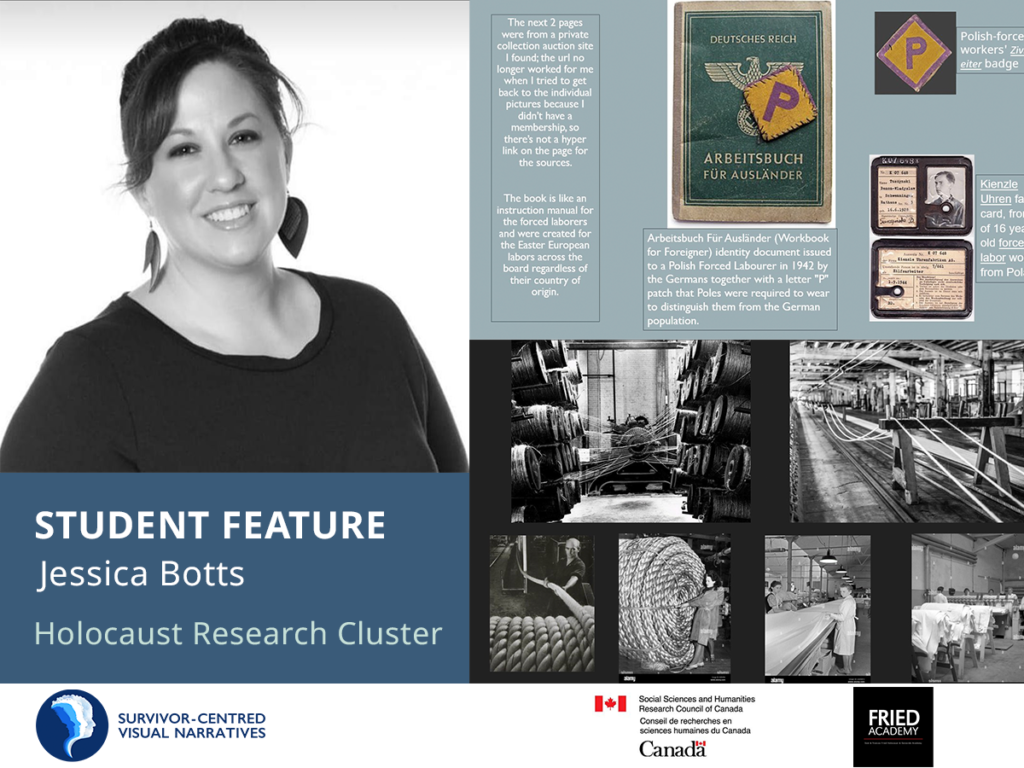
From transcribing interviews to navigating the archives, Research Assistant Jessica Botts had an instrumental role in the process of developing Two Roses, the graphic novel created by Miriam Libicki in collaboration with Holocaust survivor Rose Lipszyc. 

Jessica is a U.S. Navy Veteran who has lived in and been deployed to several countries. Currently, she is a graduate student pursuing a master’s degree in Environmental History at the University of Nebraska Omaha, with a minor focus in Native American Studies. She joined the SCVN project in September 2023, and worked closely with Holocaust Research Cluster Co-Lead and historian, Dr. Mark Celinscak, and graphic artist Miriam Libicki.

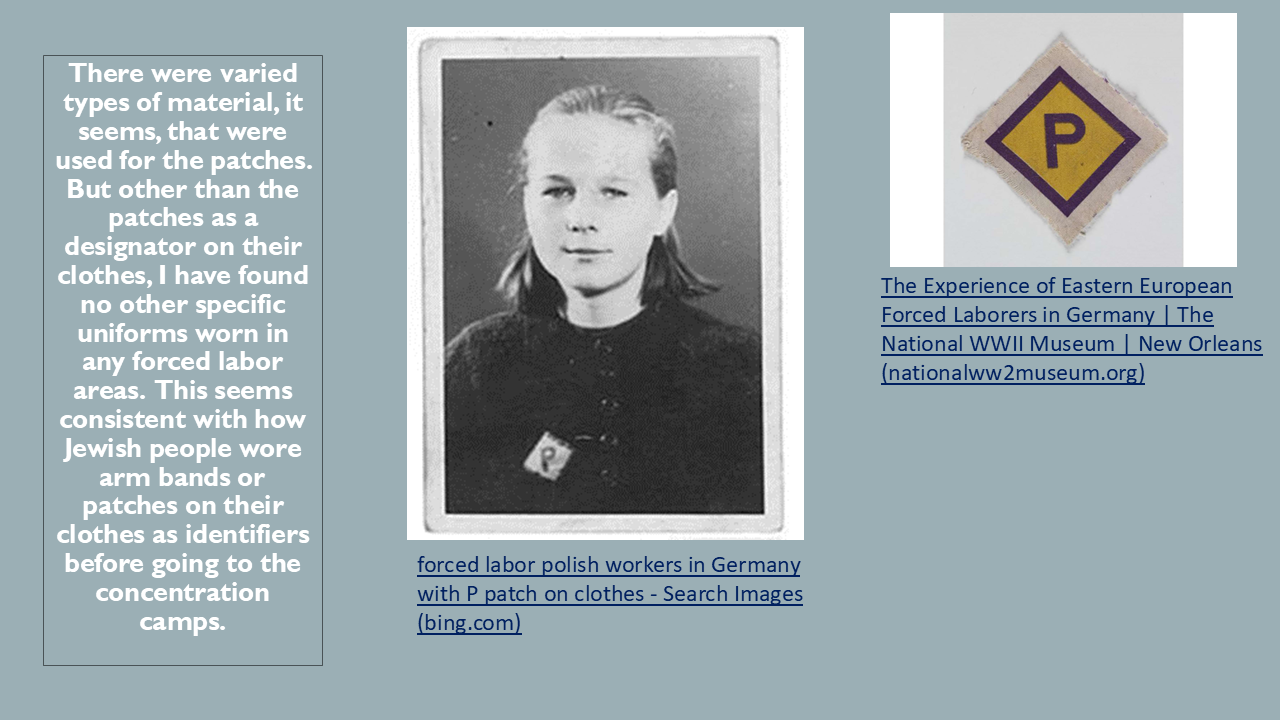
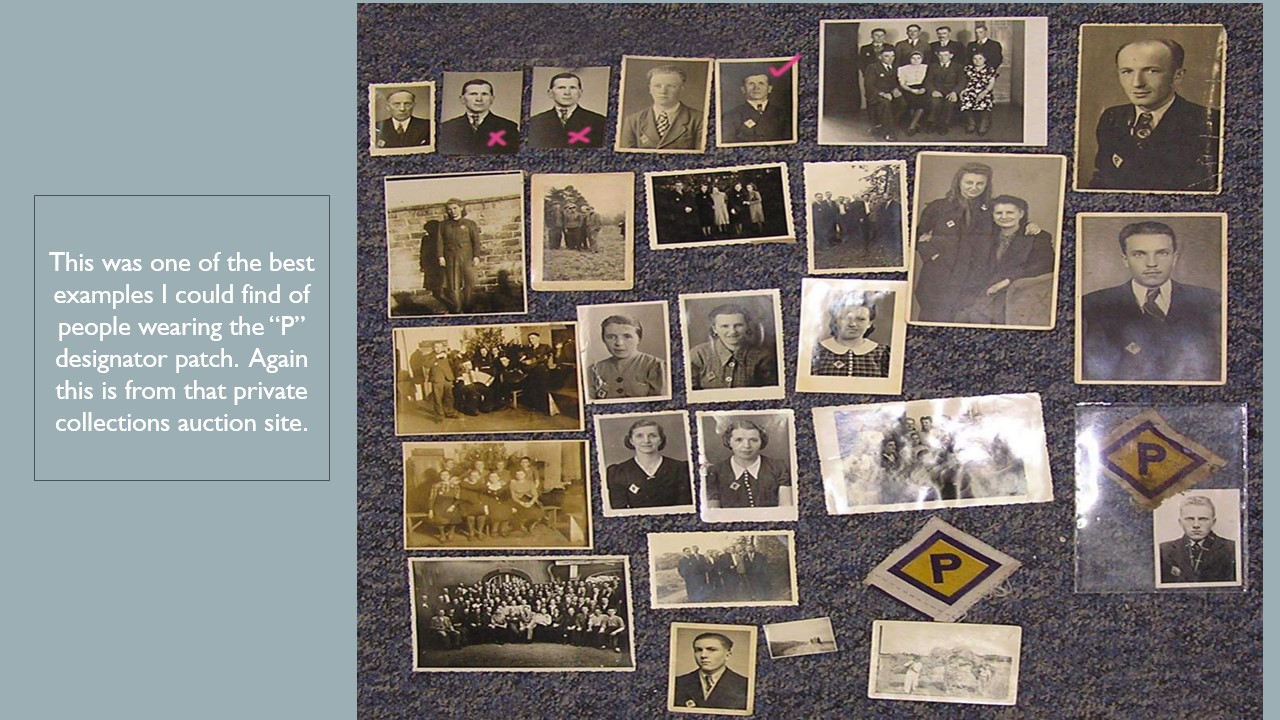
As a Research Assistant, Jessica transcribed interviews between Miriam and Rose and researched throughout historical archives for specific information and materials for Miriam to consult. To prepare her research findings for Miriam, she created PowerPoint presentations with a selection of historical images and notes describing historical sources and translations. The collection of images provided a visual reference for Miriam to develop her graphic narrative.

The following images are a selection of highlights from Jessica’s research:

We also followed up with Miriam, who shared her experience of collaborating with Jessica, and highlighted her detailed approach and diligence:

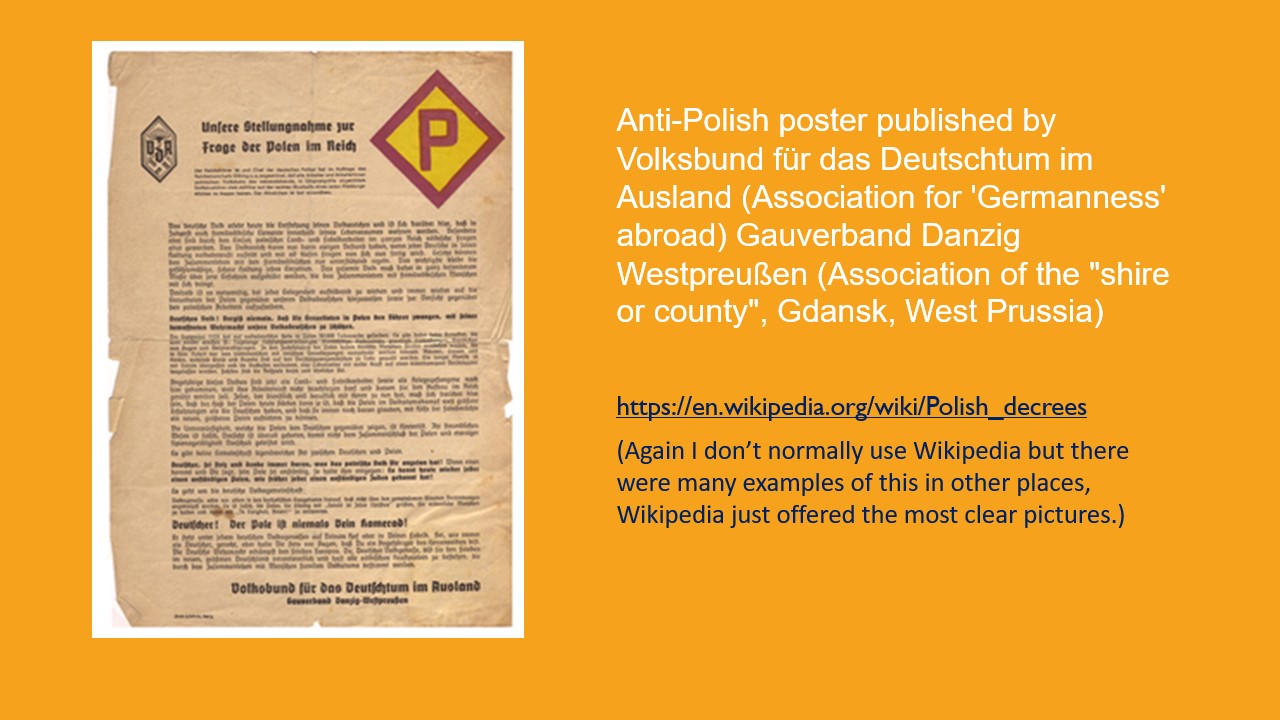
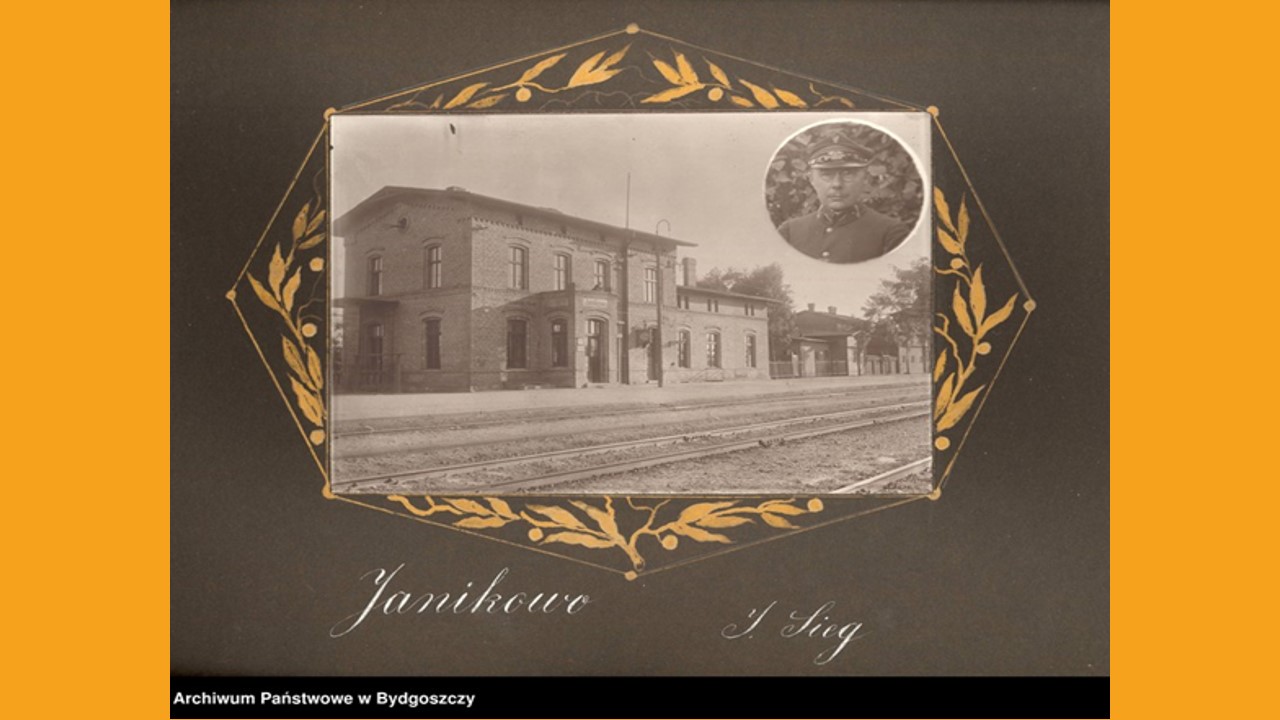
“Jessica had to transcribe, type and organize four days of conversations, with a quick turnaround so that I could start on my script. She also helped enormously when I was first establishing the look of the story’s settings. She found photos both recent and archival, of Rose’s birthplace neighbourhood in Lublin, as well as the clothes and patches Polish slave labourers were given to wear.

Without my asking, she found photos of the very specific stiff wooden shoes labourers all wore, and when I showed this photo to Rose, it brought back strong memories and great sensory descriptions of slipping on snow.

I really appreciated how organized Jessica was, and how she diligently kept me updated on her progress and her research plans.”

Jessica’s role as Research Assistant on SCVN was unique due to her close and direct support to one of the graphic artists. In January 2025, she shared the following reflections on this experience with us:

“It has been a privilege and honor to work as a Research Assistant with historian Dr. Mark Celinscak and graphic artist Miriam Libicki on the Survivor-Centered Visual Narratives project to create a graphic novel about Rose Lipszyc’s story of surviving the Holocaust with her aunt. I have learned a lot about the Second World War and the Holocaust that I never knew before. Though I never met Rose in person, I feel like I know her because of the friendship and openness that she shared with Miriam, Dr. Celinscak, and others in the recordings of their time together. As a Research Assistant on the team, it was my job to transcribe their many interviews together. In the interviews with Rose, I listened to her story and became quite familiar with it as she revealed the details from her memories of her time in hiding in plain sight, as they unfolded bit by bit. Rose told of how a Jewish girl from Poland escaped the rounding up of the Lublin Jewish population and went on to work in Germany at a factory under the noses of her oppressors. She and her aunt made every situation work out as best as possible for them, and with a bit of luck, quick-wittedness, and some unlikely friendships, they were able to make it through the war until Allied troops came and liberated the area.

Documenting Rose’s story into written transcriptions helped Miriam ensure she could capture each detail to be highlighted on the pages of the novel. 

In addition, I was often asked to find historical photographs of the places and clothing Rose encountered and wore on her journey. I then put them into power points for references for Miriam to create the visual depiction of Rose’s story for the novel. Sometimes, to give perspective, I would find modern pictures of specific locations to contrast with generalized pictures of a similar place when period photos were unable to be located. I used military archives, different types of maps, Polish national archives, photos from groups where people were sharing their family histories about how they lived and what they went through during WWII as Polish laborers, and sometimes just scouring pages on the internet to find images for Miriam to reference. The photographs shared by descendants from Polish families telling about their family’s stories were especially helpful because Rose and her aunt posed as Polish girls from the countryside, working in German factories to send money home to their families.  

Rose is astounding in terms of the number of languages that she speaks. To pull off posing as Polish laborers, Rose had to speak “a perfect Polish,” as she would say, though that was not what was spoken at home growing up but was learned at school; she also learned German while in Germany, and spoke Yiddish, Hebrew, and later learned English as well when she immigrated to Canada.

Because Rose speaks so many languages, she would sometimes recall songs, sayings, and conversations she had had in another language, and I would have to figure out the translation for it.

I am very fortunate to have lived in Europe for several years and have friends who speak German fluently and have a grasp of other neighboring countries’ languages, so they were able to help me with translations at times when trying to search the internet for them was unfruitful. Dr. Celinscak also had academic colleagues overseas who assisted me by looking through some local archives to help find photographs and information I could not access.  

I have found it fascinating and encouraging to see how different relationships and friendships helped bring Rose’s story to life in the graphic novel Miriam authored and illustrated. Through researching, writing the transcriptions, finding proper translations, and historical images, I became engrossed in the stories, videos, and images of Holocaust survivors.

It truly is heart-wrenching to know the atrocities that people had to endure and inspiring to see how they have overcome that trauma to move on with their lives afterward.

Rose would tell how her mom would say that she did not think the whole world had gone crazy and that someone would help her. Hearing her tell about some of the small acts of kindness she and her aunt were given demonstrated the hope in the human spirit her mother held during such a terrible time lived out in the day-to-day exchanges in people’s lives. It could become frustrating when pictures, documentation, or paperwork seemingly disappeared from the historical record when I could not find what I was looking for to help Miriam. It was like somehow the evil of that time had won that battle of the documentation that was such a big part of people’s lives from that time period, but then seeing how people around the world worked together to help put all the pieces together to complete bringing Rose’s story to the graphic novel page, it felt like a victory again too. I genuinely appreciate the opportunity to be a part of this project and to have had the privilege to get to know Rose and her story, as well as Miriam and many other people who are a part of the Survivor-Centered Visual Narratives project.”

On behalf of the SCVN team, we sincerely thank Jessica for her hard work and dedication. Her contribution was essential to supporting Miriam’s work and telling Rose Lipszyc’s story as closely as possible to her testimonial. 

First-year Practicum Experience with SCVN – Fall 2024

In the fall 2024, we had the pleasure of inviting three first-year students from the University of Victoria’s HUMA 180 class to participate in a practicum with the project. The class is a Dean’s Seminar course that introduces Humanities students to current research and researchers through three-week long practicums experience.

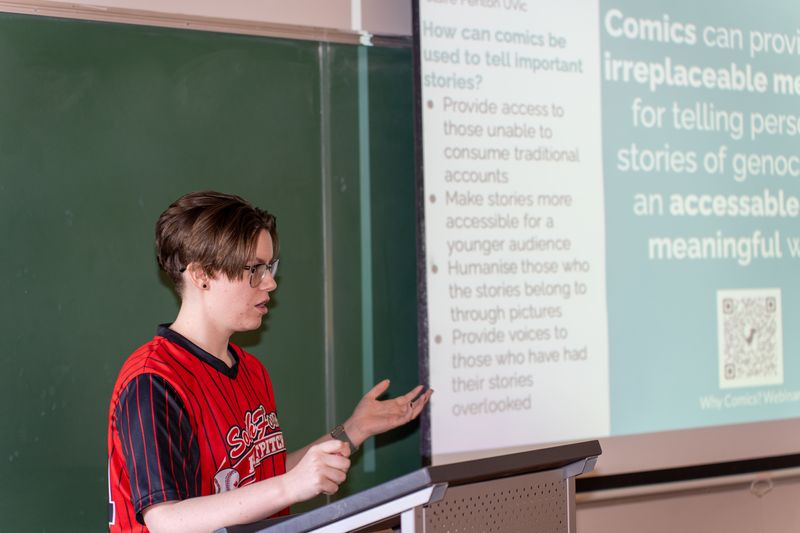
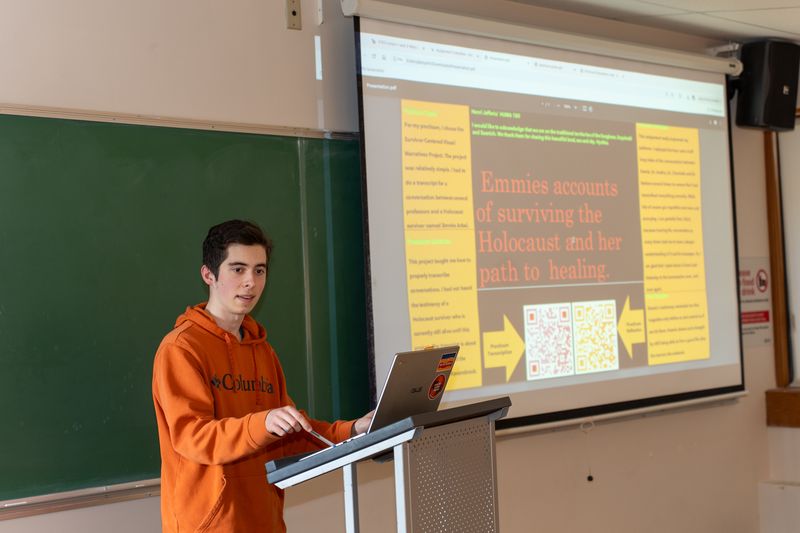
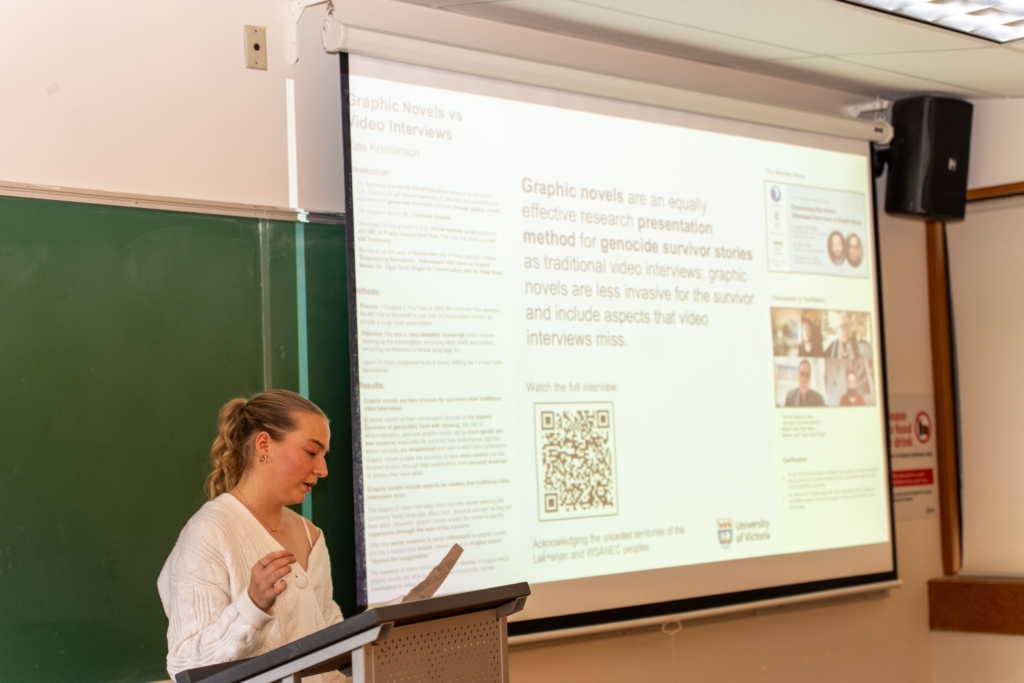
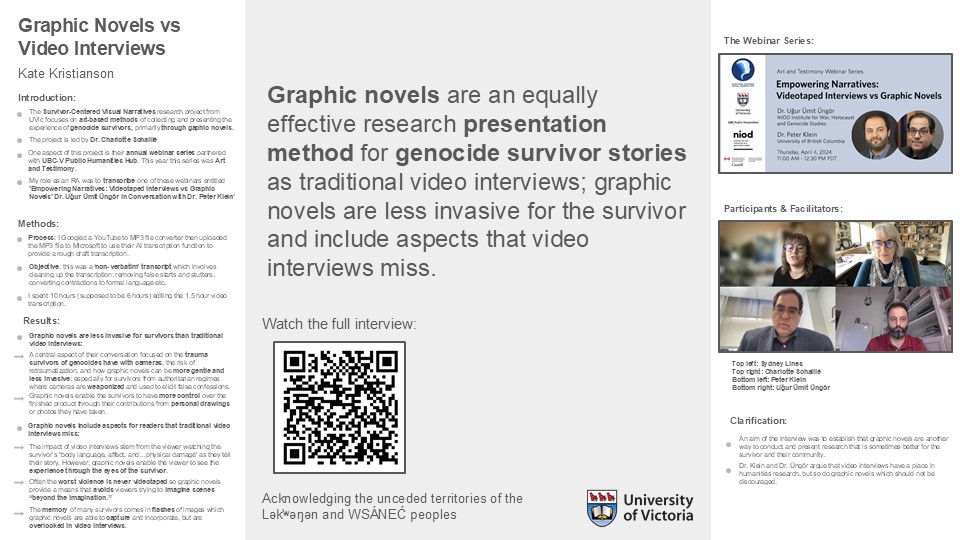
Our practicum students were Claire Fenton, Henri Jefferis, and Kate Kristianson, and from October 23 to November 6 they each completed twelve hours of training and research practice with SCVN. During their initial meeting with Project Director Dr. Charlotte Schallié, Project Manager Jennifer Sauter, and Research Assistant Lucie Kotesovska they were introduced to the context and protocol of webinar transcription. As the main task of their practicum, Claire, Henri, and Kate selected a webinar from the SCVN’s ‘Art and Testimony Webinar Series’ and provided a transcription of the session under the joint supervision of Jennifer and Lucie. In the second week of the practicum, the students had a chance to discuss their experience and any potential challenges at a check-in meeting. It turned out to be a welcome opportunity to connect during the emotionally challenging task, share tips on the technological aspects of their work, and even to engage in research together when dealing with less clear points in their respective webinars. The final meeting provided space for the students to reflect upon their research experience and share their main takeaways with other team members. Along with their finished transcripts, the students were asked to submit a one-page reflection piece inspired by the webinar they watched and transcribed. Here, they had the opportunity to focus on something they learned, were inspired by, or even disagreed with during that process.

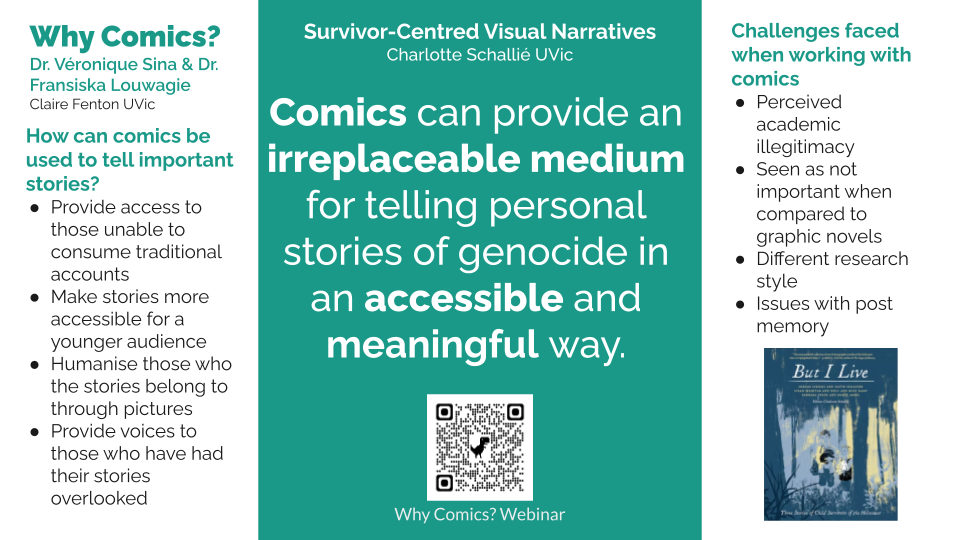
Claire, Henri and Kate presenting their HUMA 180 practicum experience with SCVN to their class. Image credit: Ziming Dong.

Claire shared her new-found appreciation for the comic, stating, “I have learned more than I ever thought I would about how comics can be used to tell the stories of people who have been through devastating things.” She also commented on the unique accessibility of the medium:

“Everyone can learn something from comics, a book being based in images does not make it lose its academic value to society. In some cases, it can even increase its value because it opens up its knowledge for a wider audience.”

Kate also reflected on her re-evaluation of the graphic narrative, saying that before her participation in the project, she thought that “traditional presentation methods should exclusively be used for heavy, serious subjects such as genocide because any other, more creative method could not be serious enough or do justice for the survivors’ experiences.” Having engaged with one the webinar, she is now convinced that “graphic novels are as, if not more, effective demonstration of survivor stories than [for instance] traditional video interviews.” Explaining her updated stance, she said:

“Unlike a traditional video interview where the main benefit is to see the survivor react to telling their story, in a graphic novel, the reader can see what the survivor experienced through their eyes, how the survivor perceived what happened, the survivor’s flashes of memory, and how that has affected their later life.”

Reflecting on the story of the Holocaust child survivor from the webinar he transcribed, Henri commented that even though “it tells a very sad and dark story,” it is still a story that “must be told”. He added that he felt “mortified by the fact that atrocities such as this actually happened.” He realized that it was impossible for him “to go back and prevent these horrific acts from transpiring” but that he “can do work to ensure that such acts are never forgotten.” About his personal contribution to the act of collective remembering, he wrote:

“I have always admired those who do work to preserve and share the memories and testimonies of those who had to live through such dark times. I felt so proud and honored to be a part of it for once, knowing that I am contributing to this process.”

After the practicum, Claire, Henri, and Kate, had a chance to share what they learned with wider community. On November 26, they each gave a poster presentation in class during which they explained their research task and reflected upon its humanistic context and value.

The students’ participation in the ‘Art and Testimony Webinar Series’ transcription project was a valuable and enriching experience for all involved. Their contributions provided essential support to the project while also helping them develop critical research and transcription skills.

Thank you very much for your effort and enthusiasm Claire, Henri, and Kate! It has been an honour to have you as our HUMA 180 practicum student research assistants on the project this term and we wish you all best as you embark on your future academic projects.