Survivor-Centred Visual Narratives

Category: films

Filming Indigenous Narratives: Interview with Andy Rutter

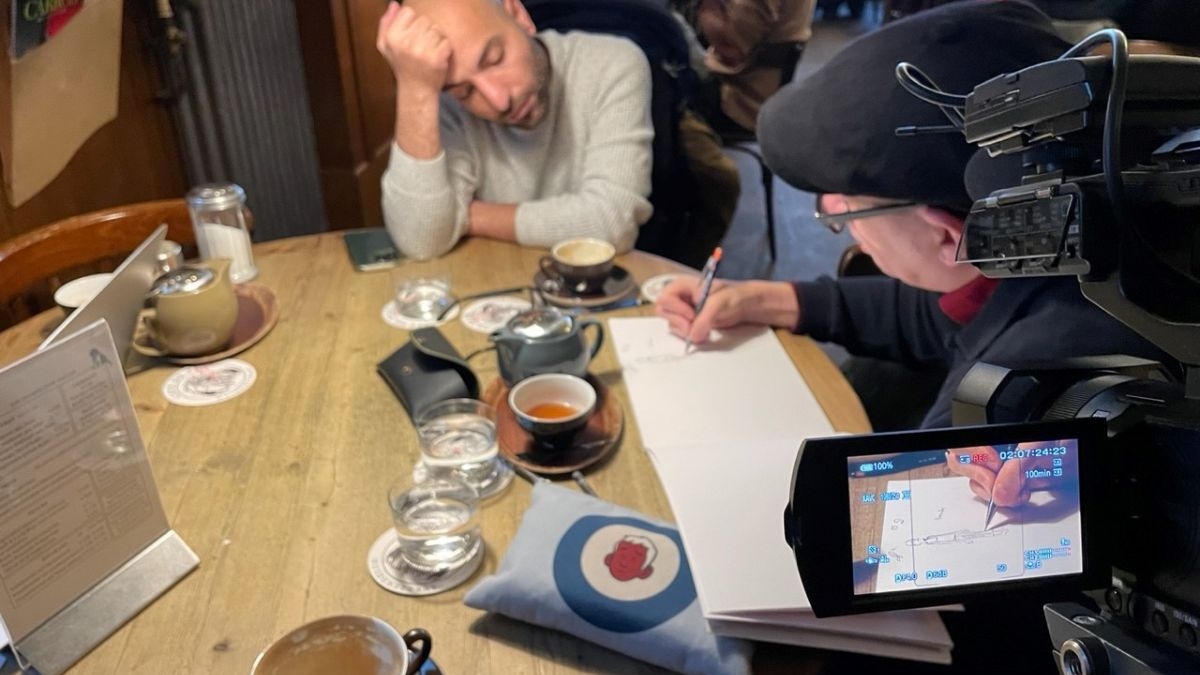
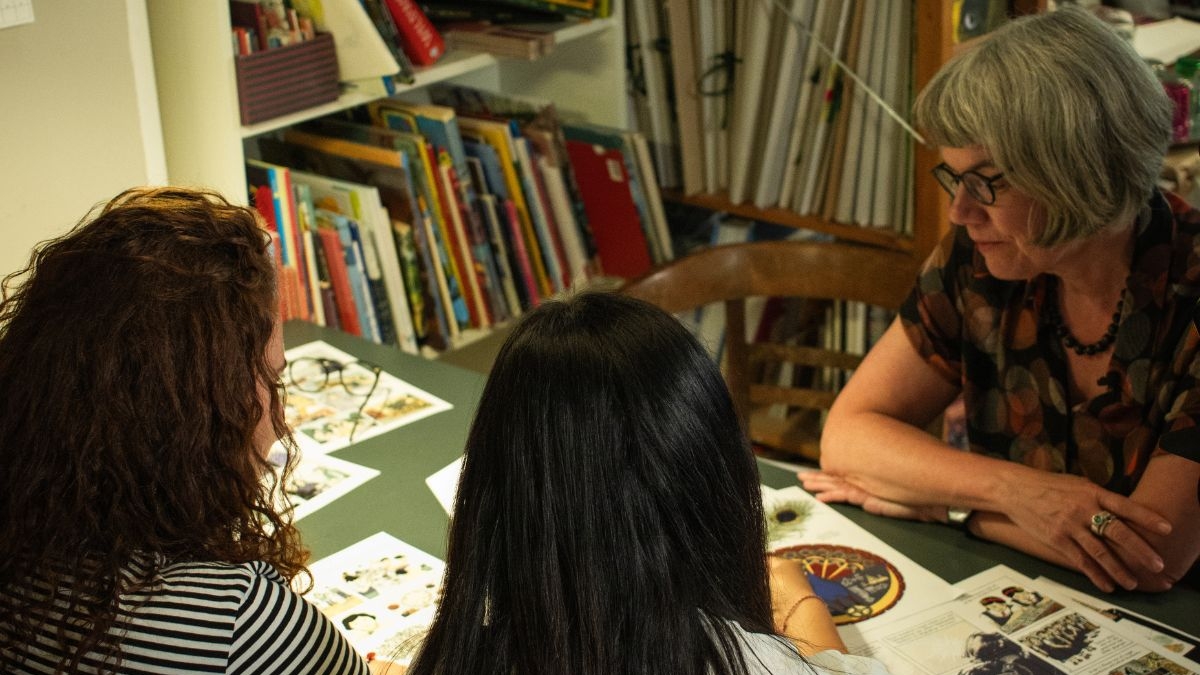
Filmmaker Andy Rutter recently discussed making his documentary Kokum Dorothy’s Story: We Can Still Sing and Dance with Ghada Youssef, UVic PhD student and fellow documentary filmmaker. This film is part of SCVN’s Turtle Island Research Cluster and features conversations between residential school survivor Dorothy Visser and Métis illustrator Natasha Donovan as they discuss their upcoming graphic novel, We Can Still Sing and Dance: Kokum Dorothy’s Story. Below is the interview between Andy and Ghada, adapted by Laura Oakley. The trailer is available to view here, and the film will be released in early 2027.

Ghada: Maybe I can start with getting to know a little bit more about you. How did you end up on the SCVN project?

Andy: My partner Shannon Leddy brought me onto the project right from the very start of 2024. We did five interviews with Dorothy Visser and I turned them into a short documentary film.

Ghada: Yes, to put things in context, the SCVN project commemorates stories of survival, working with genocide and mass atrocity survivors and turning their testimonies into graphic novels and short documentary films. And your film, as you mentioned, revolves around the story of Dorothy, who is a survivor of the residential schools in Turtle Island. Working with personal experiences, and especially where trauma and memory and personal experiences are involved, requires careful navigation, at the very least, in how these stories are handled, represented, and shared. My question to you: Can we start with your relationship to Dorothy? How did you create a space that was emotionally safe for Dorothy to share her experiences, from trust to privacy to boundaries? I’m curious about your relationship to Dorothy.

Andy: Luckily for us, Shannon already had a relationship with Dorothy. Shannon had been going to Dorothy’s Cree language lessons. So, they did have a relationship or a bond already through the Cree lessons. But it was quite easy actually to create that space. In the beginning, of course, it was a trauma-informed environment. And so, we took it very slowly. But then we started to find that Dorothy was actually very funny and told a lot of really, really funny jokes. There was a good balance between some of the traumatic events that she’d experienced as well as some of the funny ones that she had as well. So that really helped us move on.

Dorothy, because she’s almost 90 years old, she couldn’t do long interviews. So, whatever we captured at the time was in one take. There was no, “Please stop. Can you go back and say that again?”

Ghada: Focusing on you as a filmmaker in this experience, I’m wondering if you felt a bigger responsibility as a filmmaker in comparison to making other films that are about a lighter topic. Did you feel that you have some ethical considerations that you needed to put front and centre, when you don’t usually need to do that? 

Andy: I would argue that you need to do that all the time with every project that you work on. Every day was emergent. Every interview that we did, it started off with a few essential questions, but then it took on a life of its own. My job as the storyteller was to find the cohesion between the stories that were being told and the way we were trying to tell it. I focused less on the atrocities of residential school survivors had experienced and more on the resilience of Dorothy.

Every day was emergent. Every interview that we did, it started off with a few essential questions, but then it took on a life of its own.

The idea that we can say that we can work together, that there is two-eyed seeing, as a residential school survivor Dorothy would like to tell us about her resilience: bring it on. How do we fit into this? Because we as social beings, we all work together, so, the survivor side of it was the catalyst. The real story that I tried to tell was how we can work together. 

And, so, the big part is with these kinds of videos is talking about why is it important to understand that there are three sides to every story and there isn’t just good and bad: there’s lots of grey area. 

…it important for people to understand that there are three sides to every story and there isn’t just good and bad: there’s lots of gray area. 

Knowing about some of these stories is a good way of beginning the reconciliation process. It’s a good way to try and get those who aren’t in communication with Indigenous communities and who don’t know the stories of residential schools, who only hear what their echo chambers give them, to let them hear another side of the story. Even if we only change that one mind, just ten percent, we’ve still done something. It is an educational process. You have to want to learn.

Ghada: That’s beautiful. Thank you for sharing that. Yes, the film centres around the collaboration between the survivor and the artist in the process of developing the graphic novel. I like to think of this as already having one layer of visualization done by the artist and then you contribute with yet another layer of visualization. Did the visuals or the content of the graphic novels influence the development of the film for you? Did they make your visualization easier, or it did not have that big an influence?

Andy: Well, at the time that I was making the actual short documentary film there were only around four or five coloured images, and they were still in the rough versions. Natasha Donovan was working as diligently as she possibly could, but I was moving faster. The whole project was moving faster than Natasha’s working on the actual illustrations. By the time we got to the end, she had around 50 frames, but I hadn’t seen them. All I had seen was the rough copies, which I incorporated into the video. And it’s also because the actual developing of the animations or the illustrations gave Natasha her energy to go on and do more. 

I focused on collaboration instead of focusing on the actual product. We talk about the product as the overarching reason why we’re doing this together. It is the story. It is a story about people who are telling stories so they can turn those stories into illustrations. 

Ghada: How did you approach the story building process through editing? Were there any moments that you had to give up? Or moments that you wished you had but did not. What did you do? Can you walk me through your editing process?

Andy:  After doing five different interviews with Dorothy, each interview being approximately an hour and a half each, the parts that I tended to focus the most on were where there was a positive aspect to it or there was a talking about progress. There was a talk about something that had happened which has brought Dorothy to this thinking or that Natasha heard and brought into her illustration.

Working with somebody who just has a vast treasure trove of good stories that they can tell, like Dorothy, means she wants to tell the story, but then she’s reminded of another story that gives her joy. So, then she’ll start talking about that story that gives her joy, and then that will segue onto another story that brings her joy, and in the end, all we can do as audience is smile with her, is listen, is to understand. As the editor, I have to come back into the editing studio and go, okay, where did that story begin? Where did it end? It didn’t. 
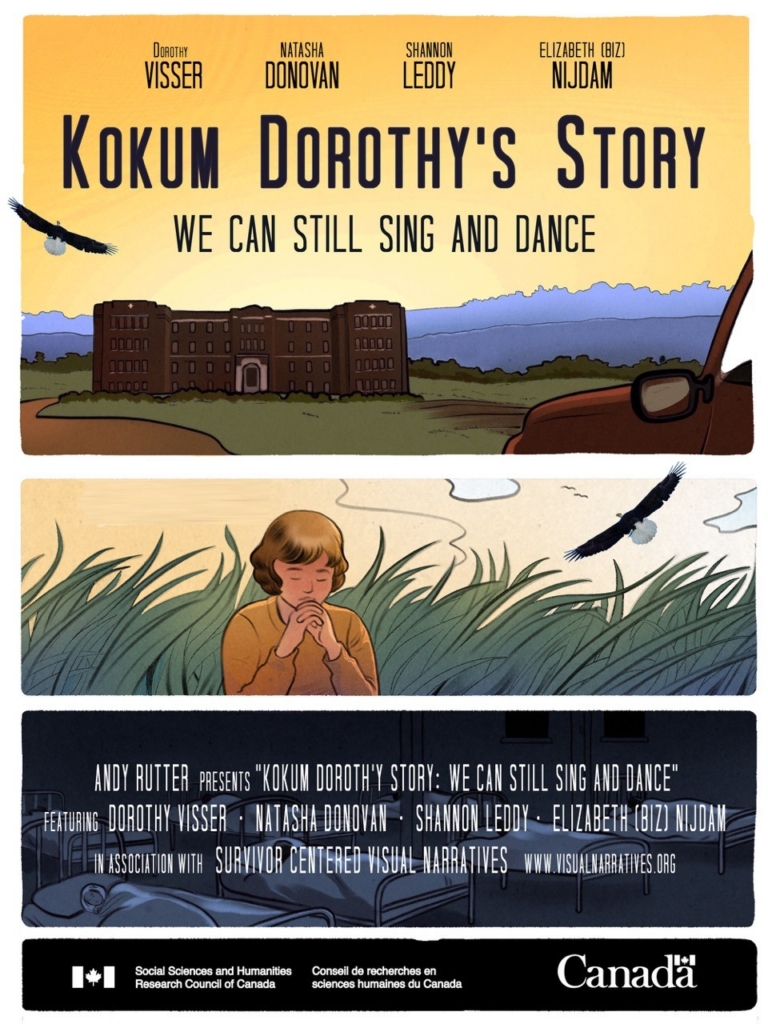
The story of We Can Still Sing and Dance, that was a story that Dorothy was telling about some injured eagles that she once used to look at the Langley Zoo. One flew down from the north, one flew from the south, and then one from the east and the west, and they stood in a circle singing and dancing to each other. Injured eagles. And she watched this and she said, that is like my people. That is like what’s happened with the Indigenous of Canadian residential school survivors. But I couldn’t get that whole story in one seating. Maybe one day we will sit down with Dorothy in another time, in another place.

Dorothy was not a seasoned celebrity, so every time the camera was turned on and the microphone was going, then she felt that this was a production, and now she should perform as if this were a production. We’d say, no, you don’t need to perform like it’s a production. Just tell us a story as you normally would if we were just sitting having a cup of coffee.

Ghada: Thank you for sharing this. This is very grounding. And it’s really what to expect in those situations where the essence is someone sharing stories, but in a very organic way. What is some advice you can give to filmmakers who want to do films like this, with this approach?

Andy: My advice to filmmakers that would like to take on these kind of trauma-informed stories or these survivor stories is to be patient with your subjects because if you tell them that you’re doing a survivor story or a survivor narrative, they automatically go to what do people want to hear about the struggles. Be patient with your subjects because chances are their survival techniques or the survival that they learned is actually what’s kept them resilient and has helped them live to where they are today with their positive attitude. 

…be patient with your subjects because if you tell them that you’re doing a survivor story or a survivor narrative, they automatically go to ‘what do people want to hear about the struggles’.

So, it’s less about the trauma and more about what happened afterwards or how the living continued. There’s not going to be any straight line unless of course your subject is somebody who has worked in media or, for example, has done multiple lectures or TED talks about the topic. And this is where you’ll have to just listen, because that story will change. At least, we hope it will change. A good piece of advice: it takes a lot of listening, it takes a lot of patience, and it takes a lot of understanding of what it means to have two ears and one mouth.

Ghada: The idea of expectations—not that you’ll receive a particular story in a specific format, but that you’ll be open to the many different ways stories can take shape. Do I read you correctly?

Andy: Allow for the story to be emergent. And if you don’t have all the equipment on the first day, look at your footage afterwards, look at your dailies and say, what could be better for the next interview? You might not always get the location that you want, but you deal with what you have. You deal with the situation that you’re in. And that’s everything. That is having your subject, for example, show up 45 minutes late, for example, and knowing that you have a deadline, you’ve only got the room for two hours. You have to take things like that into consideration that your subject might not always be at their best on the day of the shoot.

Get what you can with your patience and quiet and calm. And of course, from the director’s side, you have to be able to be patient yourself with the other people in the room. The ones who might be nattering in the back while you’re trying to listen to an interview. Leave it there.

Ghada: Thank you so much, Andy. I think it’s very inspirational, realistic, and very, very useful to any filmmaker. I usually ask the filmmakers about how they themselves handle the emotional weight when dealing with stories that are emotionally heavy. What can you share with me about this? Now, I do get the sense that Dorothy had this humorous side, and so maybe that kind of released this emotional pressure. But in the big picture, when you are reflecting on yourself that you are a filmmaker doing a story of this kind, how did you deal with this?

Andy: In Dorothy’s family, there would be times something happened, or she didn’t get enough sleep because there was a trauma. We would do a smudge. And then we’d clear out our minds ready for the shoot. We would have the lead up which was just a quick normal chit chat about life, about everything. And while we’re doing that chit chat, that’s when I turn the cameras on. As a filmmaker who’s done lots of interviews with people who aren’t used to being on camera, who are shy on camera, who don’t have that interviewing gene, what I’ve learned to do is don’t bring any attention to the equipment. Obviously, you have to set up your lights and your cameras and your microphones, but don’t draw attention to them. Don’t tell your subject, I am now going to turn the camera on, because then they say, I’m not prepared for that. If you never have to tell them that you’re turning the camera on, then the camera is always on.

And feel the room. I can’t push my subject to be bubbly and bright if I inside myself feel that they didn’t get enough sleep last night or if they have something emotional going on in their head. Or they’re dealing with something. I can’t try and pull that character out as if this were a Hollywood actor who can switch on a dime. This is a human being.

Ghada: Beautiful. SCVN films will be used in genocide and human rights education, so they will be shown at exhibits, in the classroom, online for a general public, so in very different ways and formats. What kind of response do you hope to receive from the diversity of audiences?

Andy: I hope that the response that I get from my short documentary encourages people to learn more. Those who have not yet experienced or don’t have knowledge of what happened in residential schools may have heard, at some point in time, was that residential schools weren’t so bad. What I would like to say to them is you only know a portion of the story. They’re sure the residential schools did have some good things and Dorothy talks about those. But for the most part, they were traumatic, traumatic, for many generations. And that is the story that I would like for people to look deeper into. And I hope that my documentary film allows people to say, oh, I didn’t know that. I need to know more.

Ghada: Is there anything in particular that you wanted to share with us? Any experience that I may have not asked you about?

Andy: Since working on Dorothy’s story and listening to the narratives, it has, in my own learning, taken me to UBC Indigenous Gardens, where now I am doing documentaries for the people who run the gardens. And I’m hearing about Indigenous medicines and about Indigenous storytelling. I’m learning about bees, which I never thought that I’d learn about before, about how to turn nettles into fishing nets, and about pickling. Once you start learning about Indigenous knowledge or incorporate this into your understanding, your worldview, it opens up so many more doors to more learning.

Once you start learning about Indigenous knowledge or incorporate this into your understanding, your worldview, it opens up so many more doors to more learning.

And, as a video editor, I’ve listened to stories 1,000 times, as a video editor does. When a video editor is editing a piece of work, he might listen to one person speak 100 times about the same thing. It is a whole different learning curve when you edit videos. And you start to learn about things that you never thought you’d ever be interested in, but then you hold on to that knowledge and you take it into your next project and say, I’m so happy that I learned that because now it makes this more understandable. So, my advice is, as a lifelong learner, never stop being interested in the topics because they always lead you to the next topic.

Ghada: There is never one thread that is in isolation to any other thread. It’s always all interconnected. It’s always going to lead you to other threads. It always has more than one outcome. As a student in philosophy, I think one of my biggest lessons is accepting that most of the times phenomena and experiences are so multifaceted, much more than we think. And it’s so nice to cultivate the sense of curiosity: to want to learn more and as much as we can.

Andy: That is right, and in stoic understanding, there are things that you have control over and there’s some things you don’t have control over. How do you identify these and which hill do you die on? When it comes to working towards the wrong and rights, is there anything called wrong and right? I don’t know: philosophy.

Ghada: Well, thank you so much for these very valuable insights. I really enjoyed this conversation.

Andy: It was a pleasure discussing them with you.
SCVN’s Ghada Youssef Wins SSHRC’s Storytellers Challenge

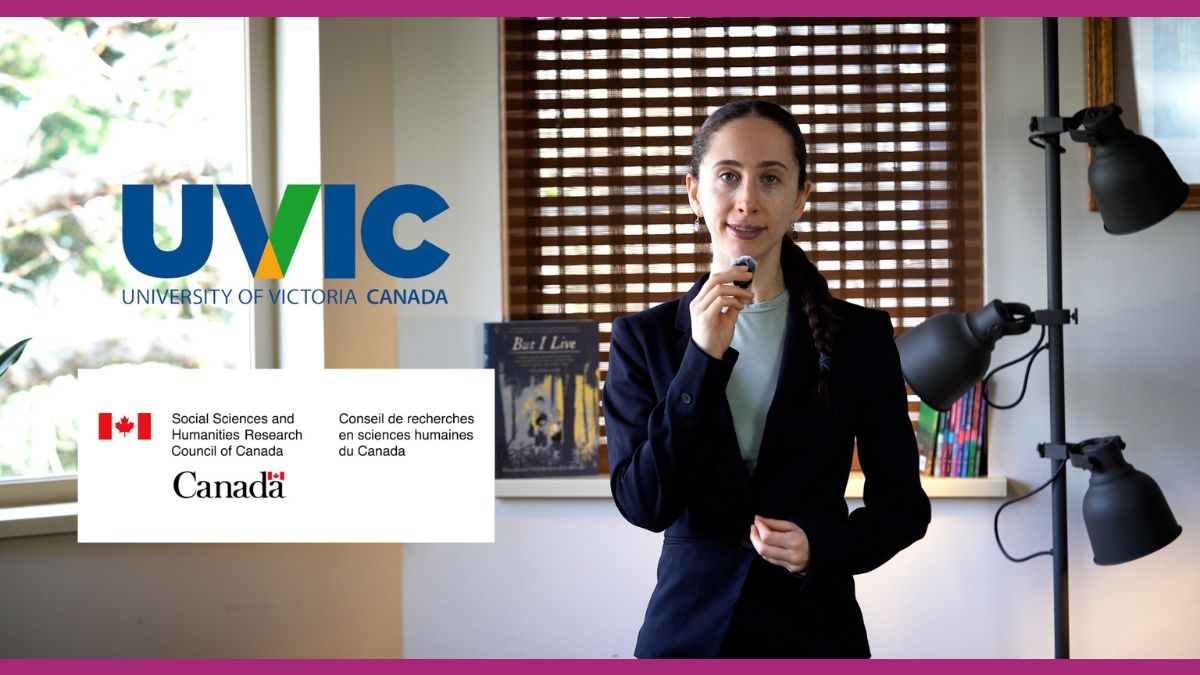
We are delighted to announce that SCVN research assistant Ghada Youssef has been selected as one of the five winners of the 2026 Storytellers Challenge, presented by the Social Sciences and Humanities Research Council (SSHRC) of Canada!

This challenge was open to postsecondary students, inviting them to show Canadians, in up to three minutes or 300 words, how social sciences and humanities research is impacting our lives, our world and our future for the better. For SCVN’s entry, research assistant Ghada Youssef produced a 3-minute video summarizing the project’s goals and outputs. She was selected to join the top twenty finalists in Montreal, Quebec this June to present the SCVN project to a live audience and jury at the Storytellers Showcase and conference. 

Ghada’s selection has since been featured in the UVic News and the VPRI Bulletin article ‘Storytellers on screen’ where she shared that SCVN was among her motivations to pursue her doctoral studies: “I was very excited that the project uses visual mediums to approach social justice topics—it felt like it sat squarely within what I’m already passionate about.” 

Congratulations to Ghada and the media and communications team on this achievement! You can watch the winning entry on the SSHRC YouTube Channel below:

Survivor-Centred Co-Direction: Interview with Filmmaker Marc Ellison

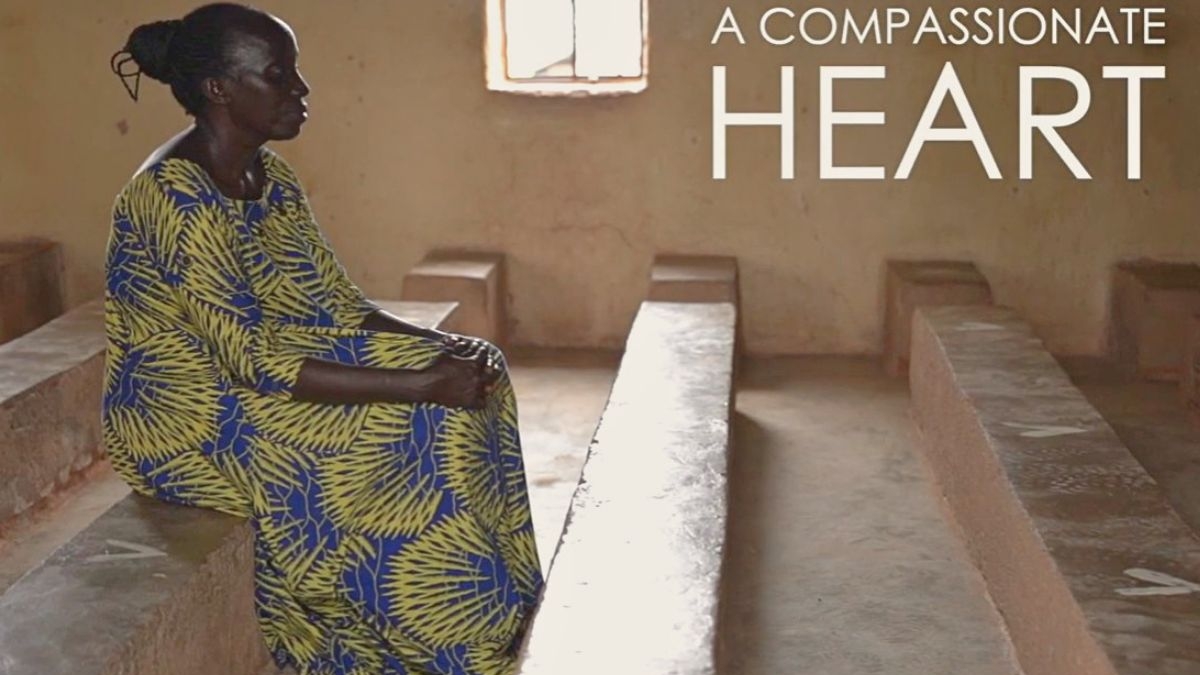
This transcript was adapted from an interview between SCVN researcher Ghada and filmmaker Marc Ellison, on November 20, 2025. Marc has directed two documentary short films for the Rwanda Research Cluster titled “Why We Dance” (trailer) and a “A Compassionate Heart” (trailer). In the interview, Ghada and Marc discuss the collaborative filming techniques that went into each production as Marc worked with Rwandan genocide survivors Jerome Irankunda (“Why We Dance”) and Madeleine Mukarwego (“A Compassionate Heart”). Marc and Ghada discuss his focus on co-direction with the survivors, the ethical considerations of filming recounting of traumatic experiences, and the role of film in preserving collective memory.

The photography throughout this interview have been generously provided by Marc and Erin Jessee.

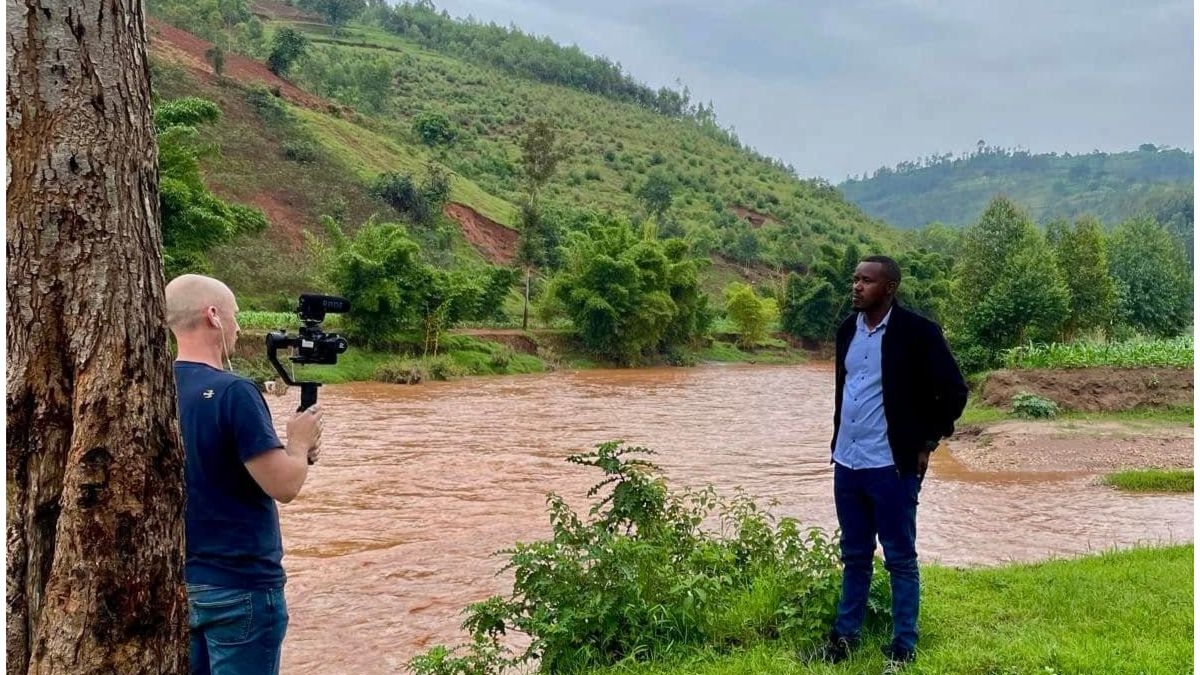
Marc and Jerome filming part of “Why We Dance” in a field with cows.

Ghada: Thank you so much for being with us today, Marc. To get us going, can you tell us a little bit about yourself, your professional background? I’m curious how you became a filmmaker and how you connected with the SCVN project?

Marc: It’s a very roundabout path coming to produce these documentaries. Before I suffered what I called my pre-midlife crisis, I was a computer programmer for the better part of a decade. It’s an inauspicious sort of beginnings. My partner at the time – she’s part of the project, Dr. Erin Jessee – she was doing her field research out in Rwanda. And she basically said, “do you want to quit your job and come to Rwanda with me?”

That was really the beginning of it. While Erin was doing her field work, I was volunteering at a local NGO, working with survivors of the genocide. The NGO was aimed at putting orphans of the genocide through university. We lived in the country for about a year and came to love the country and the people, and we were fortunate enough to hear some stories of what some of these – I call them kids, I guess, because I’m old – some of these awful things that these kids have gone through.

And I’d been doing some writing at the time; I’d always been a keen creative writer and keen photographer. And I thought, “I don’t want to be stuck in a cubicle for the rest of my life.”

I thought, “you know what, given the photography and the love of writing, let’s try my hand at journalism.” I was fortunate enough to get into the journalism program at Carleton University in Ottawa. And then, I was basically a freelance photojournalist for a number of years, primarily working across Africa.

And not just video. I can’t draw, but I’ve produced a number of graphic novels. I did one quite recently called House Without Windows, [2021, coauthored with Didier Kassaï] where I collaborated with local artists. We travelled around the country, looking at how the conflict there was impacting children. And we had this great marriage of Kassaï’s artwork and my photography.

But then I’ve always come full circle. My current job right now is basically a data analyst with BBC Monitoring. It’s a bit more sedentary but still looking at quite depressing things like jihadist activity in Mali or what have you.

I still do the photography and the filmmaking whenever I can. And then, as you say, I was fortunate enough to get involved with this project.

Left: Jerome sitting in front of church. Middle: Madeleine on peer. Right: Marc filming church.

Ghada: Thank you for sharing. It’s always inspiring to see how people end up in different places in different ways. I’m curious to know how did you navigate the balance between documenting the survivors’ experiences and protecting their dignity and their privacy? And along those lines, how did you create a space that was both respectful and emotionally safe for the survivors to share their stories while there is a camera recording?

Marc: It’s tricky. I’ve dealt with many video projects in the past, even dealing with female former child soldiers in Uganda or victims of FGM [female genital mutilation] in Tanzania.

It’s tricky to get a balance of getting the person’s trust, not sensationalizing the story, and respecting their rights to anonymity, if that’s what they want.

I’ve been fortunate enough to know both Jerome and Madeleine, the focus of both stories. I’ve known them for several years. As in the case of Jerome, a colleague, I’ve worked with him for a number of years. And Madeleine, she’s almost a mother figure for me in many ways. And whenever we’re out there, she makes sure that she gives me lots of food. She’s a lovely lady. And I think that comes through in the documentary.

Arguably, it was maybe a disadvantage having known them for a few years. I had to take a step back and be a bit more objective and remove myself a little bit from the fact that I do know these people. On the flip side, there was an advantage because obviously I did know them. They, I think, trusted me. I’ve worked with them on and off over the years, and they’ve seen the work that I’ve done with Erin Jessee as well. I think there was a certain amount of trust there. I think a lot of the groundwork had already been laid.

But, I made it clear from the start that obviously we wanted to empower them in the storytelling, and both Jerome and Madeleine were really involved. When we talk about myself directing them, the film or both films, I would argue that in many ways, it was a co-direction. They were very clear that they wanted to be included in the story.

I think there was a mutual trust and mutual respect there in telling their story. And I think they know that I would never try and make them uncomfortable. I’d always try and put them at ease. Not just for these projects, but if there’s nothing that they want to do again, or if they do get a bit sort of upset or a bit emotional, we always make it clear from the start that we can stop. 

They don’t have to answer that question at all, or we can come back to it later. It’s just about having a certain degree of empathy. Having had that experience over the last 10 or 15 years of dealing with people who have been traumatized by different conflicts or events that, you do learn. It becomes a gut instinct how to navigate these things.

Ghada: I feel sometimes it’s a skill to be nurtured. And then with the right mentality and enough experiences, we can nurture that skill of empathy, which is such a crucial skill to have in life.

Marc: Yeah, absolutely. And I should say it was an eye opener for myself as well. Both with Jerome and Madeleine, despite having known them for many years, there were elements of their story that they shared with me for the first time on camera.

For example, there’s a bit of Madeleine’s story where we’re interviewing in the church. You see that at the beginning of her documentary, and she describes hiding underneath the bodies for a couple of hours. She’d never shared that with me before. I think that came out partly because she felt empowered; she wants people to know the horrible things that happened to her. But also, I think she felt she was in a safe environment.

I think often the fact that we’re doing it in a sort of guerrilla style, quite low key, I think that sort of makes them feel less nervous as well.

Ground level shot of Madeleine

Ghada: Related to that, I’m curious about some ethical considerations that maybe guided your choices in visualizing and creating two documentaries about trauma and memory. Did you feel that you have a bigger responsibility as a filmmaker in comparison to other films that we might arguably say are fiction?

Marc: Because I know Jerome and Madeleine, I wanted to respect their rights and anonymity if that’s what they decided to do. I didn’t want to force them to go into great detail about what they went through.

It’s funny, actually. Jerome’s documentary was shown for the first time – was it in the Netherlands? Literally just a month or so ago, and the audience members were saying to the members of the team that were there, “Oh, where’s the conflict?”. [It was first shown at the Wiener Library on October 23, 2025].

You’re expecting like an acted reenactment of what Jerome or Madeleine went through. And it was very much Jerome and Madeleine’s decision to take us to the places where some of these terrible things happened.

I mentioned Madeleine’s church and Madeleine’s story too, where there’s one moment where she’s thrown down a ravine by a Hutu neighbor. And those are things that she easily could have just told us about. I wouldn’t have forced her to take us to those locations and recount these things that happened. And in terms of ethics too, there’s an interesting moment at the end of Madeleine’s story where you see her interacting with a perpetrator of genocide, so the man who basically killed her brother. So obviously there’s ethics involved with that.

With the man, Joel, the perpetrator, we made it very clear; we asked a number of times about getting his consent and asked him, “Are you aware there potentially could be backlash?” Even though, in the country, many perpetrators are out of prison and do live back in their original communities.

But we made sure to get signed consent and then, when Erin was back there quite recently showing him the finished film, just getting informed consent that he’s happy with [his] portrayal.

So, respecting not only survivors, but also the perpetrators, which, in itself is maybe controversial.

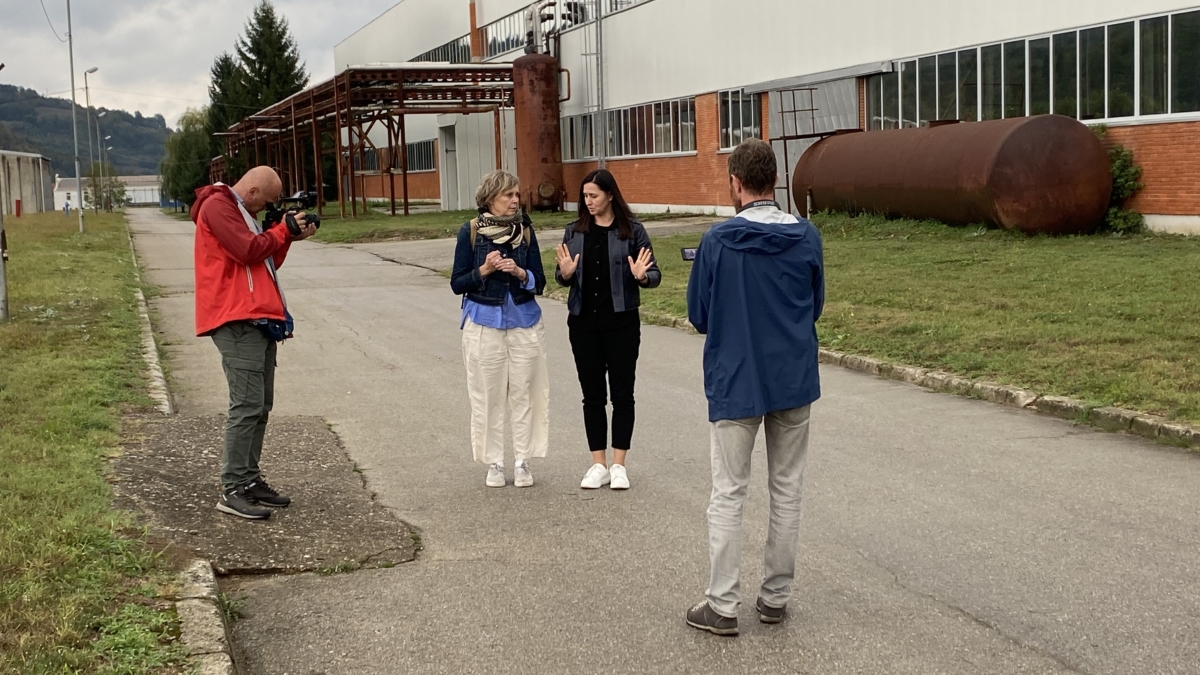
Marc filming conversation between Madeleine and Joel, a man responsible for her brother’s death.

Ghada: Speaking about consent, with the case of Madeleine, you had already shot the film, and we already had drafts of the films. And then Madeleine had her reasons to ask to be anonymous. She didn’t want to have her face shown, and that was already after the process was done. As a filmmaker, how did you approach that?

Marc: I should say, it sounds like now she’s happy for it to be shown. That’s my understanding.

But yeah, at the end of the day, if given the sensitivity of the topic and again, the fact that I’ve known her for so long and I really love, admire, and respect Madeleine. She’s an amazing person. Even if I wasn’t that close with Madeleine, it’s still the decision that you ultimately have to respect. There’s arguably ways in which we could have tried to re-edit it. It would have been quite a challenge just because she’s so in it; she’s in most scenes and obviously interacting with Joëlle, the artist.

Ultimately, had she wanted to remain anonymous in the film, there’s ways in which we could have tried to have made it work, be it with blurring, disguising the voice, removing any identifying information in the transcript as well. So, had we had to go down that route, of course, we would have respected her wishes.

Ghada: I’d like to zoom out a little bit and talk about films in general. How do you see films playing a role in preserving collective memory and understanding history? What is the main function for documentaries like these?

Marc: I think it’s primarily about informing, engaging, making people realize that things that are happening in a faraway place, even years ago, that they do matter. There are ripple effects of everything that’s happening around the world, now and back in 1994. And I think, the world’s only getting smaller.

It’s important that documentaries, for example, that they inform, they educate, and they engage.

And they leave a historical record, too. Madeleine’s a bit older than Jerome. Madeleine’s not going to be around forever. And this is probably the first time that her story has been properly documented. I think she’s told it to the community a number of times.

Every year in Rwanda to commemorate the genocide, you have an event called Kwibuka [“to remember” in Kinyarwanda], which basically commemorates the genocide. And so most years, survivors will recount their story. Of course, people in the community would have probably heard her story, maybe not all of it, but certainly have a rough idea of what she’s gone through. 

But in terms of a more global international audience, documentary in general is a great way to get down for eternity somebody’s story. I would say that that’s the primary benefit I see: education and engagement.

Ghada: Both documentaries start as the initiative to show the survivor and the artist’s collaboration in the process of developing a graphic novel on the SCVN project. I like to think of this as having your first visualization of the story by the graphic artist. Then you are adding other layers of visualization as a filmmaker. Did the visuals or content of the graphic novels influence the development of the films?

Marc: I think it’s probably the other way around. I think because both artists, Michel and Joëlle, did visit Rwanda, but I don’t think they got to visit some of the key locations in Madeleine’s story or Jerome’s story. They’ve actually used a lot of the B-roll and the footage I shot as sort of visual references.

I think, for me, one of the most incredible parts, certainly of the filming of Jerome’s story, is that development of the relationship between Michel, the artist, and Jerome. And I think that comes across in the film. Obviously, you just see a small part of it. I took hours and hours of footage, but it was really quite touching to see almost this father-son bond develop over the three or four days in Belgium.

But in terms of did the graphic novel inform the video, did the video perform the graphic novel, as I said, I think in this instance Michel and Joëlle drew a lot from the footage that we then shot in Rwanda, after the filming in Belgium.

Marc filming Jerome walking from behind.

Ghada: Nice. I didn’t see this answer coming and I love it! I’m also curious about how much was planned and rehearsed versus how much was just improvised?

Marc: I’ll talk about kits to start with. In a perfect world, there probably would have been two or three crew members. Obviously, that’s not always possible. I mean, and to be frank, just because of money. That’s not just for this project; that’s for countless freelance projects I’ve done. Often funding for these types of projects is limited. And so you get used to just doing the best you can on a budget.

I’m fortunately quite used to having to do everything myself. I do the filming; I do the editing; I do the production, the directing, the writing of the script. I sort of joke that, you know, I used to have hair, but that’s sort of what happened. Because it can be intense, because you are doing everything.

Ghada: Yeah, filmmakers know what you’re talking about. And unfortunately, sometimes people who are not familiar with the process of making films tend to underestimate the need.

Marc: Yeah, and even just setting up, people think that when they just see like a one-on-one interview, they think, “Oh, okay, you just get the camera set up and away you go.”

Often you’re moving around multiple tripods, just to get the right framing, get the right lighting, then you’re setting up the lighting, and then you realize, oh, there might be background noise. So maybe you then need to move. It can take at least an hour, half an hour to an hour just to set up for a standard so-called “talking head” interview. 

But yeah, because it was just me, it was a case of taking what I can carry. And particularly, because again, bear in mind that, a lot of the filming that we did in Rwanda, you’re out in the boonies basically in quite remote rural areas, so literally it’s whatever you can fit on a backpack. I had a Sony A9 camera and multiple lenses. A prime 35-millimeter, 50-millimeter, and then a 400-millimeter actually, which came in very handy as well. I had a couple of tripods, too. 

And smartphones are so good nowadays. The video is so good on them that I basically just used my iPhone as a second camera. Primarily just for the wide angle and then using the good camera for the close-ups of Jerome and Madeleine. Because at the end of the day, it was most important to get the close-ups of them that, worst comes to worst, if my iPhone crapped out, you can always get set up shots afterwards of the wide shots. As a backup, I just had a Zoom audio recorder, but I try to keep it out of shot when possible. But that was just a backup for the audio, just in case there were any issues. Then I had a couple of Sennheiser wireless mics. And that’s literally about it.

I did also have a reflector for the light source as well because obviously when you’re filming somebody who’s dark-skinned, you don’t want to overexpose or underexpose. So we would have to use the lights and the reflector to try and expose Jerome or Madeleine a bit better.

And then just a laptop with Final Cut on it. That, in many ways, is the hardest bit after you’ve been filming for say 10, 12 hours a day, and you’re really tired. I always back it up on at least two external hard drives. Because again, it’s never thankfully happened to me, but we hear stories.

Jerome and Marc filming in a local field with cows.

Ghada: So how much was improvised versus how much was rehearsed and planned?

Marc: We would tend to take it day by day in terms of, I guess, people’s energy levels and the weather because we were actually very lucky where we did a lot of the filming in Belgium just because, even though it was November, the weather was glorious. So we tried to keep it fairly organic.

And again, it was largely survivor-driven in the sense that I had some sort of preconceived ideas of types of shots and sequences I wanted to get, but every day, I tried to keep a bit of wiggle room for what we wanted to do and when we wanted to do it. Even at the end of a day’s filming too, we’d often had an informal debrief over dinner and say, “Okay, well, you know, what went well, what didn’t go well?”

Sometimes you have to roll with the punches, too, because we obviously really wanted to film inside the church with Jerome, to show where he was sleeping before the interim army came and attacked. But unfortunately, we couldn’t get permission.

There’s again a brief moment where you see Jerome near the river on the border of Burundi, and that’s where he fled to Burundi with his uncle. We were there for about 10 minutes and just getting some filming. And then some border police from around the side came over and asked what we were doing. And even though we had all the paperwork, they said, “No, sorry, you can’t film here.” Even though you have the paperwork, you just learn you’re not going to argue. So, we had to pack up, unfortunately.

As a filmmaker, you just have to be fairly easy going and often just brainstorm ideas on the spot.

I should say that in many ways both documentaries were co-directed by Jerome and Madeleine. They had some really good ideas and things that I wouldn’t have thought of. There’s a moment where, near the start of Jerome’s documentary, we’re filming him walking through the sort of bean fields where his home used to be.

And he says, “Oh, you know, when I’m here, I’ll often just come here and sit and think about how our family used to be on this hill.” And he’s like, “Oh, Marc, why don’t why don’t we just get a shot of me sitting in the bean field?”

So there’s this beautiful moment where you see Jerome sat amongst the bean.

There were moments like that with Madeleine as well; they were both really invested in telling the story and even though I’m credited as the director, they were very much a part of the storytelling and how they wanted it to be.

Ghada: You took us to my next question where I wanted to ask you about the collaborative nature of doing these documentaries. Did you have to at some point revise your approach based on feedback from any of the project team or artists?

Marc: Oh, that’s a good question. I can’t think of any specific examples. We navigated that quite well. 

I guess I’m thinking specifically of when we were all physically together for the filming in Belgium. I think a big part of that was just navigated by… every evening, all of us, the project leads, Jerome, Madeleine, myself, we’d all have dinner in the evenings, and we’d all be talking about the project. And, I think, informally talking about what we thought went well, or maybe things that people maybe didn’t like. Not that there were any sort of major disagreements! It was fairly easy going.

The only thing I can think of where there’s, maybe not disagreement, but debate was when […] one of the first cuts of Madeleine’s documentary had been put together. And I think there was some concern. There’s a moment where, because again, I wanted to get Joëlle and Madeleine out of the hotel and into a different space and kind of just engaging as human beings. There’s a moment where they’re on a swing set. And it’s quite a sweet moment because Madeleine had never been on a swing set in her life. And so she was kind of like a giddy schoolgirl.

It was quite funny in many ways. But I just raised that just because when some colleagues on the team first saw that cut, there was concern. I think it was coming from a good place. There was concern that this could maybe show Madeleine to be childlike or that people could have certain preconceived notions of what people from the African continent are like. There are negative connotations and perceptions, unfortunately. I think they were afraid that that could reinforce those preconceptions. But yeah, and again, it was a collegial discussion that we had via e-mail with members of the team, and obviously we did ask Madeleine if she was okay with the footage, but I certainly pushed to keep it in just because it was a spontaneous moment in the documentary that wasn’t really that scripted.

And it’s just a moment of levity and shows that despite everything that she’s been through, she’s still one of the most cheerful, well-adjusted people I know. I was keen to keep it in, but we did go back to Madeleine, just to say, “are you okay with it?” And she was fine.

Marc filming Madeleine in the church

Ghada: How did you approach the story-building process through the editing? Were there moments you had to give up and you didn’t want to? 

Marc:  I think initially both films were only supposed to be 10 minutes. And I think Jerome’s ended up being, goodness, I think 13, maybe, maybe a bit more? And Madeleine’s is way longer. This was a luxury to have, because often a lot of the work that I’ve done, for example, for the BBC, you’ve got 10 minutes, and it has to be 10 minutes. And so you do have to make those hard editorial judgments.

I went to Charlotte Schallié, the leader of the project, and said, “do you mind if I do more?” And she said, “fill your boots!” If I had to rigidly stick to 10 minutes, then yes, there would have had to have been some hard decisions to have been made. 

But in terms of putting the film together, I was very keen not to have too much narration. In Madeleine’s story, she doesn’t speak English, so we could have had a narrator give some of the context of the genocide, but I always like, when editing, to try and keep the person’s voice in as much as possible to keep you in the story. So that’s why there’s no real narration. You’re just hearing the voice of Jerome or Madeleine. There’s minimal text on the screen. There’s just a little bit of context at the beginning of both.

Ghada:  Beautiful, beautiful. To sum up our talk about all these technical aspects of the process, what would be your main advice to filmmakers who’d like to explore trauma-informed storytelling such as human rights, mass atrocity, and other social themes, especially through documentaries? What would be some advice that you would feel it’s important to share with them?

Marc:  Oh, goodness me. People have literally written books on this!

It seems obvious – but I’ve seen journalists not do this – is just to listen, not only to what people are saying during the interviews, but what are they comfortable with, what are they not comfortable with. It’s important to remember, this isn’t about you as the journalist. This is about them, about what they want.

Yes, in a perfect world, you’d want them to relay every detail of what happened, but if they’re not comfortable, you can’t push them. I think it’s really important. In terms of mental health, it’s really important to stress that if they don’t want to answer the question, they don’t have to. If they want to stop, they can. When I was working on different projects across Africa, it was important to make sure that you’ve got a counsellor on hand if somebody does get upset and they want to sit with a counsellor and have a chat.

It’s important for you as the filmmaker to have resources that you can rely on in terms of unpacking things that you’ve heard. It’s quite sad in a way, but when you do this type of work for many, many years, you do become a bit detached. Well, I always liken it to a mental scab in the sense that when you’ve heard so many awful things, after a while you do become a bit detached. But every now and then you do hear a story that picks off that scab. So it’s really important to take mental health seriously when you’re dealing with this kind of thing.

Ghada: Yeah, I did want to ask you, how did you manage also the emotional weight yourself as the person who also is listening to these stories nonstop, dealing with the material, having to think about it and having to visualize it and even be there in the place of the event?

Marc: It’s a curse and a blessing when you’re a one-man band doing everything, but often in the moment of the interview, you’re trying to juggle so much that yes, of course you were listening and paying attention for follow-up questions, but you’re also so focused on adjusting the camera angles. “Is the lighting okay? Is the sound coming through okay?”

And very famous journalist like Lynsey Addario or James Nachtwey have said that having that camera in front of your face when you’re taking a photo is almost a barrier that allows you to sort of distance yourself a bit. It’s only afterwards when you’re going through the rushes or when you’re looking at your photos of the video. For example, with Madeleine’s story, I was aware of what she was saying, but it’s only when I was watching back, there’s a moment in the church where she mimics the sound of the cries of the children dying in the church.

Of course, I would have clocked it in the interview, but as I said, you’re so busy keeping an eye on everything. It was only when I was sat literally at this desk, doing the editing, I was like, “Oh my God, it’s chilling.”

If you want to do this kind of work, you do have to just compartmentalize it in the moment and almost have that sort of healthy detachment. You need to watch out for any potential red flags for secondary trauma or what have you.

Right & Left: Marc taking shots of Madeleine.

Ghada: Those two documentaries, like other SCVN documentaries, will be used in genocide and human rights education, so they will be shown at travelling exhibits, in the classroom, even online for the general public. What kind of response do you hope for from the diversity of audiences?

Marc: Yeah, that’s a good question. We’ve talked about the fact that the primary role of documentaries is engage, inform, and educate.

But I think as much as we’ve just talked about the doom and gloom of trauma, I think ultimately both of the documentaries are quite uplifting. They have quite positive  endings. And that’s why Jerome’s story is called “Why We Dance:” the importance of reconciliation of the battle to move on.

And the strength of character that Jerome and Madeleine have that they’re not victims; they are survivors. They’re both incredible people. Jerome is amazingly successful. He’s an instructor at a really good university in Kigali. Madeleine’s a high-up community leader, very well respected.

That’s just to try and get people beyond that notion of victimhood, that victims don’t need to be powerless and can be really involved and active in how they not only present their narratives but also showing the horrible things that they’ve been through, that there is a way forward.

I mean, I don’t think it’s been easy for either of them, but ultimately, I want people to take away a sort of message of the positivity of hope. And I think that comes across, and I think obviously people watching it won’t probably ever get to meet Jerome or Madeleine, but I think they do give a sense of what they really are like. They’re not the sorts of people to act up to the camera. They’re very, very down to earth.

I guess the hope is for people to relate to them as human beings and not as victims.

Ghada: Thank you so, so much for your time first and also for being very generous and sharing all your input and experiences and advice and beautiful insights. It was a pleasure. Thank you.

Marc:  The pleasure was mine.

SSHRC’s Storytellers Challenge features Ghada Youssef as Finalist

We are delighted to share that the SCVN project has been selected as a finalist in the Social Sciences and Humanities Research Council (SSHRC) of Canada’s Storytellers Challenge for 2026! This challenge is open to postsecondary students, inviting them to show Canadians, in up to three minutes or 300 words, how social sciences and humanities research is impacting our lives, our world and our future for the better.

For SCVN’s entry, research assistant Ghada Youssef produced a 3-minute video summarizing the project’s goals and outputs. She will be participating in the second phase of the challenge by presenting the project in front of a jury at a conference in Montreal, Quebec this June 2026, where five winners will be announced.

Ghada’s selection has also been featured in the UVic News and the VPRI Bulletin article ‘Storytellers on screen’ where she shared that SCVN was among her motivations to pursue her doctoral studies:

“I was very excited that the project uses visual mediums to approach social justice topics—it felt like it sat squarely within what I’m already passionate about.”  

Congratulations to Ghada and the media and communications team on this achievement! You can watch the submission video on the SSHRC YouTube below:

Ghada’s participation featuring on Uvic News:

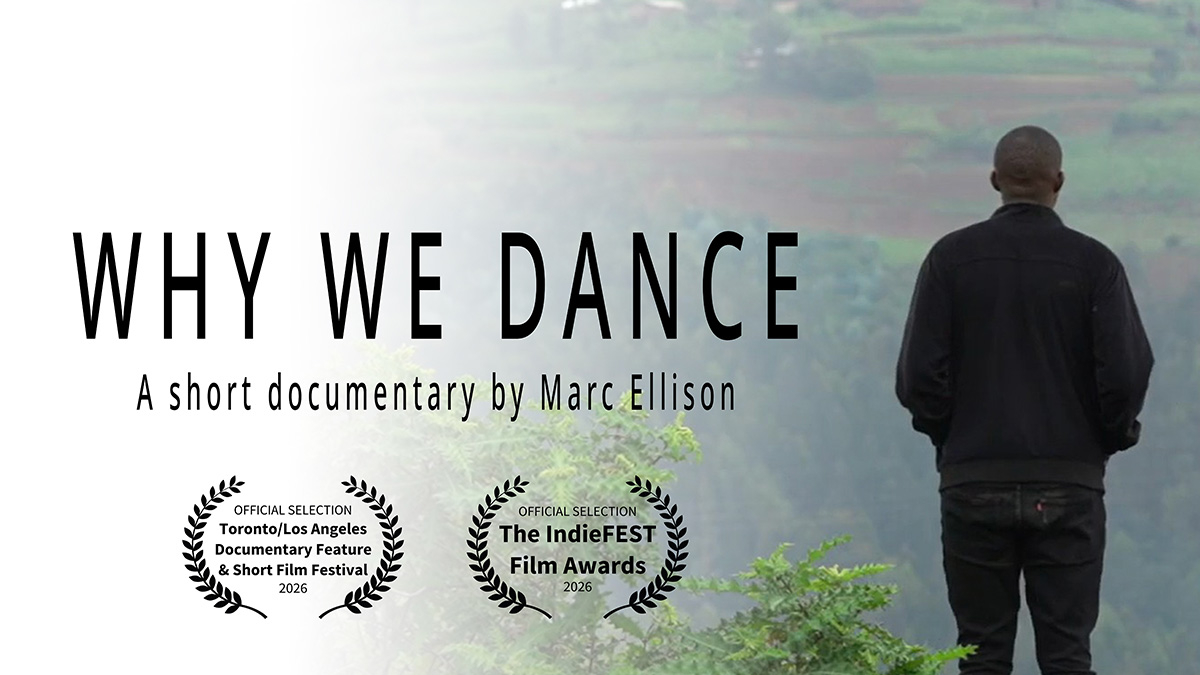
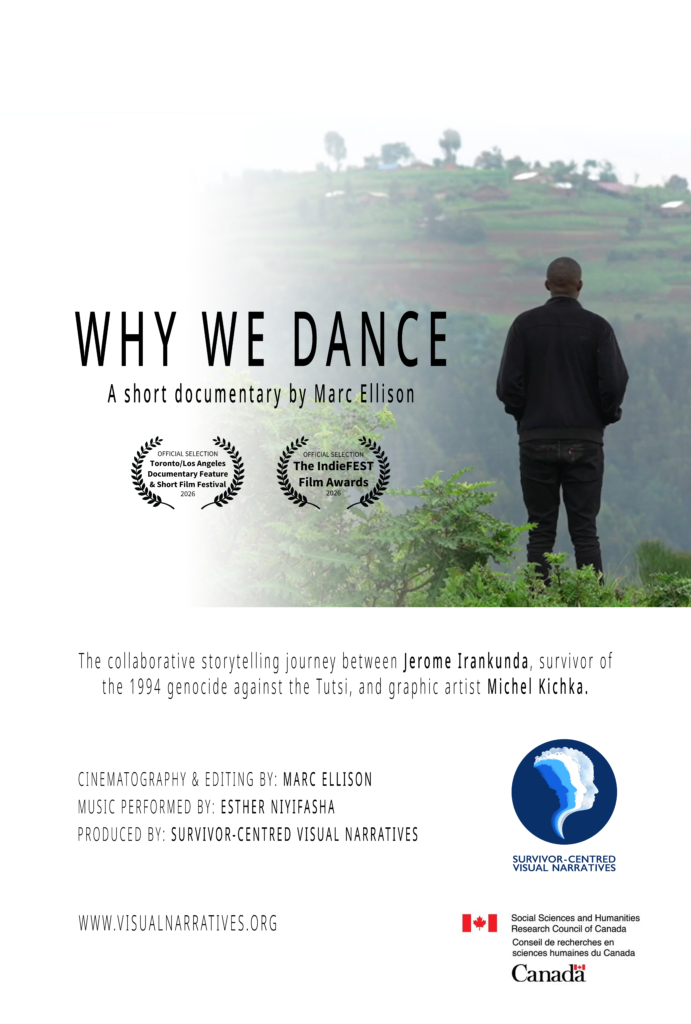
‘Why We Dance’ begins its film festival tour with first award!

We are thrilled to share that the documentary short film ‘Why We Dance’ by filmmaker Marc Ellison, part of the Rwanda Research Cluster, has received its first two official selections and an award at film festivals. The film features Jerome Irankunda, a survivor of the 1994 genocide against the Tutsi in Rwanda, and graphic artist Michel Kichka, who interviewed Jerome to create a graphic novel about his life and experiences during and after the genocide.

The first is the Toronto/Los Angeles Documentary Feature and Short Film Festival, where the film was screened as part of the official program in Toronto and awarded the ‘Best Short Documentary’ Audience Award. Audience responses to the film are available to view here: https://www.wildsound.ca/videos/audience-feedback-why-we-dance

The second is the IndieFEST Film Awards, an international competition that does not include a live screening component.

The film is currently awaiting further award announcements from both festivals, where selections are judged by panels of award-winning industry experts and filmmakers.

The trailer is available to view on our SCVN YouTube: https://www.youtube.com/watch?v=cAe5d6evLEk, and you can learn more about Jerome and Michel’s collaboration on the Rwanda Research Cluster page.

Congratulations to Marc and the Rwanda Research Cluster on this recognition!