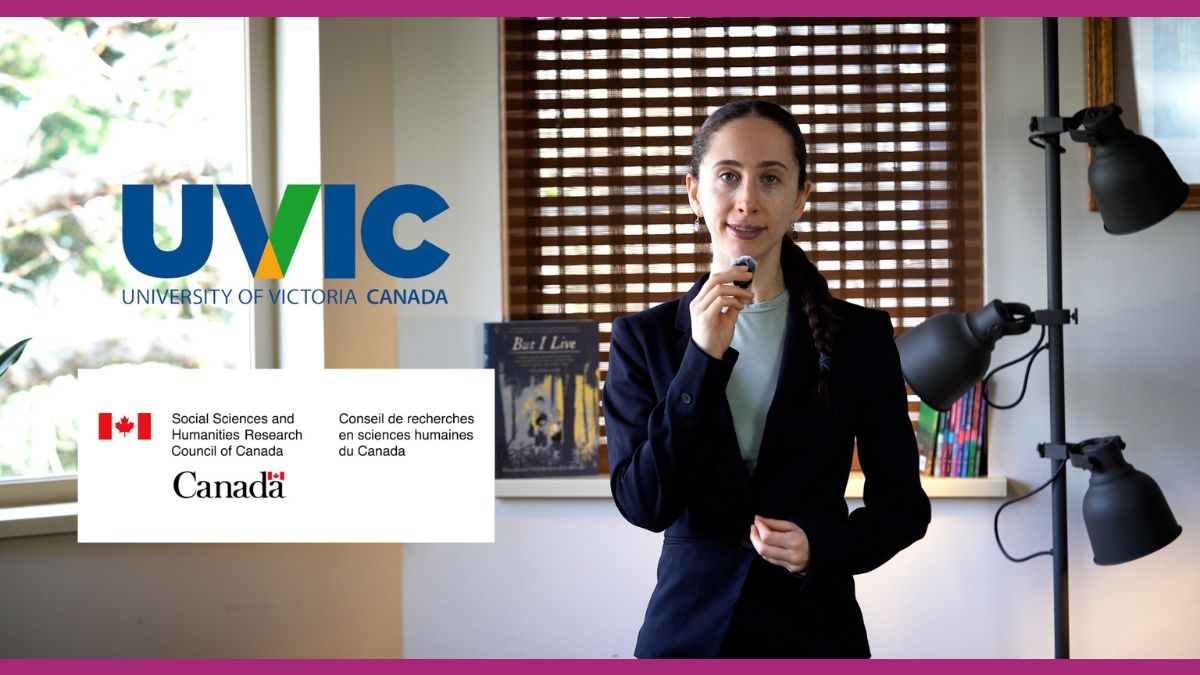
We are delighted to announce that SCVN research assistant Ghada Youssef has been selected as one of the five winners of the 2026 Storytellers Challenge, presented by the Social Sciences and Humanities Research Council (SSHRC) of Canada!
This challenge was open to postsecondary students, inviting them to show Canadians, in up to three minutes or 300 words, how social sciences and humanities research is impacting our lives, our world and our future for the better. For SCVN’s entry, research assistant Ghada Youssef produced a 3-minute video summarizing the project’s goals and outputs. She was selected to join the top twenty finalists in Montreal, Quebec this June to present the SCVN project to a live audience and jury at the Storytellers Showcase and conference.
Ghada’s selection has since been featured in the UVic News and the VPRI Bulletin article ‘Storytellers on screen’ where she shared that SCVN was among her motivations to pursue her doctoral studies: “I was very excited that the project uses visual mediums to approach social justice topics—it felt like it sat squarely within what I’m already passionate about.”
Congratulations to Ghada and the media and communications team on this achievement! You can watch the winning entry on the SSHRC YouTube Channel below:
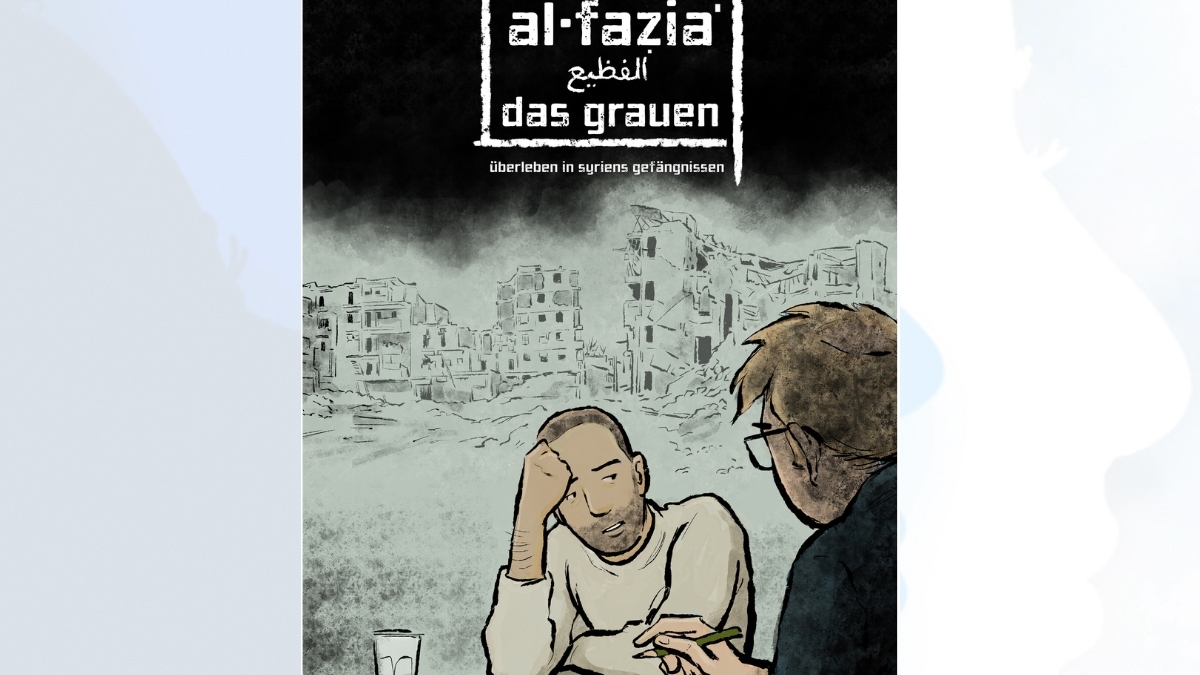
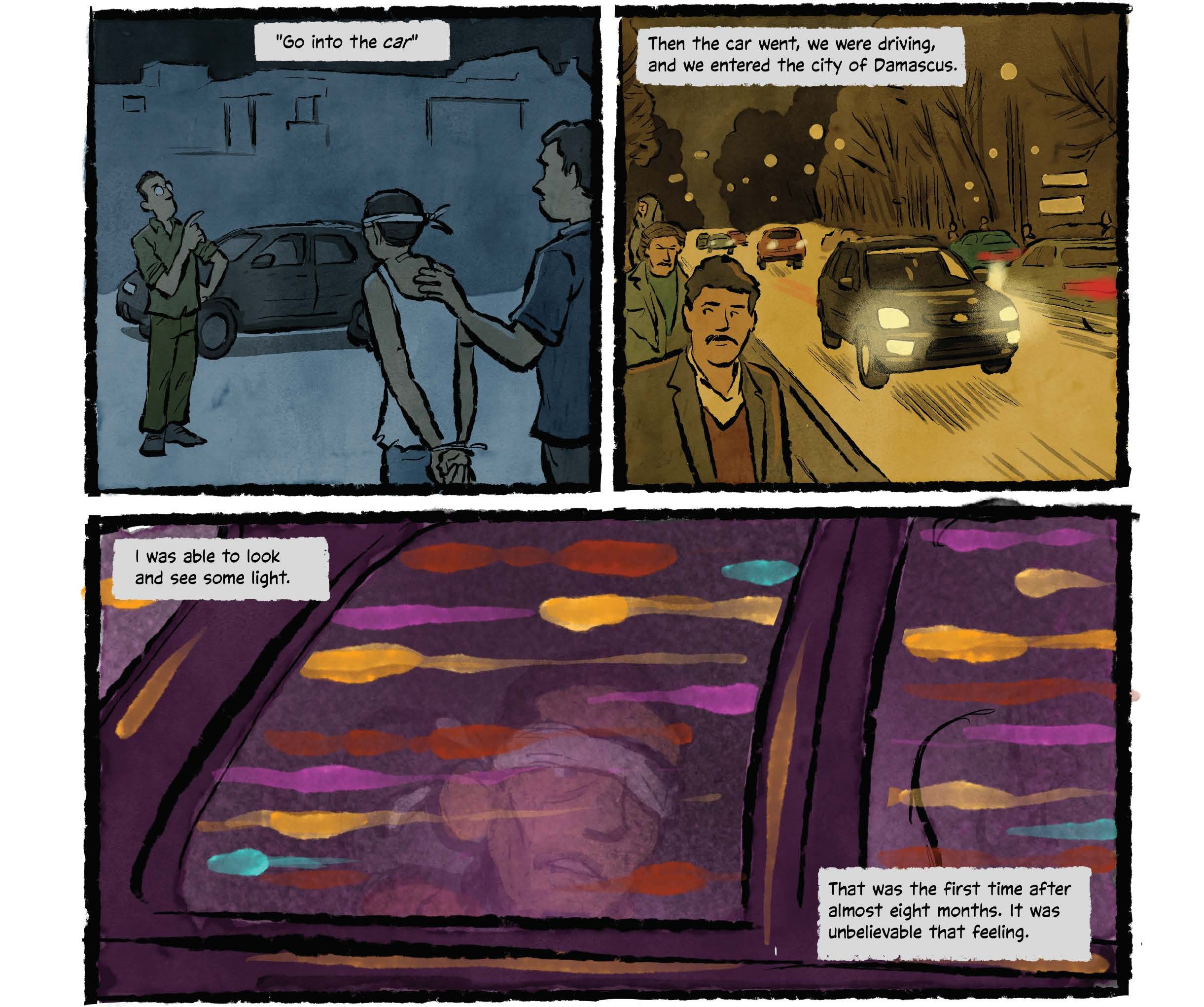
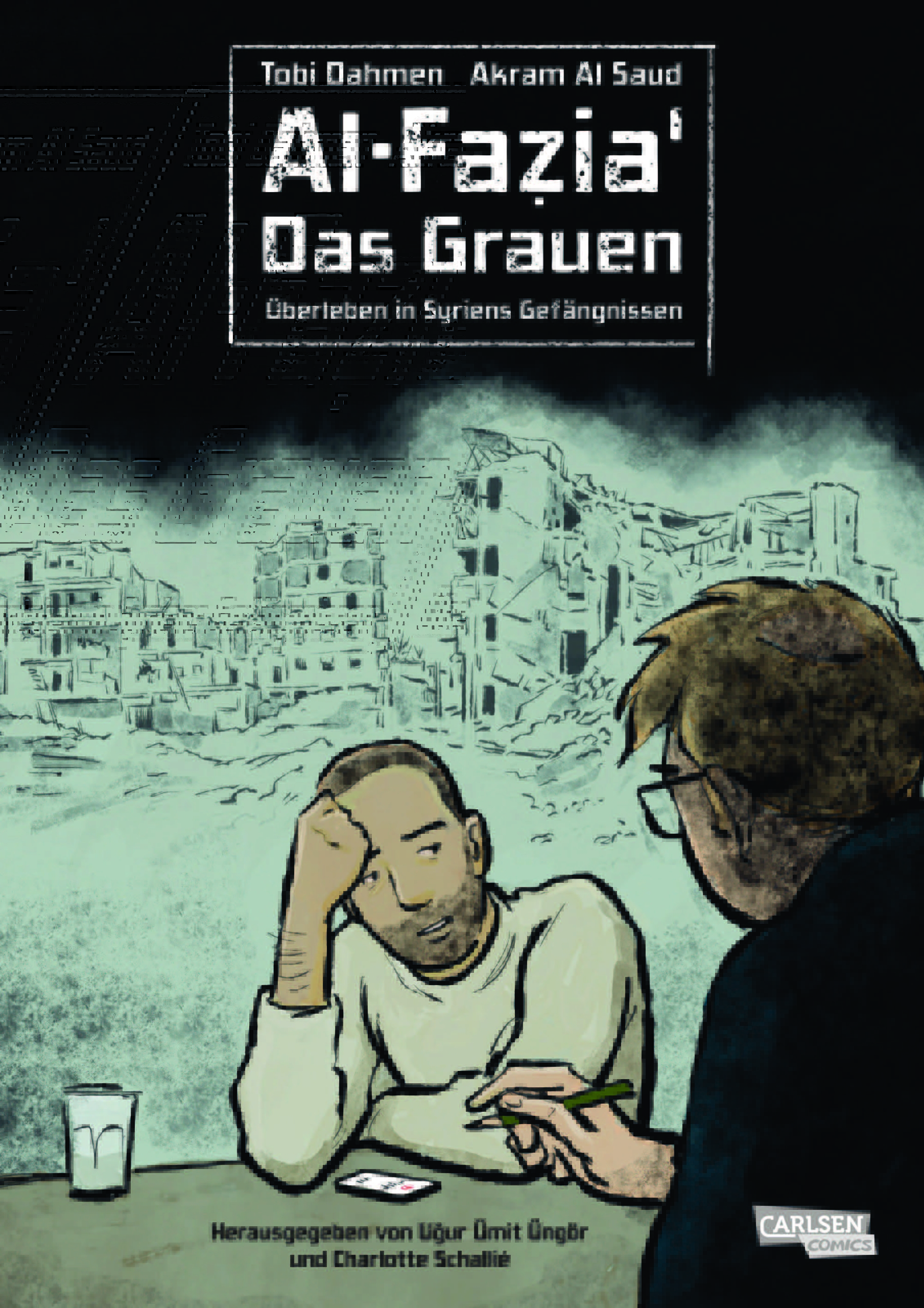
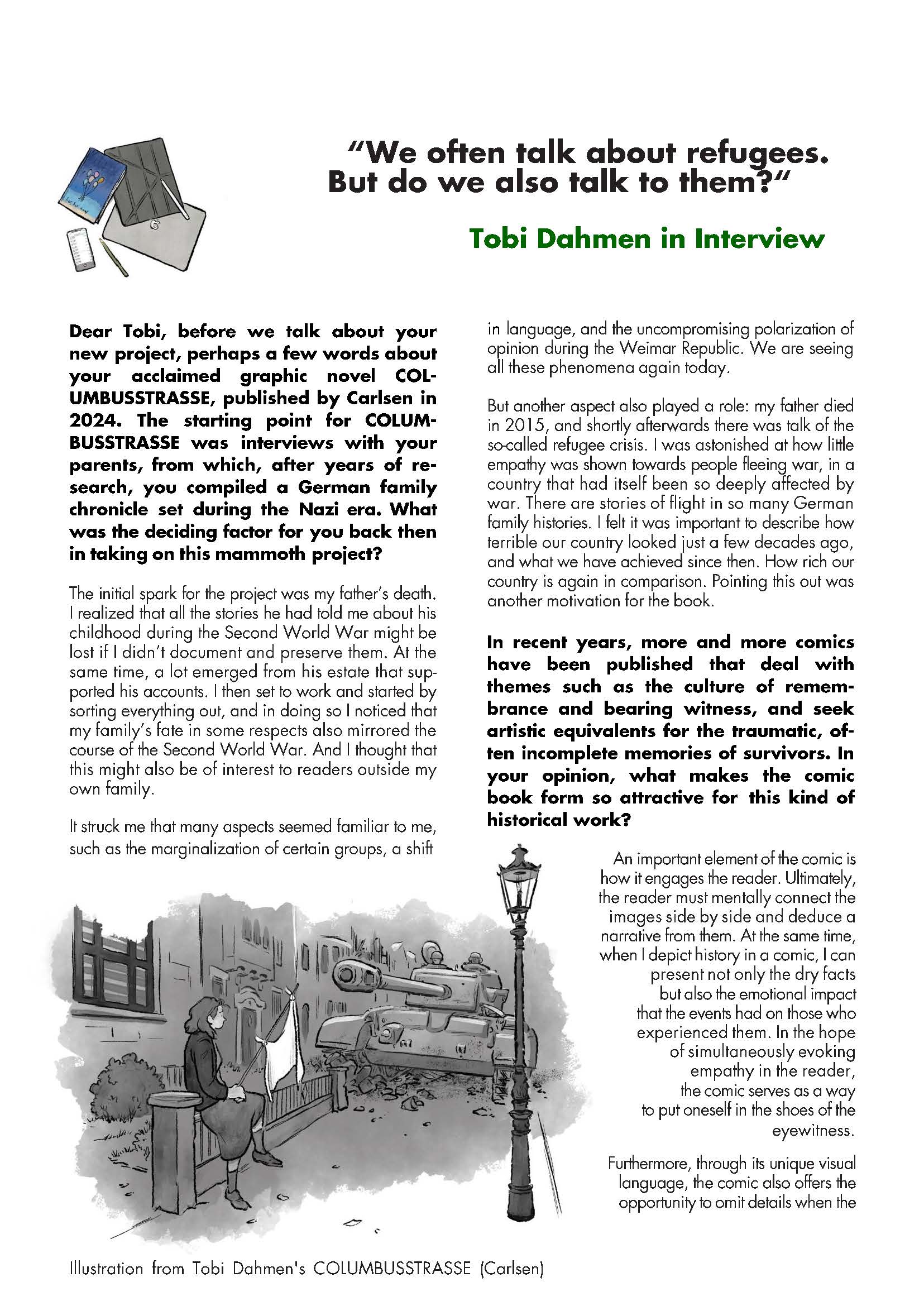
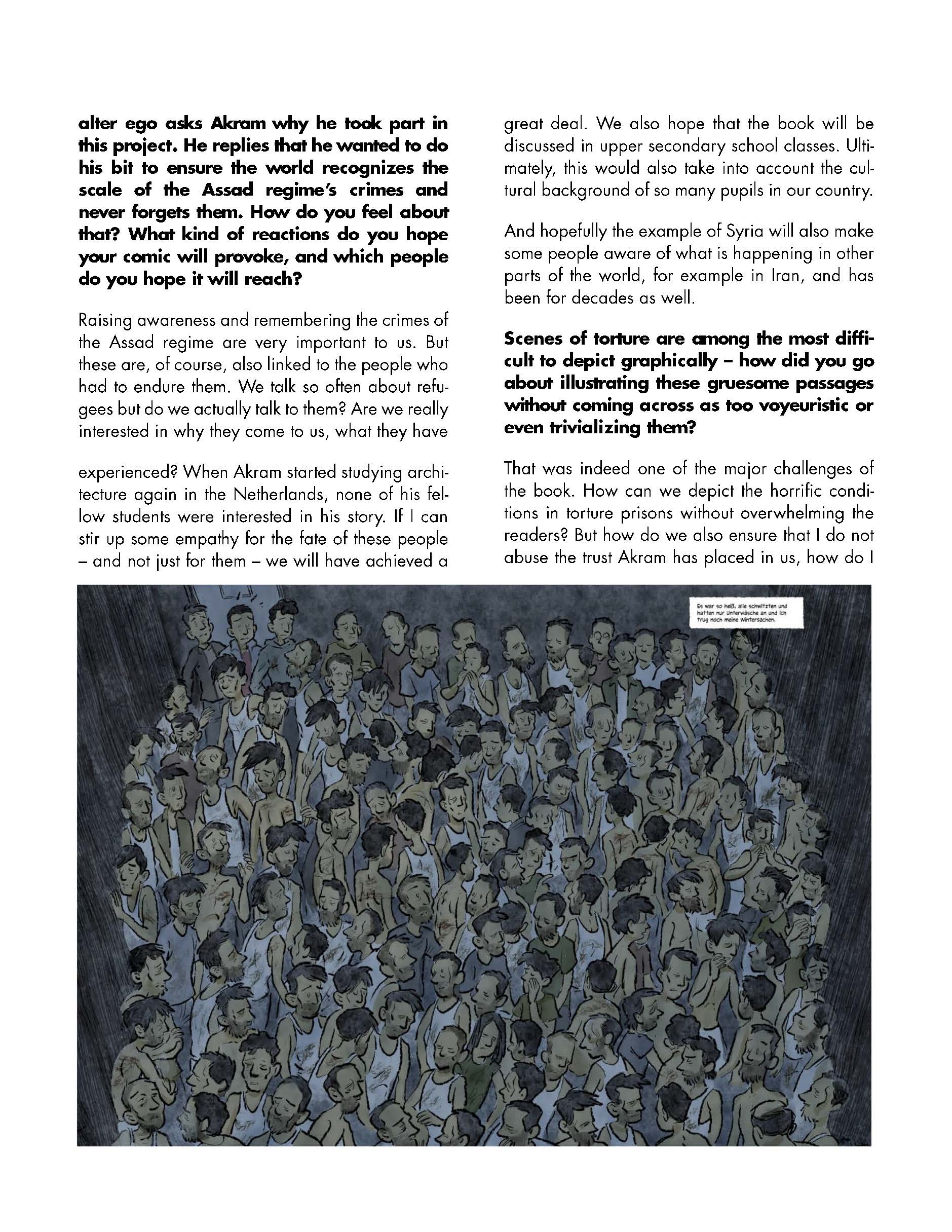
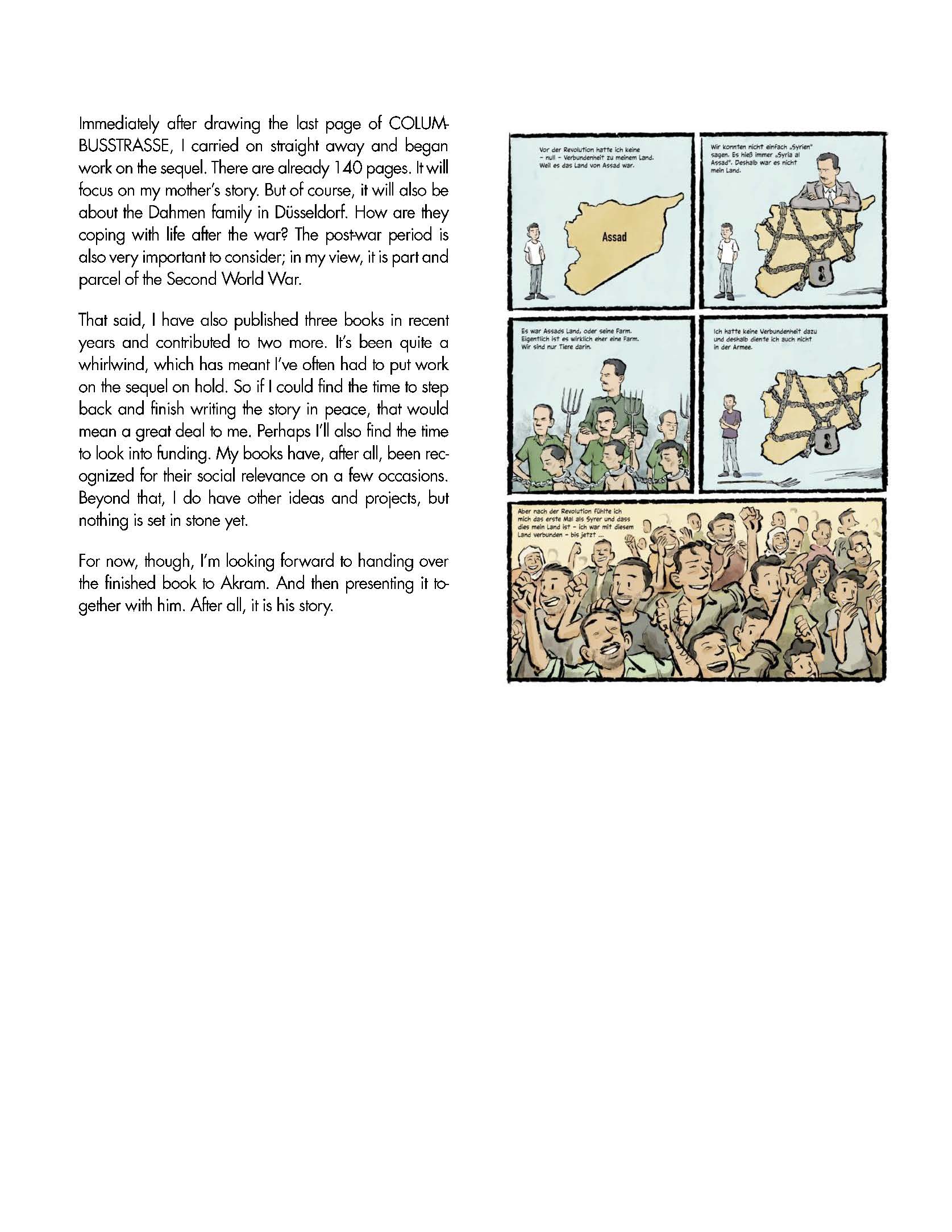
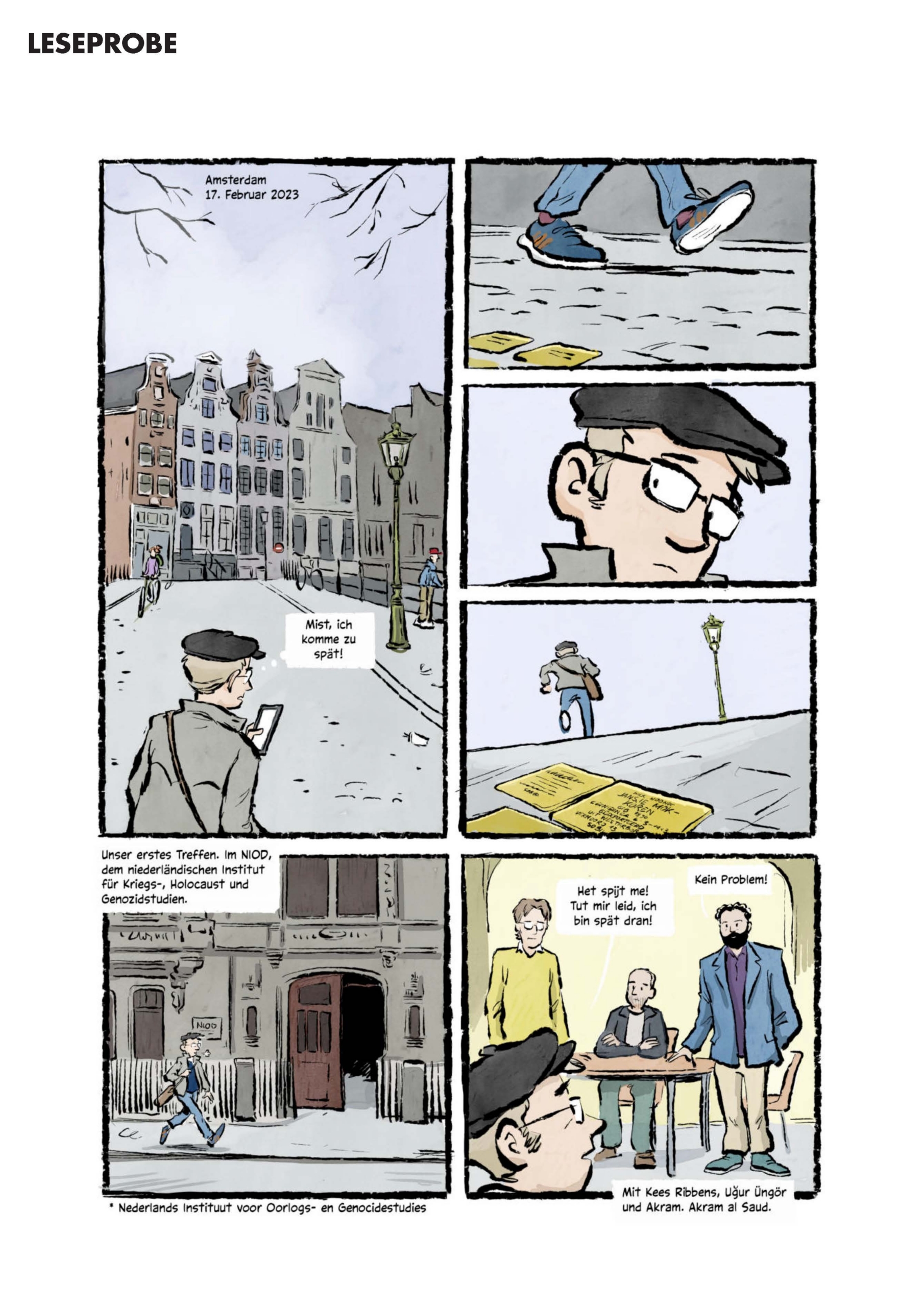
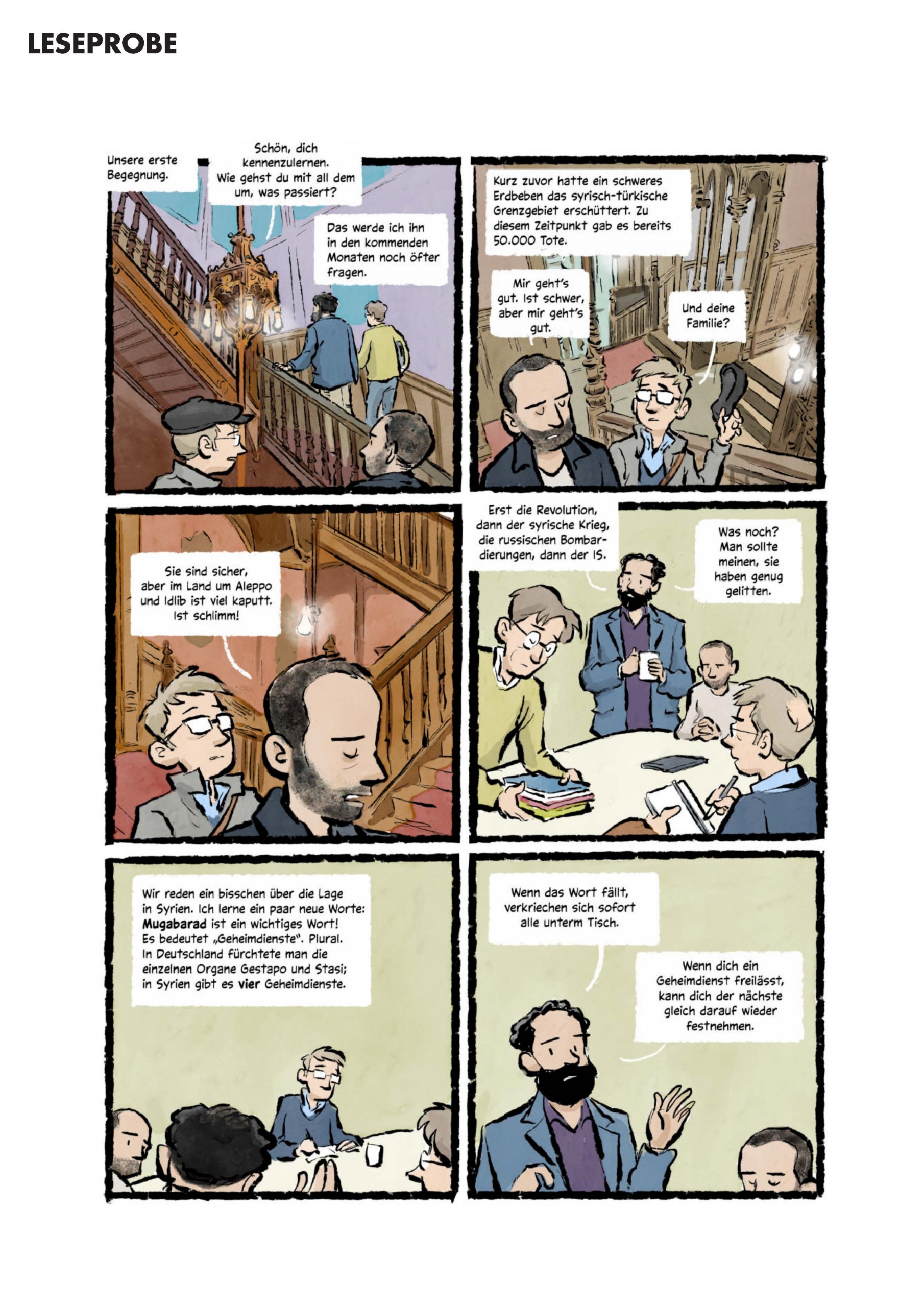
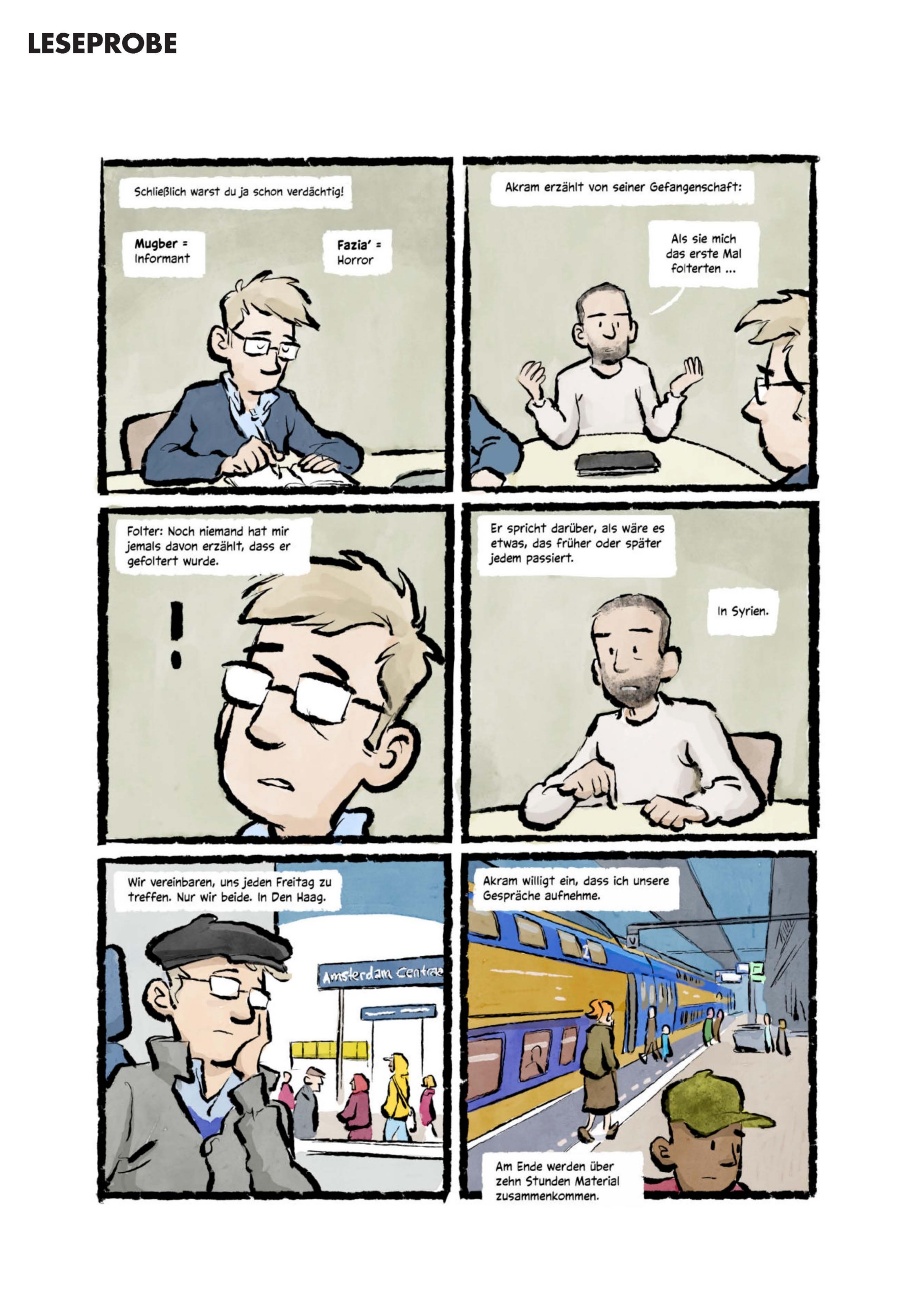
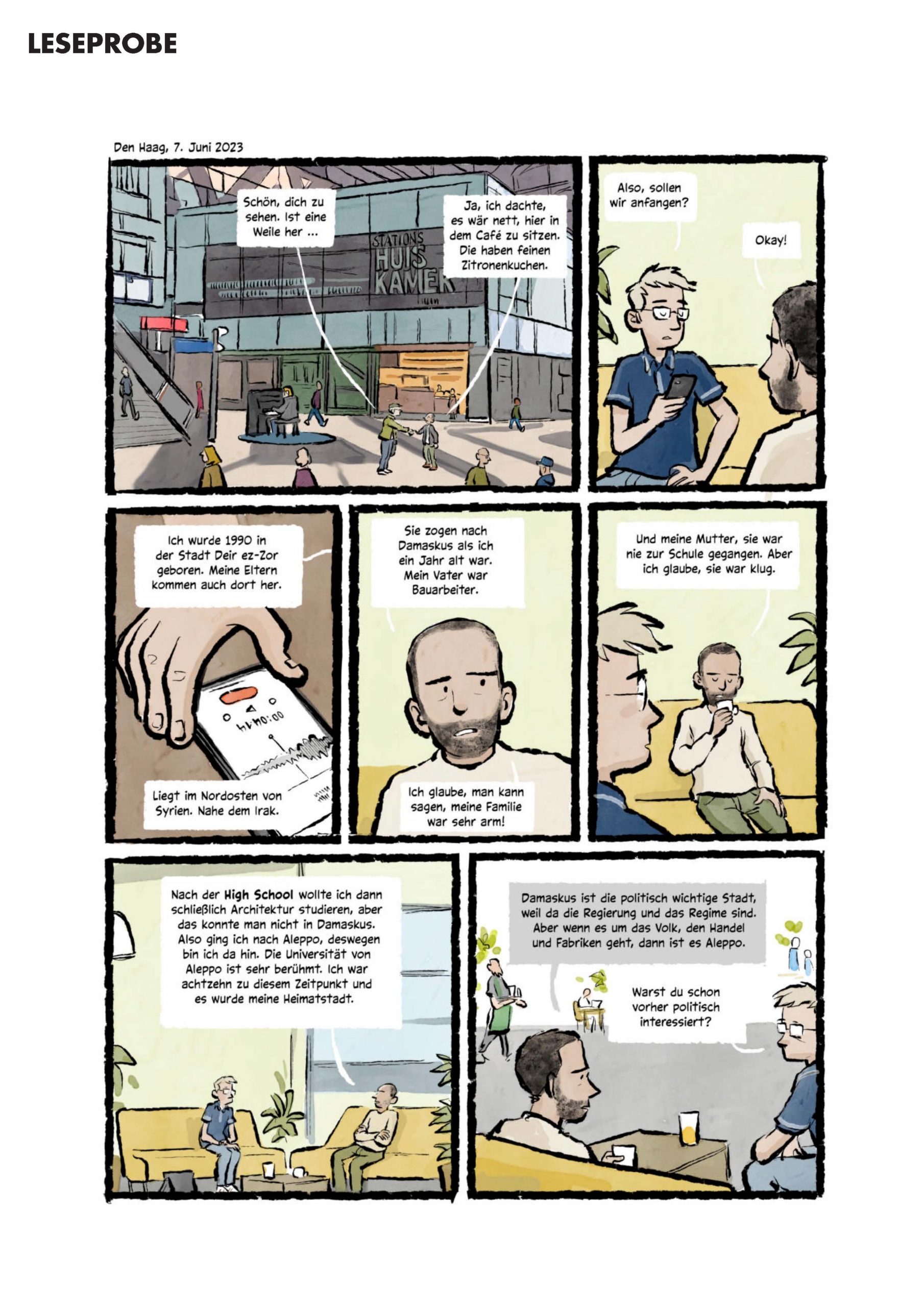
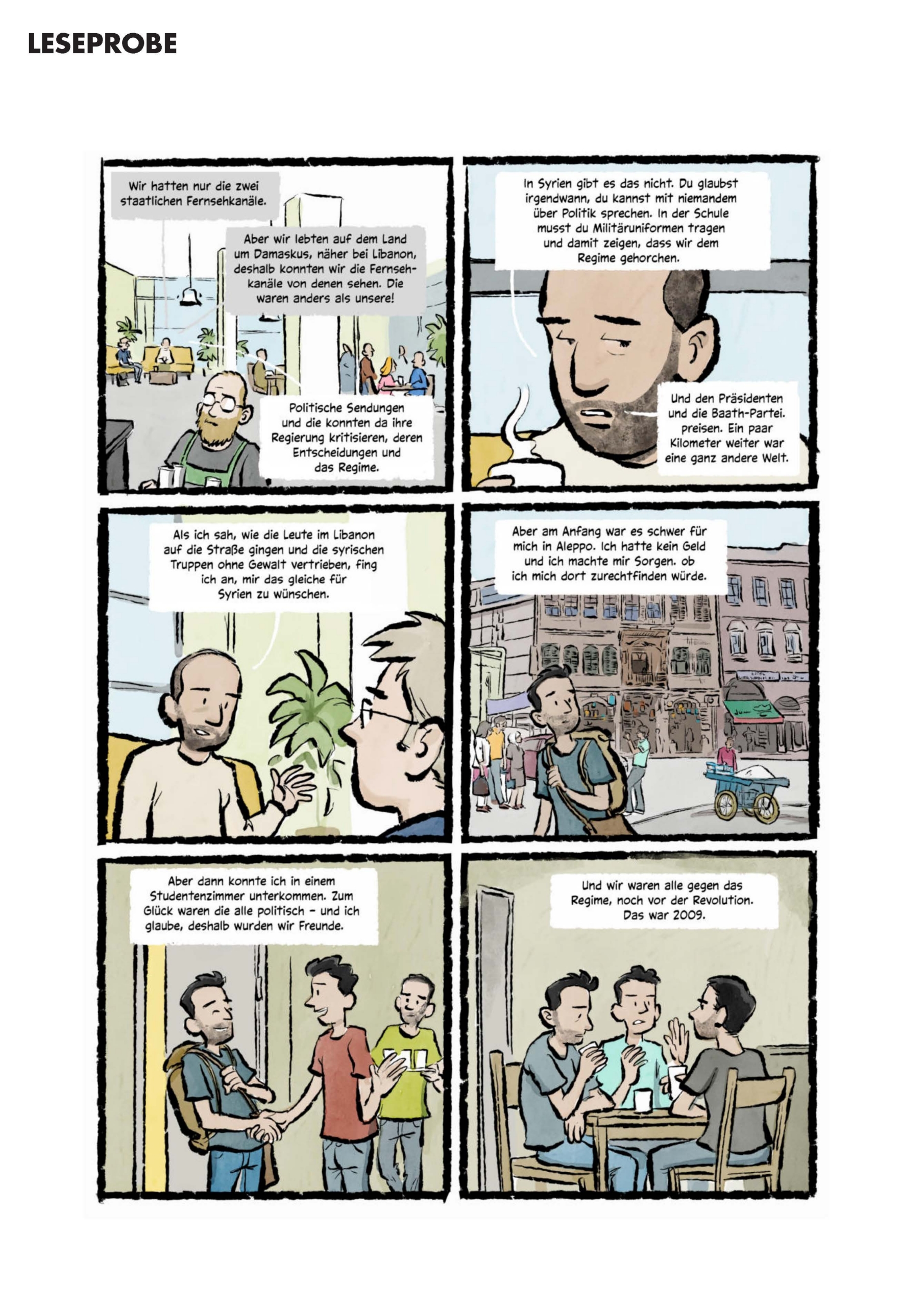
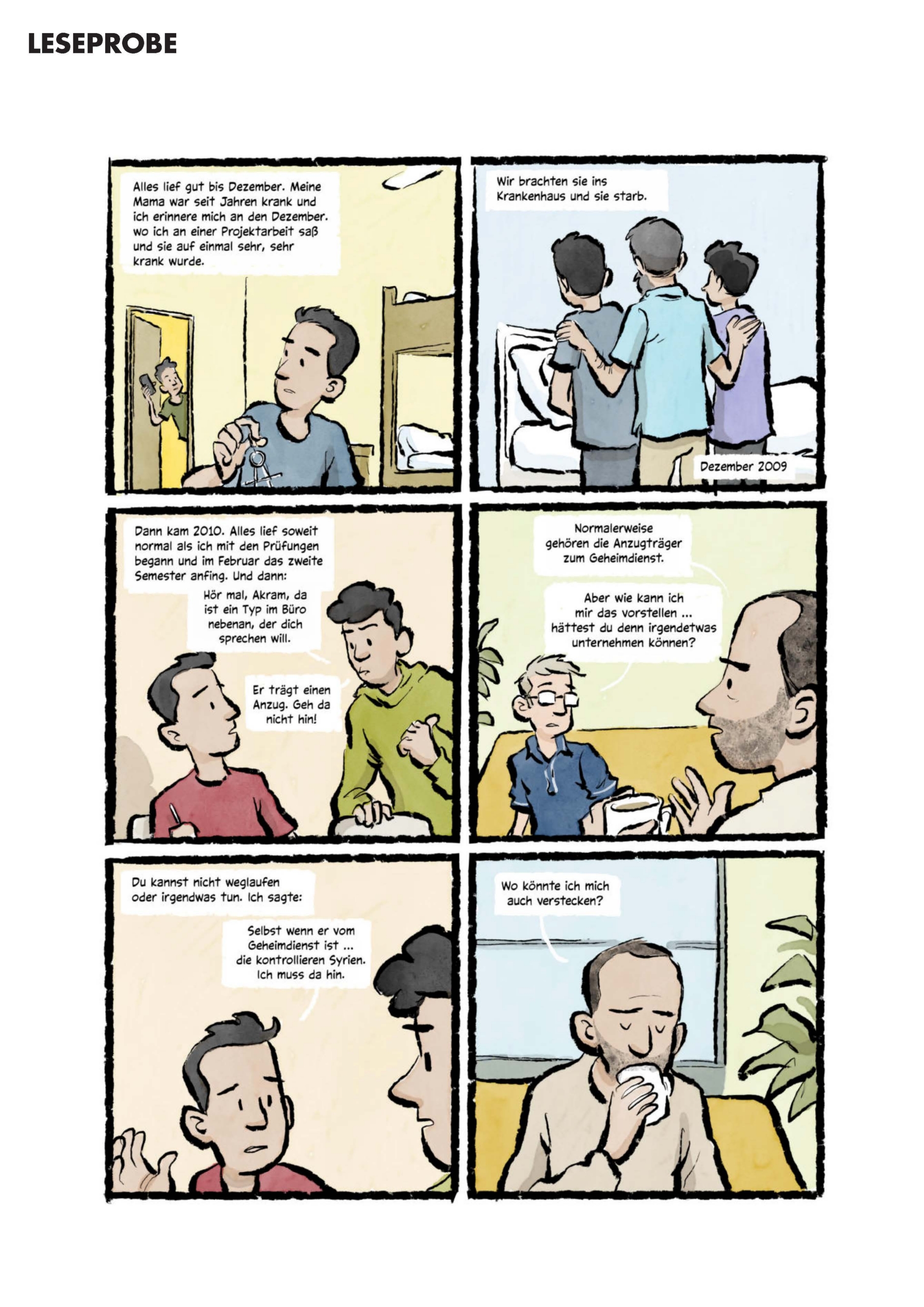
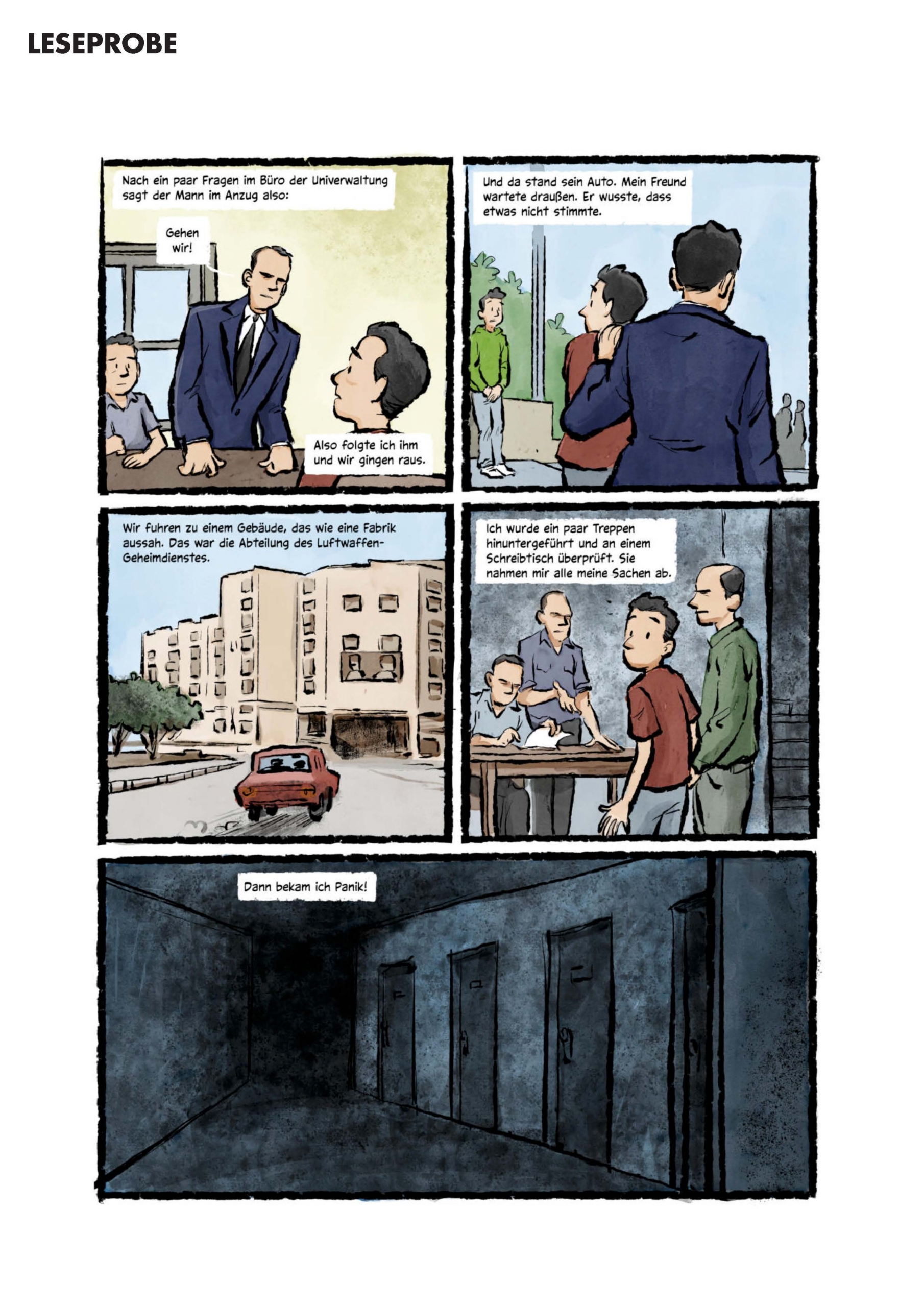
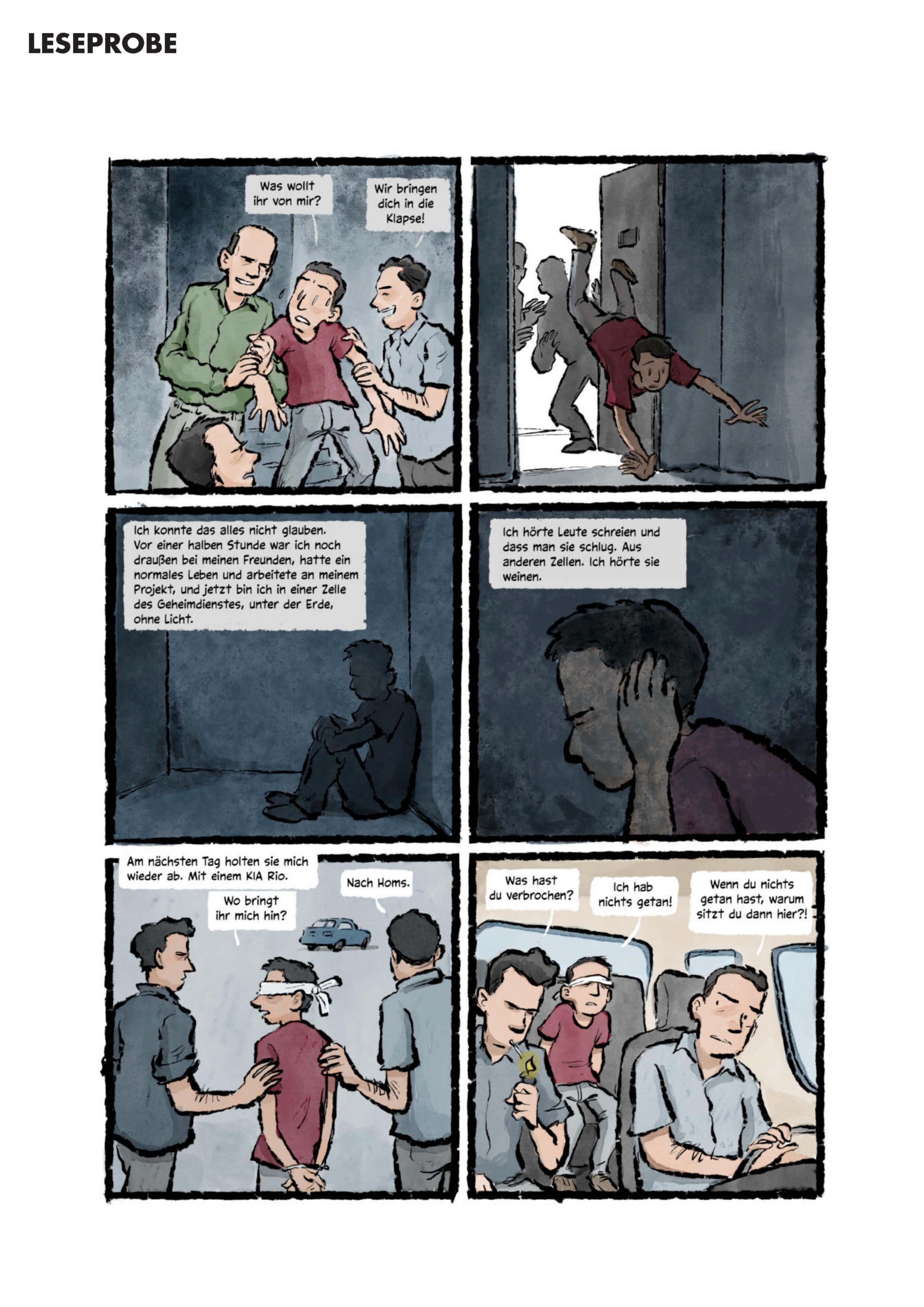
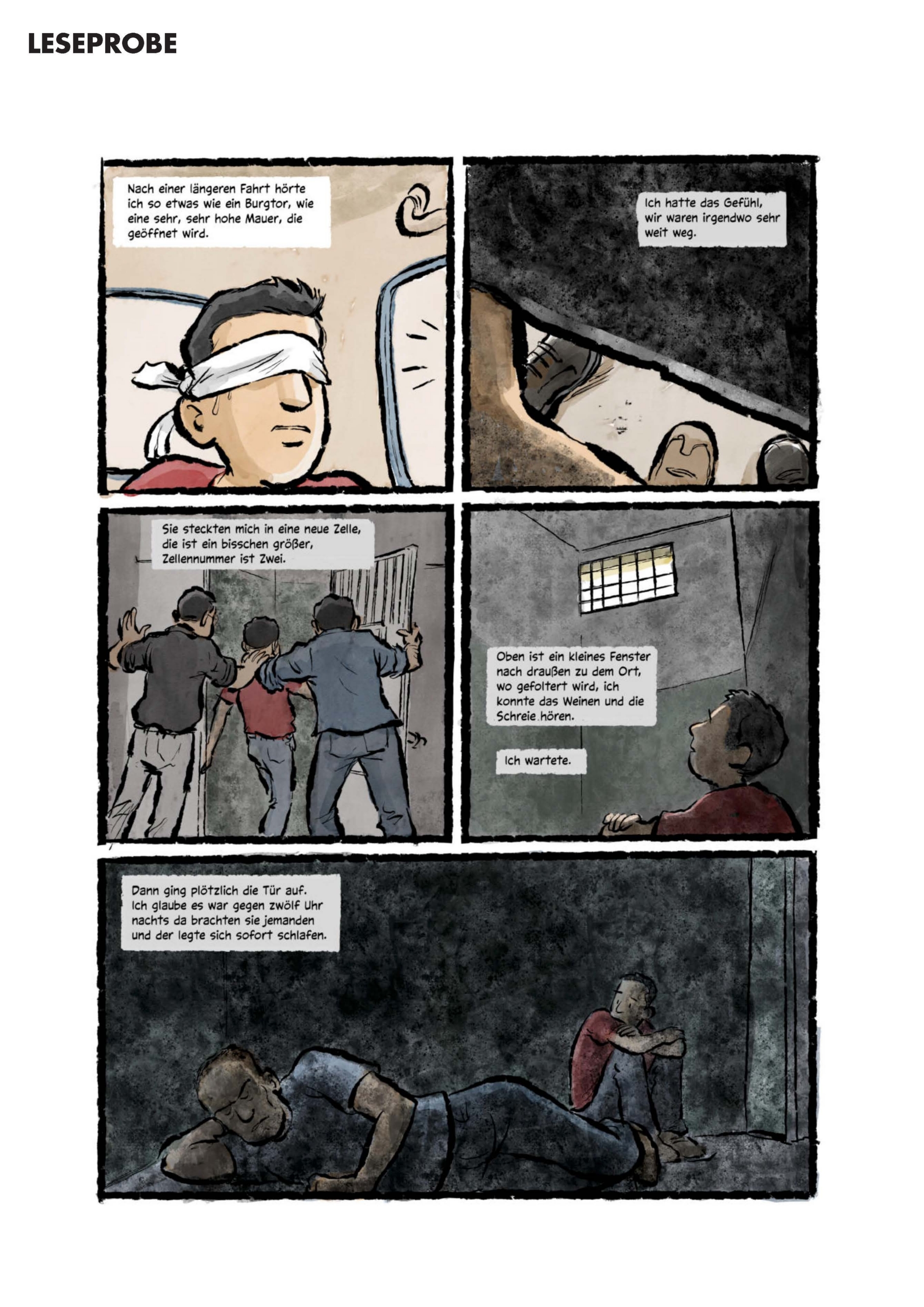
Excerpt from Al-Faẓia’ (University of Toronto Press, 2026) by Tobi Dahmen and Akram Al Saud.
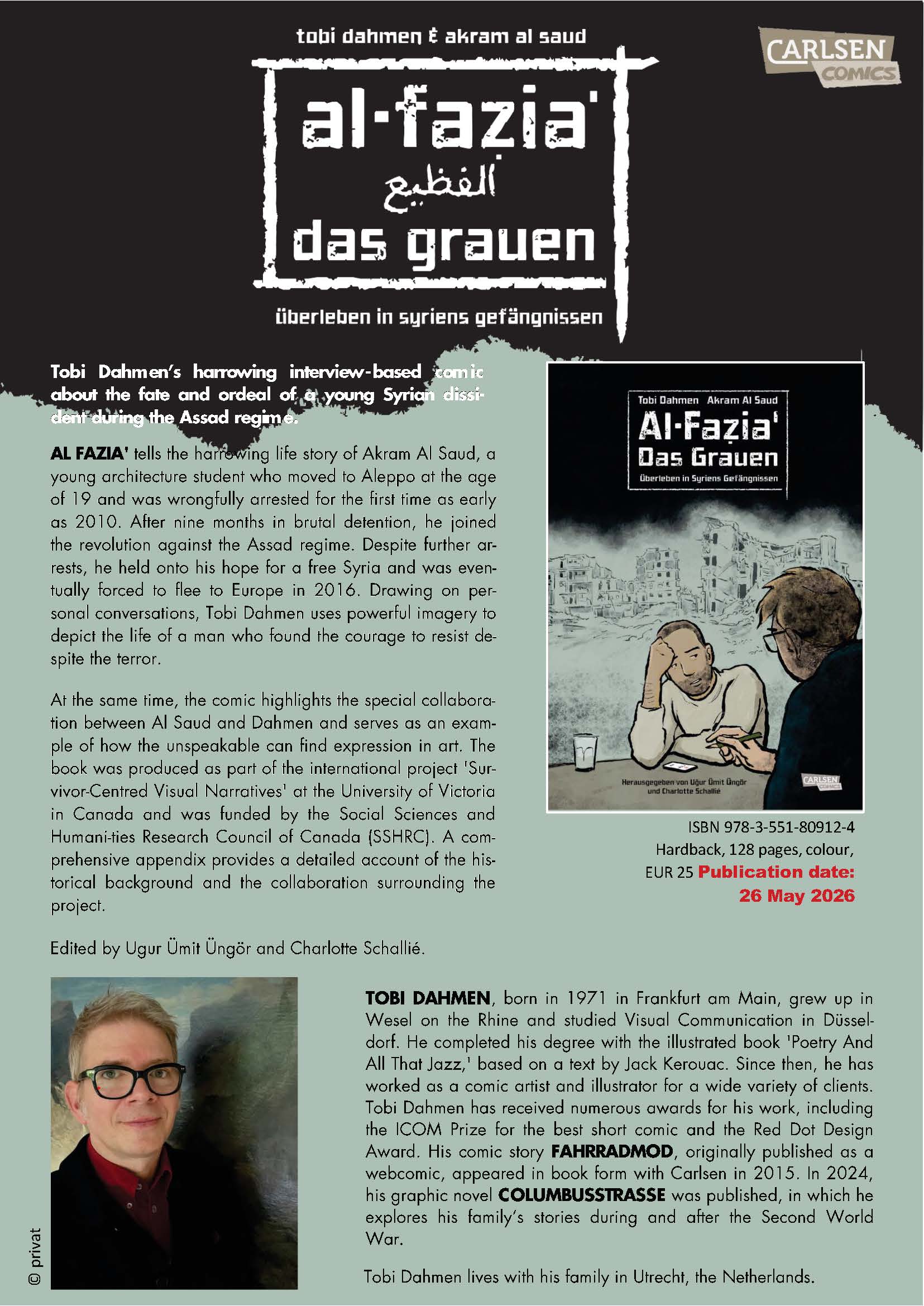
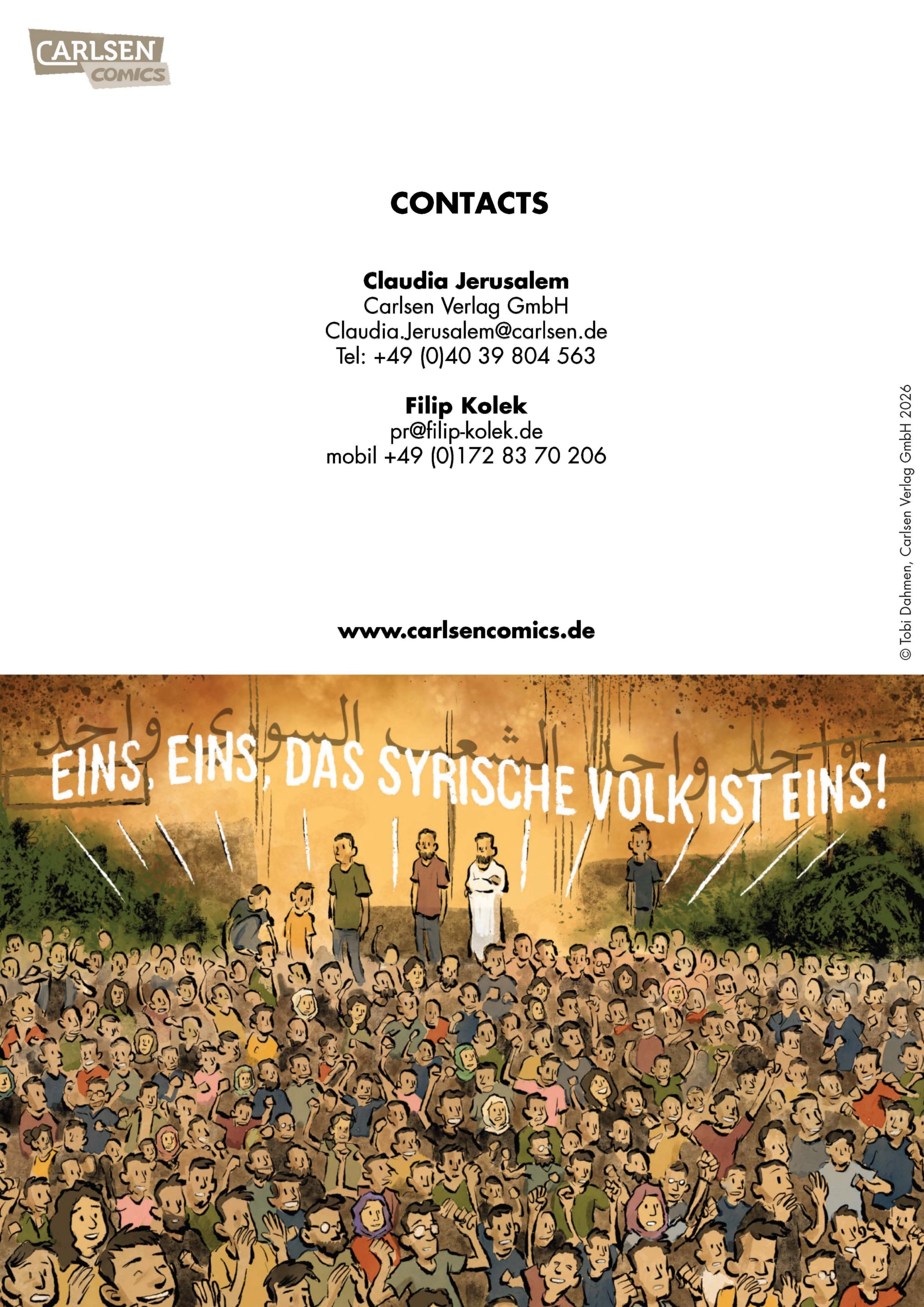
We are delighted to announce that SCVN’s third graphic novel, Al-Faẓia’ الفظیع– The Horror: Surviving Syria’s Prisons, will be published in German on May 26, 2026, by Carlsen Verlag. Al-Faẓia’ is the result of a collaboration between artist Tobi Dahmen and survivor Akram Al Saud, including extensive interviews and personal encounters.
In 2010, Akram Al Saud, then a nineteen-year-old architecture student at the University of Aleppo, was unjustly arrested by the intelligence services of the Syrian air force. His detention, the first of four, lasted nine months. After his release, Akram joined the revolution against the Assad regime, but in 2016 he was forced to flee to Europe.
Akram and Tobi’s collaboration was supported by a team of people dedicated to arts-based, trauma-informed, survivor-centred research and storytelling: editors Uğur Ümit Üngör and Charlotte Schallié; research cluster co-leads Dr. Üngör, Kees Ribbens, and Kjell Anderson; and the NIOD Institute for War, Holocaust and Genocide Studies in Amsterdam. Funding was provided by the Social Sciences and Humanities Research Council of Canada (SSHRC).
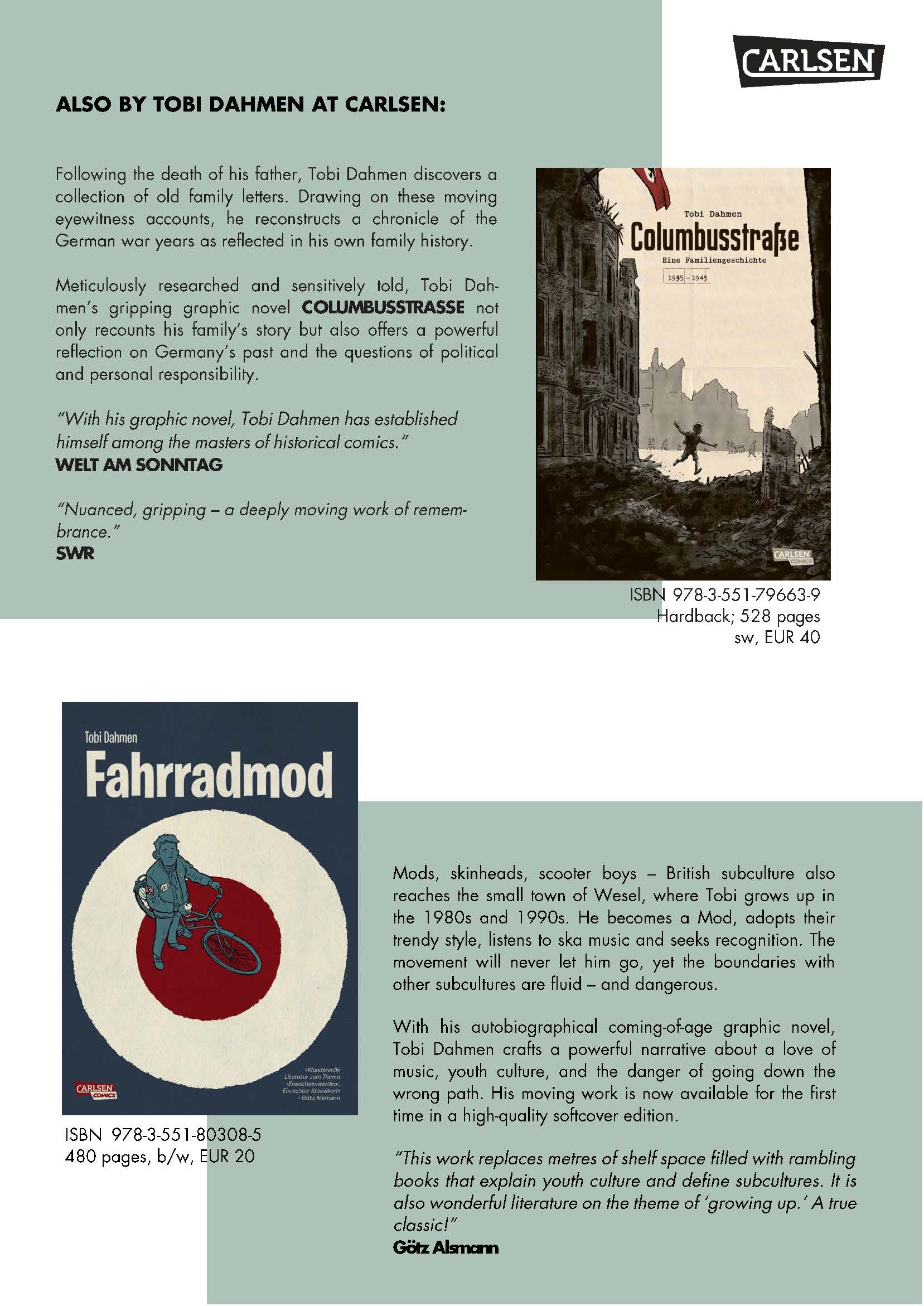
For more information about the graphic novel, follow the link to our Research Cluster page. Click the cover image on the right to read an English translation of the official Carlsen press kit, or click on the images below.
A companion documentary short film, ‘How to Draw Darkness?’, directed by Lidija Zelović, is currently in post-production, with the official trailer available to watch on our SCVN YouTube channel.
We are delighted to share that the SCVN project has been selected as a finalist in the Social Sciences and Humanities Research Council (SSHRC) of Canada’s Storytellers Challenge for 2026! This challenge is open to postsecondary students, inviting them to show Canadians, in up to three minutes or 300 words, how social sciences and humanities research is impacting our lives, our world and our future for the better.
For SCVN’s entry, research assistant Ghada Youssef produced a 3-minute video summarizing the project’s goals and outputs. She will be participating in the second phase of the challenge by presenting the project in front of a jury at a conference in Montreal, Quebec this June 2026, where five winners will be announced.
Ghada’s selection has also been featured in the UVic News and the VPRI Bulletin article ‘Storytellers on screen’ where she shared that SCVN was among her motivations to pursue her doctoral studies:
“I was very excited that the project uses visual mediums to approach social justice topics—it felt like it sat squarely within what I’m already passionate about.”
Congratulations to Ghada and the media and communications team on this achievement! You can watch the submission video on the SSHRC YouTube below:
The official trailer for the upcoming documentary short film ‘Almasa’s Story’ is now available to view on our SCVN YouTube channel. Filmed in Sarajevo and directed by Bojan Hadžiabdić, ‘Almasa’s Story’ features Almasa Salihović, a child survivor of the 1995 Srebrenica genocide, and graphic artist Anneli Furmark, who spent a year interviewing Almasa to create a graphic novel based on her lived experiences during the genocide.
Almasa was six years old when Bosnian Serb forces overran the UN ‘safe area’ of Srebrenica. More than 8,000 men and boys were killed in one of the most violent chapters in European history since World War II. As part of their year-long collaboration, Anneli met with Almasa in Bosnia and Herzegovina, and together they visited locations from Almasa’s past, including the village of Potočari, where she lost her older brother, Abdulah. ‘Almasa’s Story’ bears witness to this journey through the physical and emotional landscapes of a history both deeply personal and universally significant.
Stills from ‘Almasa’s Story’ directed by Bojan Hadžiabdić
Today, Almasa works at the Srebrenica Memorial Center, an organization ‘committed to preserving the history of the genocide in Srebrenica as well as combatting the forces of ignorance and hatred which make genocide possible’.
The full documentary short film will be released on the SCVN YouTube channel in 2026.
Excerpt from Two Roses (New Jewish Press, 2026) by Miriam LibickiandRose Lipszyc.
We are delighted to announce that our second SCVN graphic novel, Two Roses: A Story of Deception and Determination in Nazi Germany, will be published on February 26, 2026 by the University of Toronto Press. Two Roses is a collaboration between Holocaust survivor Rose Lipszyc and graphic artist Miriam Libicki, sharing the experiences of Rose and her aunt, Róza Finkielsztajn, during and after WWII in Poland.
Born in 1929, Rose Lipszyc was only ten years old when Nazi Germany invaded Poland. In October 1942, as her family was being deported from their home in Osmolice, Rose managed to escape when her mother pushed her out of the line of deportees. Barely a teenager, Rose fled with the help of strangers and friends by using a false identity. She was then reunited with her aunt in Lublin, and the pair went on to work as forced labourers in a factory in Bremen, Germany, by impersonating Polish gentile sisters. Two Roses depicts how these two women came together and survived the war under vulnerable aliases, portraying the incredible depth of their connection and perseverance. Rose settled in Toronto, and in 2021, she was awarded the Order of Canada for her work in Holocaust education.
Supported by the Social Sciences and Humanities Research Council of Canada, Two Roses is a highly collaborative book project created over the course of two years. Miriam’s work was supported by SCVN’s Research Cluster Co-Leads Drs. Charlotte Schallié and Mark Celinscak, with research assistant Jessica Botts, who provided research materials and interview support. SCVN’s Project Manager Jennifer Sauter coordinated the travel for Miriam to visit with Rose in Toronto for in-person interviews and filming the documentary. Our project partner, the Azrieli Foundation, supported interview facilitation by having a community liaison present with Rose during the interviews. We are grateful for the time and support of Devora Levine, Arielle Burger, and Carson Phillips. This extended graphic narrative was also made possible by additional funding from the Government of Canada’s National Holocaust Remembrance Program.
A companion documentary film, “A Rose in Plain Sight,” directed by filmmaker Chorong Kim, is available to watch on our SCVN YouTube Channel.
Two Roses disrupts the narratives of victimization that often undermine the stories of Holocaust survivors. Instead of painting victims of human rights abuse as mere case studies, this book illuminates a crucial part of our shared history with radical care, honesty, and creativity.
From left to right: Graphic artist Miriam Libicki, Holocaust survivor Rose Lipszyc, and Research Cluster Co-lead Mark Celinscak. Photo credit: Chorong Kim.Two Roses book cover.
We are pleased to announce that both Barbara Yelin and Emmie Arbel have been awarded the prestigious “Against Forgetting – For Democracy” prize for 2025 by Gegen Vergessen – Für Demokratie e. V. (Against Forgetting – For Democracy). The prize honours their collaborative work on the graphic novel Emmie Arbel. The Colour of Memory.
The award recognizes individuals, initiatives, and/or projects whose outstanding work aligns with the association’s goals of developing appropriate forms of engagement with the past and/or right-wing extremism, and clearly demonstrating democratic values.
Barbara Yelin is being honoured for her artistic achievement and Emmie Arbel for her courage in revisiting and sharing her memories through a four-year creative collaboration. The recognition of this work underlines the power of graphic storytelling in keeping memory alive and fostering democratic awareness.
The award jury, chaired by former President of the Federal Constitutional Court Andreas Voßkuhle, shared this statement as part of the reasons for awarding Barbara and Emmie the prize:
“Barbara Yelin’s drawings convey history vividly and accessibly, in a way that text alone could not. At the same time, they do justice to the multifaceted nature of Arbel’s biography. 80 years after the end of the war, the book thus speaks to people of very different generations.”
Thank you to Gegen Vergessen – Für Demokratie e. V. for this recognition and congratulations to Barbara Yelin and Emmie Arbel for this well-deserved honour. The award ceremony will take place on 22 November 2025 in Berlin. Stay tuned for further updates!
Barbara YelinEmmie Arbel
Find more information on Against Forgetting – For Democracy e.V.’s website here.
We are delighted to announce that graphic artist Barbara Yelin is the winner of the 2025 annual Grand Prize of the German Academy for Children’s and Young Adult Literature (Deutsche Akademie für Kinder- und Jugendliteratur), granted in recognition for outstanding achievements in children and young adult literature.
Barbara Yelin
Grand Prize poster from the German Academy for Children’s and Young Adult Literature (Deutsche Akademie für Kinder- und Jugendliteratur), and Barbara Yelin. Photo credit: Martin Friedrich.
The award highlights her “multifaceted storytelling in the medium of comics – in drawing, dialogue and narrative text” and recognizes the culmination of her SCVN collaboration with Holocaust survivor Emmie Arbel in their initial graphic narrative, ‘But I Live’ and the expanded collaboration ‘Emmie Arbel. The Colour of Memory’.
Through translation, the academy outlines Barbara’s achievements as:
[Her] exceptional gift for biographical storytelling shines through once again – her keen powers of observation, her empathetic approach, and her richly atmospheric imagery. In addition to her artistic talent, Yelin is distinguished, among other things, by her profound social understanding and civic engagement.
Thus, she not only champions biographical remembrance work but also engages in art projects against the exploitation of refugees, antisemitism, hatred, and racism. With her artwork, Yelin makes unseen life stories and tragic events visible to us all.
The award ceremony will take place on November 21st, 2025 in Volkach, Germany, facilitated by Dr. Winfried Bausback on behalf of the Bavarian State Ministry for Science and Art.
Exciting news! Author Duncan McCue and illustrator Mangeshig Pawis-Steckley, from our Turtle Island Cluster, are collaborating with Professor Éléonore Goldberg and Alan Goldman of Emily Carr University of Art + Design—along with their student researchers—to explore how the graphic novel Indians Do Cry can be brought to life through animation. Éléonore has been accepted as a SSHRC Co-applicant on the SCVN project and connected with Duncan on October 28, when he travelled from Ottawa to Vancouver to meet with the local Emily Carr team and Mangeshig. The animation project is still in its early stages, but stay tuned for more on this creative partnership which blends Indigenous storytelling with cutting-edge visual arts.
Students in consultation with Éléonore, Alan, Duncan and Mangeshig (left) and Alan, Mangeshig and Éléonore touring the university (right). Photo credit: Duncan McCue and Asad Aftab.
In September 2025, Jonathan Sandler, host of the GraphicMemoirBlog and author of The English GI (2022), interviewed SCVN graphic artist Miriam Libicki in a blog feature titled ‘A Conversation with Miriam Libicki: WWII Graphic Memoirs’. They discussed her previous SCVN collaboration with Barbara Yelin, Gilad Seliktar, and Dr. Charlotte Schallié in But I Live: Three Stories of Child Survivors of the Holocaust (2022), and her forthcoming publication Two Roses: A Story of Deception and Determination in Nazi Germany (2026).
Jonathan and Miriam discussed the ways in which graphic novels can be used as research and storytelling tools for Holocaust education and to honour the voices of survivors. As Jonathan highlighted, Miriam worked from transcripts and shaped narratives that stay faithful to the survivors’ words, such as David Schaffer, where “every word in that book is his… the story is his voice.” Through comics, the stories convey information about survivor experiences while providing a safe and supportive learning environment.
Miriam Libicki. Photo credit: Chorong Kim.Page from But I Live: Three Stories of Child Survivors of the Holocaust, in which Miriam Libicki adapts her interviews with survivor David Schaffer.
In this interview, Miriam also shared her experience working closely with Holocaust survivors and the impact of the narratives on her art, describing her collaborations as “transformative.” To her, David’s story felt like “something out of dark fairy tales”, leading her to develop a watercolour style that would “evoke the living, threatening natural world.”
Inspired by early 20th-century children’s illustrations, she used watercolours “to set apart from the monochrome charcoal styles often associated with Holocaust art.” The illustrations in her SCVN graphic narratives also reflect different influences, ranging from Will Eisner to Japanese manga and Canadian comics, that supported her journey in both projects.
In her narratives, she has been drawn to first-person stories and particular points of view, and believes:
Comics are a powerful tool for empathy. Even if you disagree, you can still be compelled by the perspective.
Thank you to Jonathan for interviewing with Miriam and sharing insights into her artistic process and collaboration with SCVN!