Survivor-Centred Visual Narratives

Category: publications

Publication announcement: ‘Solange wir zusammen sind’ (‘As Long As We Are Together’) – Nov 19, 2026

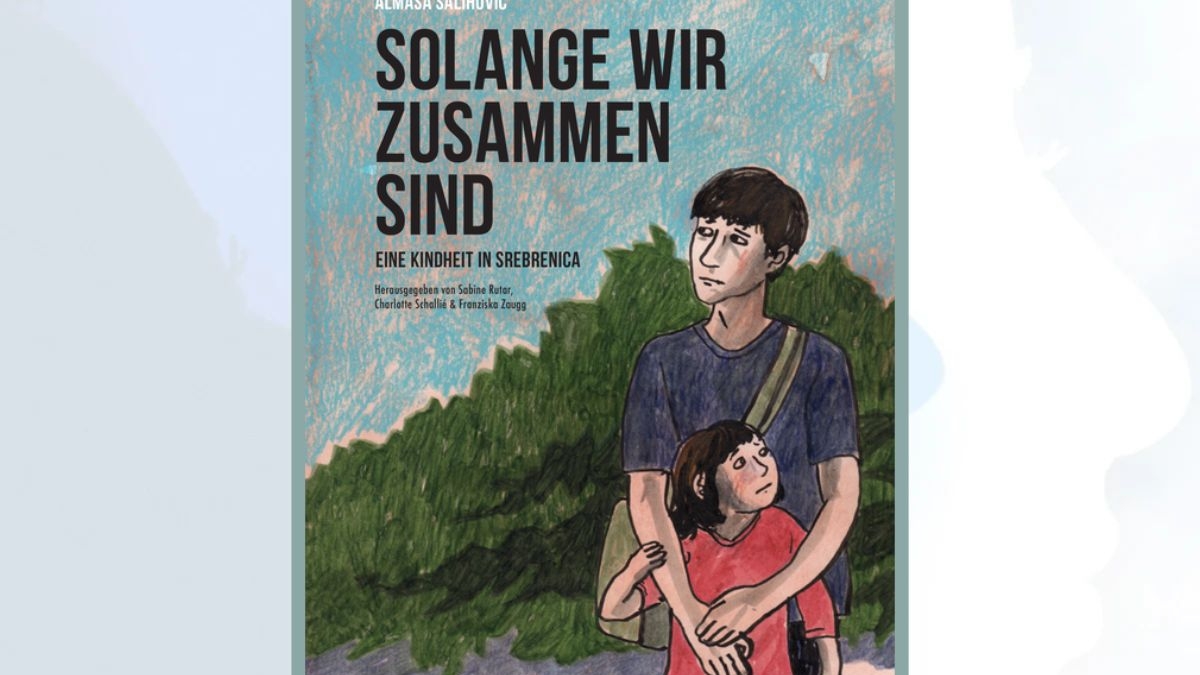
Survivor-Centred Visual Narratives (SCVN) is delighted to announce that the German edition of As Long As We Are Together: A Childhood During the Screbrenica Genocide will be released on November 19, 2026. The graphic novel is published by Berlin’s avant-verlag under the title Solange wir zusammen sind: Eine Kindheit in Srebrenica.

The graphic novel is an intimate portrait of Almasa Salihović’s survival of the 1995 Srebrenica genocide. Almasa grew up in the village of Skejići, and her childhood in Yugoslavia was cut short by the war in Bosnia-Herzegovina. Her family fled on foot through the surrounding forests, hoping to find protection in Srebrenica, a UN-declared safe area. Over the following days, more than 8,000 Bosniak men and boys were murdered. Almasa’s family did not escape the loss, and among the people she carries with her is her older brother Abdulah. By weaving together testimony, artistic process and a landscape marked by both trauma and resilience, the book honours Almasa’s survival and the strength that sustains her today.
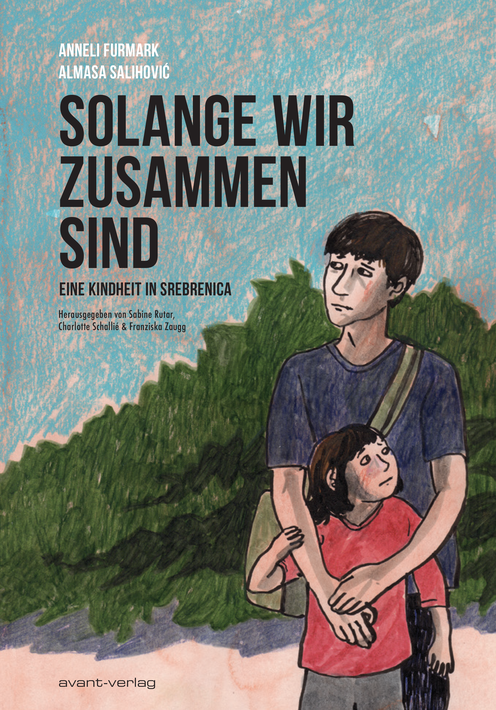
German cover for As Long As We Are Together (2026). Image credit: avant-verlag

The book was co-created by Swedish artist Anneli Furmark and survivor Almasa Salihović, with the support of community liaison Dr. Ajnura Akbaš from the War Childhood Museum. It was edited by Dr. Sabine Rutar, Dr. Charlotte Schallié and Dr. Franziska Zaugg, and translated from English by Johann Ulrich. It is part of the Yugoslav Wars Research Cluster of SCVN.

We are especially pleased that this story will reach German-language readers. It is also a reminder that the history of the Yugoslav Wars is one that Germany and Europe are still reckoning with.

Order from avant-verlag here.

The English edition will be published by University of Toronto Press in late November 2026.

Learn more about the book and the project here.

This graphic novel was developed as part of the Survivor-Centred Visual Narratives Project funded by the Social Sciences and Humanities Research Council (SSHRC) of Canada.
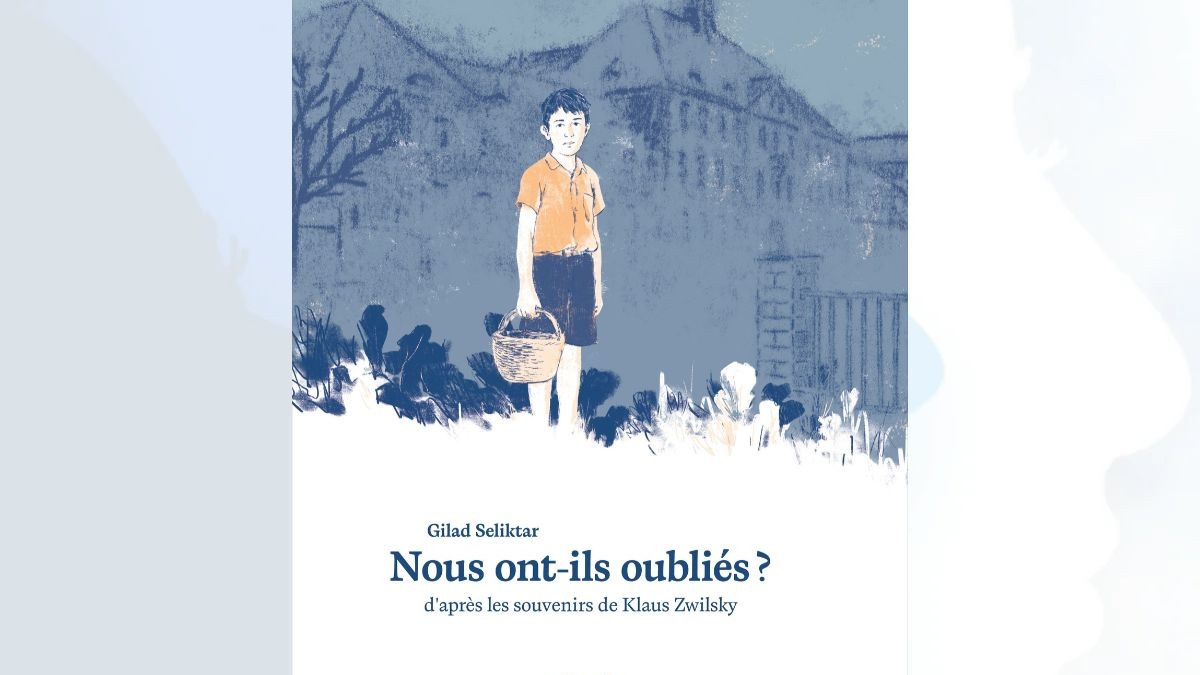
Publication announcement: ‘Nous ont-ils oubliés ?’ (‘Did They Forget About Us?’) – Oct 16, 2026

Survivor-Centred Visual Narratives (SCVN) is pleased to announce the French-language release of Nous ont-ils oubliés ? (Did They Forget About Us?) by publisher Éditions çà et là on October 16, 2026. The graphic novel is co-created by graphic novelist Gilad Seliktar and Holocaust survivor Klaus Zwilsky. The book was translated from English by Hélène Duhamel.

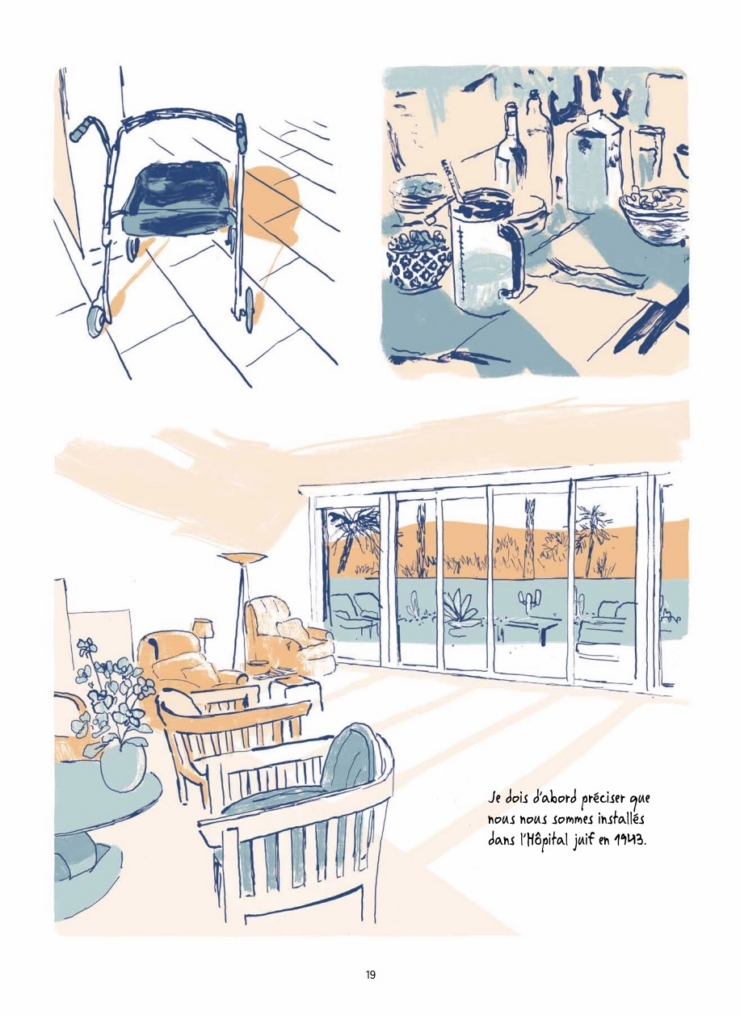
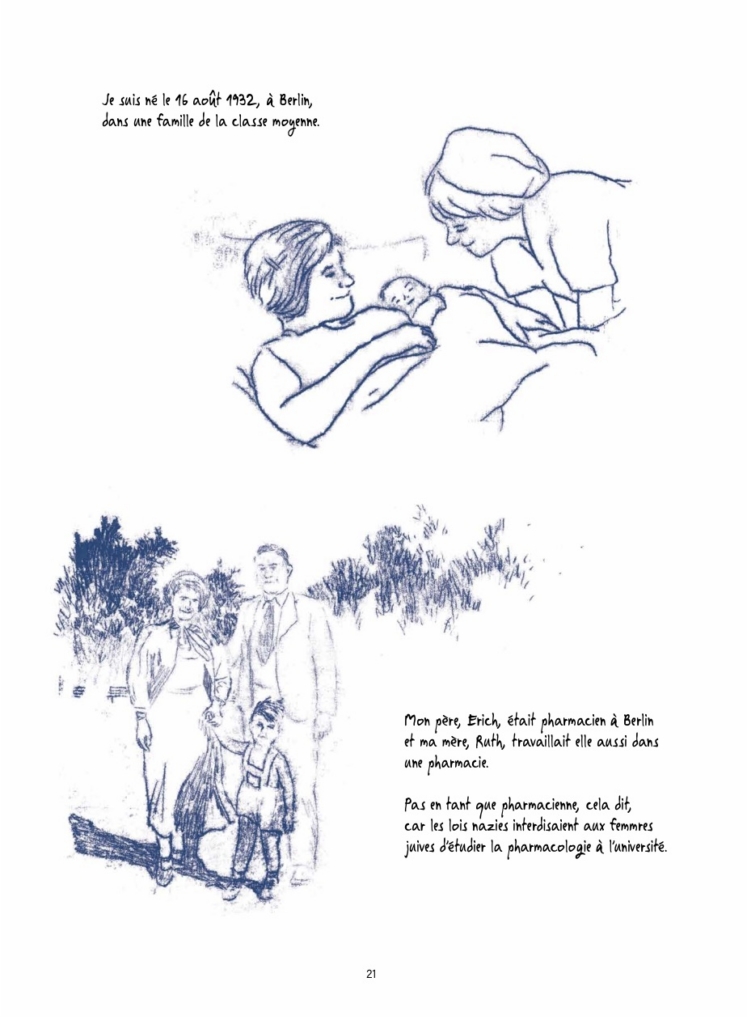
The book follows the story of a young boy named Klaus Werner Max Zwilsky who was born in Berlin on August 16, 1932. In 1943 his family was ordered to the Jewish Hospital Berlin, where his father, Erich, served as the institution’s last remaining pharmacist and his mother, Ruth, repaired military uniforms before joining him in the dispensary. What followed was a story of survival in plain sight: the hospital was the only Jewish institution in Nazi Germany to remain operational throughout the war, and roughly 800 Jews were still living there when Soviet troops liberated it on April 24, 1945. Klaus returned to school that July and became the first Bar Mitzvah in postwar Berlin.

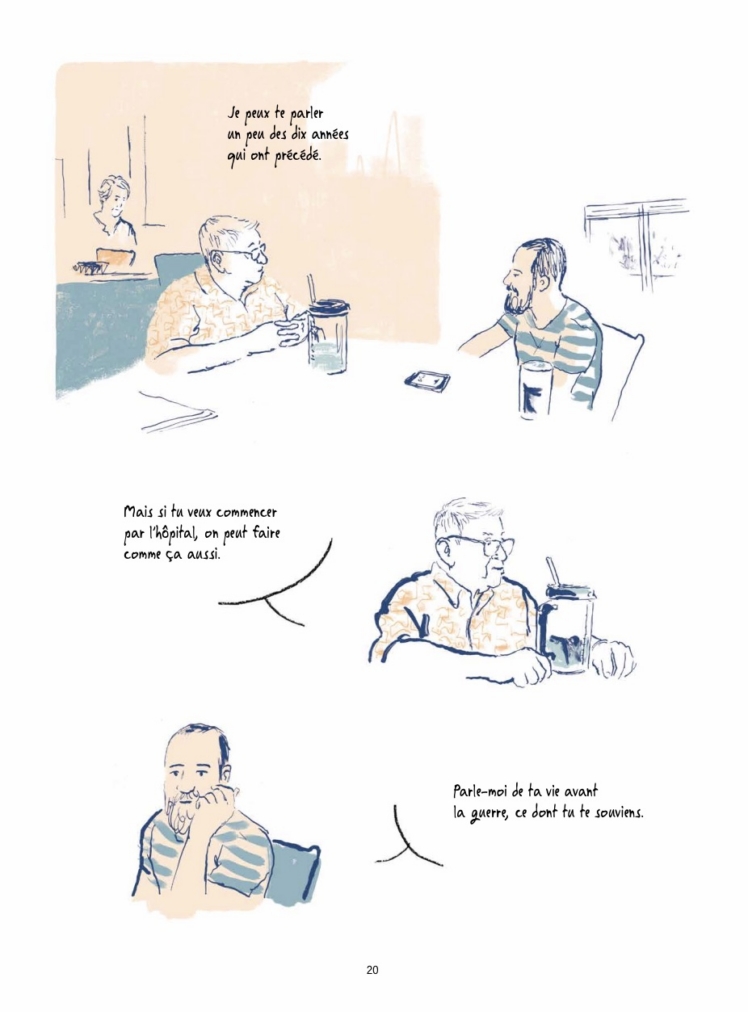
The two met through Dr. Aubrey Pomerance, Head of Archives at the Jewish Museum Berlin, who put them in touch in the autumn of 2022. In May 2023, Gilad travelled to Klaus’s home in Palm Springs, California, to record his account; and that July he went to Berlin to see the archive and the hospital for himself.

The book Gilad drew from those visits tells two stories side by side, allowing the reader to engage with two timeframes at once: Klaus’s wartime memories, and the encounter between an artist and a survivor eighty years later. The deliberate representation of these overlapping timeframes calls direct attention to the collaborative mediation process involved in the creation of this graphic novel.

Nous ont-ils oubliés ? leaves a genuine historical question open. Why the Nazi authorities never closed the hospital or deported the people sheltering inside it has never been satisfactorily explained, and the book is accompanied by an essay setting out what the documentary record can and cannot establish. Klaus has spent much of the past two decades on that record himself, organizing his parents’ wartime papers and donating them to the Jewish Museum Berlin, where they form the Zwilsky Collection.

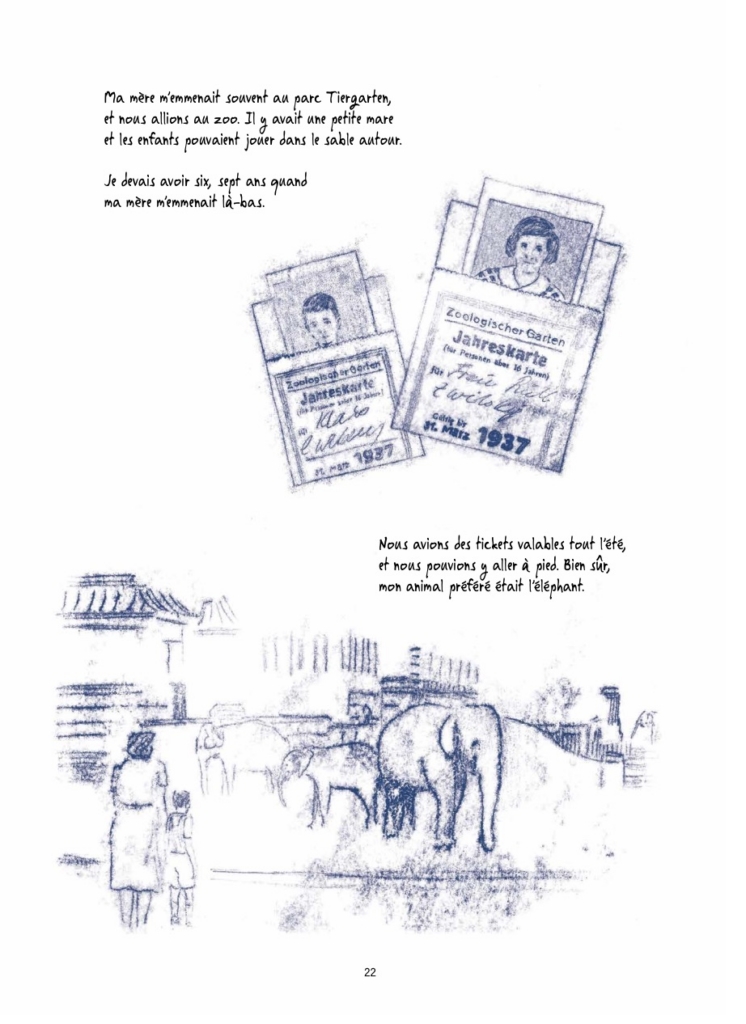
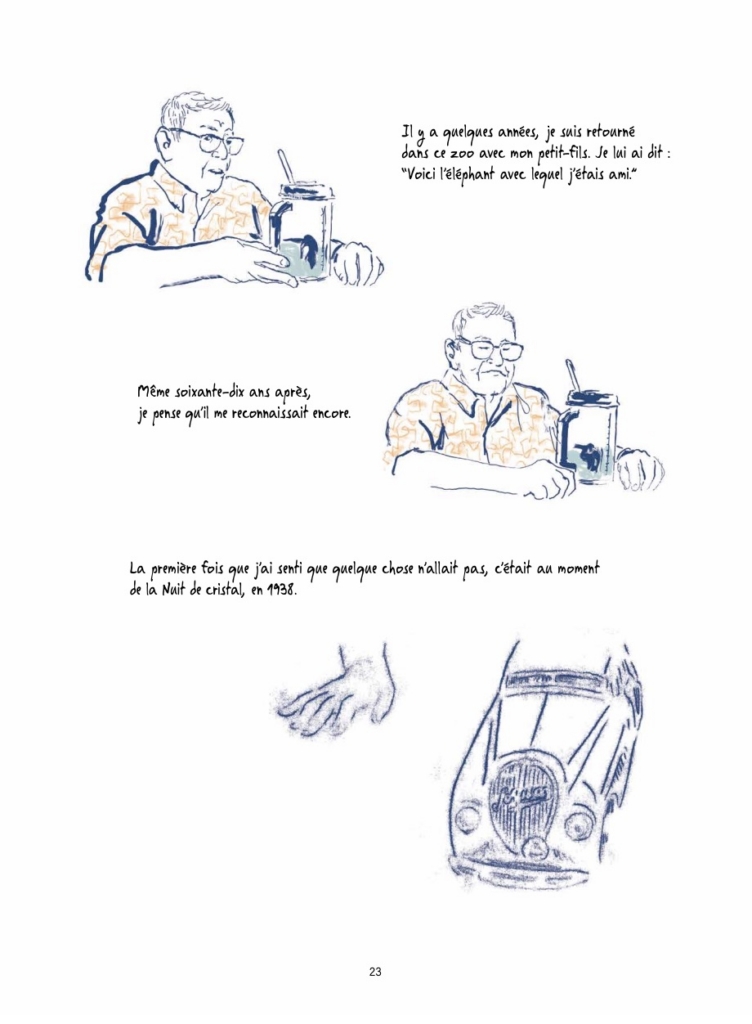
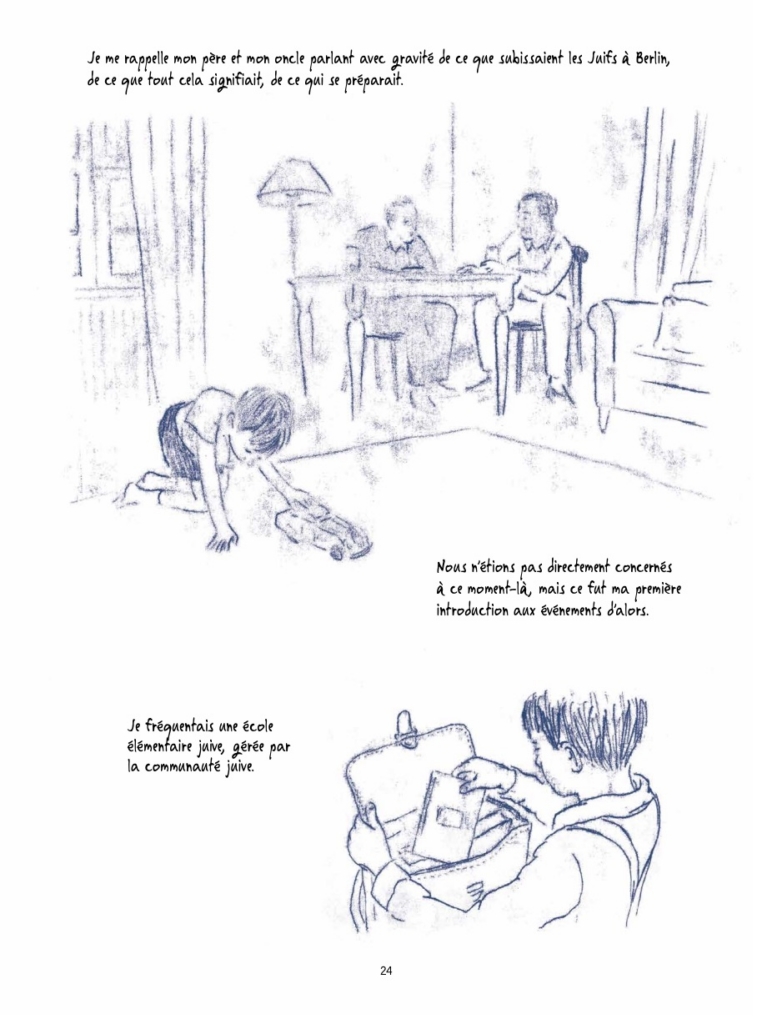
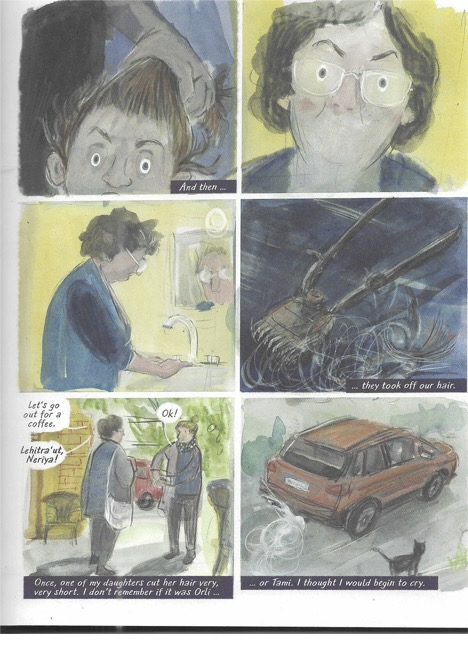
Pages 19-24 from ‘Nous ont-ils oubliés ?’ Read more: https://www.caetla.fr/IMG/pdf/extrait_nous_ont-ils_oublies.pdf

In Jnauary 2026, SCVN hosted the webinar Personal Histories in the Public Archive: Archiving the Klaus Zwilsky Story, in which Klaus joined friend and colleague Aubrey Pomerance, Head of Archives at the Jewish Museum Berlin, and SCVN Project Director Charlotte Schallié to discuss the Zwilsky Collection. Their conversation asks what it takes for a public archive to hold a family’s personal history responsibly, with the survivor himself shaping how his records are described and made accessible. The webinar recording will be available to view here.

Merci! A heartfelt thank you to Klaus Zwilsky, Gilad Seliktar, editor Dr. Charlotte Schallié, Dr. Aubrey Pomerance, translator Hélène Duhamel, Éditions çà et là editor Serge Ewenczyk, and everyone who helped bring the French edition of Klaus’s story to French-language readers.

Learn more about Klaus and Gilad’s collaboration here. Learn more about SCVN’s Holocaust Research Cluster here.

This graphic novel was supported by the Social Sciences and Humanities Research Council of Canada (SSHRC) and La Fondation pour la Mémoire de la Shoah.

Publication announcement – ‘Al-Faẓia’ The Horror: Surviving Syria’s Prisons’ – Nov 2026

We are delighted to announce that the English edition of the Survivor-Centred Visual Narrative (SCVN) graphic novel Al-Faẓia’ The Horror: Surviving Syria’s Prisons co-created by graphic artist Tobi Dahmen and survivor Akram Al Saud will be published by the University of Toronto Press in November 2026. The book follows the German edition, released by Carlsen Verlag in May 2026, and brings Akram Al Saud’s story to English-language readers for the first time.

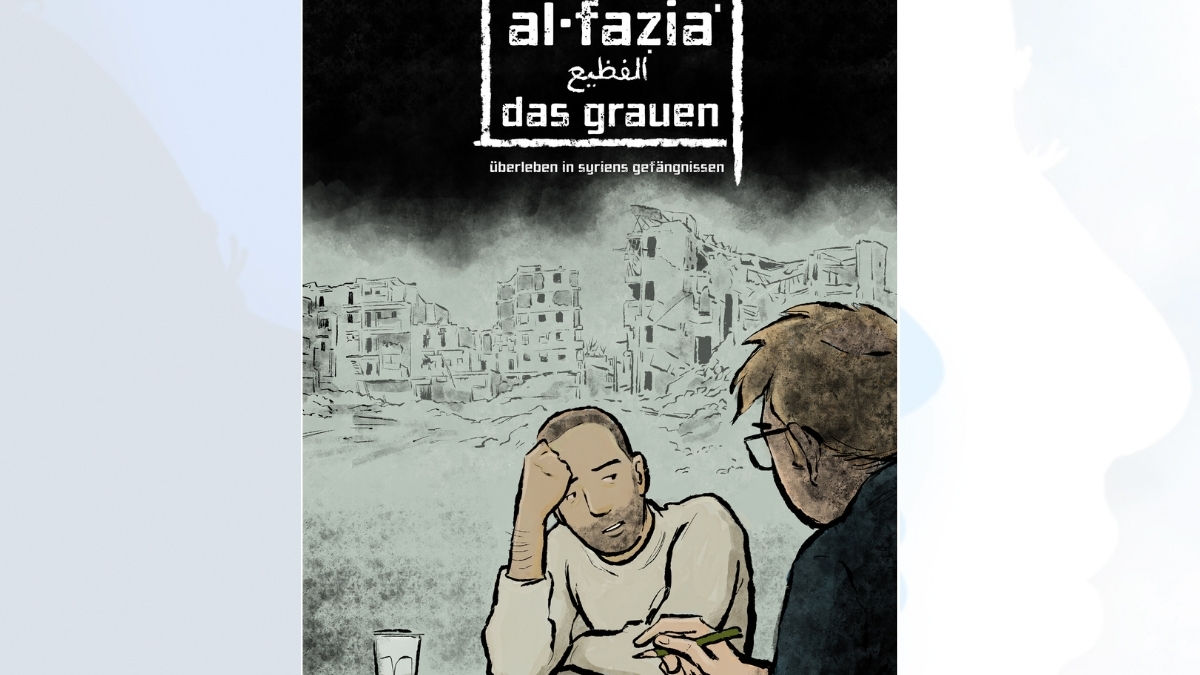
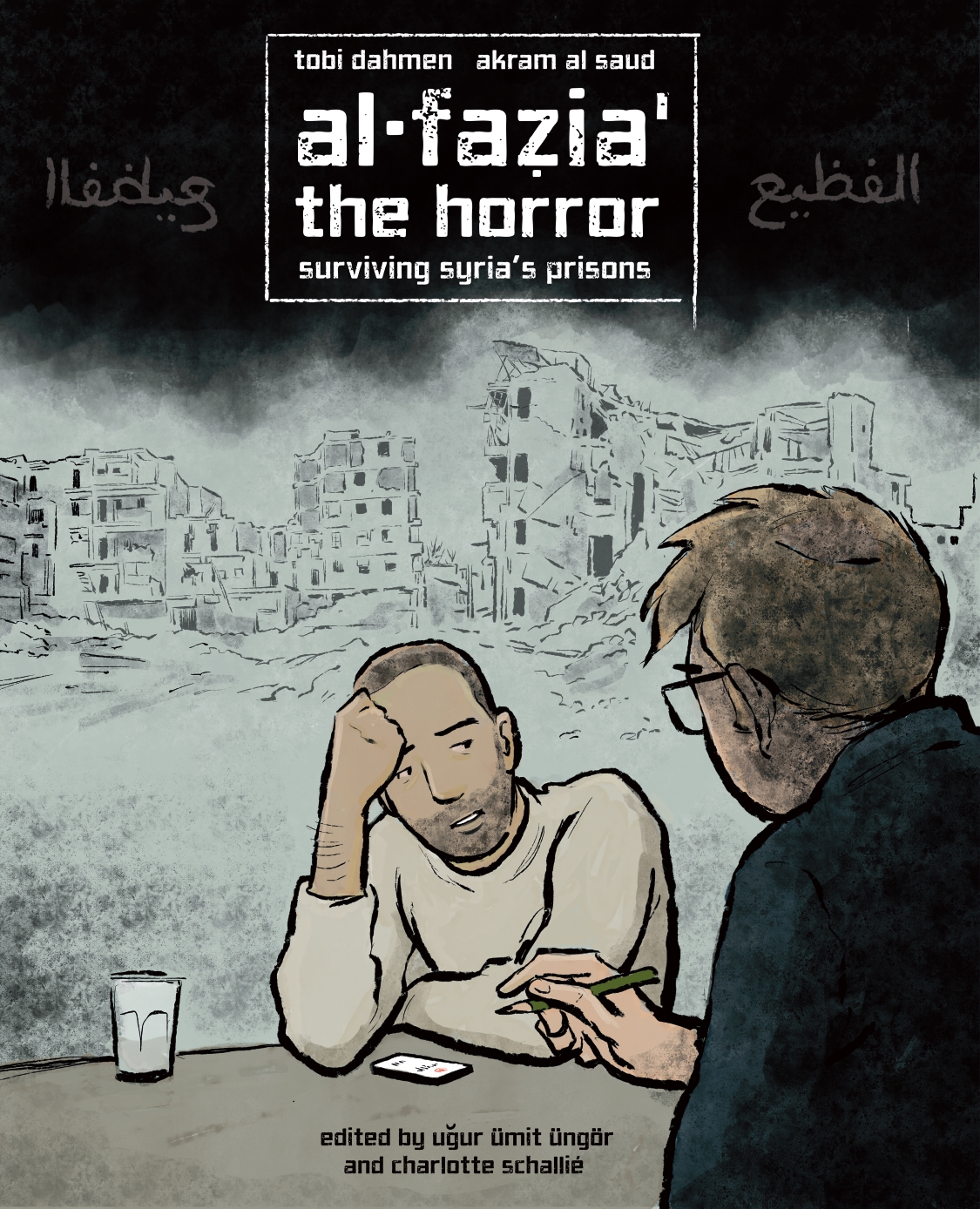
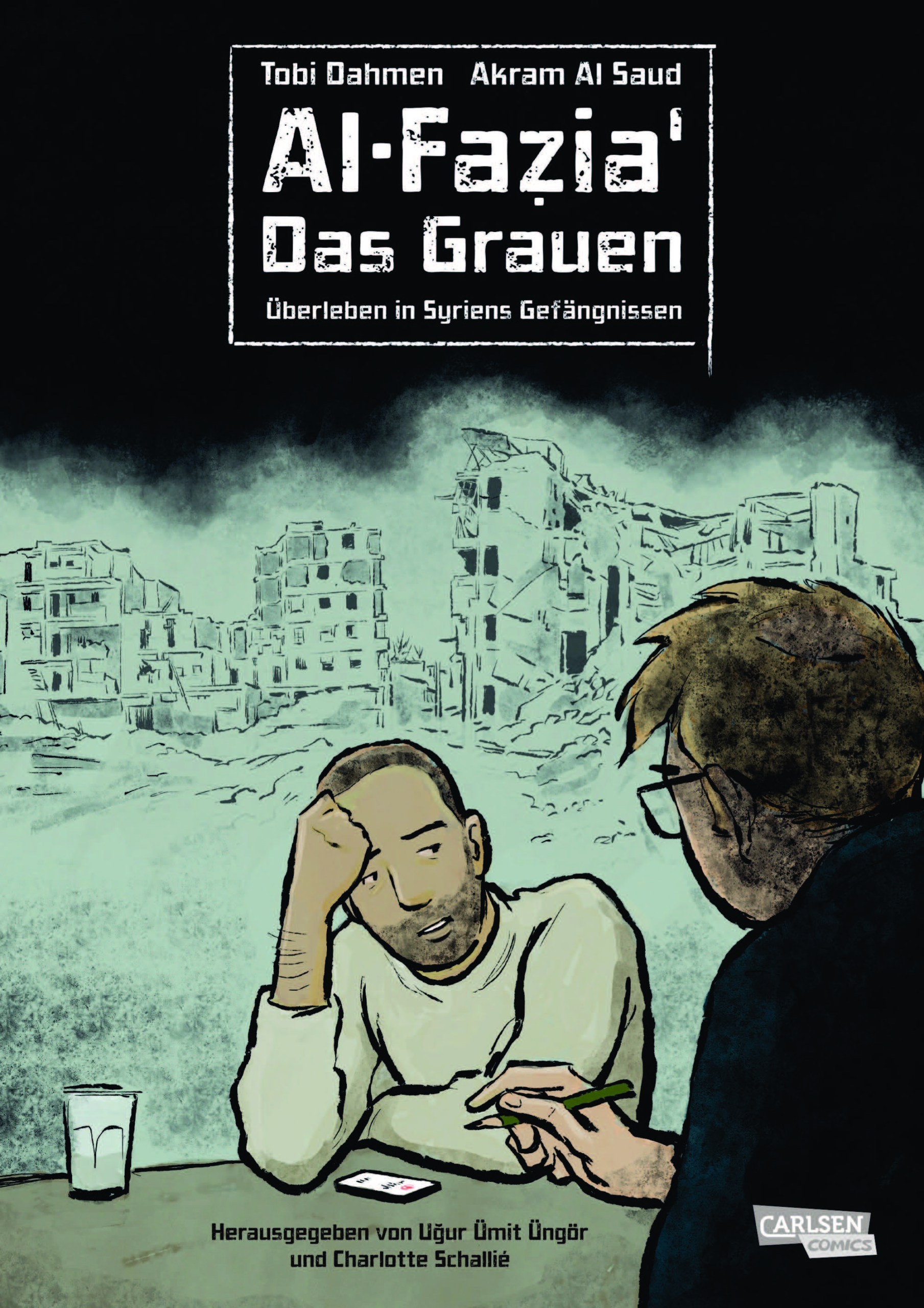
Cover of ‘Al-Faẓia’ The Horror: Surviving Syria’s Prisons’ (November 2026). Photo credit: University of Toronto Press.

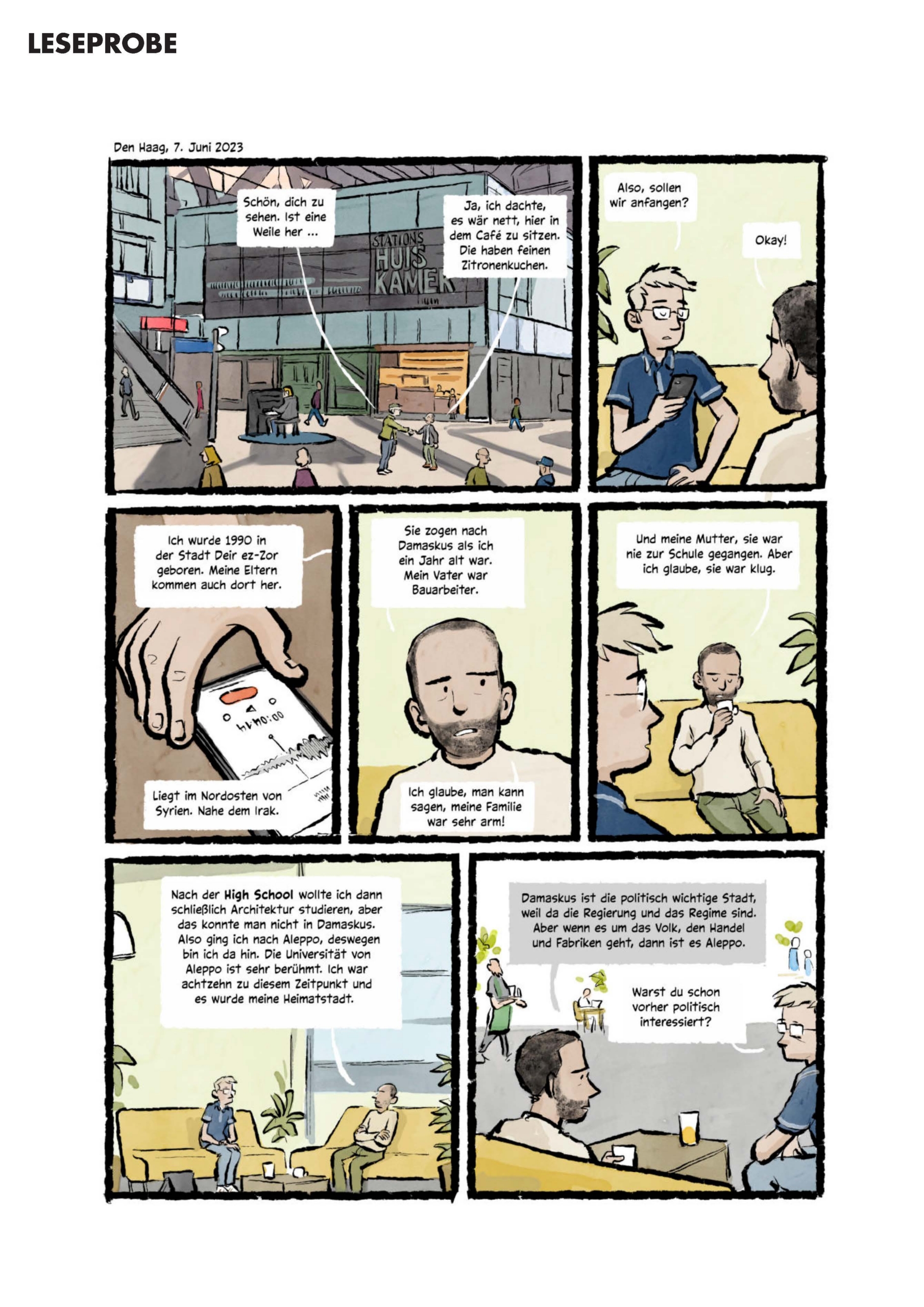
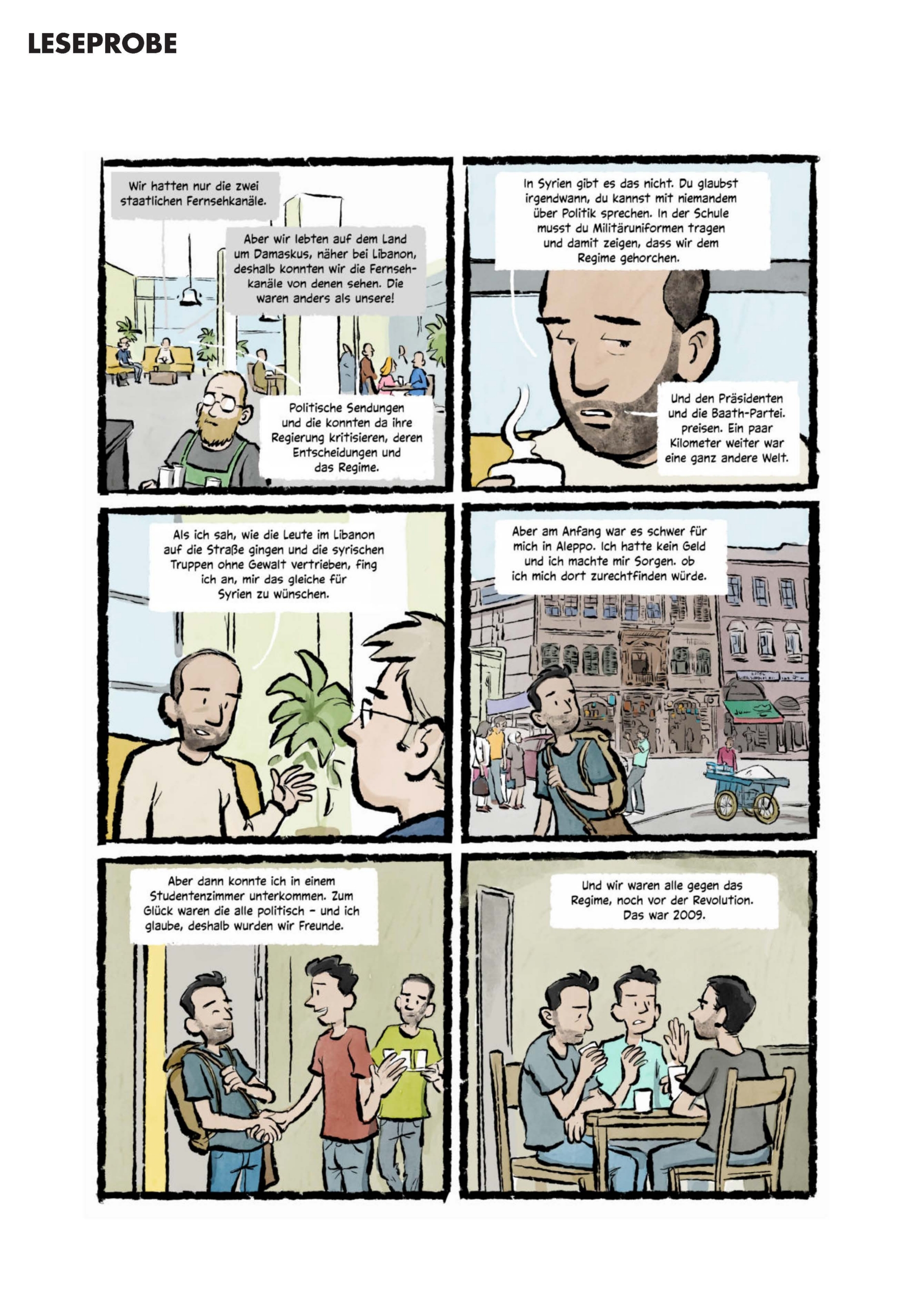
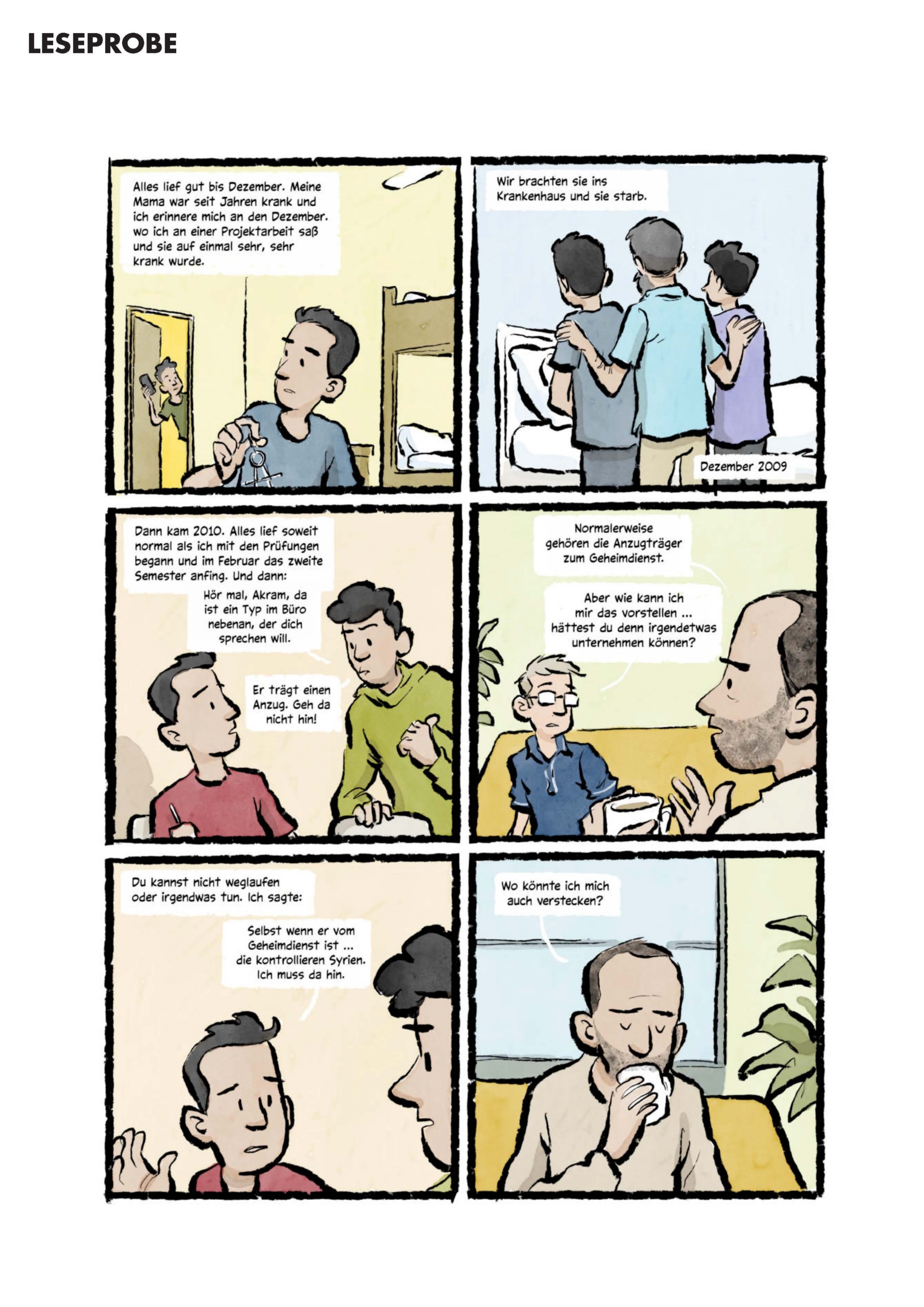
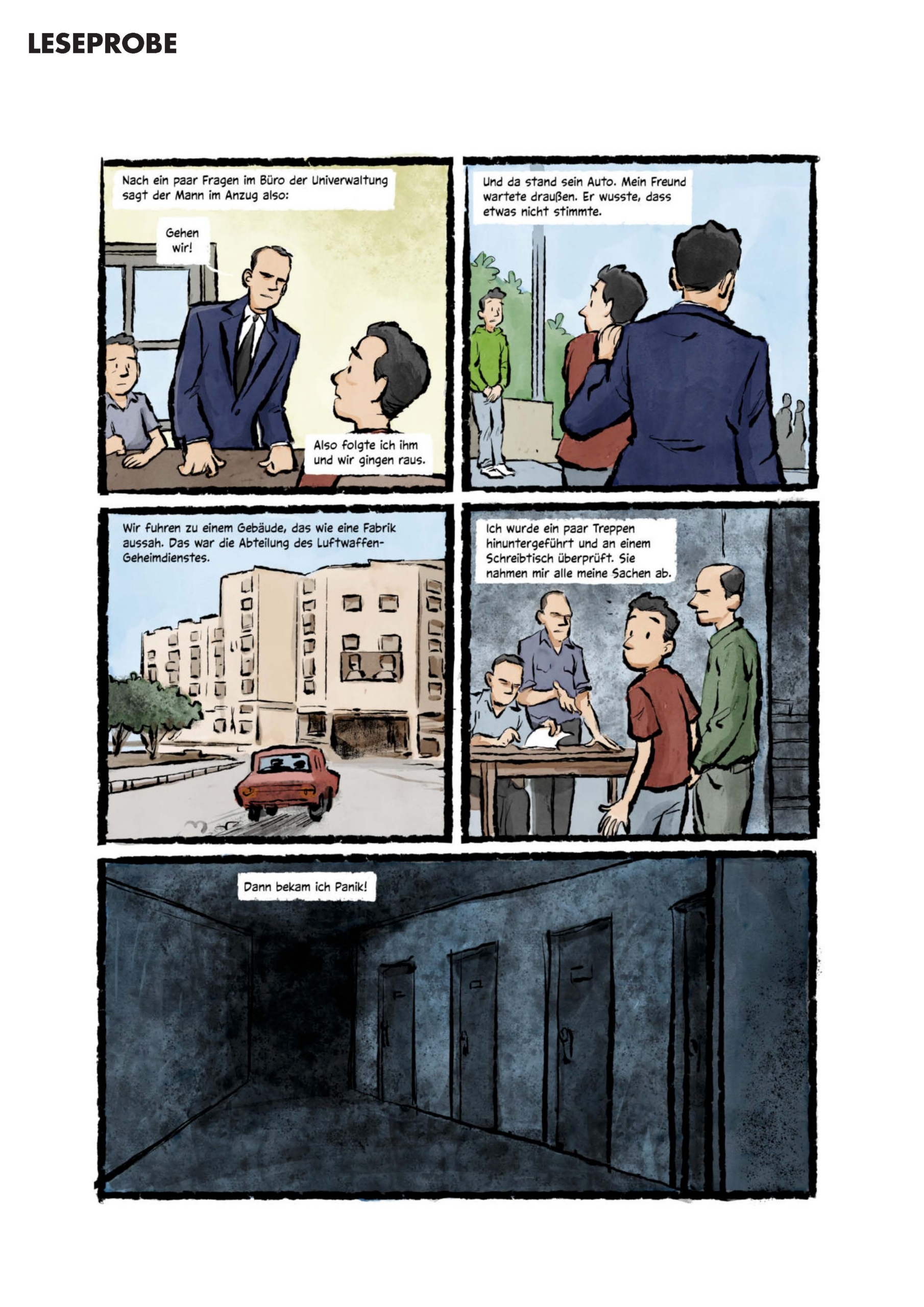
Al-Faẓia’ is the result of a close collaboration between artist Tobi Dahmen and survivor Akram Al Saud, built on extensive interviews and personal encounters. In 2010, Akram, then a nineteen-year-old architecture student at the University of Aleppo, was unjustly arrested by the intelligence services of the Syrian air force. His detention, the first of four, lasted nine months. After his release, he joined the revolution against the Assad regime, endured further arrests, and was forced to flee to Europe in 2016. The book portrays his life with authenticity and sensitivity, restoring agency to his experience as a survivor. A substantial appendix provides historical context and a behind-the-scenes look at how the project came to be.

The collaboration was supported by a team dedicated to arts-based, trauma-informed, survivor-centred research and storytelling: editors Dr. Uğur Ümit Üngör and Dr. Charlotte Schallié, and research cluster co-leads Dr. Üngör, Dr. Kees Ribbens, and Dr. Kjell Anderson.

The project’s timing carries particular weight. The manuscript was being finalized when the Assad regime fell in December 2024, which made two significant changes possible: the book can now be distributed in Syria, and Akram’s full name can be associated with it. Neither would have been possible before.

For more information, visit the Al-Faẓia’ project page or our Iraq / Syria Research Cluster page. A companion documentary short film, How to Draw Darkness?, directed by Lidija Zelović, accompanies the book, and the trailer is available on our SCVN YouTube channel here.

Pre-order the English edition of Al-Faẓia’ The Horror: Surviving Syria’s Prisons (2026) from the University of Toronto Press here.

This graphic novel was supported by the Social Sciences and Humanities Research Council of Canada (SSHRC), the NIOD Institute for War, Holocaust and Genocide Studies, and the Government of the Netherlands (Ministry of Health, Welfare and Sport).

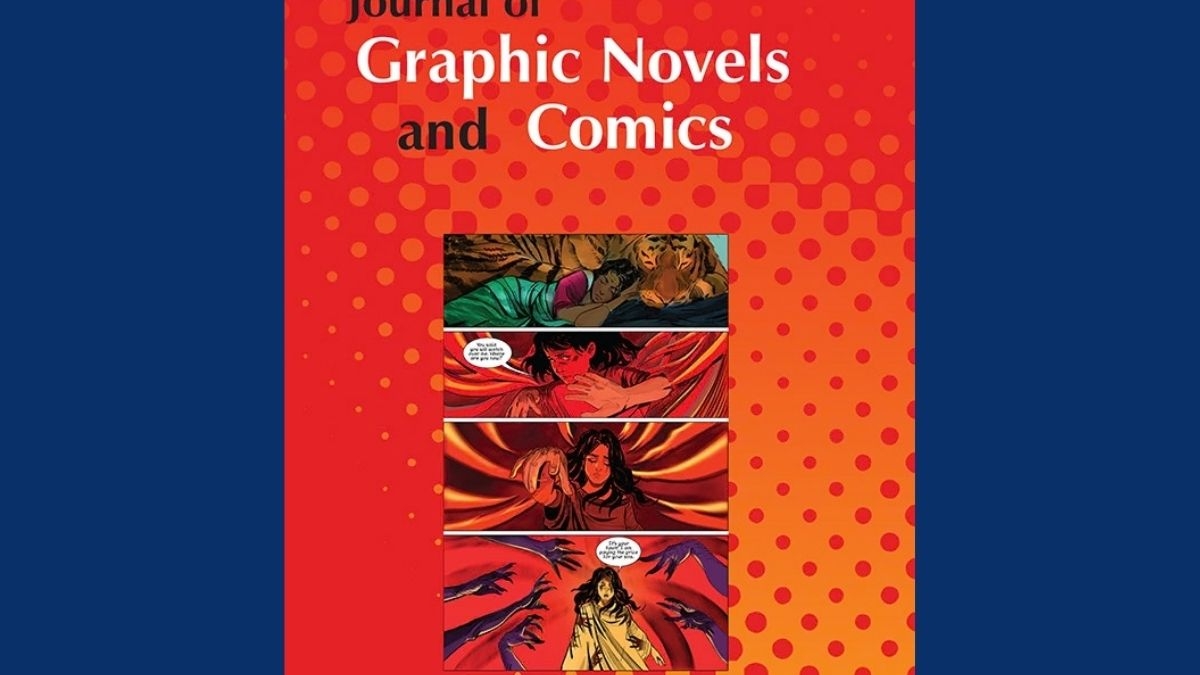
New article in Journal of Graphic Novels and Comics features ‘But I Live’

Academics Amrita Das and Debapriya Basu have recently published an article entitled “Dwelling in grief: the traumarchitecture of But I Live (2022)” in the online Journal of Graphic Novels and Comics, on August 18, 2026. The article examines the SCVN graphic narrative But I Live: Three Stories of Child Survivors of the Holocaust, and is outlined in the abstract as:

As part of exploring traumatic space in But I Live, the authors argue it unfolds on two fronts: 1) the exploration of the body as the site of trauma and 2) the comics page as the cartographic representation of the traumatic space, and that “…graphic artists, here, as Schallié herself puts it, ‘are actively co-creating the history with the survivors’ (2022, 179).”

The article deeply reflects on the artistic approaches in each graphic narrative, from the choice of colour, use of grids, and representation of trauma in the body, with their conclusion outlining:

“While the testimonies offer a glimpse into each survivor’s childhood suffering and the abiding sorrow that is its lifelong burden, we also witness how they spill trauma across the pages…lead[ing] us towards a deeper understanding of what it may mean to make art after Auschwitz.”

“This essay examines how the authorial/editorial team bends and stretches the conventions of the graphic novel and the materiality of the comics page to evoke the silences and stutters that accompany such testimonies. It reads the visual strategies deployed by the artists/illustrators (such as the presence or absence of demarcated panels and their overall arrangement, choice of colour palette, and the stylistic aesthetics referenced) as architectural elements that draw the blueprint of what we propose to call the ‘traumarchitecture’ of the narrative. Invoking conceptual metaphor theory (CMT) and Thierry Groensteen’s formulation of spatio topia, this essay argues that studying the traumarchitecture of But I Live leads us to a deeper understanding of what it may mean to make art after Auschwitz.”

Throughout the article the authors incorporate images from the book. This page from the book is shown with the caption “Emmie’s past spills over into the present (99),” for example.

The platform Taylor and Francis Online is not an open access site but the article may be accessed through an institution like the University of Victoria Library. To read the article please follow this link:

https://www.tandfonline.com/eprint/VYEVK4XBK2T5CHYGUYTC/full?target=10.1080/21504857.2026.2715395

Amrita Das is a Research Scholar and Debapriya Basu is an Assistant Professor both in the Department of Humanities and Social Sciences at the Indian Institute of Technology Guwahati, Guwahati, Assam, India.
Das, A., & Basu, D. (2026). Dwelling in grief: the traumarchitecture of But I Live (2022). Journal of Graphic Novels and Comics, 1–18. https://doi.org/10.1080/21504857.2026.2715395

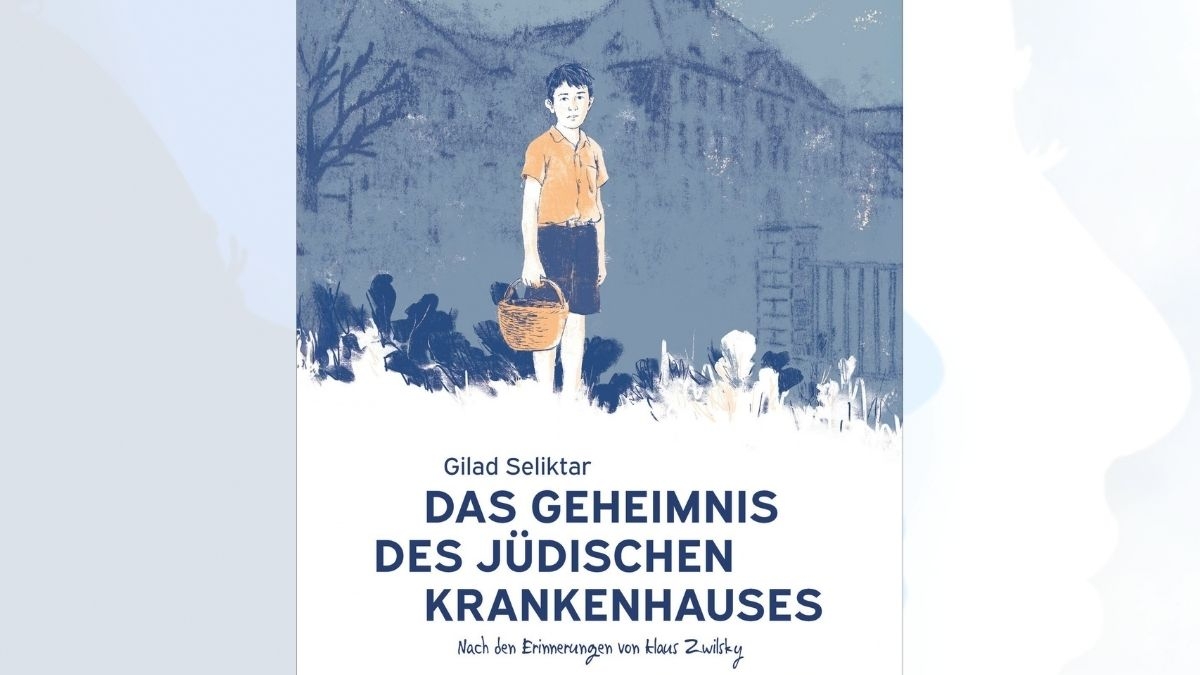
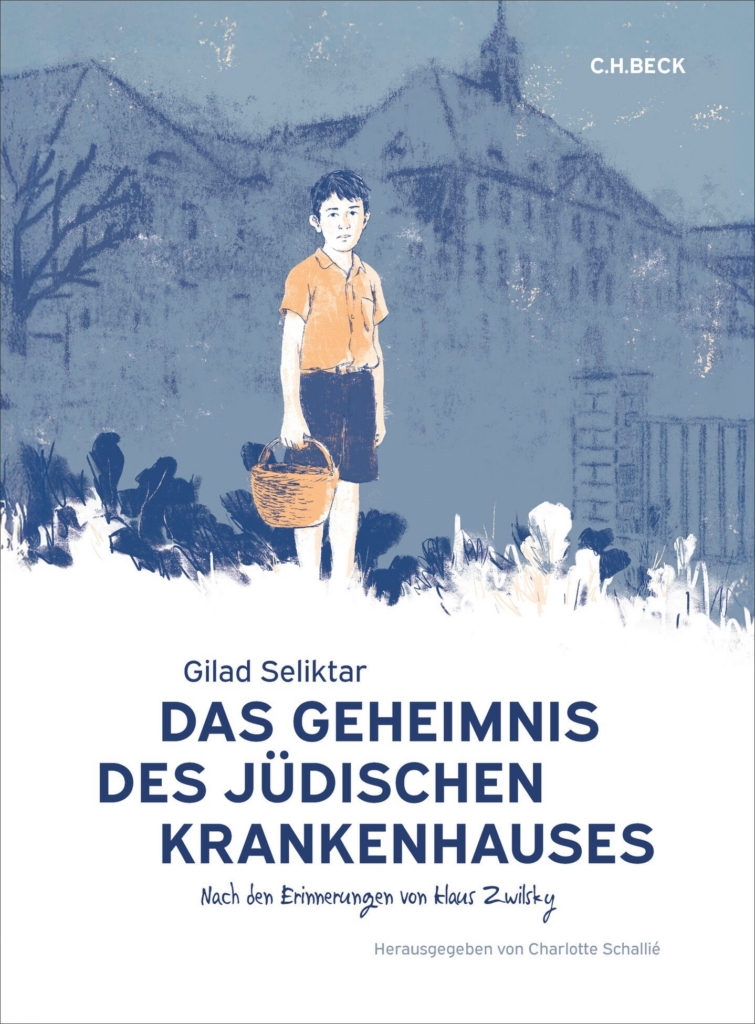
Book cover of Das Geheimnis des Jüdischen Krankenhauses Nach den Erinnerungen von Klaus Zwilsky. Graphic Novel

Publication announcement – ‘Das Geheimnis des Jüdischen Krankenhauses’ (The Secret of the Jewish Hospital) – Sept 24, 2026

Survivor-Centred Visual Narratives is pleased to announce the publication of Das Geheimnis des Jüdischen Krankenhauses. Nach den Erinnerungen von Klaus Zwilsky (The Secret of the Jewish Hospital: Based on the Memories of Klaus Zwilsky), released in German by C.H. Beck on September 24, 2026. The book was translated from English by Rita Seuß. The graphic novel is drawn by Israeli graphic novelist Gilad Seliktar, a lecturer at the Bezalel Academy of Art and Design whose Arad 95 won the 2024 Navon Prize for Best Israeli Graphic Novel and whose contribution to SCVN’s previously released graphic novel But I Live was nominated for an Eisner Award.

The book follows the story of a young boy named Klaus Werner Max Zwilsky who was born in Berlin on August 16, 1932. In 1943 his family was ordered to the Jewish Hospital Berlin, where his father, Erich, served as the institution’s last remaining pharmacist and his mother, Ruth, repaired military uniforms before joining him in the dispensary. What followed was a story of survival in plain sight: the hospital was the only Jewish institution in Nazi Germany to remain operational throughout the war, and roughly 800 Jews were still living there when Soviet troops liberated it on April 24, 1945. Klaus returned to school that July and became the first Bar Mitzvah in postwar Berlin.

Cover of Das Geheimnis des Jüdischen Krankenhauses (The Secret of the Jewish Hospital) co-created by Gilad Seliktar & Klaus Zwilsky (2026).

The book was built through direct collaboration between Zwilsky and Seliktar, in keeping with the project’s central commitment: that the gathering and understanding survivors’ experiences should place their well-being, agency, and cooperation at its centre.

The two met through Aubrey Pomerance, Head of Archives at the Jewish Museum Berlin, who put them in touch in the autumn of 2022. In May 2023, Seliktar travelled to Zwilsky’s home in Palm Springs, California, to record his account; and that July he went to Berlin to see the archive and the hospital for himself.

The book Seliktar drew from those visits tells two stories side by side, allowing the reader to engage with two timeframes at once: Zwilsky’s wartime memories, and the encounter between an artist and a survivor eighty years later. The deliberate representation of these overlapping timeframes calls direct attention to the collaborative mediation process involved in the creation of this graphic novel.

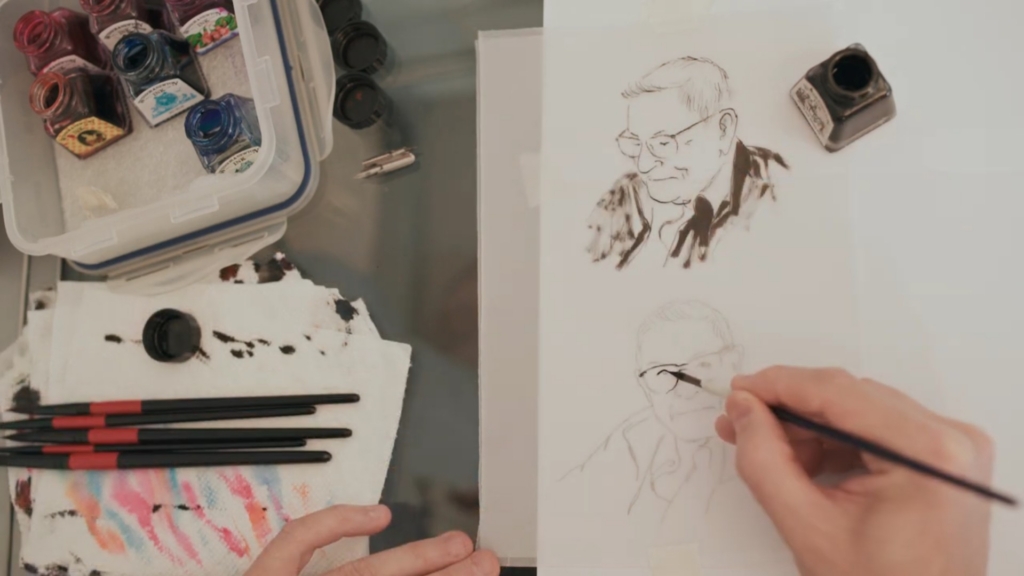
A still of Seliktar painting Zwilsky’s portrait in the documentary short ‘The Apothecarian’s Boy’ (2025).

Das Geheimnis des Jüdischen Krankenhauses leaves a genuine historical question open. Why the Nazi authorities never closed the hospital or deported the people sheltering inside it has never been satisfactorily explained, and the book is accompanied by an essay setting out what the documentary record can and cannot establish. Zwilsky has spent much of the past two decades on that record himself, organizing his parents’ wartime papers and donating them to the Jewish Museum Berlin, where they form the Zwilsky Collection.

SCVN recently held a webinar entitled Personal Histories in the Public Archive: Archiving the Klaus Zwilsky Story (January 2026) in which Zwilsky joined Aubrey Pomerance, and SCVN Project Lead Dr. Charlotte Schallié to discuss the Zwilsky Collection. Their conversation asks what it takes for a public archive to hold a family’s personal history responsibly, with the survivor himself shaping how his records are described and made accessible. The webinar recording can be accessed here once it has been made available for the public.

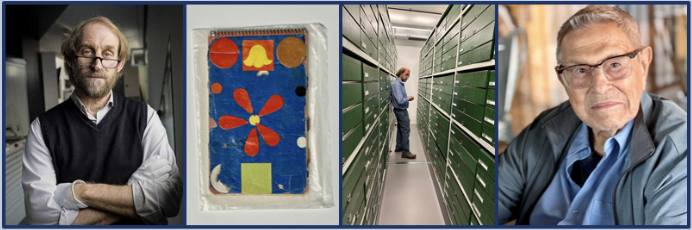
Left to right: Aubrey Pomerance, Head of Archives at the Jewish Museum Berlin; Zwilsky family notebook;
Aubrey in the archives of the Jewish Museum Belin and Holocaust Survivor, Klaus Zwilsky.

Das Geheimnis des Jüdischen Krankenhauses was edited by Charlotte Schallié with a historical essay by Aubrey Pomerance, and developed within the project’s Holocaust Research Cluster.

The French version of the book Nous ont-ils oubliés ? translated by Hélène Duhamel is set to be released in October 2026 by çà et là.

Many thanks to the Social Sciences and Humanities Research Council (SSHRC) for supporting our project, and to the Jewish Museum Berlin and the Jewish Hospital Berlin for their participation.

Publication Announcement – ‘Gib nicht auf!’ (Don’t Give Up!) – Sept 17, 2026

Survivor-Centred Visual Narratives is pleased to announce the publication of Gib nicht auf! Wie eine junge Ezidin den Völkermord überlebt (Don’t Give Up! How a young Yezidi woman survived the genocide), released in German on September 17 by avant-verlag. The graphic novel is co-created by Jilan (pseudonym), a Yezidi survivor of the genocide in Sinjar, and German graphic artist Birgit Weyhe, whose earlier Madgermanes was awarded the Berthold Leibinger Foundation’s Comic Book Prize in 2015 and the Max and Moritz Prize for Best German-Language Comic in 2016.

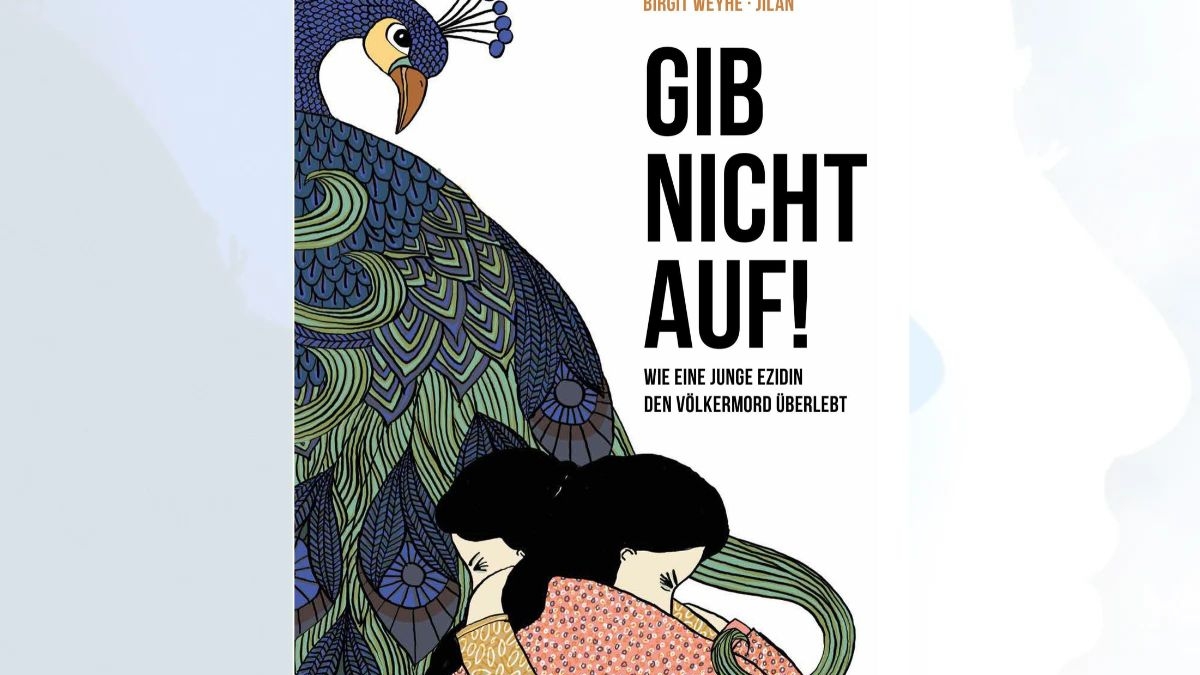
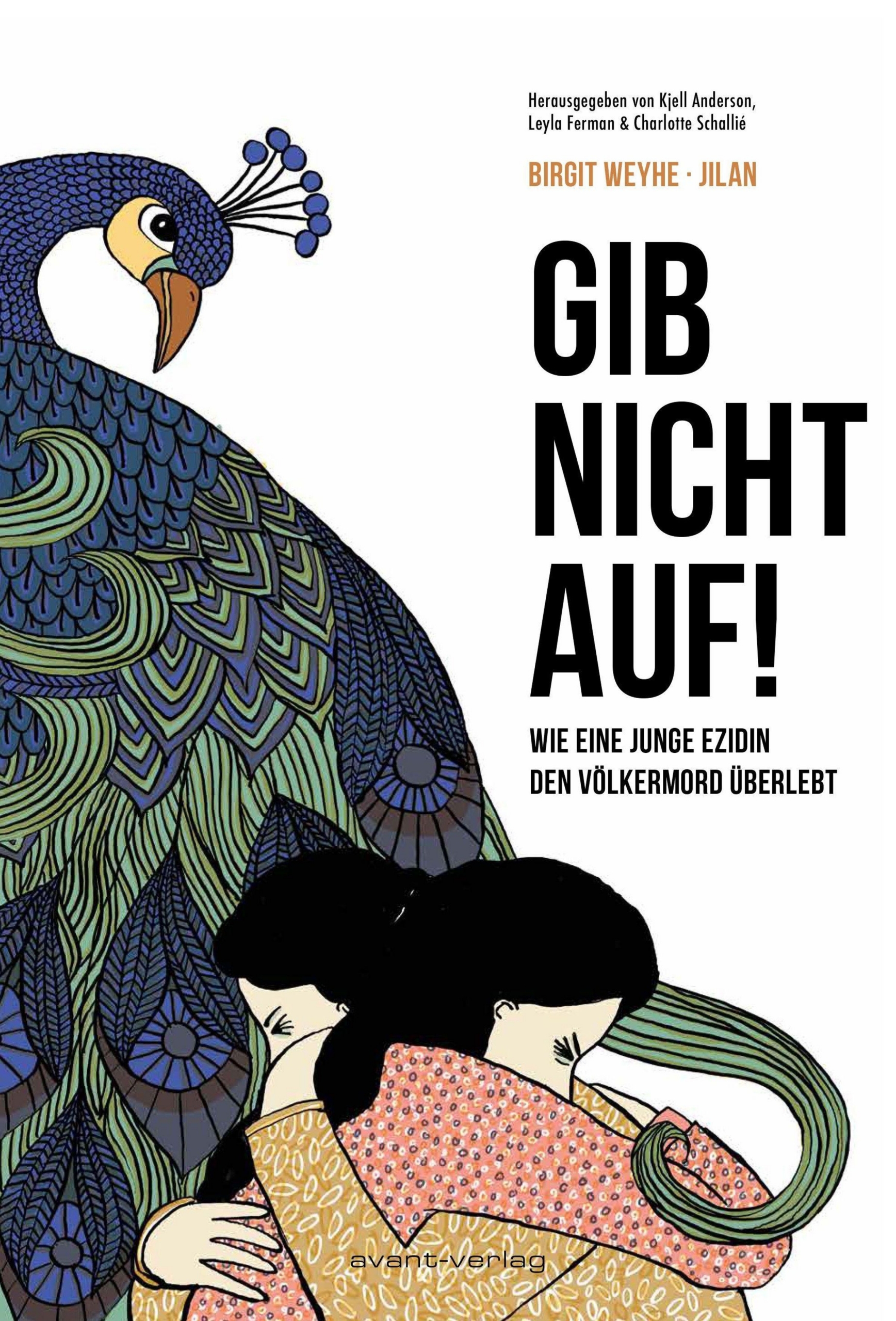
Cover of Gib nicht auf! Wie eine junge Ezidin den Völkermord überlebt (Don’t Give Up! How a young Yezidi woman survived the genocide) co-created by Jilian and Birgit Weyhe (2026).

In summer 2014, the Islamic State attacked the Sinjar region of northern Iraq. Jilan, then a young girl, was captured and held as a slave. The book follows her account of that captivity including the fear of death, her eventual escape, her work of coming to terms with trauma, and her first steps toward a new and self-determined life in Germany. It is the first time Jilan has told this story publicly.

The book was built through sustained collaboration between Jilan and Weyhe, in keeping with the project’s central commitment: that the gathering and commemoration of survivors’ experiences should place their well-being, agency, and cooperation at its centre. Jilan’s testimony shapes not only the content of the book but the terms on which it is told and drawn. Weyhe has confronted the question of how to centre survivor narratives before: her Rude Girl (2024) takes as its subject the ethics of drawing another person’s life.

The publication arrives while the conditions it documents remain unresolved. Because northern Iraq continues to be contested by shifting parties, the Yezidis are still not safe in their homeland—a fact that gives Jilan’s account, and the wider work of Yezidi documentation and advocacy, a continuing urgency.

Gib nicht auf! was edited by Kjell Anderson, Leyla Ferman, and Charlotte Schallié, and developed within the project’s Iraq/Syria Research Cluster. Further information on the collaboration is available on the project page and on the Iraq/Syria Research Cluster page.

Many thanks to Social Sciences and Humanities Research Council of Canada (SSHRC) for our project funding, and NIOD Institute for War, Holocaust and Genocide Studies and University of Manitoba’s Faculty of Law for supporting additional pages for our graphic narrative.

Gib nicht auf! is now available for purchase from avant-verlag.

Publication Announcement – ‘Al-Faẓia’ الفظیع – the Horror: Surviving Syria’s Prisons’ – May 26, 2026

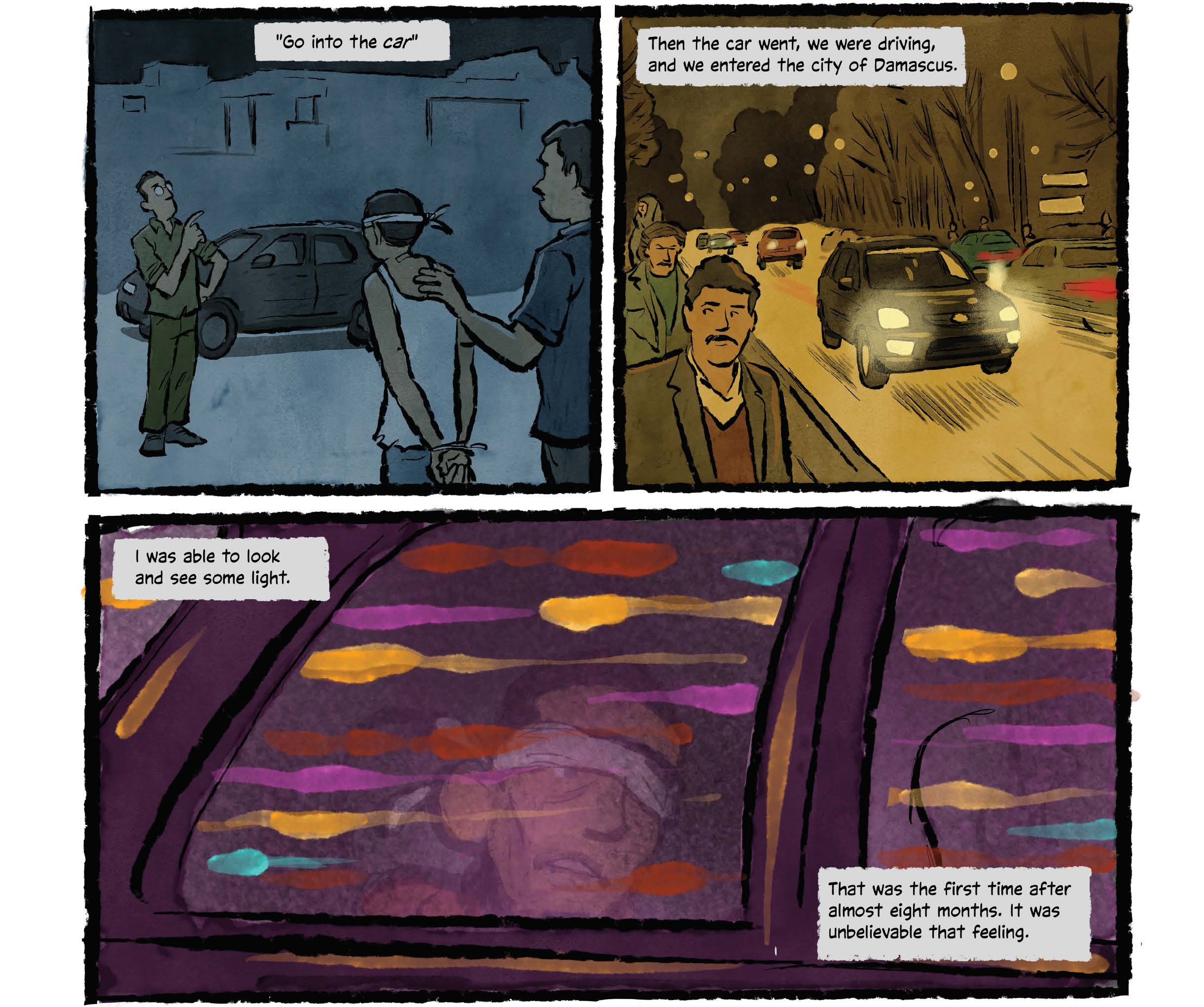
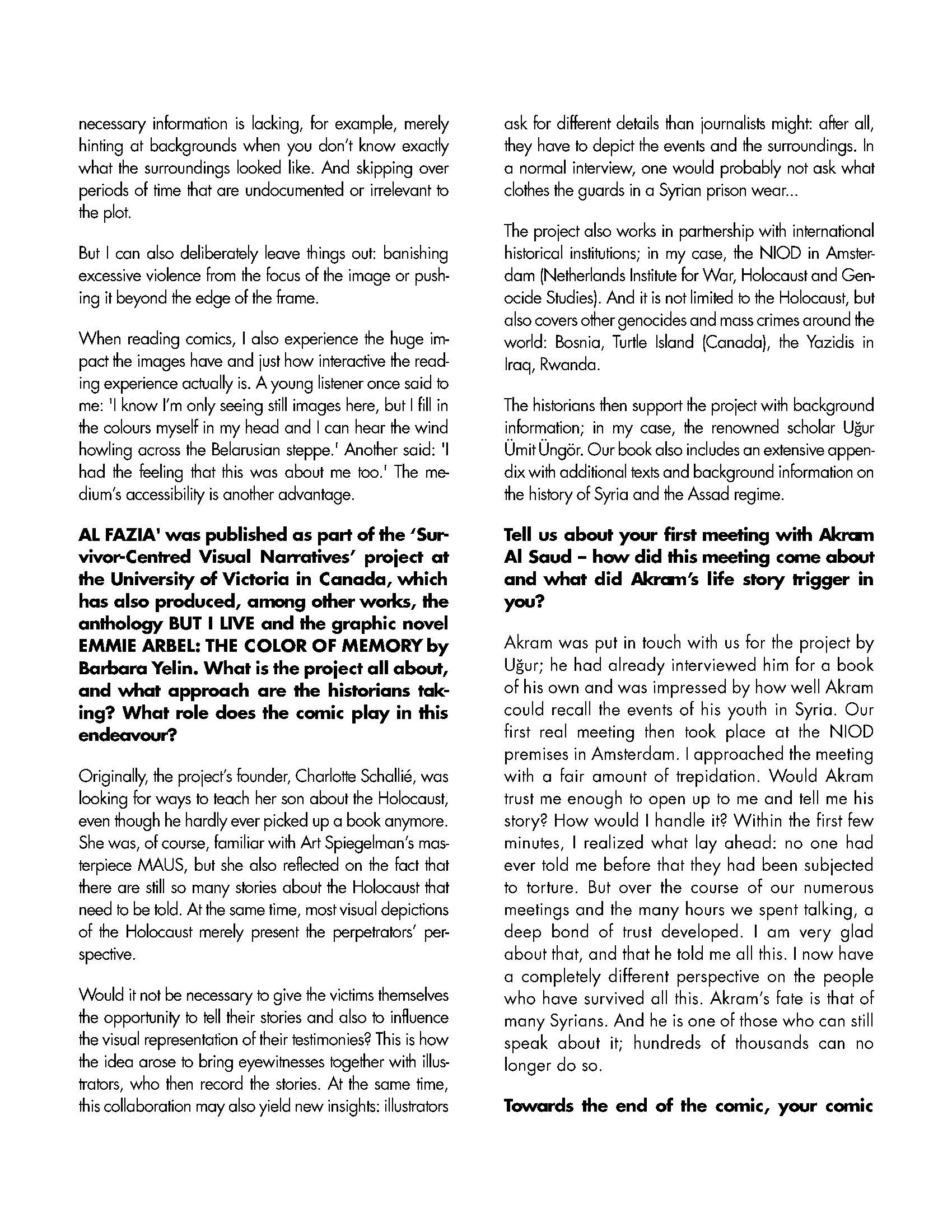
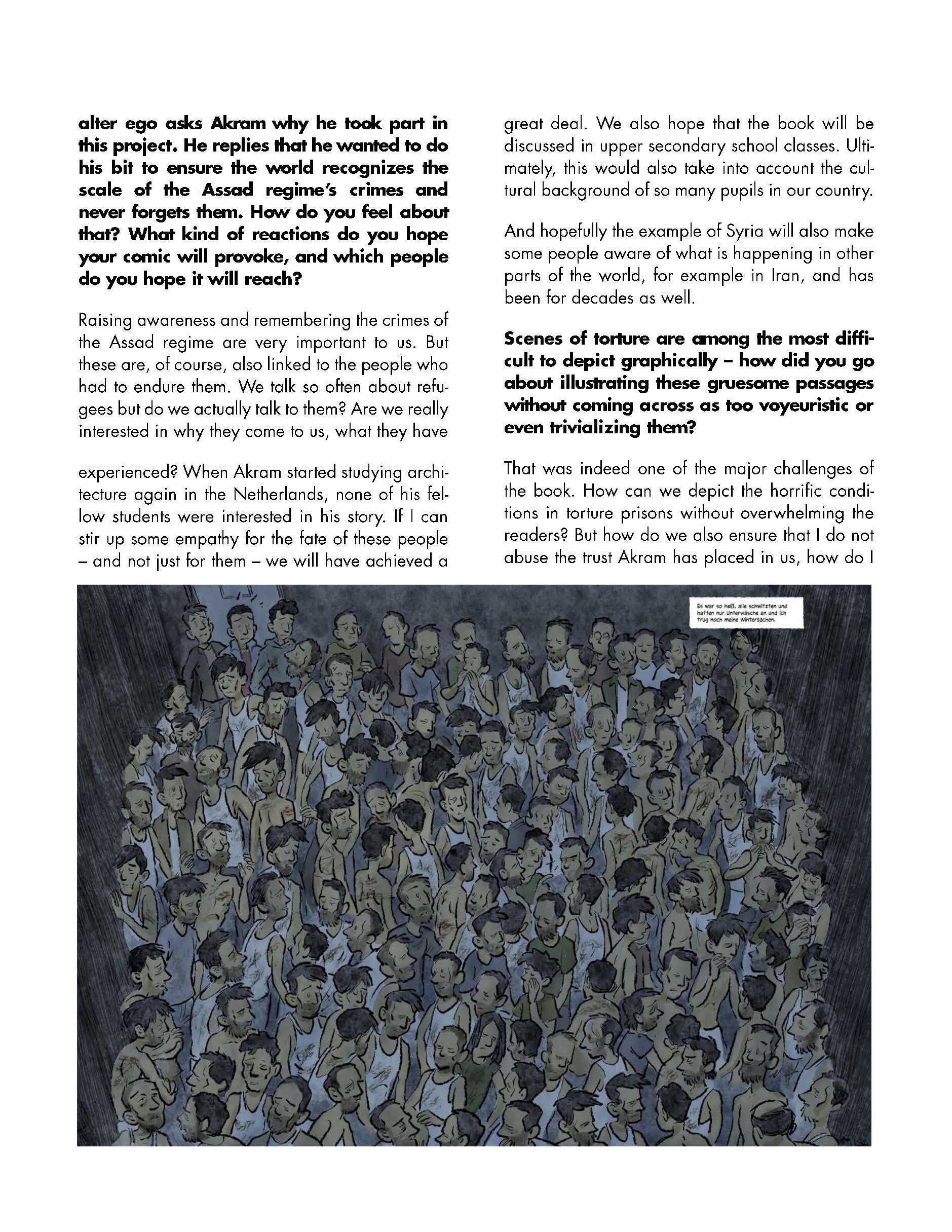
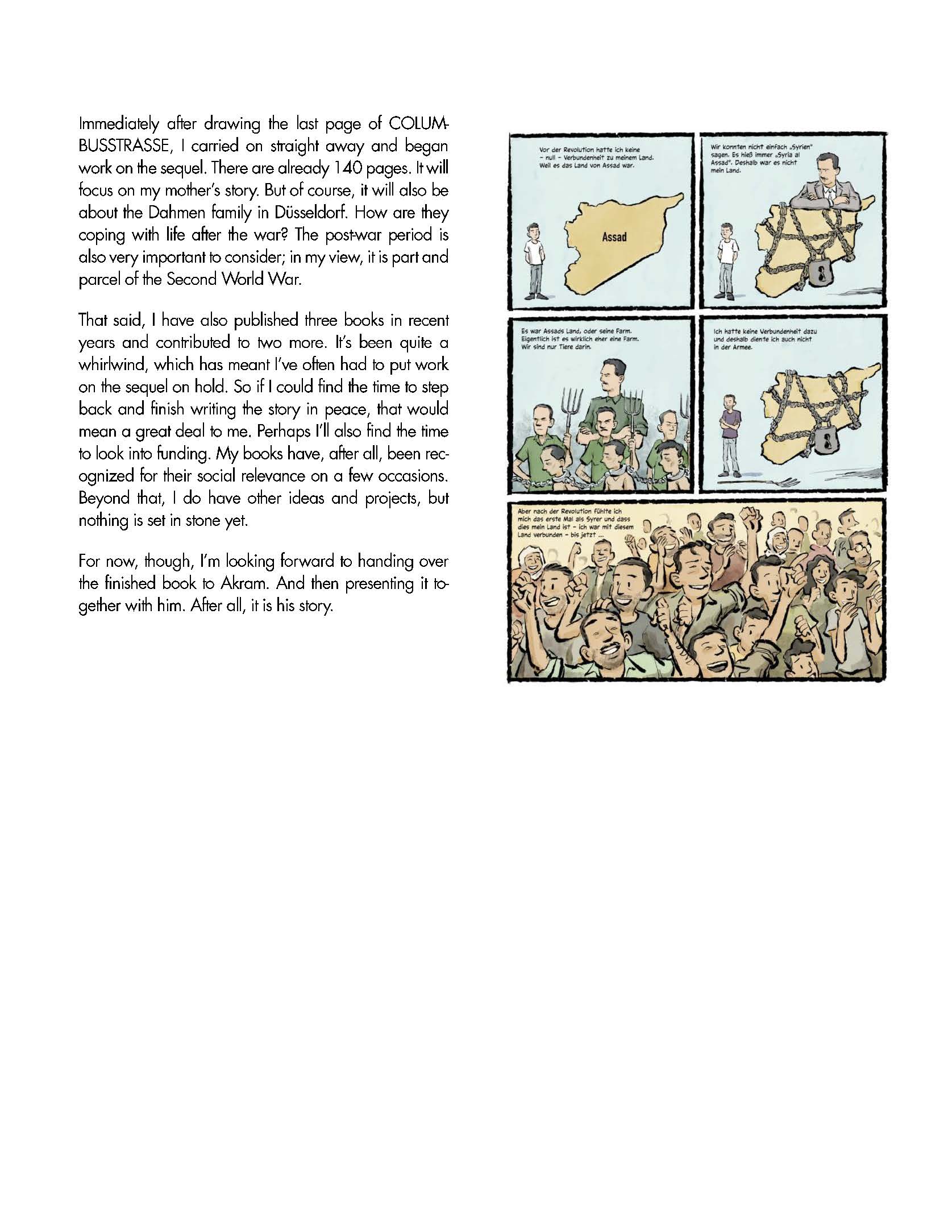
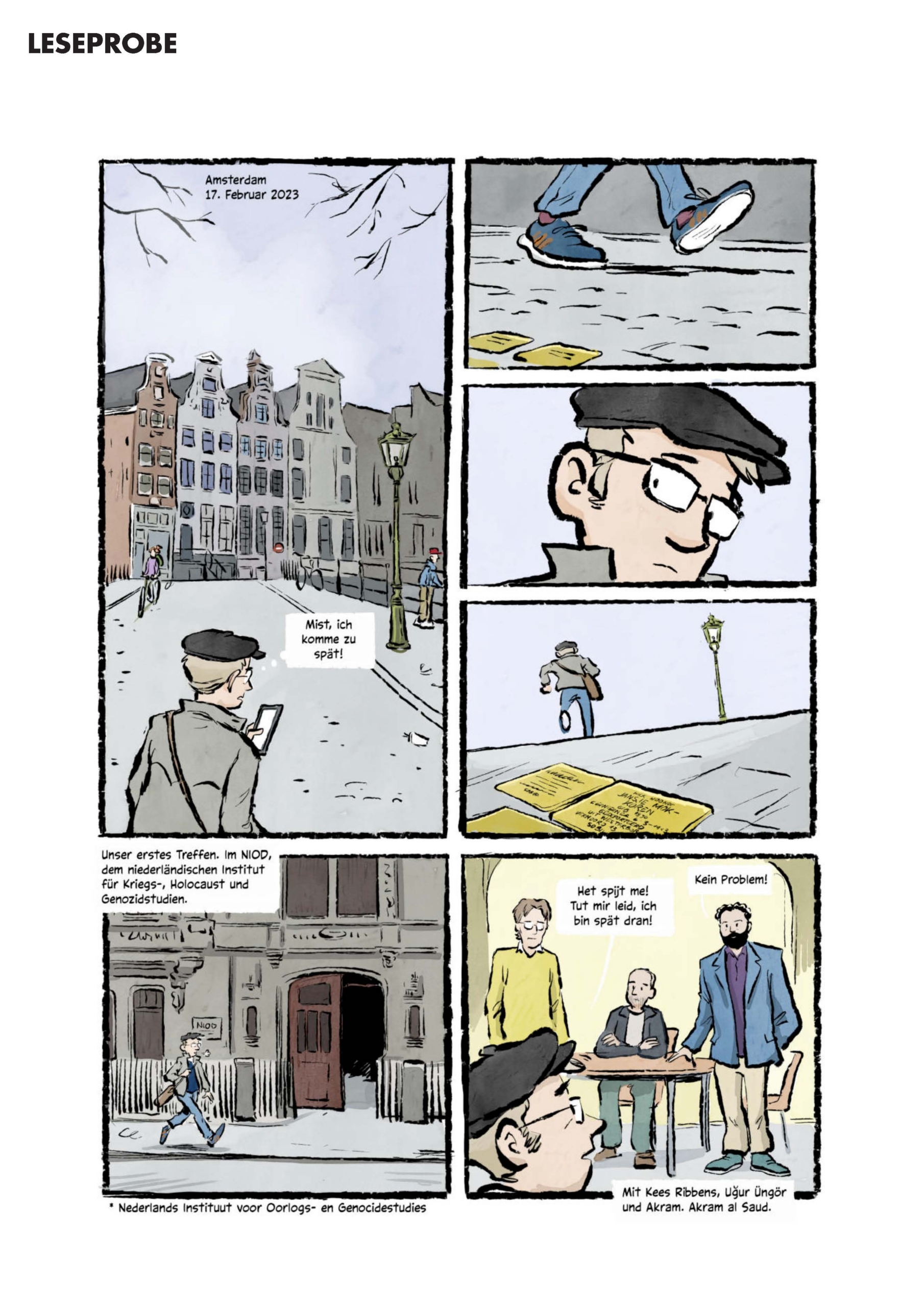
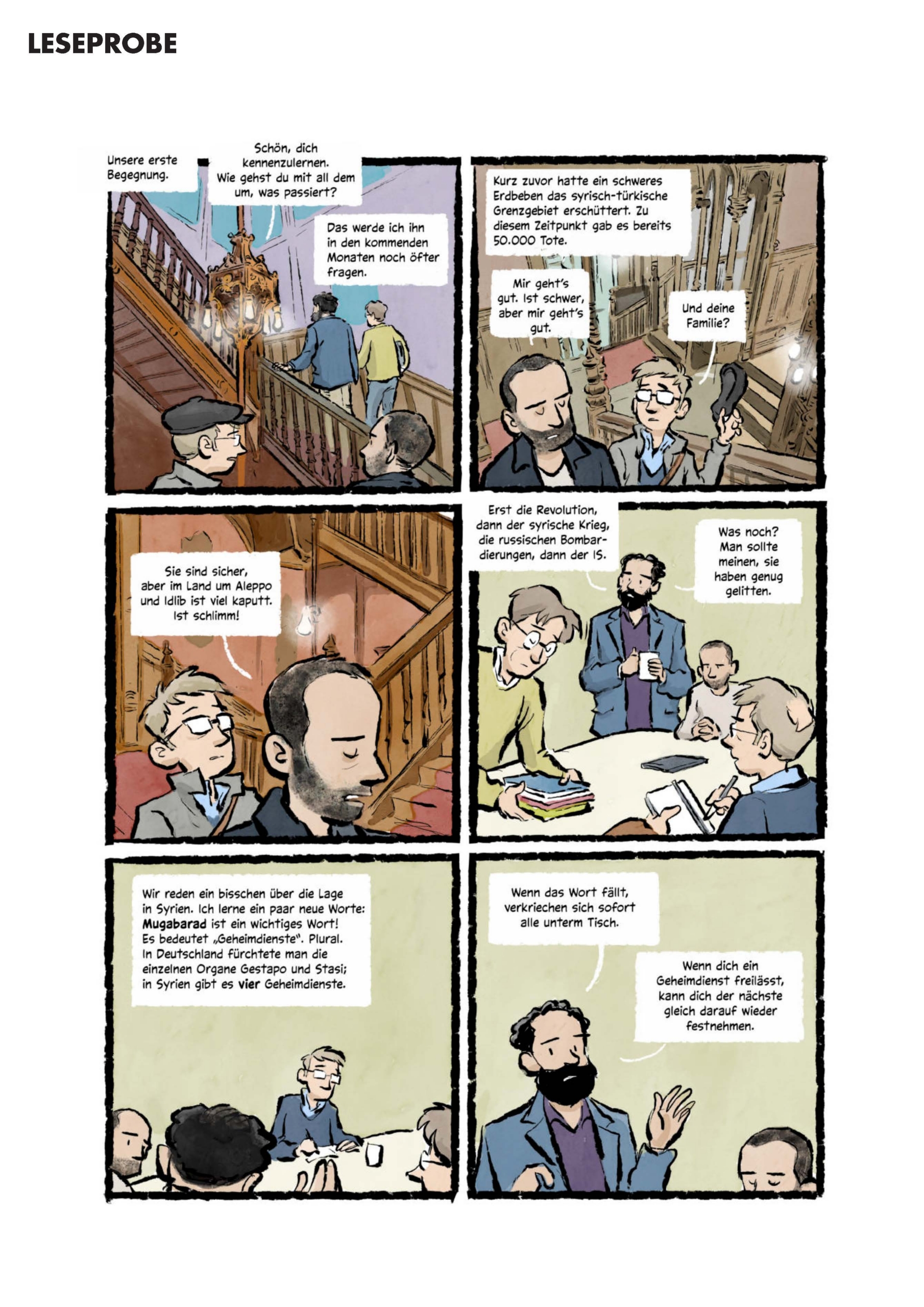
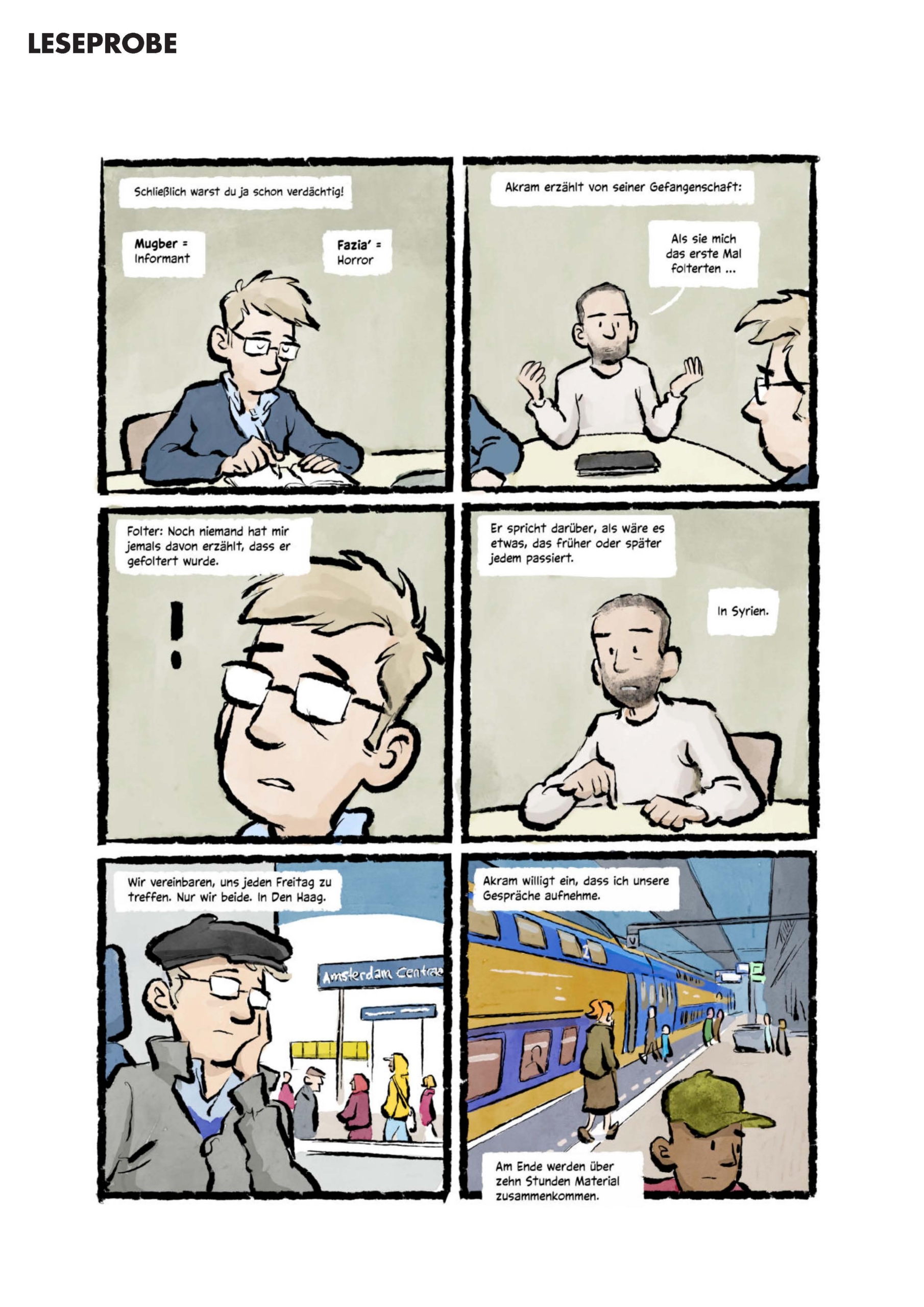
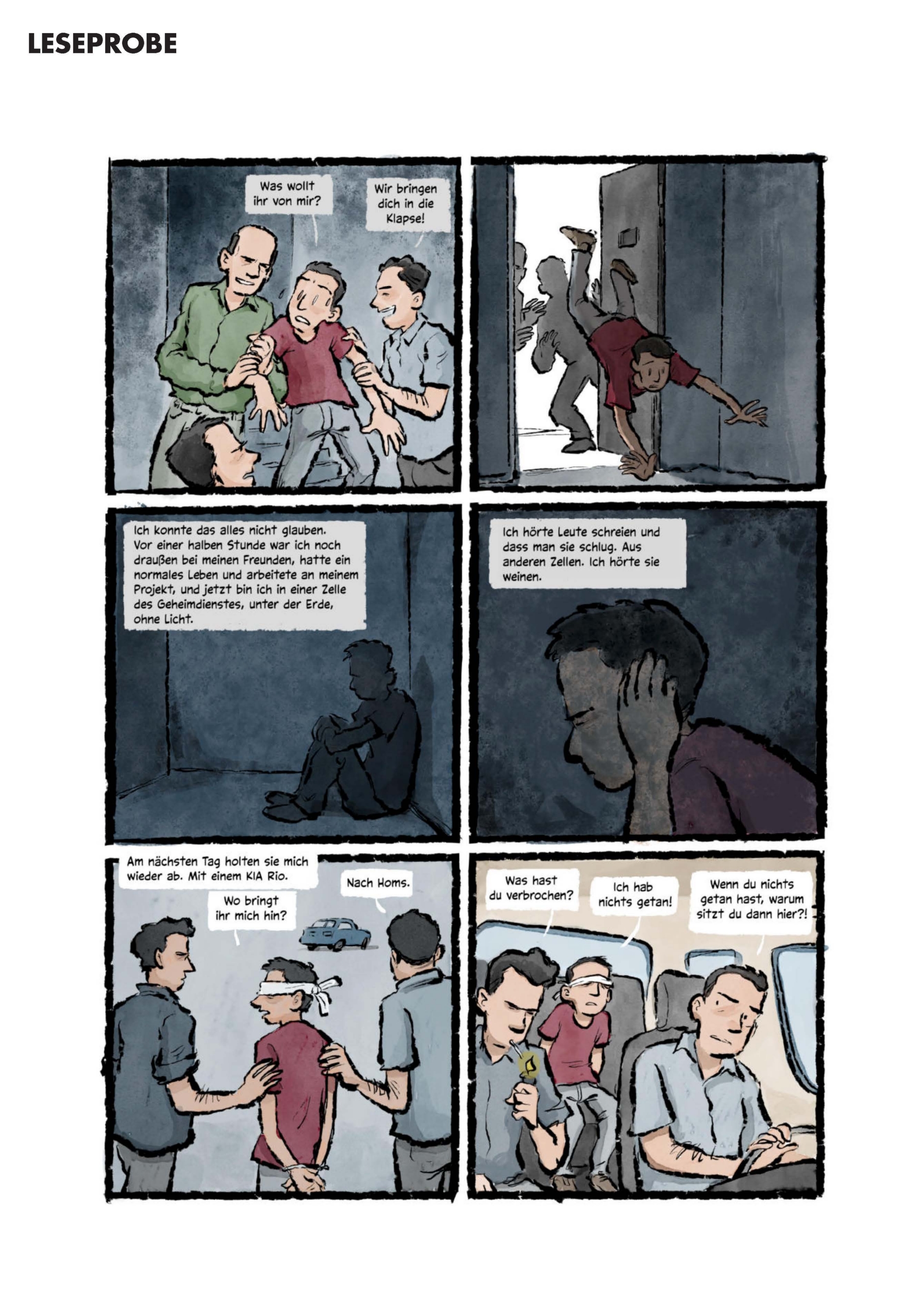
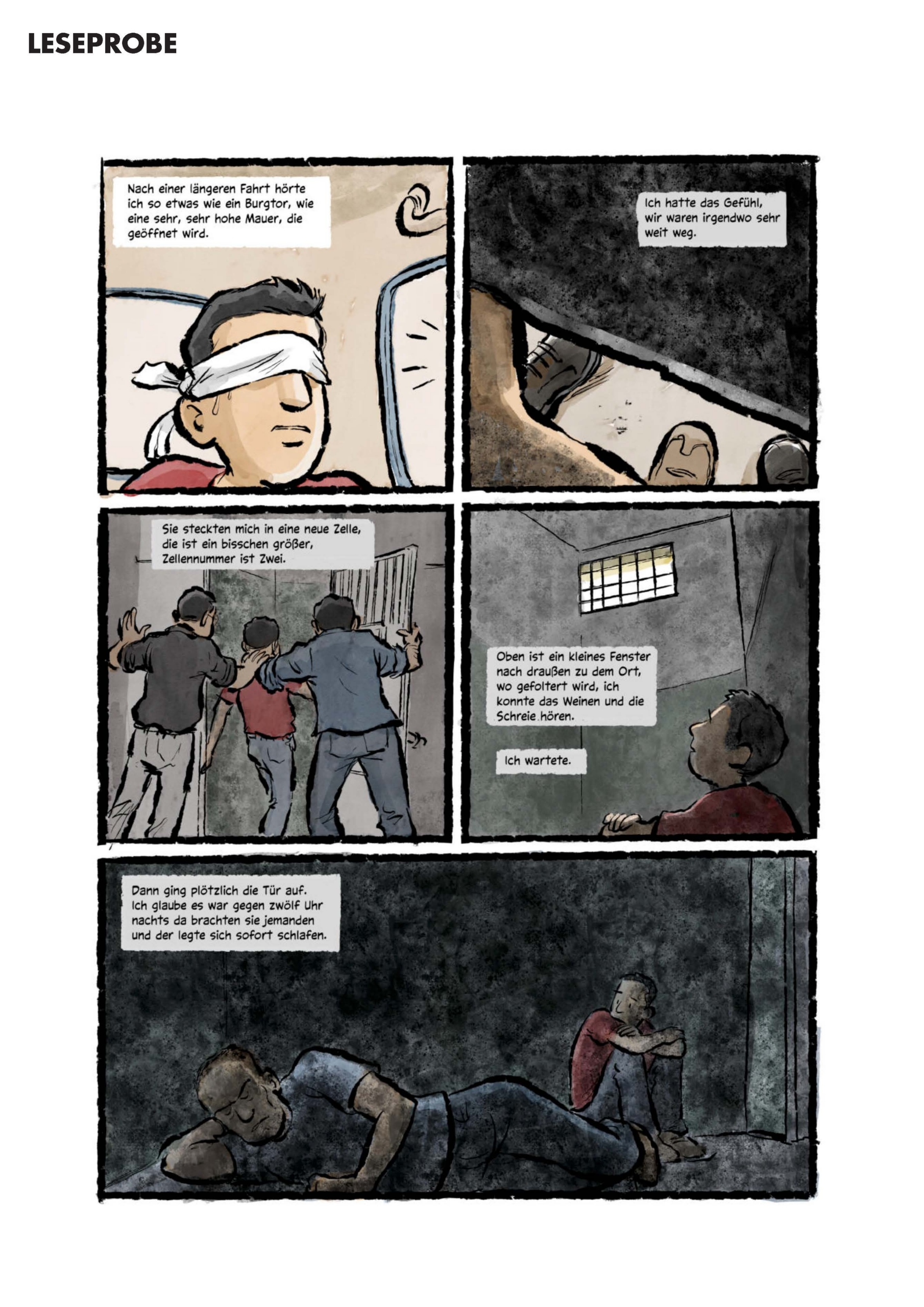
Excerpt from Al-Faẓia’ (University of Toronto Press, 2026) by Tobi Dahmen and Akram Al Saud.


We are delighted to announce that SCVN’s third graphic novel, Al-Faẓia’ الفظیع – The Horror: Surviving Syria’s Prisons, will be published in German on May 26, 2026, by Carlsen Verlag. Al-Faẓia’ is the result of a collaboration between artist Tobi Dahmen and survivor Akram Al Saud, including extensive interviews and personal encounters.

In 2010, Akram Al Saud, then a nineteen-year-old architecture student at the University of Aleppo, was unjustly arrested by the intelligence services of the Syrian air force. His detention, the first of four, lasted nine months. After his release, Akram joined the revolution against the Assad regime, but in 2016 he was forced to flee to Europe.

Akram and Tobi’s collaboration was supported by a team of people dedicated to arts-based, trauma-informed, survivor-centred research and storytelling: editors Uğur Ümit Üngör and Charlotte Schallié; research cluster co-leads Dr. Üngör, Kees Ribbens, and Kjell Anderson; and the NIOD Institute for War, Holocaust and Genocide Studies in Amsterdam. Funding was provided by the Social Sciences and Humanities Research Council of Canada (SSHRC).

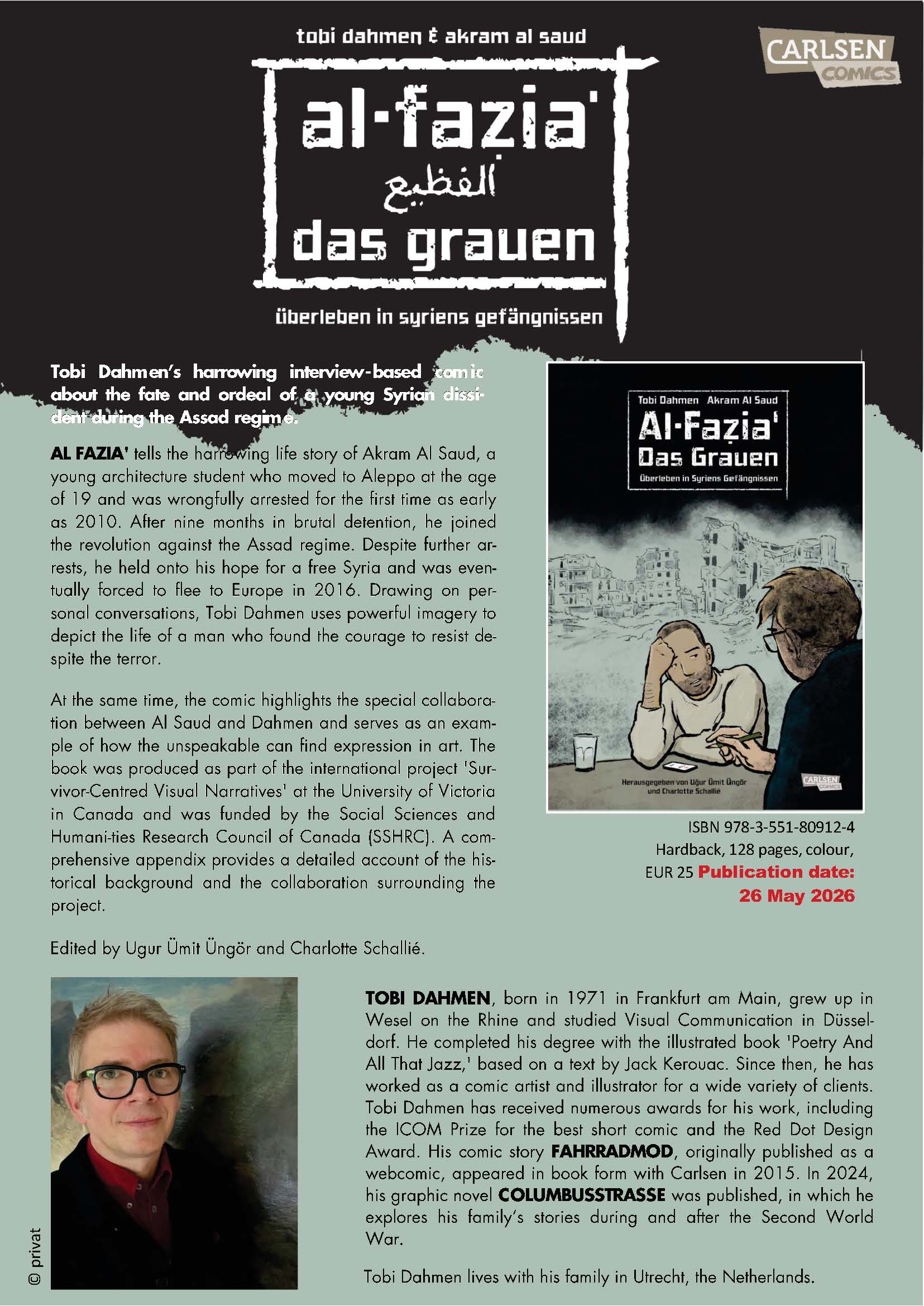
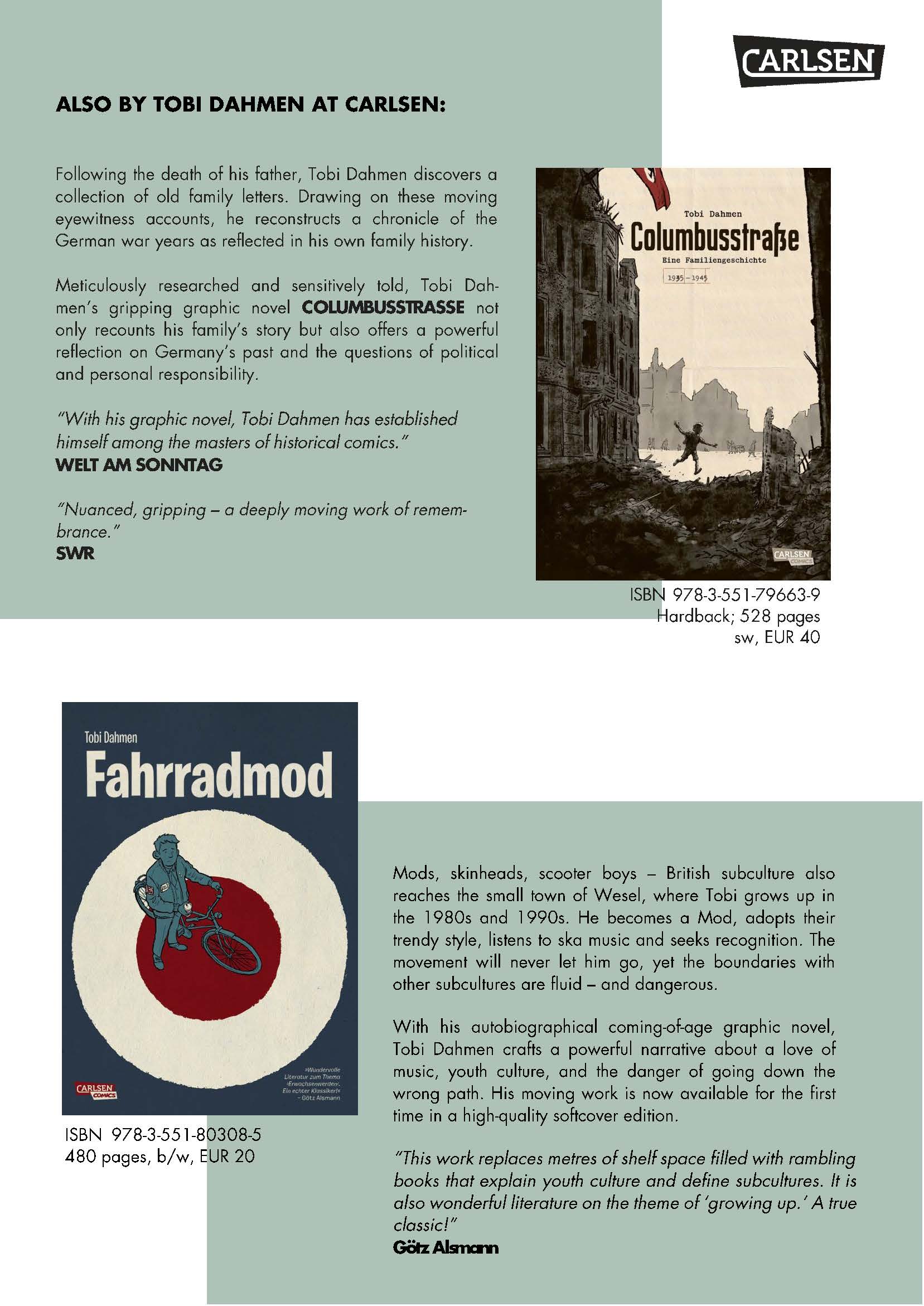
For more information about the graphic novel, follow the link to our Research Cluster page. Click the cover image on the right to read an English translation of the official Carlsen press kit, or click on the images below.

A companion documentary short film, ‘How to Draw Darkness?’, directed by Lidija Zelović, is currently in post-production, with the official trailer available to watch on our SCVN YouTube channel.

An English version of Al-Faẓia’ will be published by the University of Toronto Press in November, 2026.

Publication Announcement – ‘Emmie Arbel. The Colour of Memory’ – UK and North America Release

We are thrilled to announce that Emmie Arbel. The Colour of Memory is coming to the UK and North America in spring 2026! SelfMadeHero will be releasing Helge Dascher’s English translation of the award-winning graphic memoir on February 5 in the UK and on March 17 in North America.

Drawing from extensive interviews with Holocaust survivor Emmie Arbel, Barbara Yelin’s graphic memoir is the culmination of a five-year collaboration that began with the anthology But I Live: Three Stories of Child Survivors of the Holocaust. With stunning visual style, Yelin captures the harrowing realities of Emmie’s childhood in Nazi Germany, where she survived both Ravensbrück and Bergen-Belsen, as well as the complexities of her journey towards adulthood in Israel. Since its publication in 2023, Emmie Arbel has received several important awards, including the 2024 Gustav Heinemann Peace Prize and selection for the prestigious White Ravens Catalogue. Helge Dascher’s English translation of Emmie Arbel was first published by Reprodukt in December 2024. For more information about the graphic memoir, follow the link to our Projects page.

SelfMadeHero is an award-winning independent graphic novel/visual narratives publisher launched in 2007 by Emma Hayley. Its mission is ‘to publish ground-breaking and beautiful work by authors and artists from across the globe, from the quirky and humorous to the political and profound’. More information about SelfMadeHero’s spring 2026 lineup, including the upcoming release of Emmie Arbel. The Colour of Memory, can be found here.

To learn more about what it took to bring Emmie’s story to life, read Lucie Kotesovska’s interview with Barbara Yelin on our blog.

Publication Announcement – ‘Two Roses: A Story of Deception and Determination in Nazi Germany’ – February 2026  

Excerpt from Two Roses (New Jewish Press, 2026) by Miriam Libicki and Rose Lipszyc.

We are delighted to announce that our second SCVN graphic novel, Two Roses: A Story of Deception and Determination in Nazi Germany,  will be published on February 26, 2026 by the University of Toronto Press. Two Roses is a collaboration between Holocaust survivor Rose Lipszyc and graphic artist Miriam Libicki, sharing the experiences of Rose and her aunt,  Róza Finkielsztajn, during and after WWII in Poland. 

Born in 1929, Rose Lipszyc was only ten years old when Nazi Germany invaded Poland. In October 1942, as her family was being deported from their home in Osmolice, Rose managed to escape when her mother pushed her out of the line of deportees. Barely a teenager, Rose fled with the help of strangers and friends by using a false identity. She was then reunited with her aunt in Lublin, and the pair went on to work as forced labourers in a factory in Bremen, Germany, by impersonating Polish gentile sisters. Two Roses depicts how these two women came together and survived the war under vulnerable aliases, portraying the incredible depth of their connection and perseverance. Rose settled in Toronto, and in 2021, she was awarded the Order of Canada for her work in Holocaust education.  

Supported by the Social Sciences and Humanities Research Council of Canada, Two Roses is a highly collaborative book project created over the course of two years. Miriam’s work was supported by SCVN’s Research Cluster Co-Leads Drs. Charlotte Schallié and Mark Celinscak, with research assistant Jessica Botts, who provided research materials and interview support. SCVN’s Project Manager Jennifer Sauter coordinated the travel for Miriam to visit with Rose in Toronto for in-person interviews and filming the documentary. Our project partner, the Azrieli Foundation, supported interview facilitation by having a community liaison present with Rose during the interviews. We are grateful for the time and support of Devora Levine, Arielle Burger, and Carson Phillips. This extended graphic narrative was also made possible by additional funding from the Government of Canada’s National Holocaust Remembrance Program.  

A companion documentary film, “A Rose in Plain Sight,” directed by filmmaker Chorong Kim, is available to watch on our SCVN YouTube Channel.

Two Roses disrupts the narratives of victimization that often undermine the stories of Holocaust survivors. Instead of painting victims of human rights abuse as mere case studies, this book illuminates a crucial part of our shared history with radical care, honesty, and creativity. 

For more information about Rose and Miriam’s collaboration, please visit their Research Cluster page here: https://visualnarratives.org/research-clusters/holocaust/holocaust-two-roses/

SCVN sincerely thanks all contributors for their hard work and dedication to bring Rose’s story to life.