Annual General Meeting 2026: Graphic Novels in Human Rights Education – Day 1
Guest blog by Ana-Maria Costa
Our Annual General Meeting took place from June 10-12 in Winnipeg, Canada, and was facilitated by local host, Kjell Anderson with the University of Manitoba at the Canadian Museum for Human Rights. The AGM gathered researchers, students, educators and partners to deepen our shared commitment to human rights through education and visual arts. It also reflected on ethical methodologies, co-create public-facing outputs, and strategize dissemination pathways that honour survivor agency and challenge epistemic injustice. A summary of each day is available on our blog: Day 1 and Day 2, as well as a reflection piece by graduate student Marie-Chantal Plouffe.
Day 1 of the AGM consisted of welcomes, project updates, and an overview of some projects. Much of the discussions focused on navigating challenging and unfamiliar situations, what a care-based approach looks like, and how trauma-informed research and human rights are interconnected. At the center of these conversations was the importance of keeping survivors central to the project and approaching each research project with care and respect. The stories and experiences shared by survivors have the power to shift conversations, build relationships, and foster an environment that encourages greater understanding and knowledge sharing. Survivors are not only participants in the project but are partners in the research process. Throughout the day, conversations began to shift and evolve, the importance of language became the focal point. The graphic novels are published in several different languages , including English and German, each language raising important questions. Translation in research can introduce entirely new research questions all together, as the way something is said in one language does not always carry the same intended meaning in another. This makes additional care and attention an important part of the process.
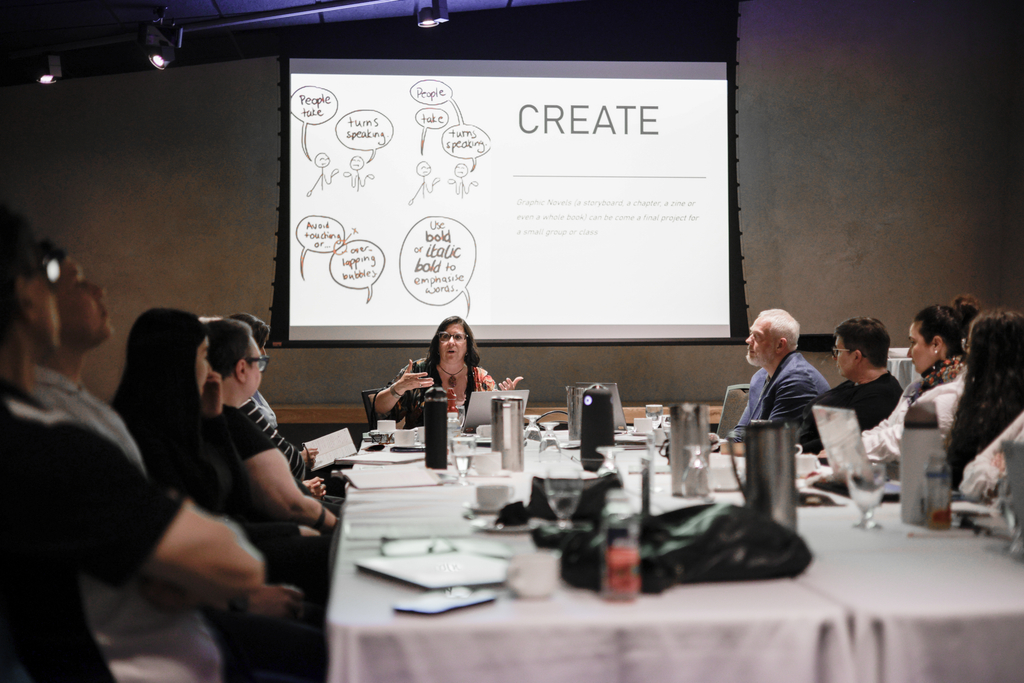
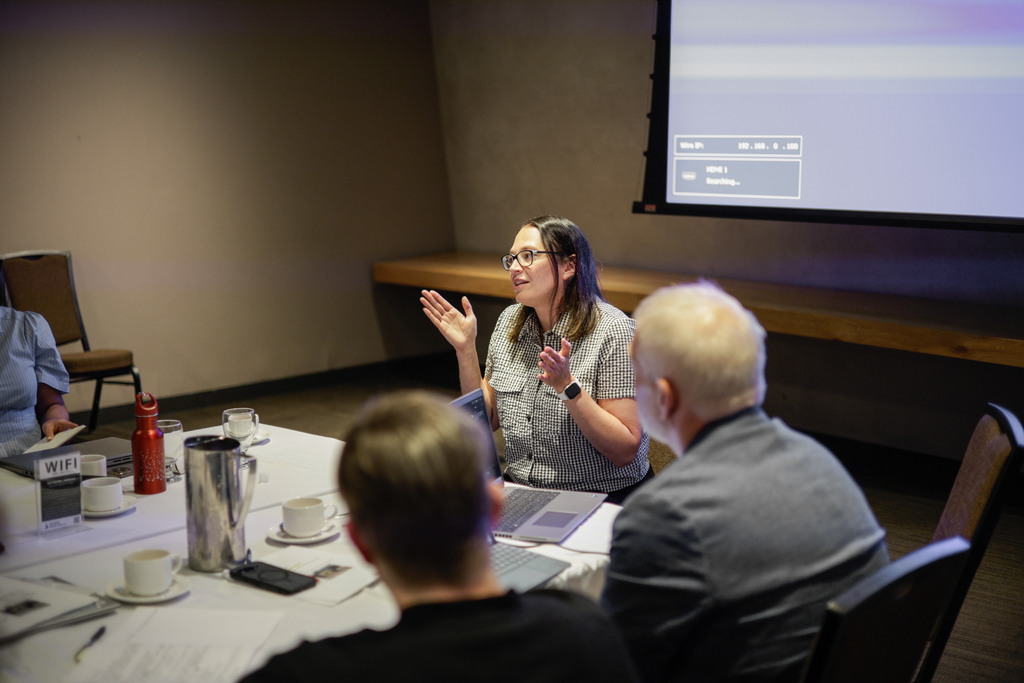
Shayna Plaut (left) and Lise Pinkos(right) in a session exploring Post-Secondary Education, Graphic Novels, and Human Rights. Photo credit: Maddy Nowosad.
Canadian Museum for Human Rights Tour
Following a lunch break, the group went on a walking tour of the Museum of Human Rights. The group received a guided tour through the museum’s major exhibits, providing another opportunity to reflect on the importance of education, storytelling, and knowledge sharing. The visit was a reminder of the immense value of bringing stories to the public. While executing a museum exhibition takes immense effort and requires significant time, sharing these stories creates an opportunity for visitors to learn, connect, and understand the world around them, regardless of when the events occurred.

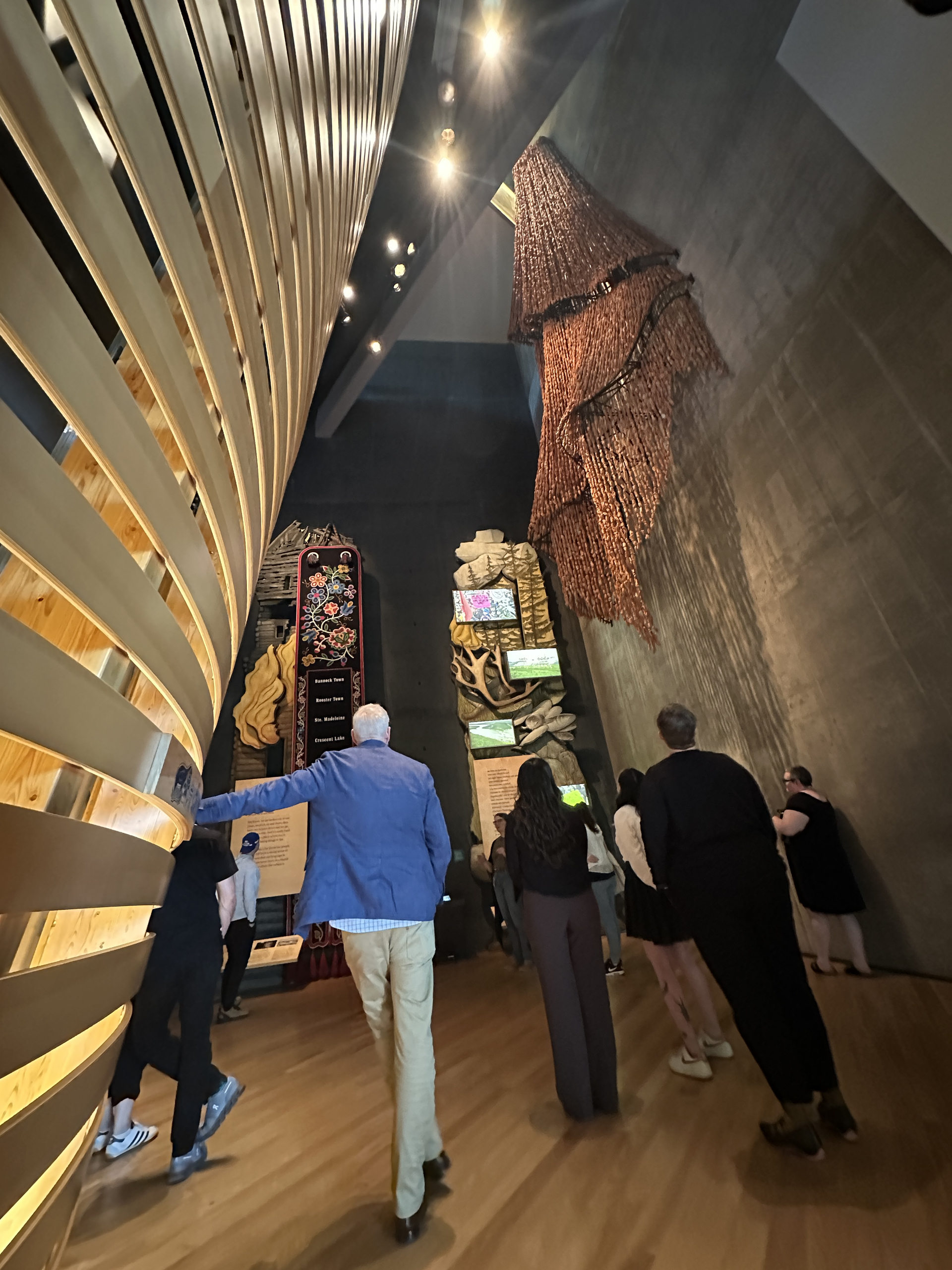
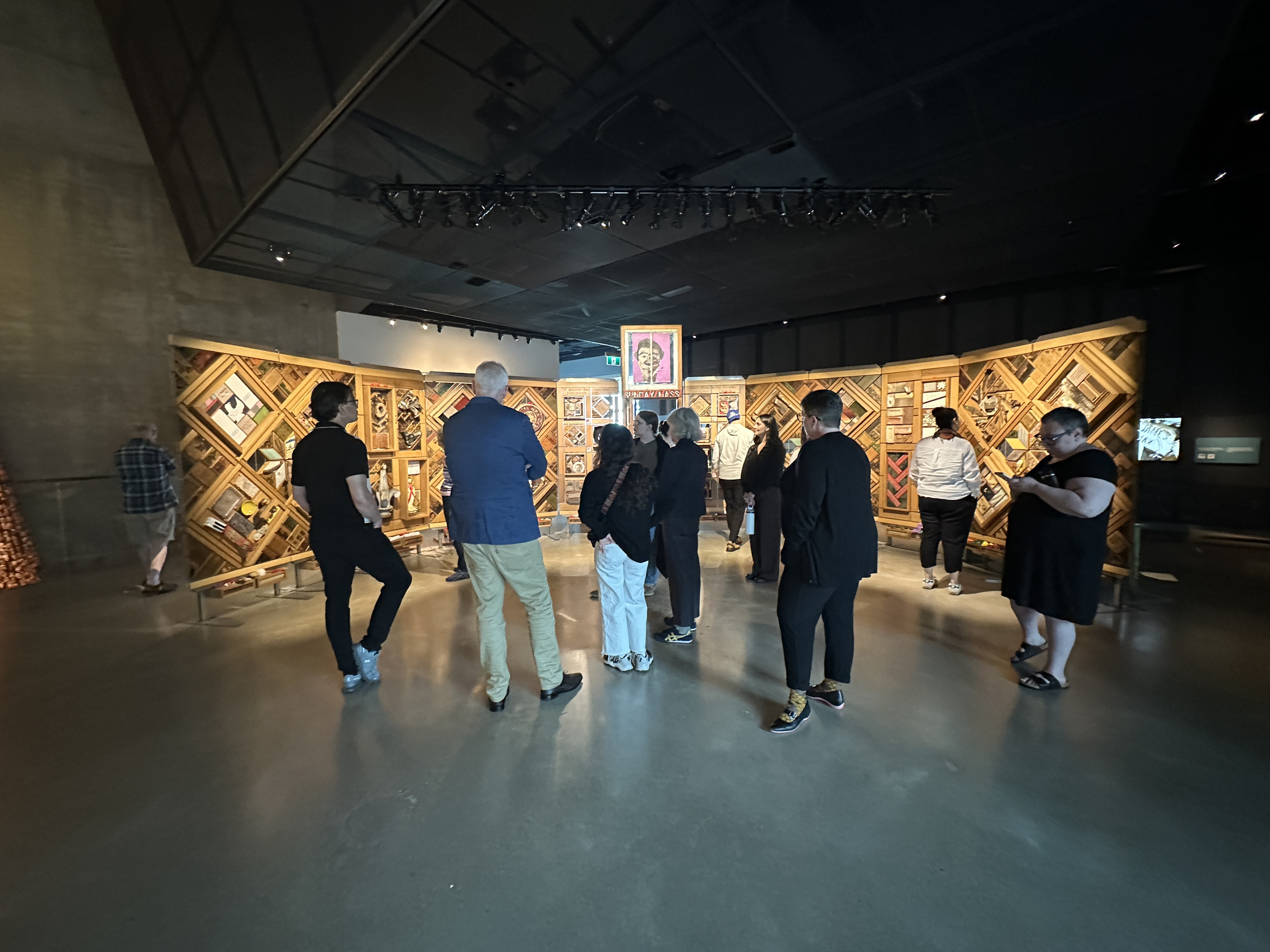
AGM participants touring the Canadian Museum for Human Rights. Photo credit: Jennifer Sauter.
Post-Secondary Education, Graphic Novels, and Human Rights
The museum tour was followed by a presentation from Shayna Plaut, Director of Research at the Museum of Human Rights, spoke to the group and discussed the topic of ‘Content and Context’, highlighting the importance of graphic novels and the power of visual storytelling. The discussed explored how images can communicate ideas and stories in ways words alone cannot. Several graphic novelists were highlighted for their success in this area such as Marjane Satrapi, Alexander Zograff, and Joe Sacco comics. Alyson Brysk also discussed medium and methods for research acquisition, asking the question: Who is telling what story and to whom?. The discussion focused once more on the power of images as a way to communicate stories and evoke a response. One example used was the photograph taken by Alan Kurdi of the “Boy who died at Sea”, became a powerful symbol of the devastation experienced by Syrian refugees fleeing the war and seeking safety overseas.
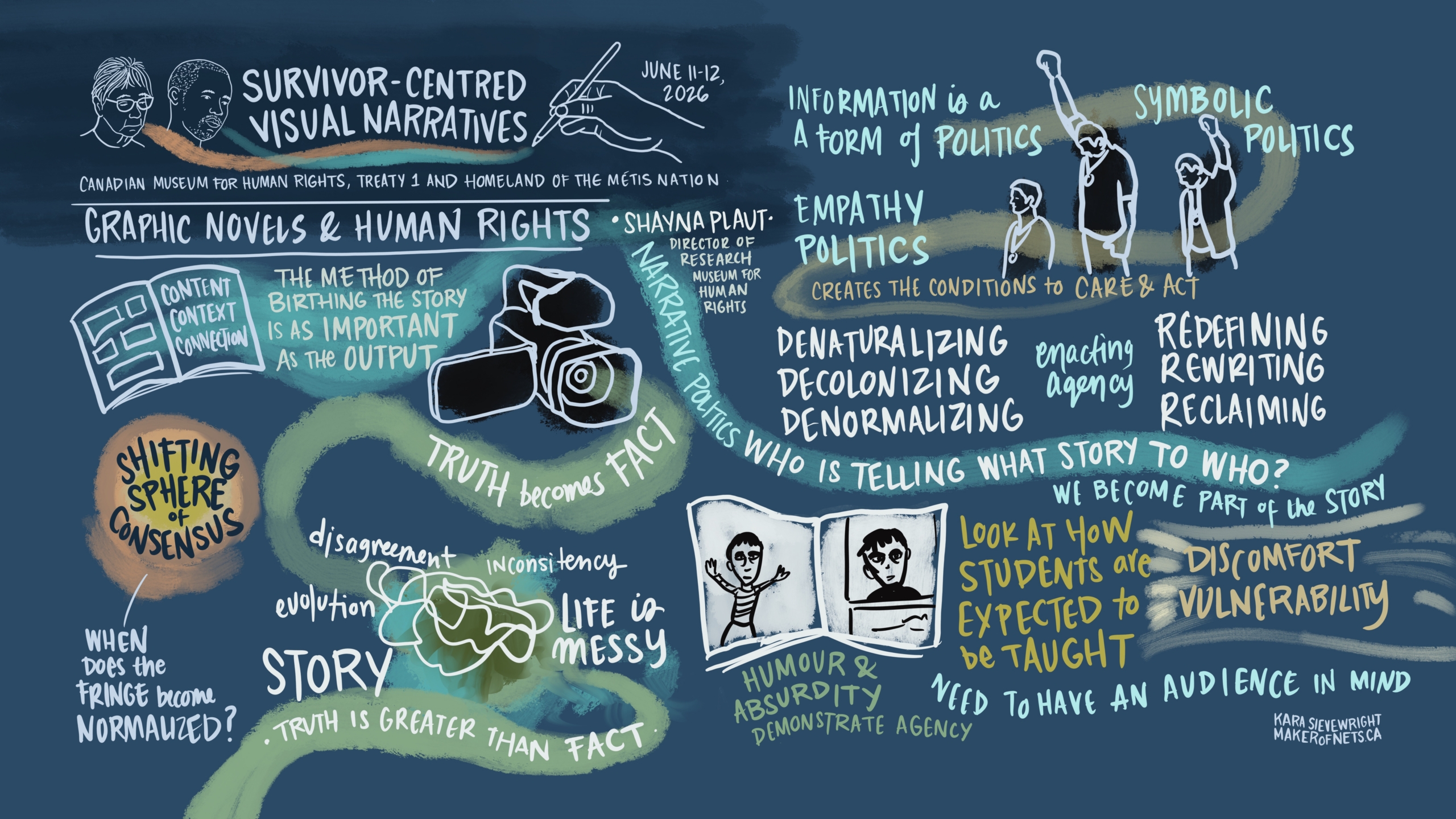

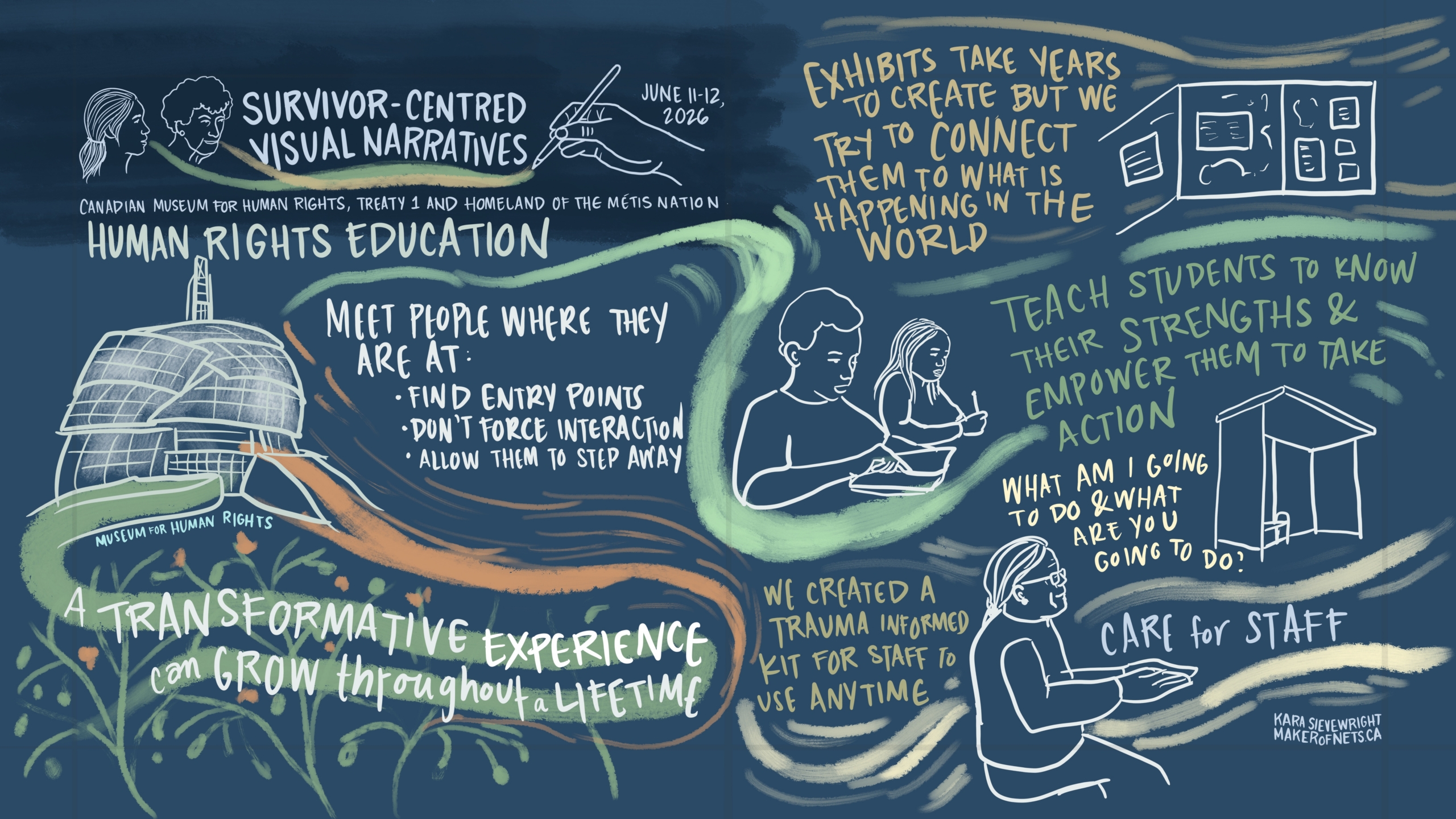
Artist Kara Sievewright joined our AGM remotely to listen to the meeting and summarize highlights through graphic recordings; a collection of hand-drawn images developed in real-time. She created four for graphics for each day.
Illustrations can be enlarged to full size viewing by selecting them.