‘Healing Trauma in the Anthropocene’ Workshop at the Royal Swedish Academy of Sciences – May 26-28, 2026
Project manager Jennifer Sauter was invited to participate a three-day workshop on “Healing Trauma in the Anthropocene” from May 26-28, 2026, at the Royal Swedish Academy of Sciences in Stockholm, Sweden. This workshop was co-organized by the Stockholm Resilience Centre, the Global Resilience Partnership, and the Anthropocene Laboratory.
The workshop brought together international expertise spanning anthropology, psychology, human geography, museology, sustainability, organizational science, and the arts to explore the role that healing may play in how individuals and communities adapt or transform in the face of Anthropocene challenges. It focused on learning from different contexts, experiences and approaches to develop and spread capacities seen in the presence of healing at different scales for the psychological, emotional, and existential challenges of the Anthropocene.
Our heartfelt thanks to Michele-Lee Moore and Shiphrah Mutungi Akandiinda for the generous invitation to participate in this workshop, and to Kayoko Kumasaka and Sachiko Ishihara for your coordination and support throughout each session.
The following blog is a summary of her reflections from the workshop.
May 26, 2026
Day 1: Learning from healing trauma in different geographical and historical contexts
Upon arriving at the Linnaeus Hall at the Royal Swedish Academy of Sciences, the morning welcome and introduction created an open and understanding space for the first plenary discussions to explore approaches to healing and the capacities that influence this process. Discussions included how to document a “healing system” (Laura Calderon), considering fractal approaches to change, physical recovery and mental health challenges, and how to create systems of care (peer-to-peer).
In the first breakout group discussions, we contemplated the definition of healing and trauma, questioning: What is healing? How can it be observed in the individual versus the collective? When is healing helpful, and when is it not? How is reconciliation part of healing, and direct versus indirect healing.
My first reaction to these questions was: What does healing look like for Emmie Arbel, a Holocaust survivor SCVN has worked with? Perhaps it is when she can sit in a café without needing to have her back against the wall. To have a reactive behaviour be released from the conscious or unconscious way she navigates the world.
In the context of the Survivor-Centred Visual Narratives project, we are working with survivors who have experienced trauma and who have previously shared their experiences in a public or research setting, to minimize the risk of retraumatization. Since each of our survivors are at different stages of processing their trauma and healing, our approach is to manage the risk of potential further trauma from describing their experiences. In support of this, we provide counselling while they are on the project and ensure the interviews are trauma-informed, with breaks during and in between sessions. While the opportunity for healing is not an explicit goal of project, some of our survivors feel there is a sense of healing from sharing their experiences, through having their voice heard and story documented. This is a general (and personal) observation that would require further interviews after the graphic novels are published to better understand the full impact of the SCVN project on each survivor.
When discussing how to engage in healing, there was the need to “define the trauma to define the response.” PhD candidate Ali Bitenga Alexandre identified that “trauma begins in the pockets,” such as the experience of systemic poverty being part of one’s identity. Dr. Jean Pierre Ndagijimana also shared that people will continue to respond to the effects of war through post-traumatic stress disorders (PTSD) and asks the question of what the ‘post’ looks after healing.
Both of these examples, and other examples of traumatic experiences, brought forth the question: Do we need a definition of trauma to be able to respond? Do we need a consensus built, and agreed upon definition that represents the trauma? Complex trauma, either individual or collective, is often very difficult to address. Beyond the trauma of poverty and war, there is also a borderless global anxiety associated with climate change that is difficult to define and to address, and therefore to heal from.
Breakout discussions: What is possible in the presence of healing that isn’t without it?
In the afternoon session, we continued to explore questions about healing and trauma. We discussed how persistence and resilience are part of an ongoing process of healing, creating transformations at different scales which challenge the concentration of existing views, structures, and practices. The questions raised were: Do we disregard trauma for an altruistic higher purpose or calling (i.e. environmental good)? What is possible in the presence of healing versus its absence? How do you know when it is happening? What are the conditions for healing? Could it be intentional or accidental (i.e. nature walks)?
In healing, there is an expansion of perceived capabilities– an increased sense of capacities within the three layers of healing (mind, body, spirit) including community and lands. When there is capacity within an individual, there is potential for participation; compared to when capacity is lacking, disengagement is likely Part of healing also includes identifying needs at individual and community levels and understanding their sense of identity and agency.
To support healing, we need mutual solidarity, financial structures, networks of support, and a humanitarian response to needs. It was suggested we need to become like ‘caterpillar goop,’ to be able to rearrange society, to go through the necessary metamorphosis.
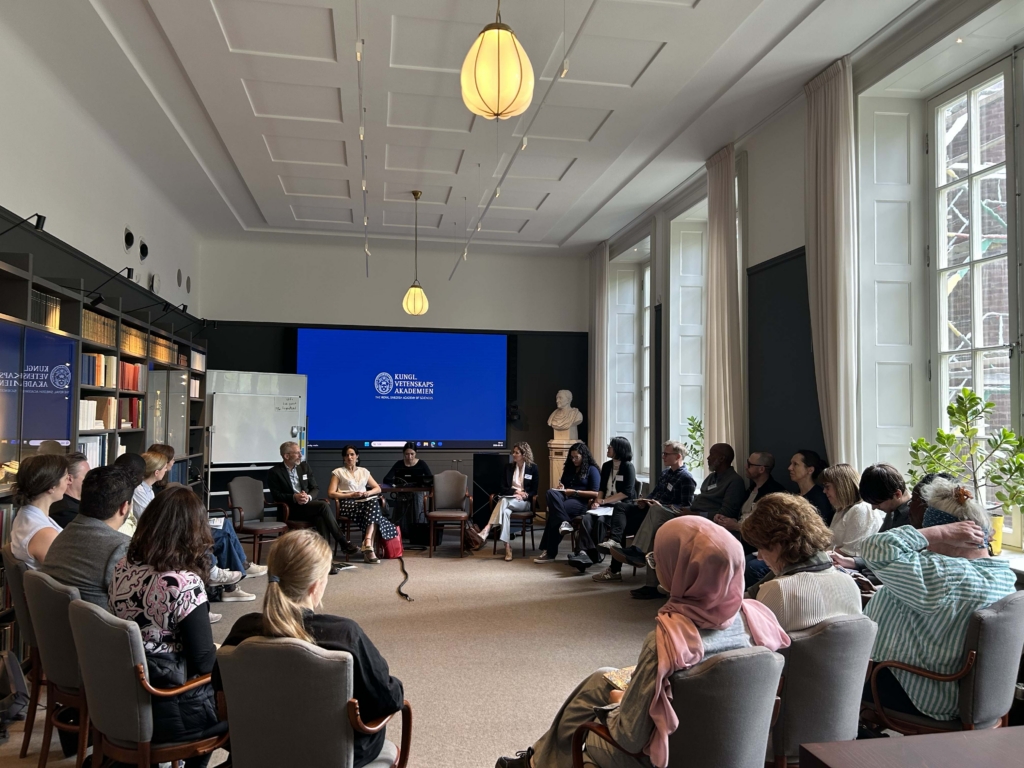
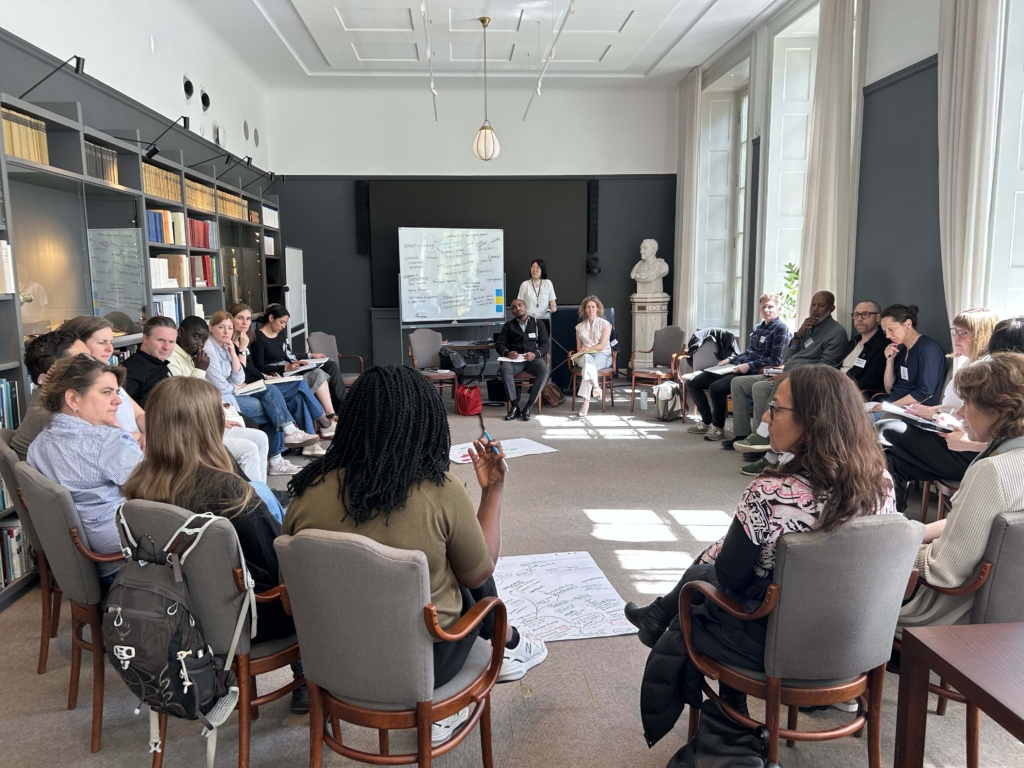
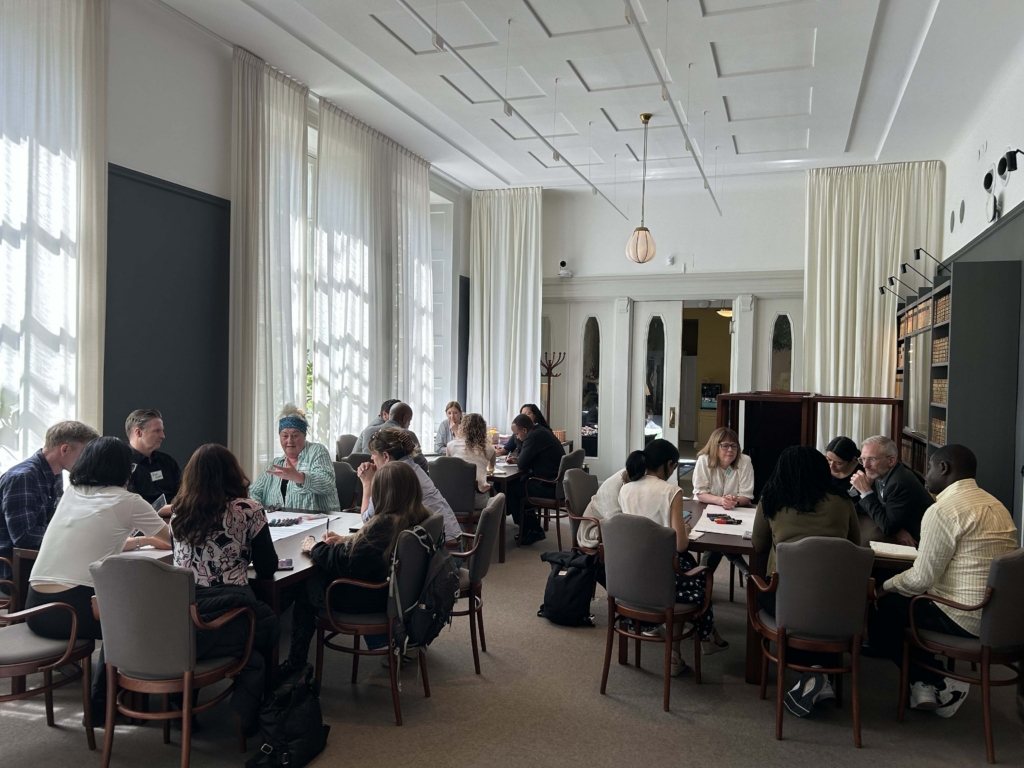
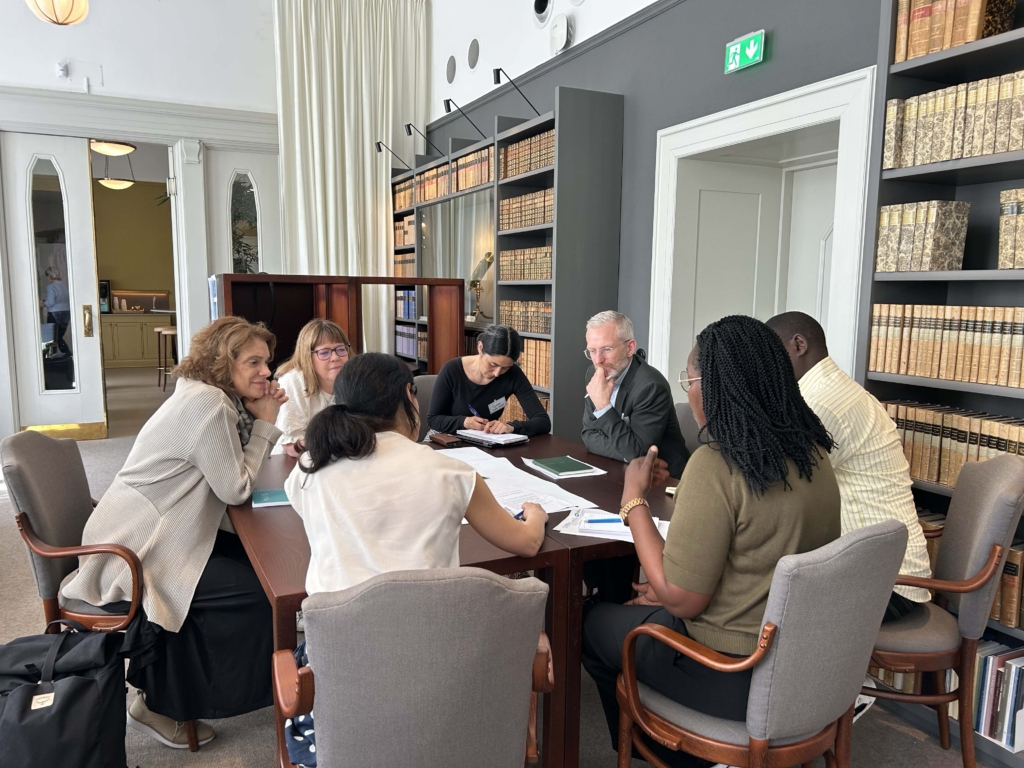
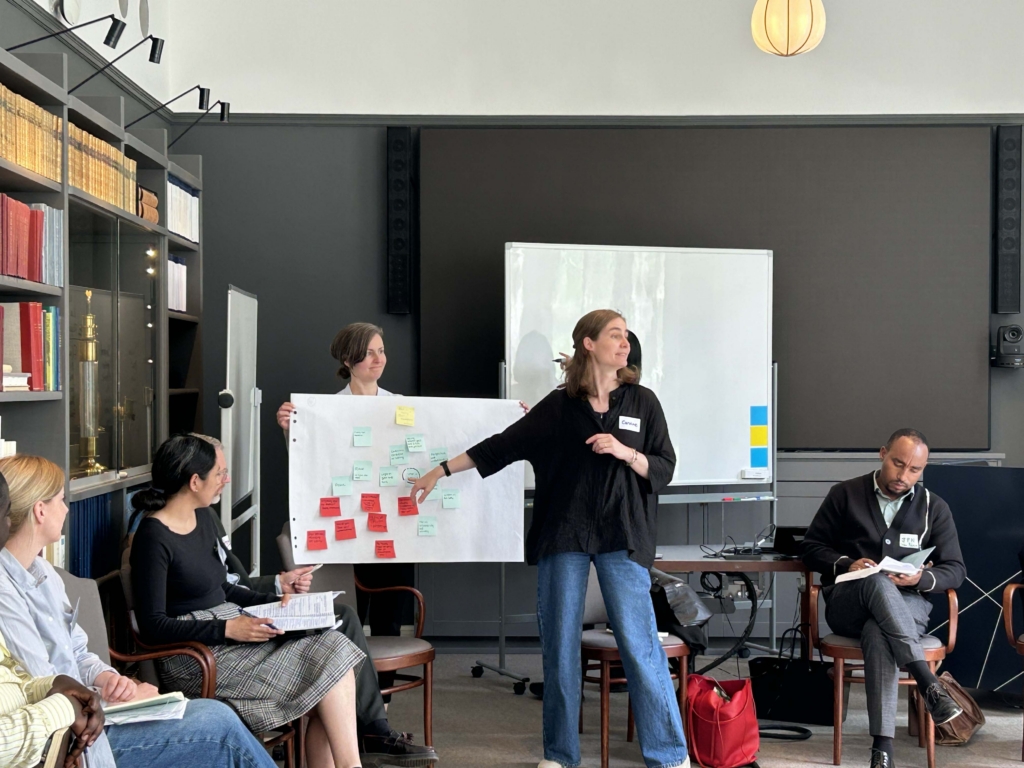
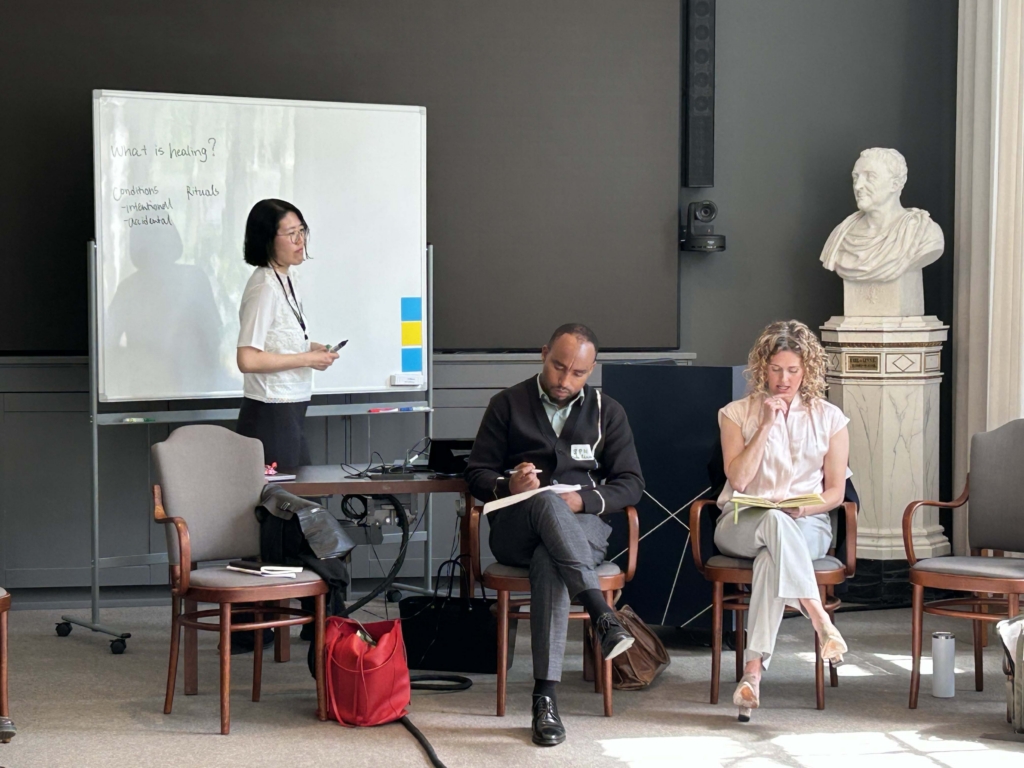
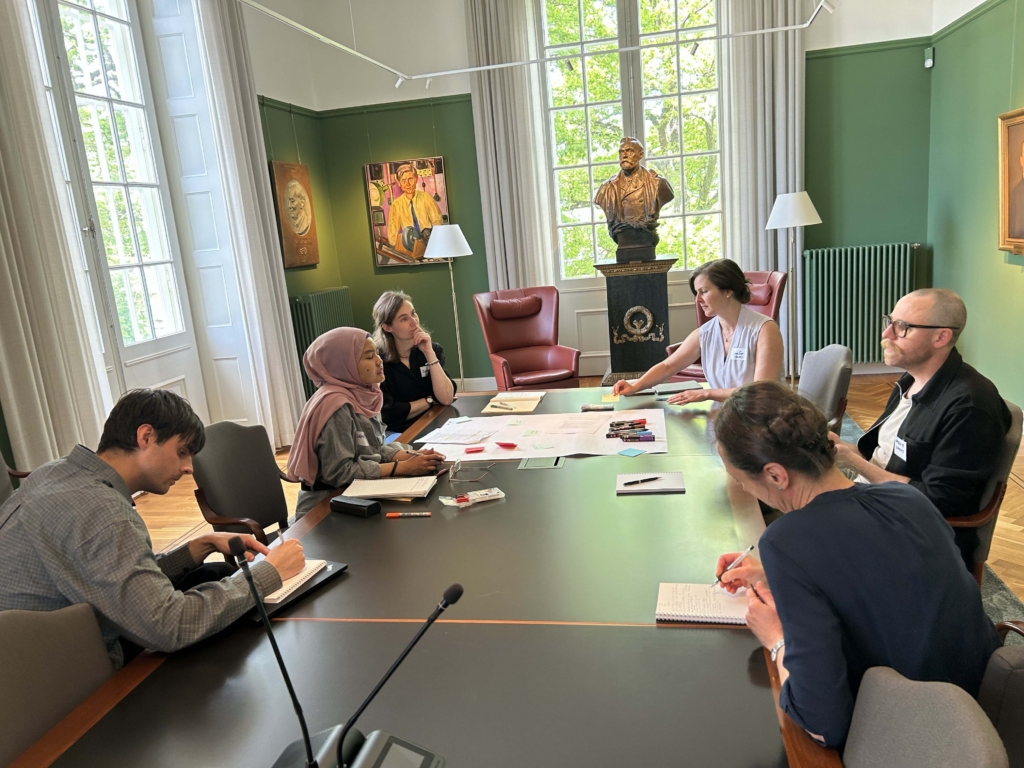
Workshop Day 1: Introductions and breakout discussions at Linnaeus Hall at the Royal Swedish Academy of Sciences. Photo credit: Kayoko Kumasaka.
Wednesday, May 27
Day 2: Developing individual and collective capacities for living in the Anthropocene
The second day started with the option of participating in two practice-based exercises, and the session I joined was a climate-aware contemplative practice led by climate psychologist Frida Hylander. She guided us through a meditation beginning within our bodies and gently expanding spatial awareness from ourselves to the room, the city, landscape, country, planet, and beyond. When debriefing after, some of the participants had difficulty reaching higher expanses, while others found their way easily. Perhaps this reflected everyone’s capacity to engage beyond their known settings, and into the unknown at that moment.
We also discussed compassion fatigue, and clinical psychologist Freddie Lymeus emphasized that compassion is a resource, and like moste resources, is finite. Frida introduced us to the concept of the Ice Cream Model, which helps people to “navigate times of uncertainty in a sustainable way” through three bowls of collective action, coping with emotions, and pausing. All of this would be possible with a foundation of social support.
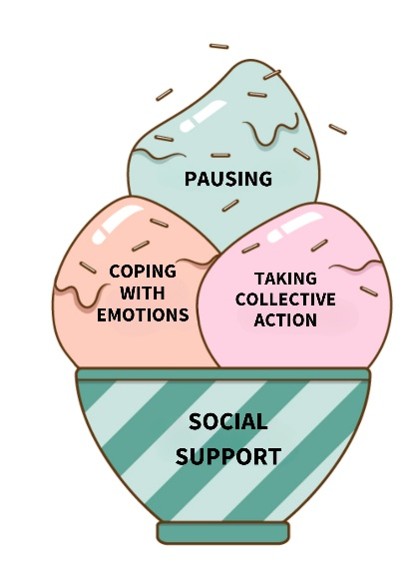
Upon returning to the larger group, we reflected on the “opportunity contexts” of individual and collective capacities which are important for facilitating sustainable transformations. For example, is an individual able to participate safely, both politically and financially? Equal opportunity to participate in transformations requires reflecting on how to support access for all, such as low-income households (UBI), physical access (transportation) and community access (ability to speak and move freely).
Participants also reflected on developing capacities for “hospicing” dying systems with dignity, that are reaching the end of their life cycle; how to manage the emotions around change and loss and accept uncertainty ahead. Participants reflected on how we balance this radical paradox and hold tensions from the process of releasing an old system all the while cultivating a new one. We discussed the power of imagination, memories, and media language that influence our ability to imagine new opportunities and alternative futures, such as altruistic world systems, while old systems decline. An excellent reflection by a participant was that we, as a society, are holding tensions, holding our unknowns in “lifeboats” and that instead of individual lifeboats we must hold on to each other to make it through difficult journeys.
Ice Cream Model. Image credit: Frida Hylander (2025).
The afternoon group activity was to join one of the five following discussions: A) Role of Arts B) Role of Nature, C) Difficult Emotions & Distress, D) Myths, Methodologies & World Views (David Anderson Hooker), E) Imaginal – Voice of Nature (Caroline Hickman). I joined the Role of Arts to share insights from SCVN and learn from others about additional ways the arts engage with healing. We discussed how the arts are not a socially prioritized practice, and how we frequently privilege language as expression and restoration. Reflecting on SCVN, our process has potentially helped with healing as Holocaust survivor Emmie had memories emerge which may have previously been inaccessible. However, many memories may remain equally unreachable and obscured from her as part of her healing, and to protect her.
We also discussed the ability of theatre to express embodied trauma and music to transcend language and cultural barriers, such as the non-profit organization “Music Without Borders” (Per Olsson). It’s also important to recognize that different cultures have different levels of artistic access and engagement. One participant recommended the documentary film The Act of Killing (2012) directed by Joshua Oppenheimer, as it investigates the perpetrators of the 1965–1966 Indonesian mass killings through staged dramatic re-enactments. It raised challenging questions: What to do when art is for the perpetrator? Could it be used for further harm?
At the end of this session, there was interest in developing a guide for researchers on the arts or the intersection of arts, trauma, and healing.
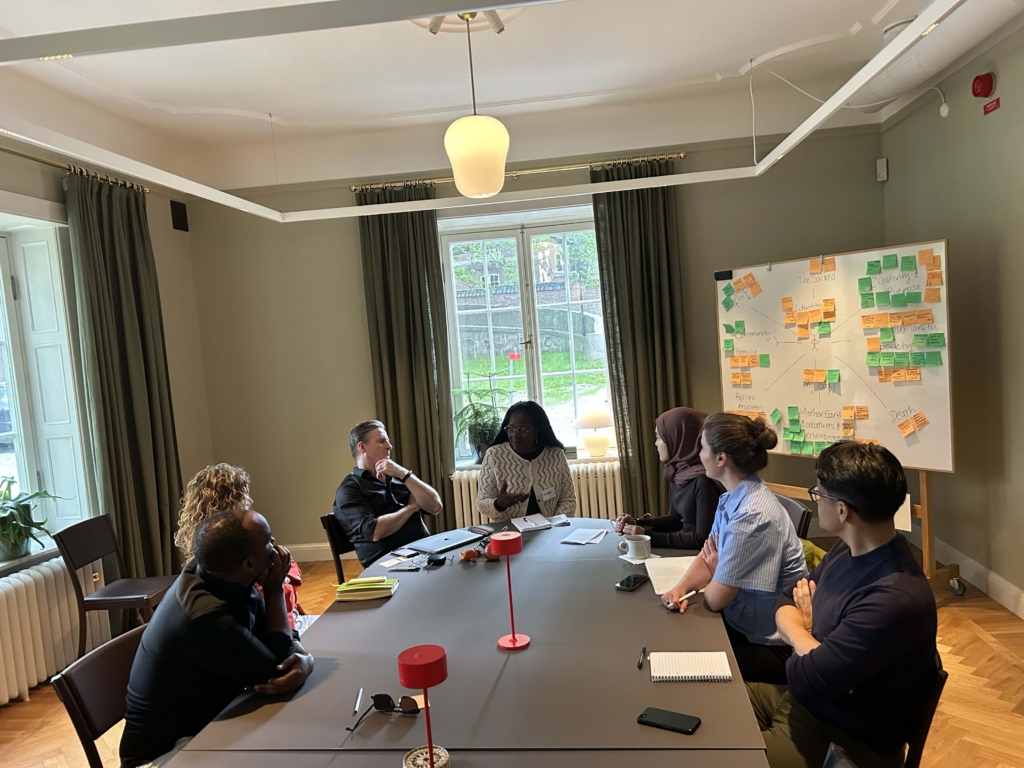
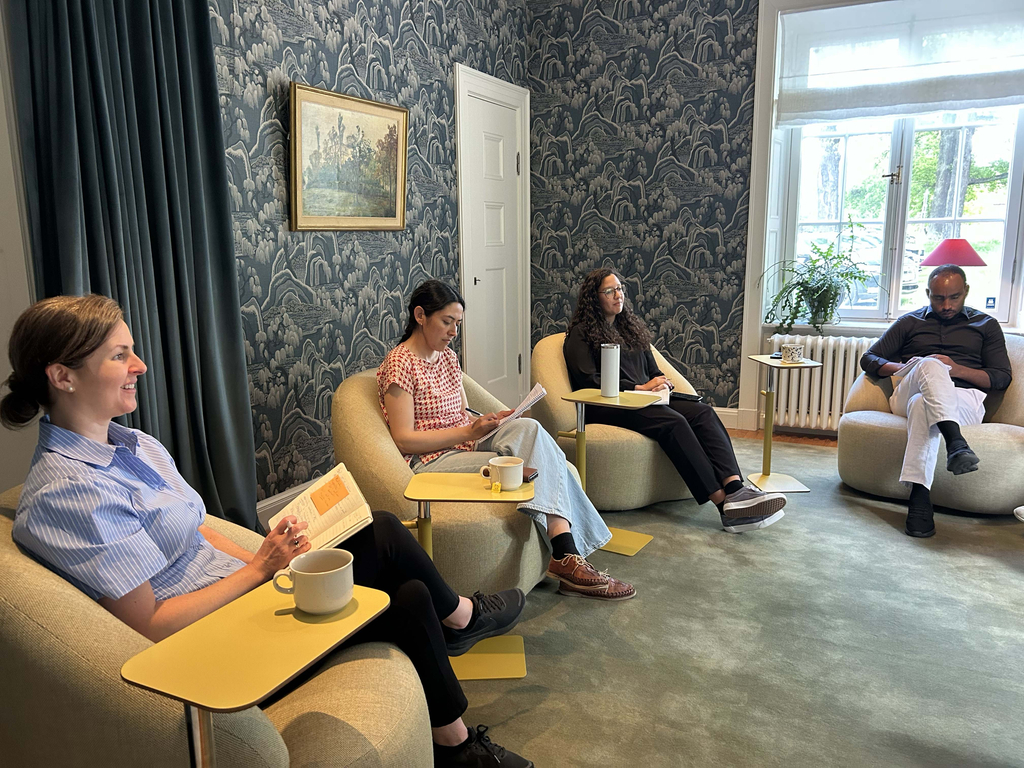
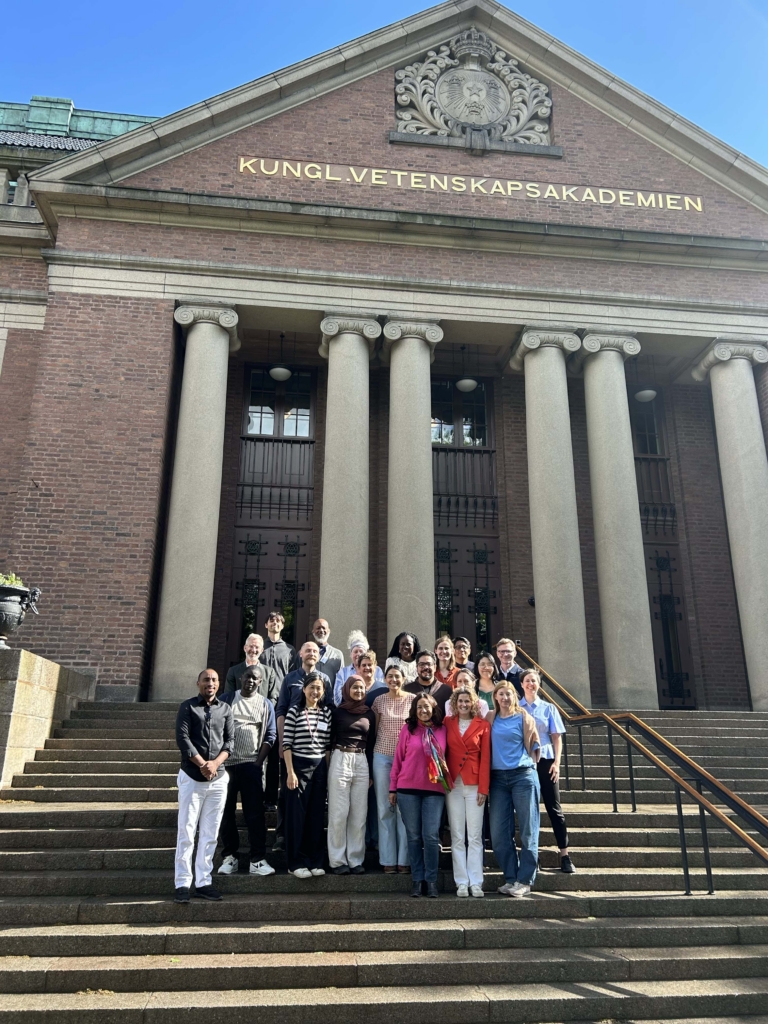
Workshop Day 2: Role of the arts group(left), climate-aware contemplative meditation group(middle) and group photo (right)at the Vinkelvillan at the Royal Swedish Academy of Sciences. Photo credit: Kayoko Kumasaka.
Breakout discussion group: myths, methodologies & worldviews
This discussion group was led by David Anderson Hooker and explored the worldviews shaping human relationships in the Anthropocene. We discussed the influence of religious drive and authority, and cultural values such as the balance of good and evil in Javanese culture. We also questioned if a society is organized according to a system in balance, what would it look like in government and business? What if we had a circular economy? And do we shift worldviews from domain-over to a stewardship-based approach?
In our networked societies, we considered the balance between accountability and surveillance. In high-trust societies there is the expectation of accountability throughout all levels, from individual to government, and across ages and cultures. However, a level of surveillance is required to ensure there are checks and balances beyond personal accountability, to mitigate corruption. Overall, it is a privilege to interrogate these ideas through the myths, methodologies and world views compared to being locked into systems of thought and practice without question.
Friday, May 29
Day 3: Conclusion
The Healing Trauma in the Anthropocene workshop highlighted healing was not as a fixed state or outcome, but an ongoing process shaped by individual, social, and systemic conditions. It is also not solely an individual process, but one that is based upon relationships and collective care. As one participant reflected, “It’s not up to me, it’s up to we,” emphasizing the importance of community, collaboration, and mutual contributions in fostering resilience and transformations in a world facing increasingly complex social, environmental, and historical challenges.
The reflections on the last day also highlighted the value of collective intelligence for widening perspectives that emerge when different disciplines and ways of knowing come together. The collective learning of the community gathered. We discussed the importance of recognizing local epistemologies of healing, addressing the stigma surrounding mental health support, and considered how to make the knowledge generated in the workshop become more accessible and common practice.
Overall, the insights I found most meaningful were that healing expands capacity, requires strong networks of collective support, and that the arts can play a role in trauma-informed healing by transcending language and traditional forms of communication.
The recommended next steps were to continue the conversations, map the networks of practitioners and researchers, develop thematic workshops and practical toolkits, and explore how to support navigating liminal spaces which are often uncertain and disruptive between declining systems and alternative, emerging futures.
Postscript
Another highlight from attending the workshop was connecting with graphic artist Anneli Furmark, who is based in Umeå, Sweden and happen to be visiting in Stockholm at the same time. We toured the city’s arts district Södermalm and connected for dinner to discuss her upcoming graphic novel, As Long As We Are Together. Thank you for the warm welcome, Anneli!
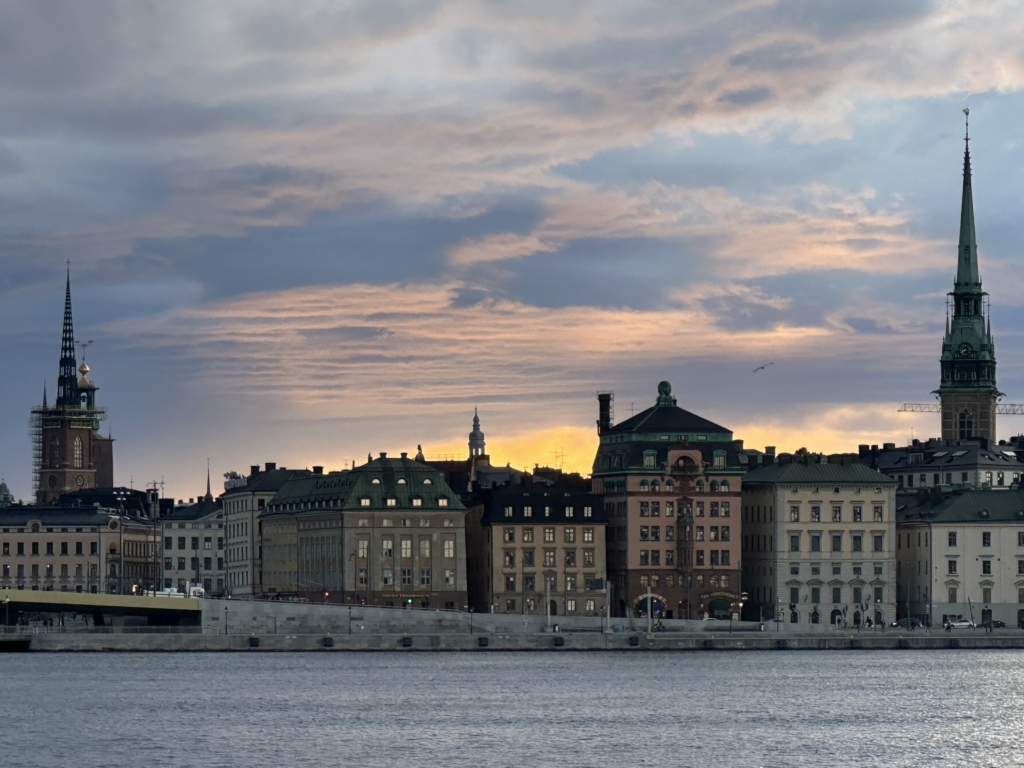
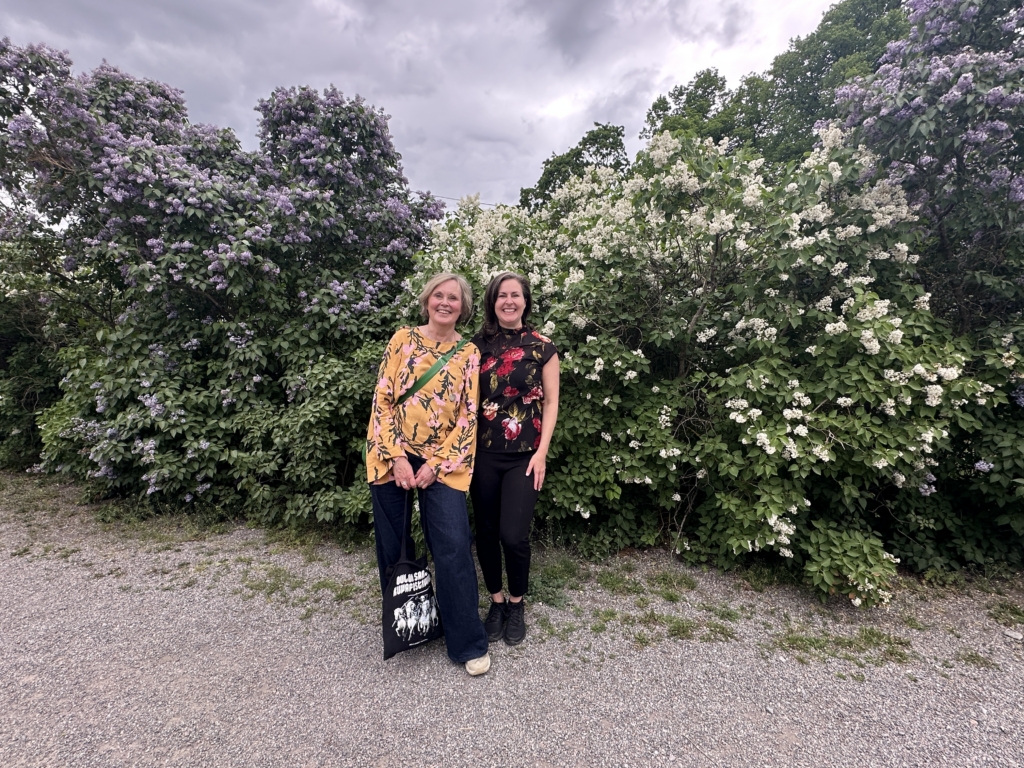
Left: Sunset over Gamla Stan, Stockholm. Right: Graphic artist Anneli Furmark (left) and project manager Jennifer Sauter (right), in a sea of spring lilacs in bloom. Photo credit: Jennifer Sauter.