Survivor-Centred Visual Narratives

Category: archives

The Artist Archives: “I Don’t Remember” – Mediating Oral Testimony and Historical Records in ‘But I Live’ with Leonie Solomons

In 2025, Holocaust Studies MA student and Survivor-Centred Visual Narratives Student Researcher Leonie Solomons archived the artistic materials from Barbara Yelin’s graphic narrative collaboration with Holocaust survivor Emmie Arbel, But I Live. It is one of the three stories featured in our award-winning graphic anthology But I Live: Three Stories of Child Survivors of the Holocaust (2022).

This guest blog is a digital exhibit representing the months of work that went into better understanding Barbara’s artistic approach and process while working with Emmie to develop the graphic narrative.

Introduction

Emmie Arbel entered the Nazi concentration camp system at age five and was seven years old when she was liberated from Bergen-Belsen. In collaboration with German cartoonist Barbara Yelin, Emmie shared her story through a combined literary-visual medium in But I Live: Three Stories of Child Survivors of the Holocaust. Central to this collaboration between survivor and artist was the decision to preserve Emmie’s recurring phrase “I don’t remember” throughout the graphic novella, a choice that both reflects the fragmented nature of Emmie’s memory and the reality of her oral testimony.

In an oral format alone, Emmie’s repeated expression of “I don’t remember” risks giving the impression that her narration is insufficient or unreliable. However, when integrated within the graphic novel, the phrase takes on a new meaning. By blending Emmie’s oral accounts with visual storytelling, supported by external archival records and documents, Emmie and Barbara’s collaboration ensured the graphic novella was both historically accurate and faithful to Emmie’s lived experience. Under a conventional oral testimony collection process, a statement like “I don’t remember” might have been understood as a mere gap in memory and therefore insignificant. Through the unique testimony collection and representation process offered by the Survivor Centered Visual Narratives (SCVN) research project, Emmie’s repeated invocation of “I don’t remember” became a deliberate and necessary part of her story.

As SCVN project lead and co-director Charlotte Schallié discusses in Slowing Down and Taking Time: A Proposal for Integrating Care Ethics into Visual Storytelling Research and Practice, the relationship between the survivor and the artist is designed to facilitate a move away from a logocentric focus of testimony to a more immersive, sensory approach to documentation (103). Such a process becomes uniquely possible with the methodology set out by SCVN, where survivors and artists rely on relationship building to co-create a graphic novel narrative of survivors’ stories. This blog explores how the SCVN methodology came to depict important details of Emmie’s life, despite the constraints of Emmie’s memory in her oral testimony account. The archive of But I Live acts as a lens into the collaboration and mediation undertaken throughout the creation process of the graphic novel. I will focus on page 114 to show how But I Live integrates Emmie’s fragmented oral testimony within a graphic novel format, despite her oral testimony’s statement, “I don’t remember”.  
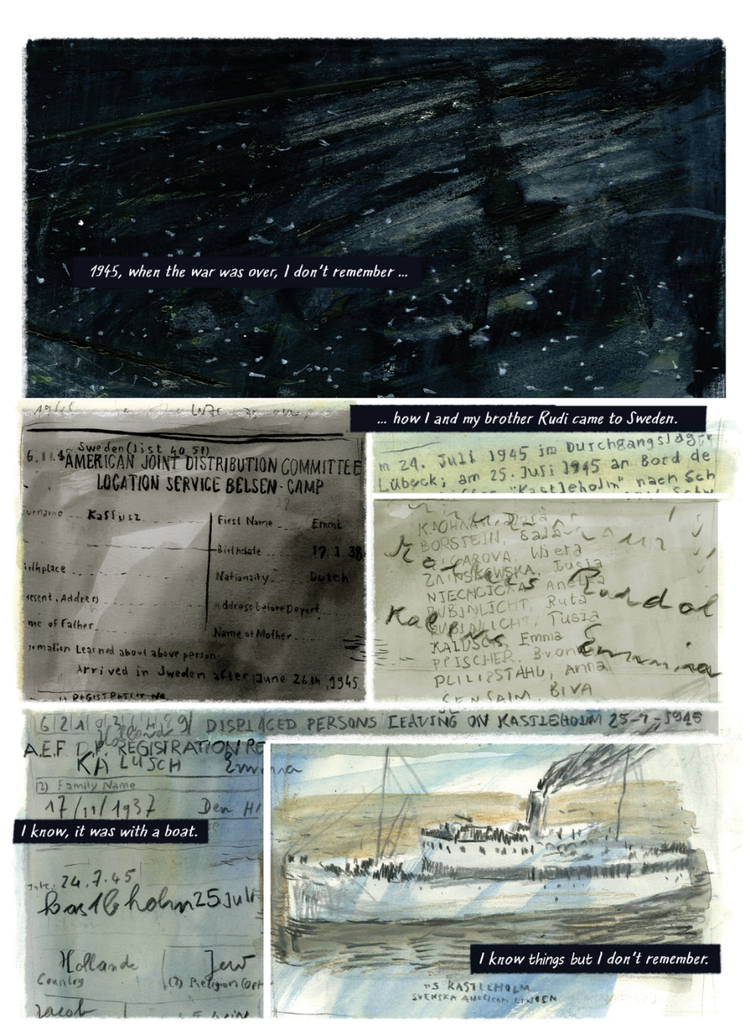
But I Live (2022, p.114)

Page 114

Page 114 of But I Live follows Emmie’s recollection of her life immediately post-liberation, layered alongside illustrations documenting her journey from Bergen-Belsen to Sweden. Emmie’s narration on this page reads: “1945, when the war was over, I don’t remember… how I and my brother Rudi came to Sweden. I know, it was on a boat. I know things but I don’t remember.”  

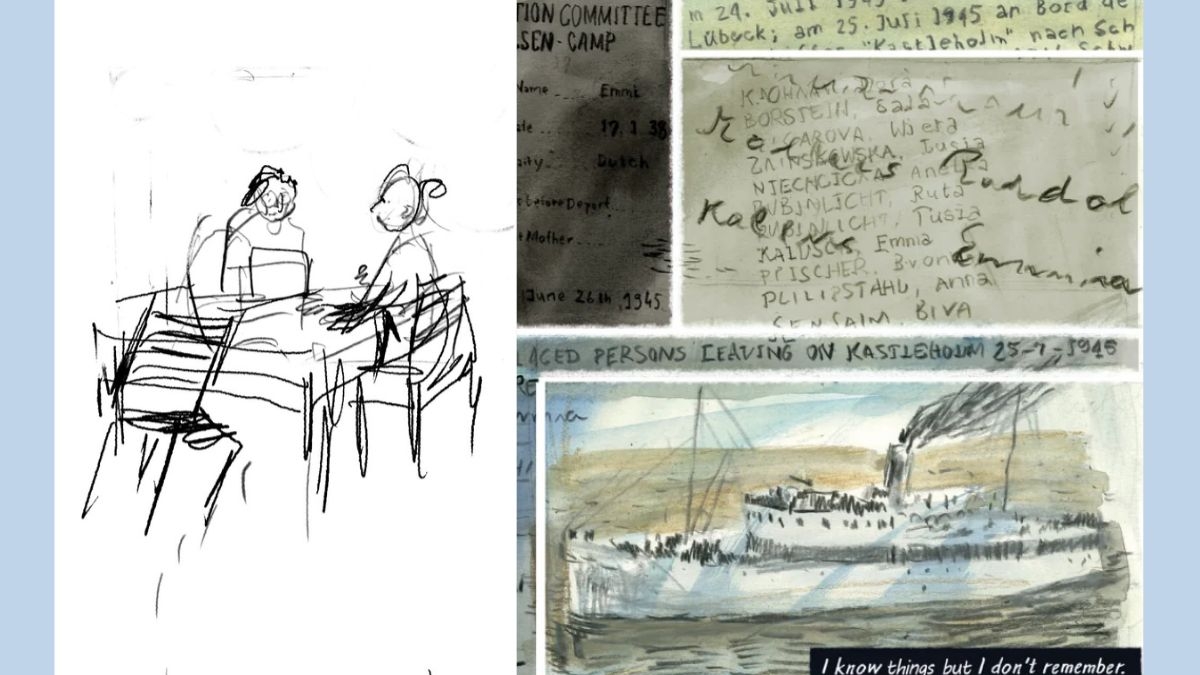
The illustrative panels contextualize Emmie’s oral account of her journey post-liberation, as she travels to Sweden with Rudi. This page includes six panels combining renderings of archival documents with an illustration of the vessel that transported displaced persons to Sweden after liberation, called the S.S. Kastelholm.  

Page 114 as a completed work conveys how Barbara and Emmie constructed a cohesive visual narrative through corroboration of multiple sources existing in tandem, including oral testimony and official archival and historical records. Yet, the finished page represents just one layer of a much deeper collaborative process of recording survivor testimony, inherent to the SCVN ethos.  

To understand how Emmie’s memories, sometimes fragmented and uncertain, became part of a larger visual mechanism of testimony, it is worth turning to the archive of But I Live. The archive of But I Live is a collection of materials that documents the process of testimony collection and development that made page 114, and the novella possible. This archive consists of storyboard drafts, audio recordings and transcripts of Emmie’s oral testimony, Barbara’s reference photographs, and official records sourced from external archives documenting Emmie’s war and post-war life, among other materials. Each item has been carefully indexed, reflecting the individual role each file played in informing the creation of the final storyboard. Over the course of months spend indexing each and every item in the archive, I became aware of an interesting meta-analysis: Barbara’s decision to include Emmie’s fragmented memories within the graphic novel format was critically supported through integrating archival records and documents alongside Emmie’s oral testimony. Page 114 offers a snapshot of the importance of the SCVN methodology at play, where the collaboration between a survivor and artist constructed a multi-layered depiction of Emmie’s story.  

Emmie’s Oral Testimony 

The following excerpt is from a transcribed conversation between Emmie and Barbara, and shapes Emmie’s narration on page 114: 

Barbara Yelin: Can you remember anything else? What did you do you in these days after liberation? Did you get something to eat then, to drink?  

An expert of a transcribed conversation between Emmie and Barbara about Emmie’s life immediately post-liberation (2020).

The narration used in the completed version of page 114 captures the essence of Emmie’s oral testimony that she shared with Barbara: an awareness of certain facts about her life as a Displaced Person unaccompanied by any true memory of having lived them. One their own, Emmie’s memories of her post-liberation journey are likely to be overlooked, given the limited detail she is able to offer. Despite this, Barbara’s first drafts reveal is her desire to include this part of Emmie’s story into the final storyboard.  

Emmie’s Liberation Story in the Drafts 
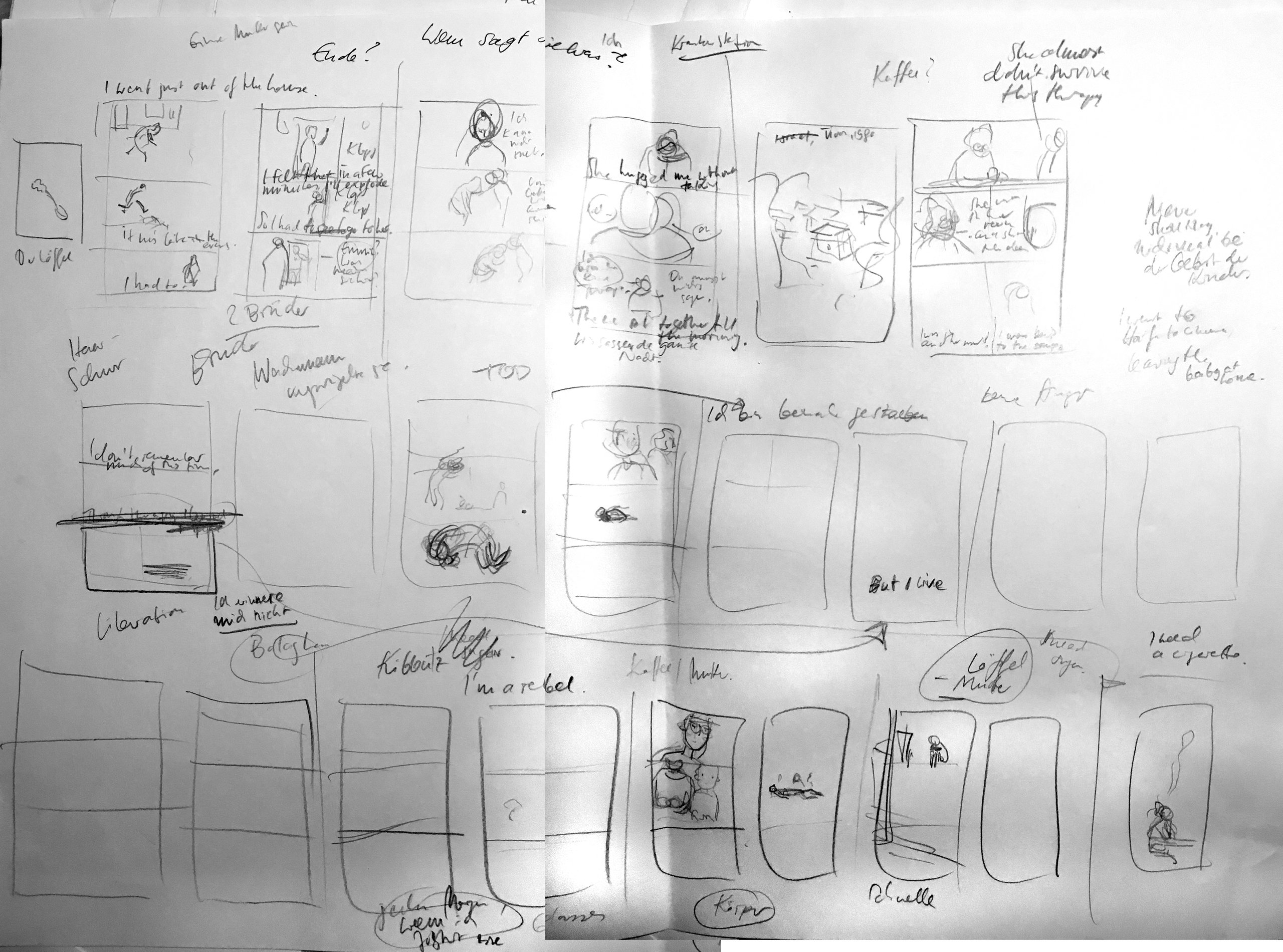
Babara’s early sketch of the page and content order of the storyboard (2019). Image credit: Barbara Yelin.

The image above features one of Barbara’s early drafts mapping the page order and content that would eventually form the final storyboard of But I Live. The page drafted on the far left of the middle row is an early iteration of what would become page 114, identifiable by a handwritten note marking this page with the theme of “Liberation”. While the detail and content of page 114 in this draft stage is minimal, Barbara has included Emmie’s oral account of liberation, narrated as “I don’t remember much from this time.”
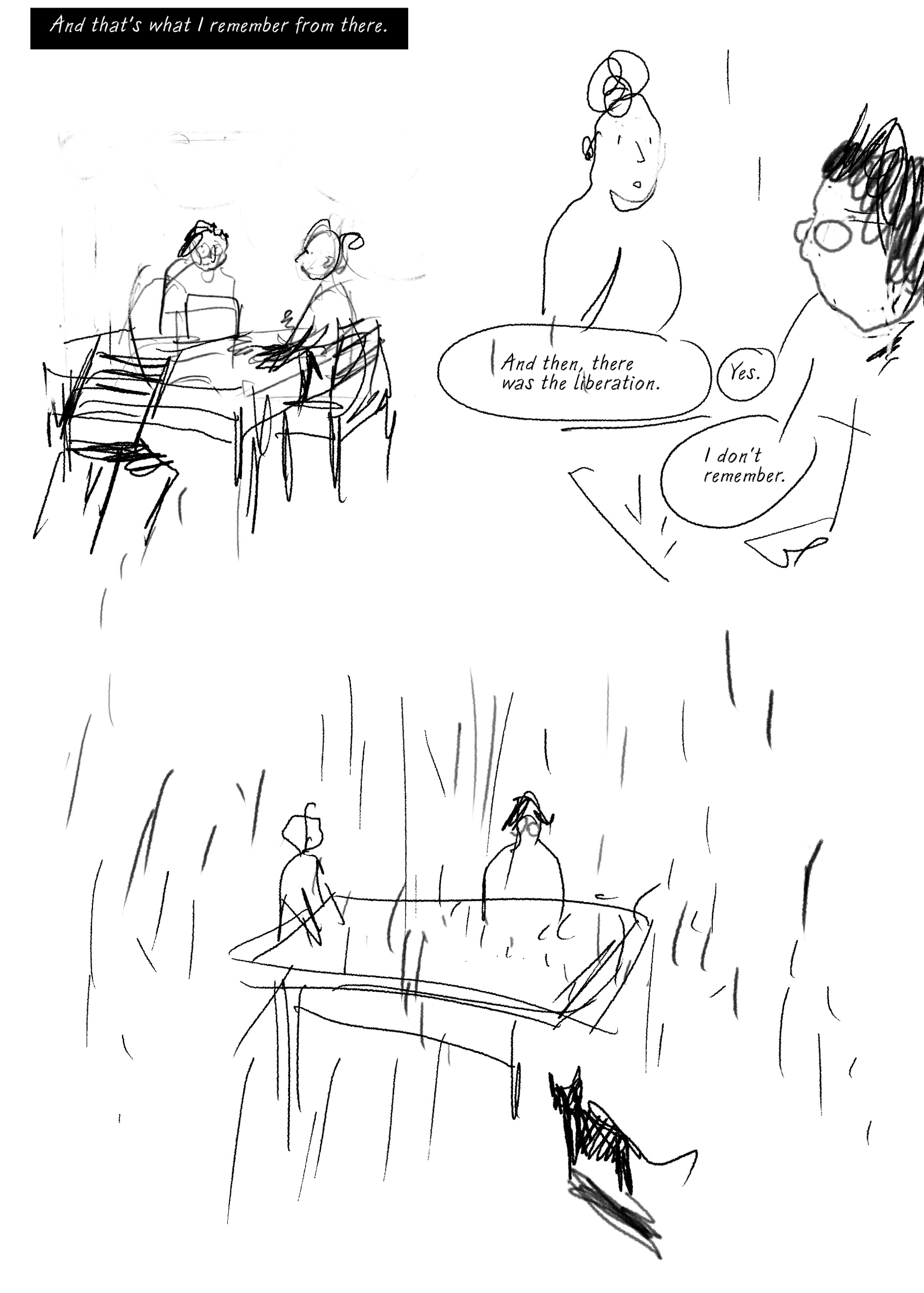
Digital sketch of Emmie and Barbara discussing life immediately post-liberation (2019). Image credit: Barbara Yelin.

This image shows a later draft of the conversation between Emmie and Barbara that would eventually become page 114. Echoing Emmie’s oral testimony of liberation, her character sketch is depicted saying “I don’t remember”. The dialogue between Emmie and Barbara seen in this earlier draft, eventually became narrated on the final version of page 114, as Barbara used illustrated references to contextualise Emmie’s post-liberation experience. 

Archives within Archives 

The illustrations on page 114 primarily draw from a collection of documents sourced from the Arolsen Archives, including Emmie’s transportation records and registration forms. The Arolsen Archive is a centre that maintains a digital database of the survivors and victims of the death camp, concentration camp, and forced labour systems under National Socialism, including individuals like Emmie. These materials corroborated Emmie’s oral testimony, where she recalls that she and Rudi came to Sweden by boat, adding “This I know. I know but I don’t remember,” which appears in the final version as “I know, it was on a boat. I know things but I don’t remember.” Where Emmie’s memory cannot account for her journey post-liberation, historical records fill in what she cannot recall.  
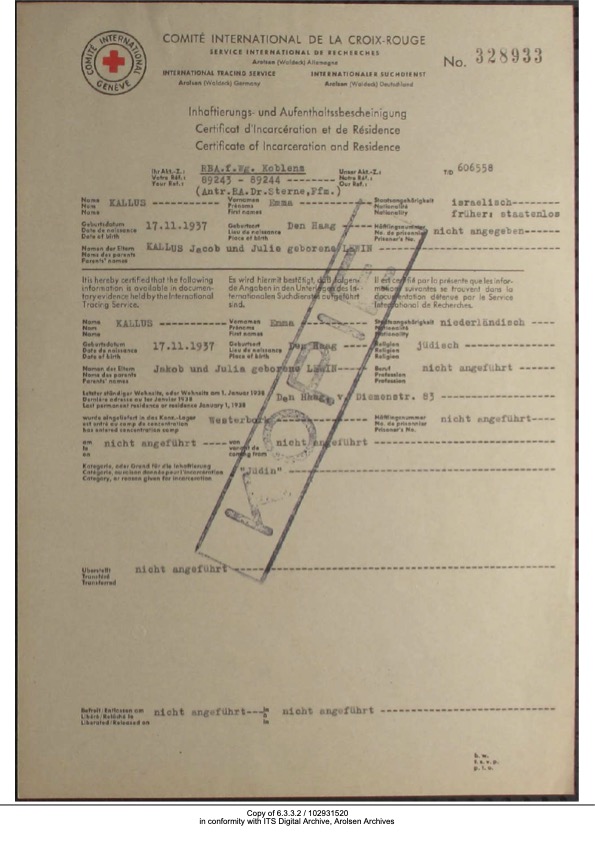
A Red Cross document preserved by the Arolsen Archives, listing Emmie’s name, date of birth, parents’ names, place of birth, and reason for incarceration, which is listed as “Judin” (1937). Image Credit: Arolsen Archives.
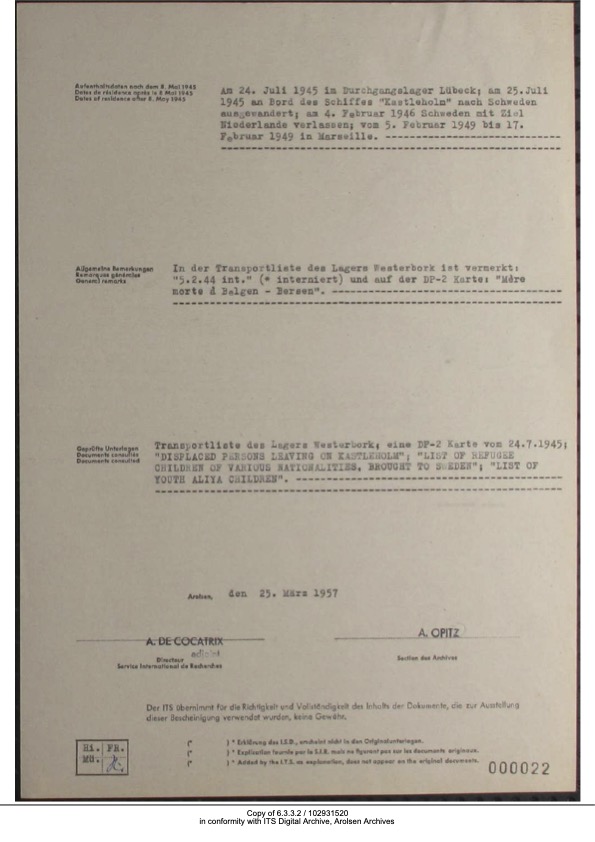
The second page of the Red Cross document, listing Emmie’s transportation route following liberation and the loss of her mother (1937). Image Credit: Arolsen Archives.

The second page of this document records some of Emmie’s internment information, including her transportation to Westerbork. This document also includes the written statement, “Mère morte à [Bergen-Belsen],” meaning “Mother died in Bergen Belsen”. The second box of text on this page lists Emmie as a “Displaced Person” and “Refugee Child…” who was brought to Sweden via the Kastleholm. The two pages of this Red Cross document appear to have influenced Barbara’s rendered illustrations of panel 2 (middle left) and panel 3 (middle right) on page 114.  
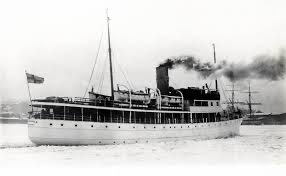
A photograph of the S.S. Kastelholm, a Swedish ship used to transport Displaced Persons after liberation in 1945 (n.d.). Source unknown.

The Red Cross document listed the “Kastelholm” as the vessel that carried Emmie, Rudi, and other Displaced Persons to Sweden after the war. An illustration of the S.S. Kastelholm makes up panel 6 (bottom right) of page 114. This image is drawn from a collection of reference photographs of the Kastelholm, consulted by Barbara during the creation process is now indexed within the But I Live archive. While Emmie does not remember her post-liberation journey or the boat she took, this account exists in the historical record of the Arolsen Archive, which Barbara transposes into the graphic novel format. 

Conclusion 

Tracing the progression of page 114 through the But I Live archive, from Barbara’s earliest drafts to the Arolsen Archive records that informed her illustrations, reveals that the making of this page was never simply a creative exercise. Rather, it was an act of careful, collaborative testimony. From the earliest stages of drafting, Barbara’s commitment to preserving Emmie’s declaration of “I don’t remember” signals an understanding that fragmented memory is not a limitation of testimony, but a vital part of it. The inclusion of transportation records and the illustration of the Kastelholm further reflects Barbara’s dedication to mediating Emmie’s testimony alongside preserved historical documents. Instead of attempting to fill the gaps in Emmie’s memory, the But I Live archive shows how different media, such as oral testimony and an official preserved record, can be simultaneously honoured.  

Works Cited 

Schallié, Charlotte, editor. But I Live: Three Stories of Child Survivors of the Holocaust. New Jewish Press, 2022.

Schallié, Charlotte. “Slowing Down and Taking Time: A Proposal for Integrating Care Ethics into Visual Storytelling Research and Practice.” Seminar: A Journal of Germanic Studies, vol. 61, no. 2, 2025, pp. 102–10. https://doi.org/10.3138/seminar.61.2.5.

Thank you to the University of Victoria’s Libraries and Art Collections for supporting the development of our archival materials.

The Survivor-Centred Visual Narratives project is supported in part by funding from the Social Sciences and Humanities Research Council of Canada and the Government of Canada. We are grateful for their support in making this work possible.
The Artist Archives: ‘A Kind of Resistance’ reflections by Olivia Kozlovic

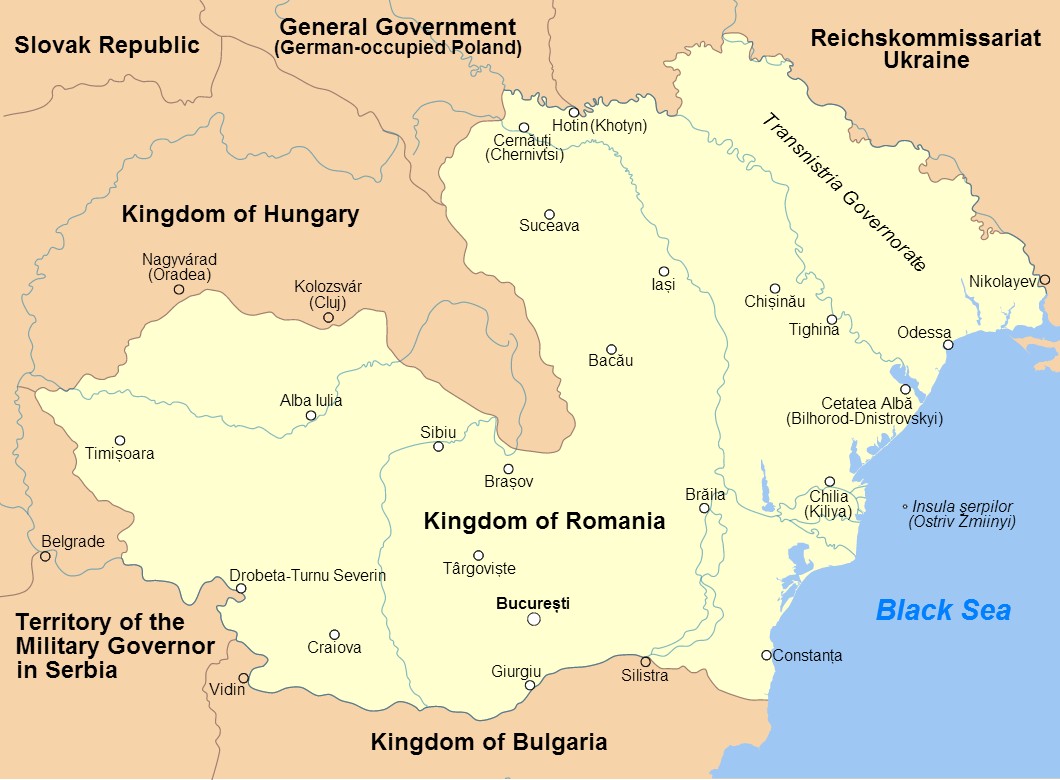
Map of Romania and territories under Romanian administration between 1941-1944. Photo credit: Wikipedia Commons, 2025.

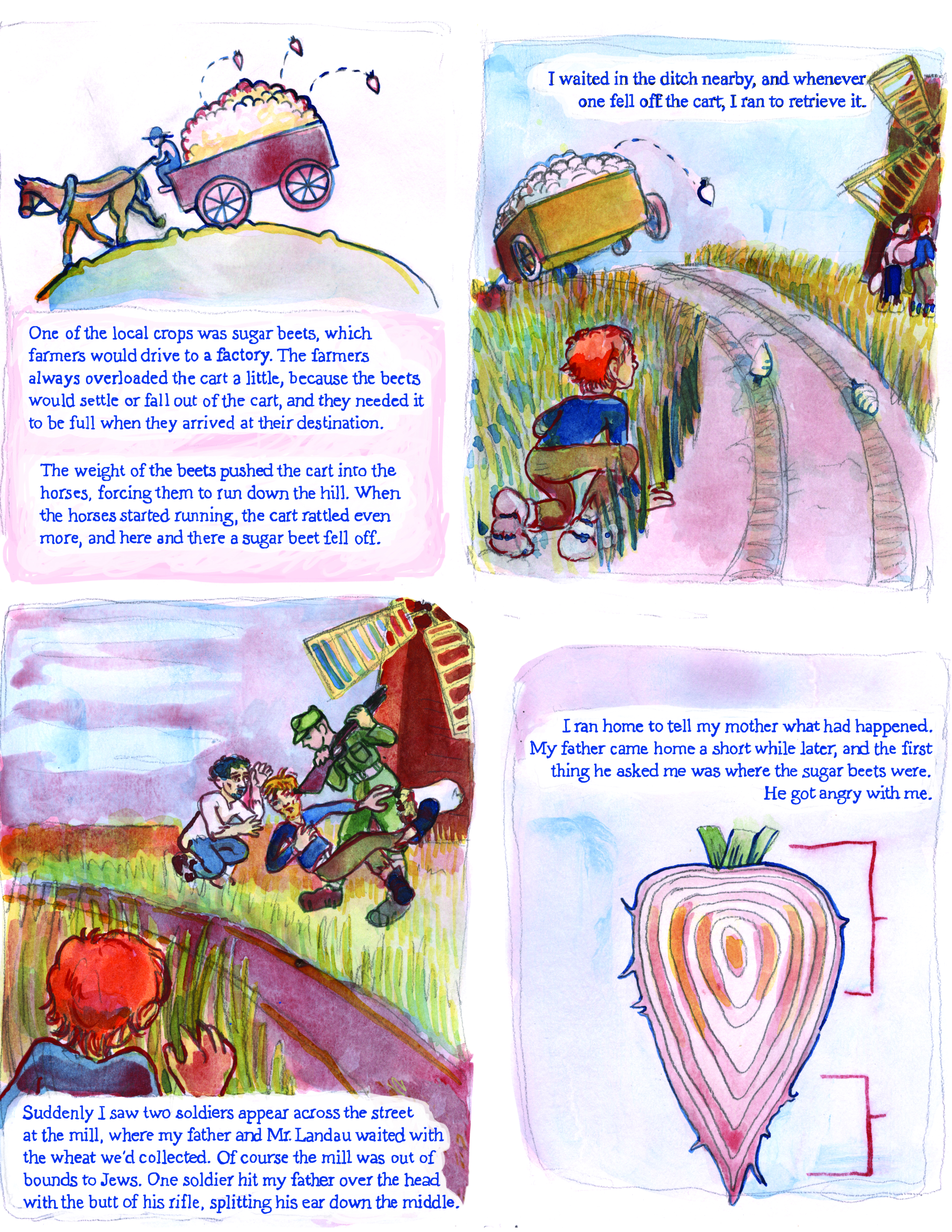
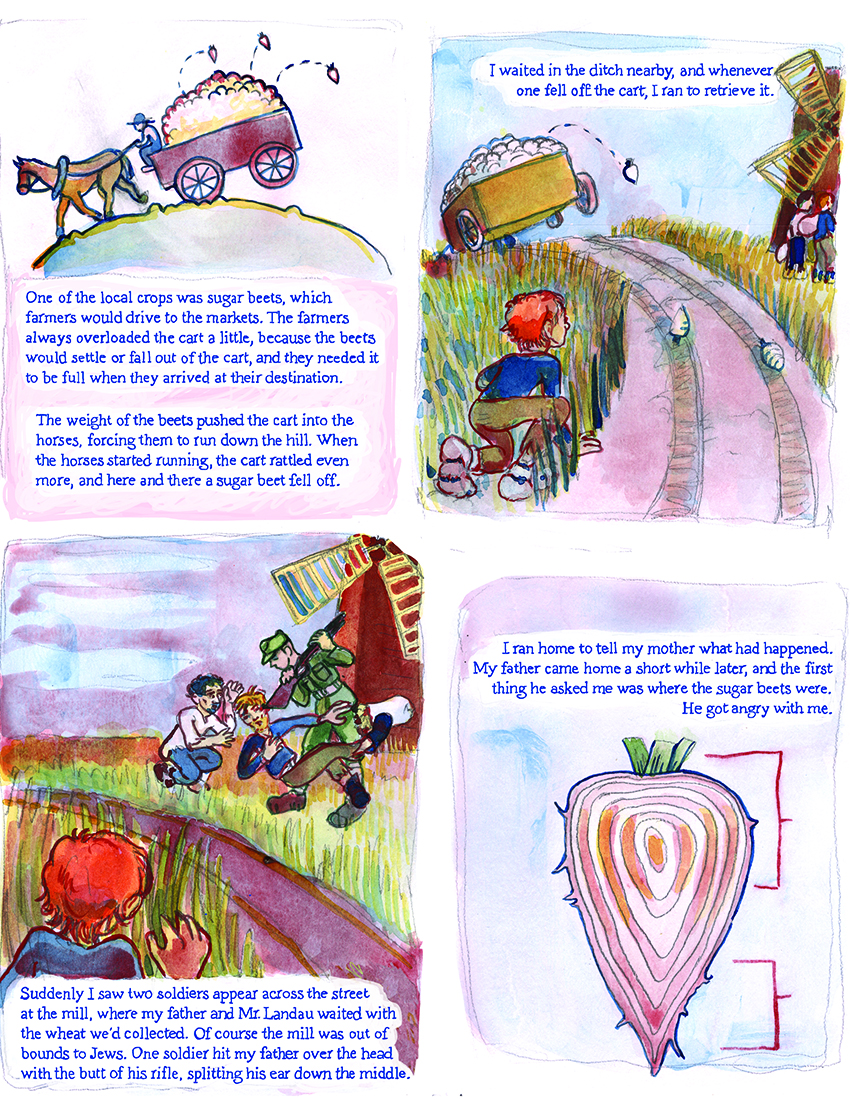
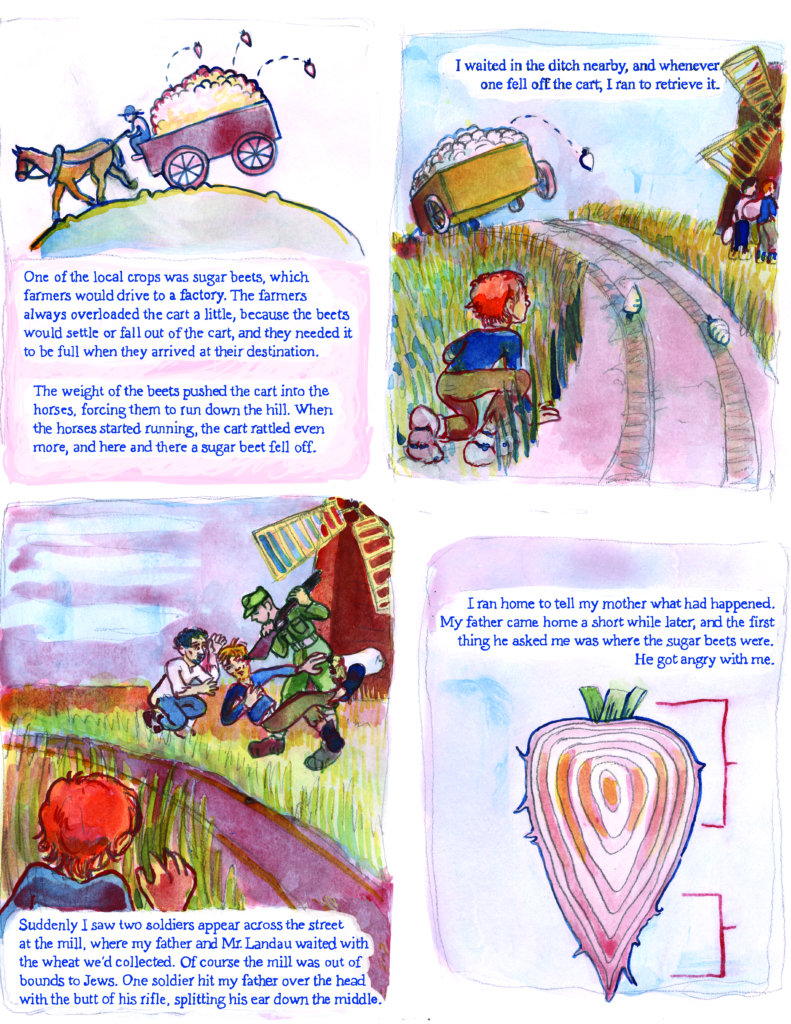
This digital exhibit, informed by my experience of archiving the project files for A Kind of Resistance, showcases the progression of a single page of the graphic novella, from initial sketch to final draft. Although some pages followed a slightly different trajectory, the development of page 24 is typical of the majority, and thus exemplifies how the chapter as a whole came together. My intent is to provide a glimpse into something the book on its own does not show. The creative process is obscured when only looking at the final page, but by looking into the archive we can see how this single page, and, by extension, the entire book, was constructed. Page 24 comes about two-thirds of the way through the story, and combines several key elements of David and his family’s fight for survival while hiding in the forests of Transnistria. It showcases the hunger that is a central theme of the story, not only in terms of needing to find food, but of the hunger to survive, both coming in the face of forces bent on their destruction. All these factors made this incident worthy of a full-page spread, as a small but crucial piece of David’s story of survival.

It is important to note that this reconstruction of Miriam’s creative process is a limited one, based on my observations as I moved through the archives and on how I personally pieced together the construction of this particular page of the story. Although I was fortunate enough to have a conversation with Miriam about her work on this project in November 2025, I imagine her own perspective of how the chapter came together would greatly differ from the one I will showcase here. 

Final draft for page 24 for A Kind of Resistance (2022). Image credit: Miriam Libicki.

Page 24

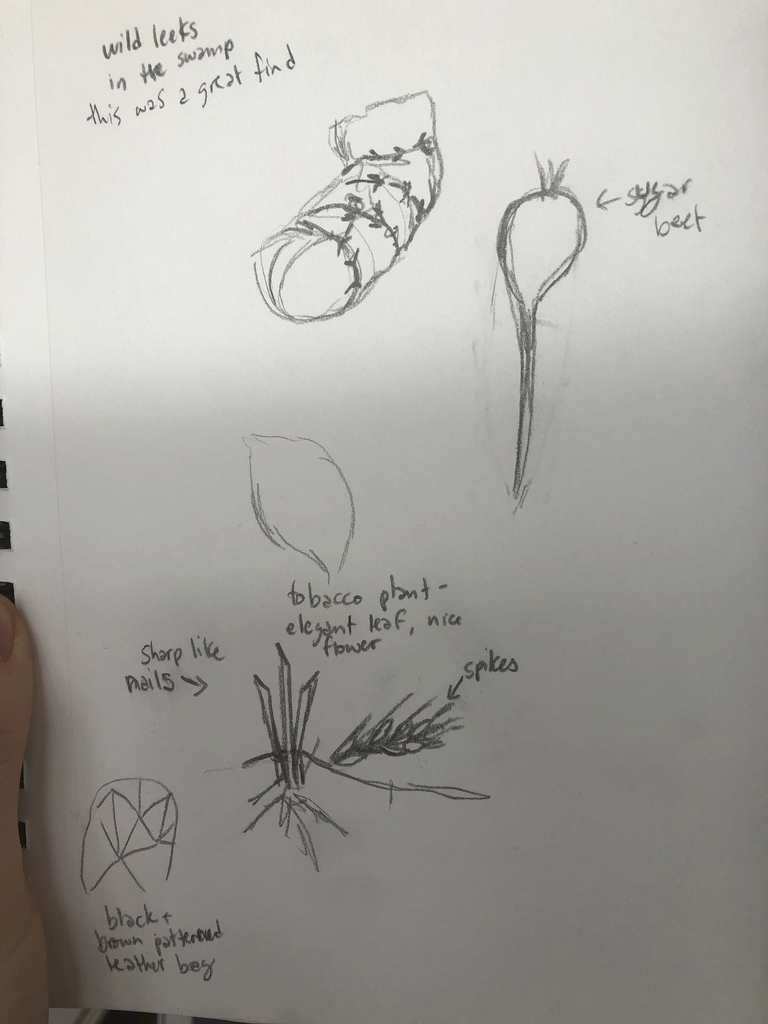
The earliest iteration of page 24 that I encountered in the project archives was in a page from Miriam’s notebook, which included a sketch of a sugar beet; presumably drawn during one of her conversations with David. The page includes a number of other illustrations: significant plants from the region, for example, and objects such as the bag David carried or the rags he wrapped around his feet after outgrowing his shoes, details that all come to play a significant role in the final story, albeit not on the same page as the sugar beet illustration. This initial sugar beet sketch served as the key detail around which the entire page was eventually built. However, the true significance of this sketch would not be revealed to me until I encountered the transcripts of Miriam and David’s conversations at the very end of the archiving process. 

The first sketches of the sugar beet, Miriam Libicki’s notebook (2020).

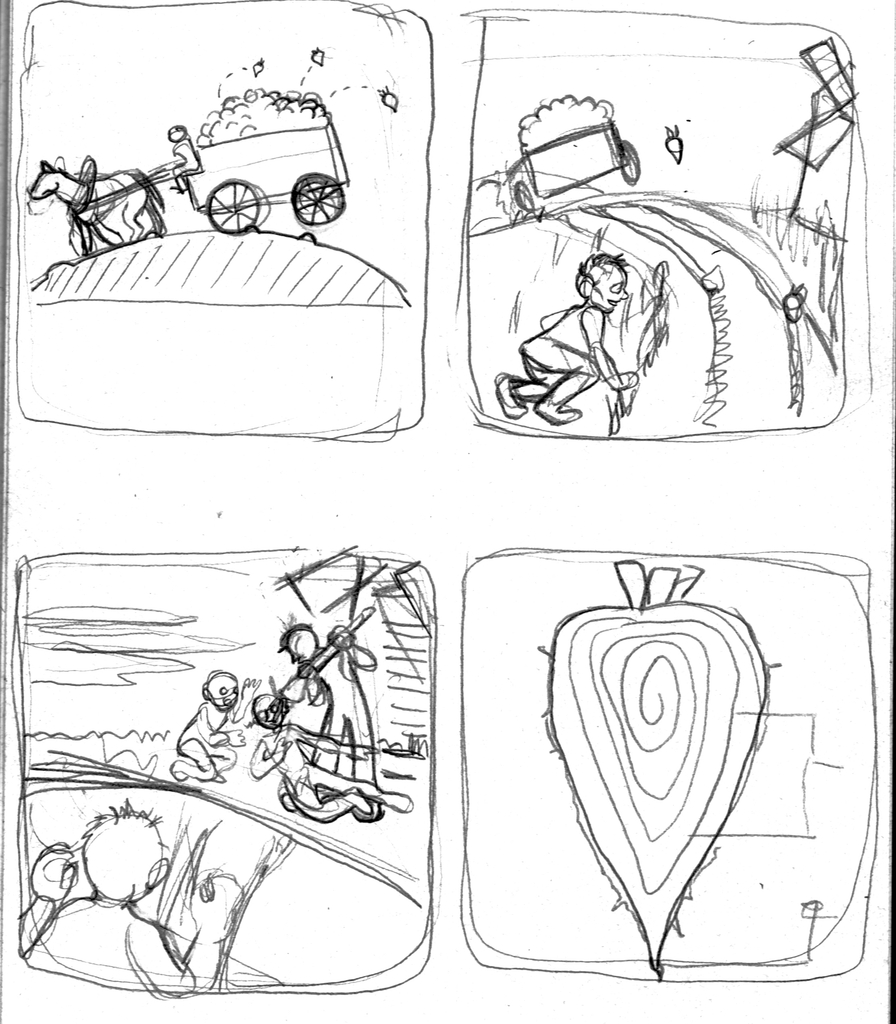
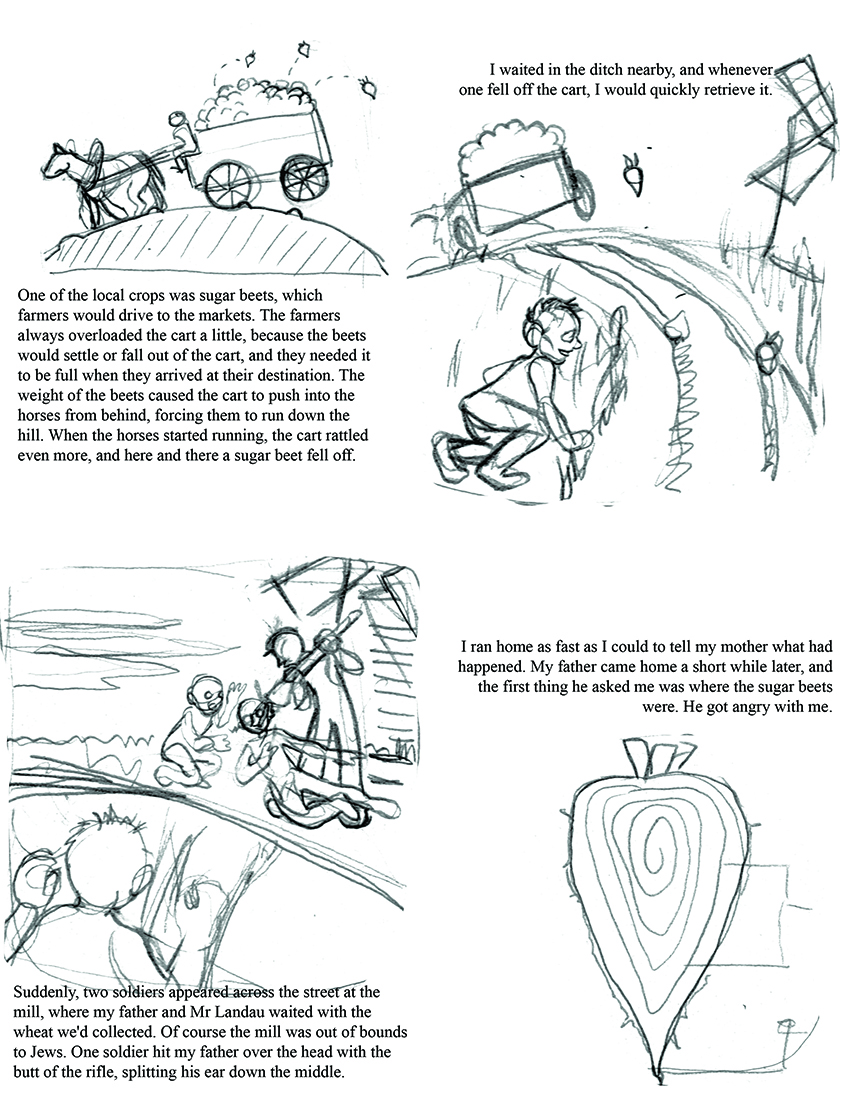
The next iteration of the page that I came across appeared in the form of a pencil sketched storyboard page, consisting of four panels, which show the sugar beets falling out of an overloaded cart with a nearby David waiting to collect them as they fall, David’s father being beaten by a Romanian soldier, and a cross-section diagram of a sugar beet. This early storyboard, though obviously a rough draft, is characteristic of most of the pages in the book, which typically remain consistent in content even as they undergo further refinement. It is worth noting that not every page in the story received an early pencil storyboard. As I discovered in my conversation with Miriam, some pages had their origins not as pencil sketches, but in digital form instead. This page is among the pages which did originate with a sketched pencil storyboard, but she explained to me that this is not necessarily the rule for all pages appearing in the final story. 

Storyboard sketch for page 24 (2020). Image credit: Miriam Libicki.

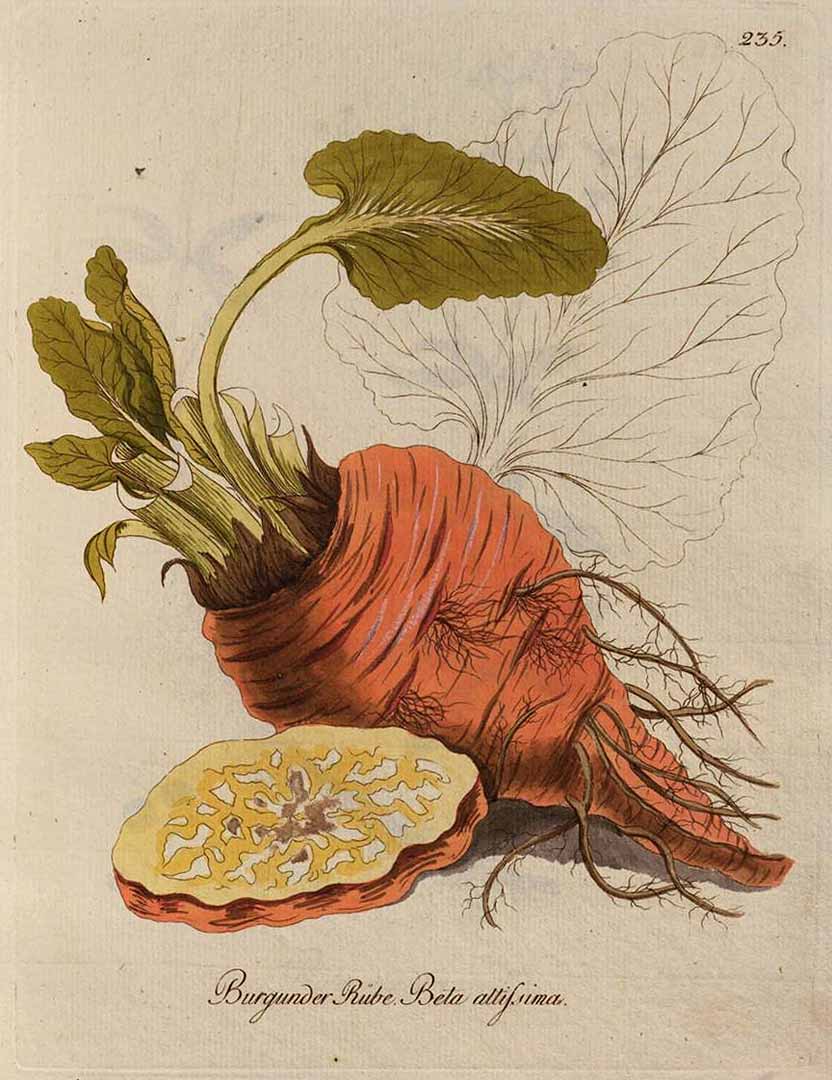
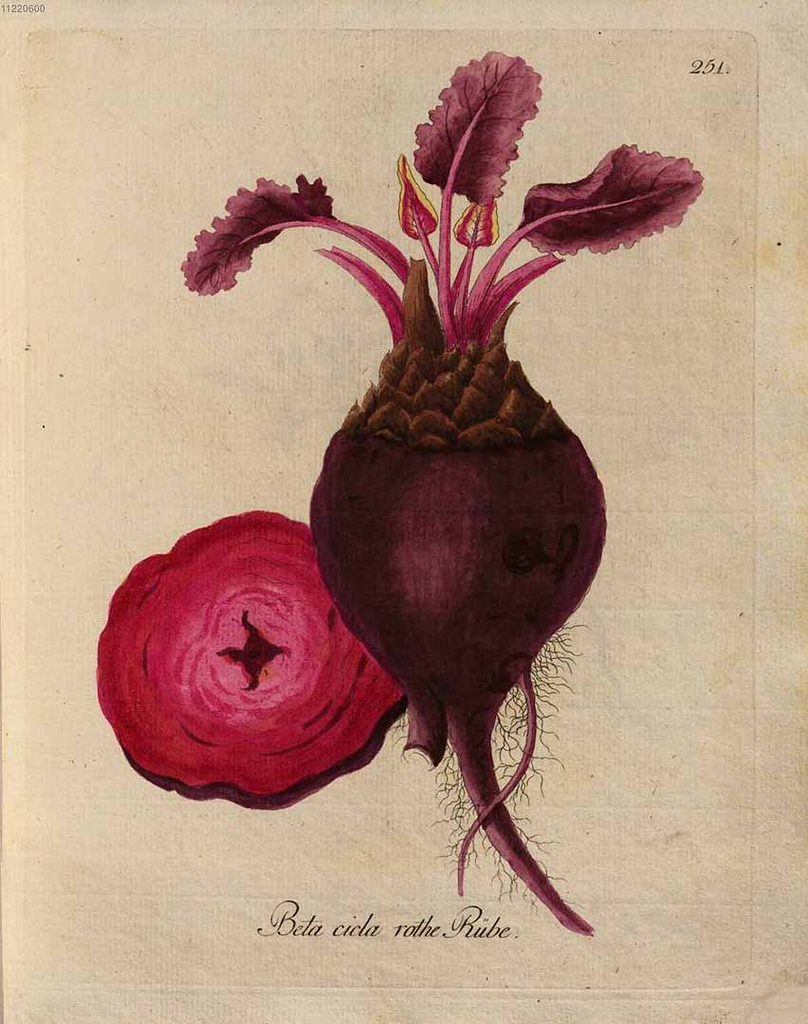
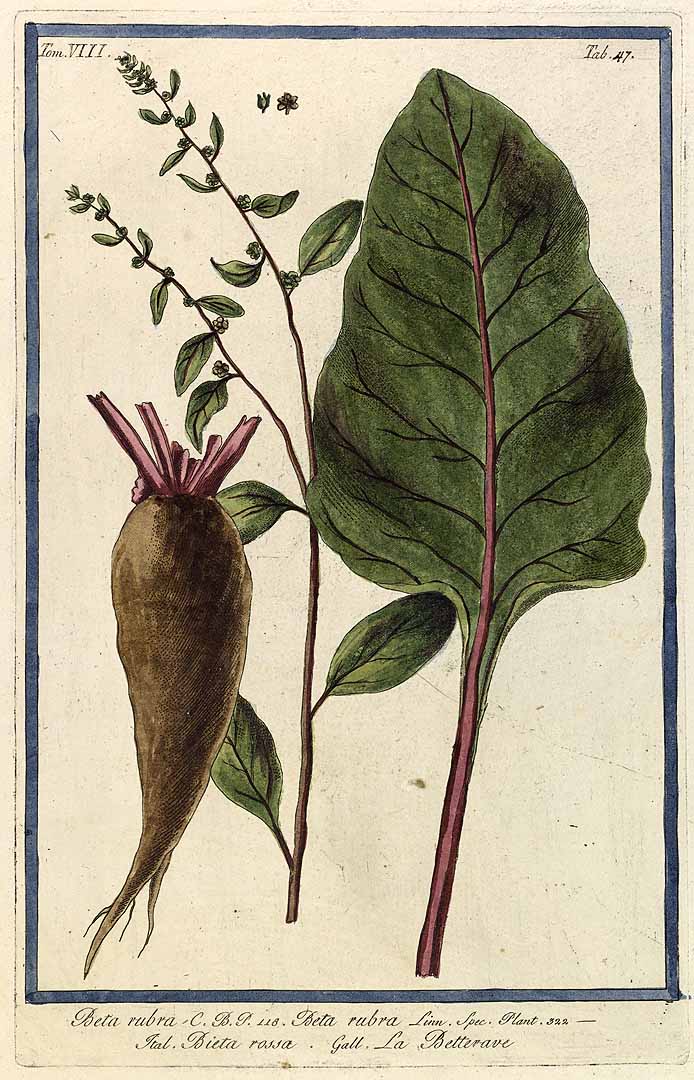
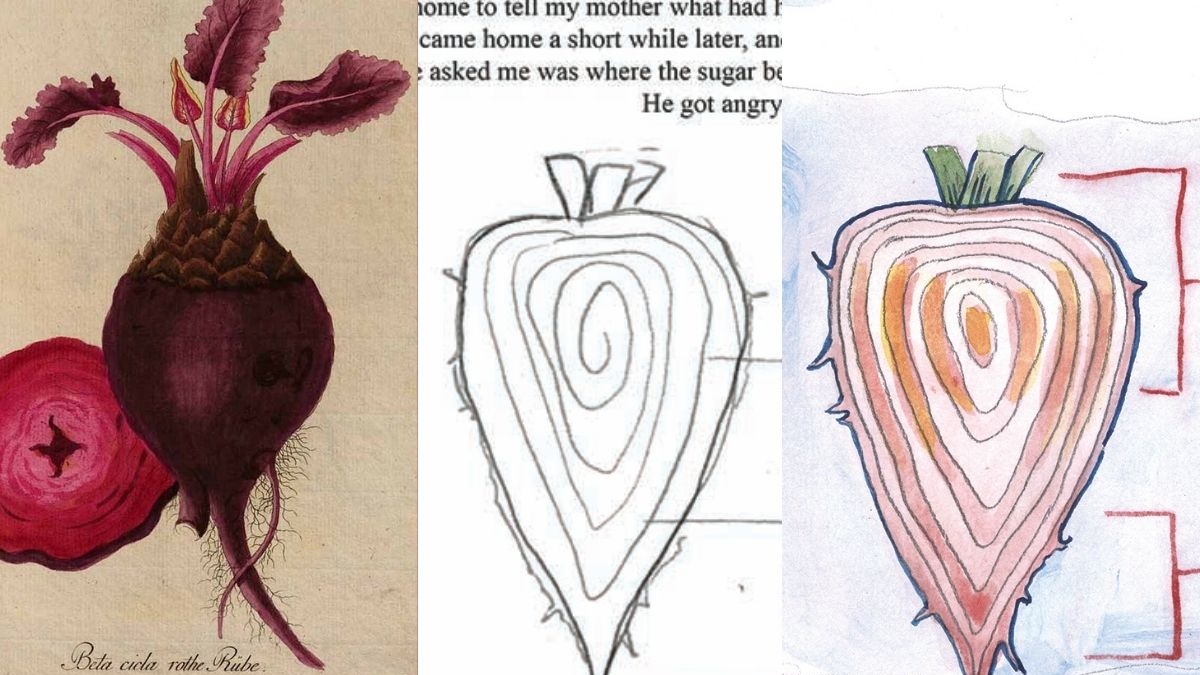
In order to accurately depict David’s experiences, Miriam drew on a number of references when composing each page. For page 24, these references included botanical illustrations of different beet varieties, which she used to illustrate the beets falling off the cart as well as the cross-section diagram of a beet appearing in the final panel. These references images are presented roughly in the order I encountered them in the archive, but because I did not deliberately select the order in which I went through the reference files, the order of these images does not matter nearly as much as the order of the drafts does. Additionally, the botanical illustrations and the cross-section diagram of a beet reflect David’s analytical gaze, borne of his engineering background, and a crucial element of his personality which Miriam told me she sought to incorporate in various illustrations throughout the chapter. 

Botanical references for drawing beets.
Photo credits, left: Golden beet illustration by Johann Simon Kerner, published in 1789 by Stuttgart.
Middle: Beet, source unknown. Right: Beet illustration by Giorgio Bonelli, published in 1783-1816, in his book Romanus juxta Systema Tournefortianum.

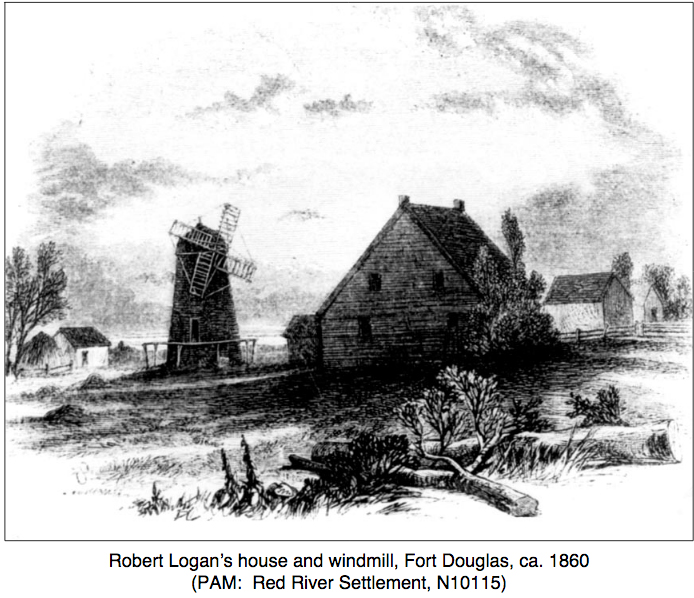
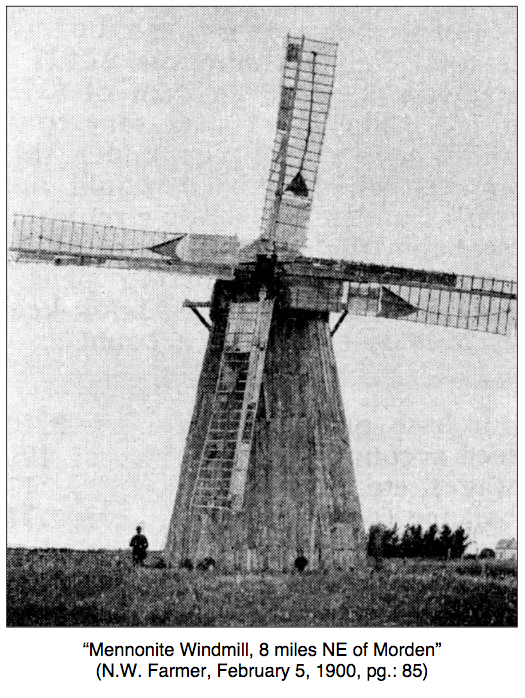
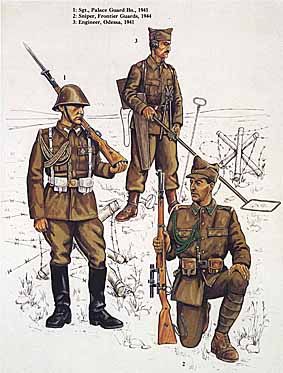
Additional reference images that went into the composition of page 24 include photos of mills from the late 19th and early 20th centuries, used in depicting the exterior of the mill that is the centerpiece of this particular scene, and images from an illustrated guidebook of soldiers from WWII, used to depict the Romanian soldier who beats David’s father and Mr. Landau in the page’s third panel. The reference images for this particular page were not directly recreated on the final page, which I noticed was the case for a handful of other reference images, but they significantly influenced how this page was illustrated, and ensured that the images appearing in the final story were as accurate as possible, whether in a historical sense or a botanical one. 

Historical reference images for drawing the mill and Romanian soldiers.
Left: 1800s House and Windmill, sketch from around 1860 from the Archives of Manitoba. Middle: 1900s Windmill photograph from 1900, published in N.W. Farmer. Right: 1940s Romanian soldiers, illustration by Horia Serbanescu, published in 1992 in The Romanian Army of World War II by Mark Axworthy.

Digital Drafts

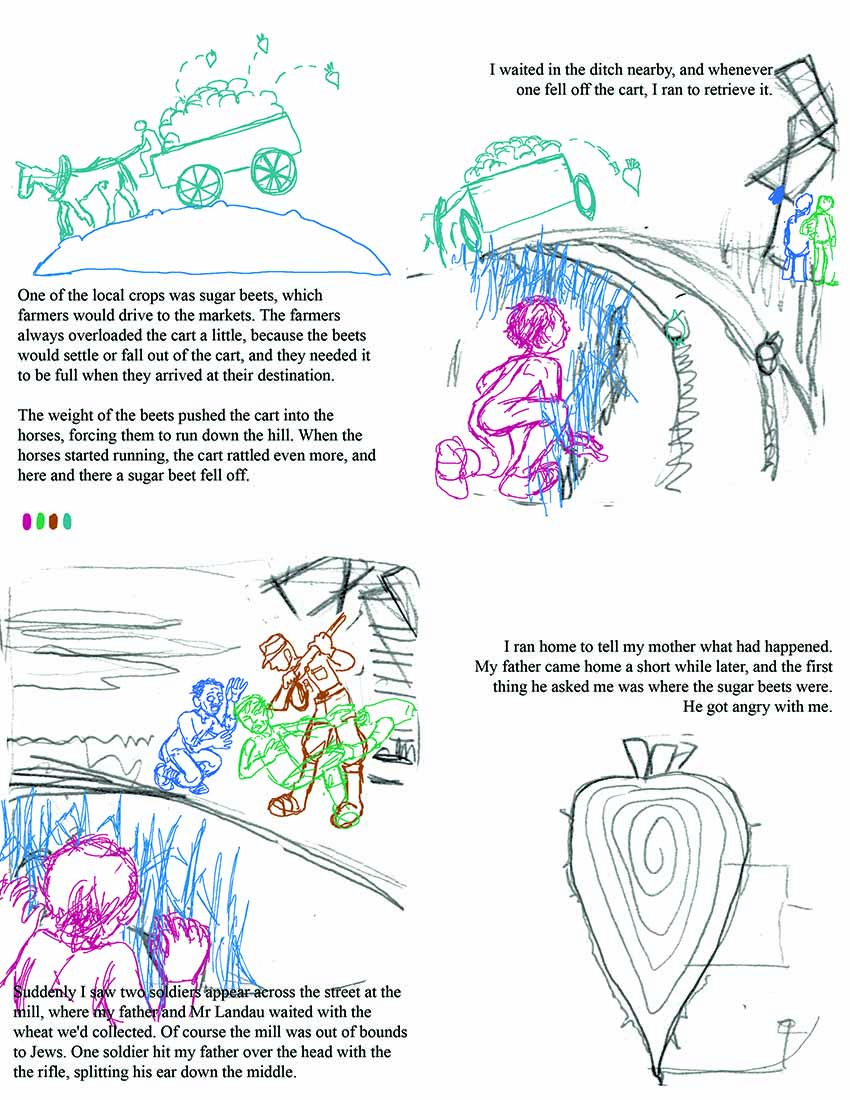
The next key stage in the project’s completion was the creation of the first digital drafts for each page and the incorporation of text taken from David’s story that determines the final layout of the individual page. For page 24, as with the other pages which were originally sketched as pencil storyboards, the earliest digital draft was built from the sketched storyboard, with the illustrations from that sketch scanned and added to Photoshop, alongside a rough layout of where the text would appear on the finalized page. A handful of pages in the earliest digital drafts saw changes in their layout or arrangement with subsequent drafts, but page 24, along with most of the other pages in the chapter, retained similar or identical layouts from this point onwards. 

Draft for page 24, no colour (2020). Image credit: Miriam Libicki.

Outlining the Pages

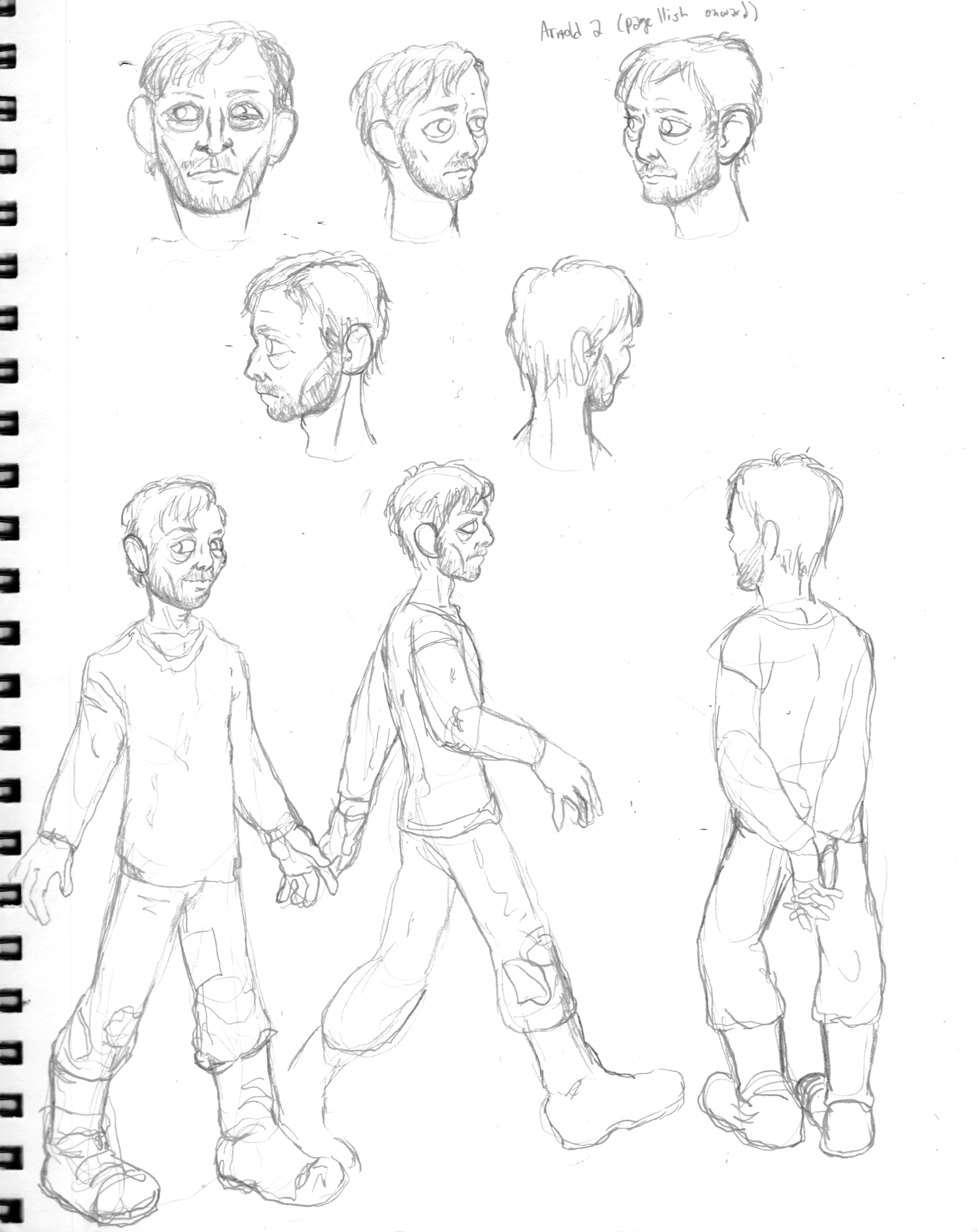
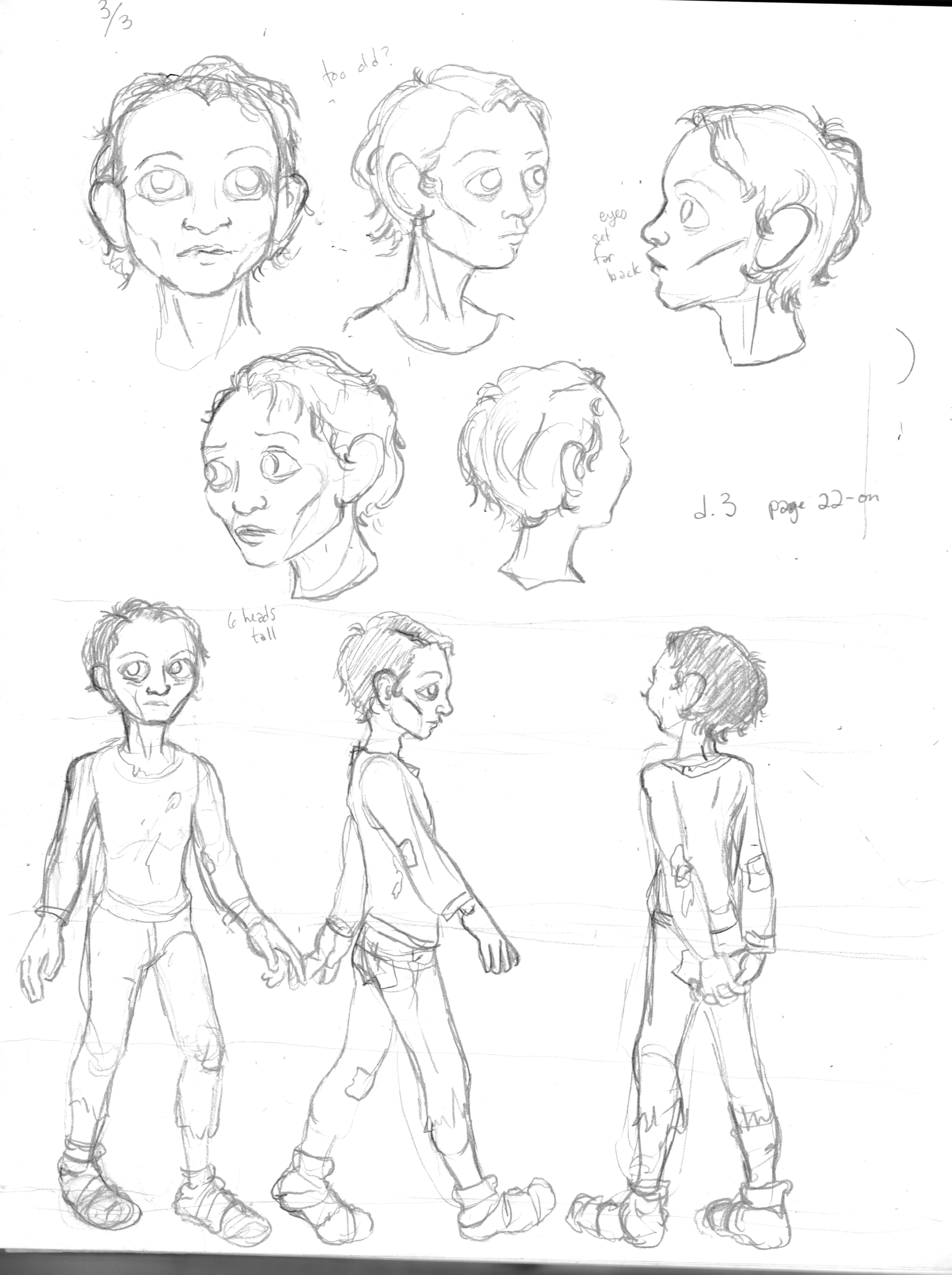
Once the page layout had been determined, the scanned pencil sketches from the original storyboard were traced over or refined in digital outlines of the elements appearing in each illustration. The outlines are colour-coded, which allows each individual element of the illustration to stand out, while also making the different people appearing on each page easy to identify—a strategy that I figured is especially useful with illustrations of large groups, or images where some figures are further in the background than others, as seen in the third panel of this page. As with the other pages, these digital outlines form the basis of the lines used in the watercolour illustrations on the final pages, with this stage of the creative process being used to refine the illustrations from their initial rough sketches and ensure that the changing depictions of David and his parents over the course of the story are linear and accurate. Miriam created a series of sketch sheets that served as a reference for how the depictions of David and his parents evolved over the course of the chapter, and the reference sketch sheets of both David and his father as they appear in the final third of the story reflect how they appear in the final illustration. 

Draft of page 24 (left), sketches of David (middle), and sketches of David’s parents (right) (2020). Image credit: Miriam Libicki.

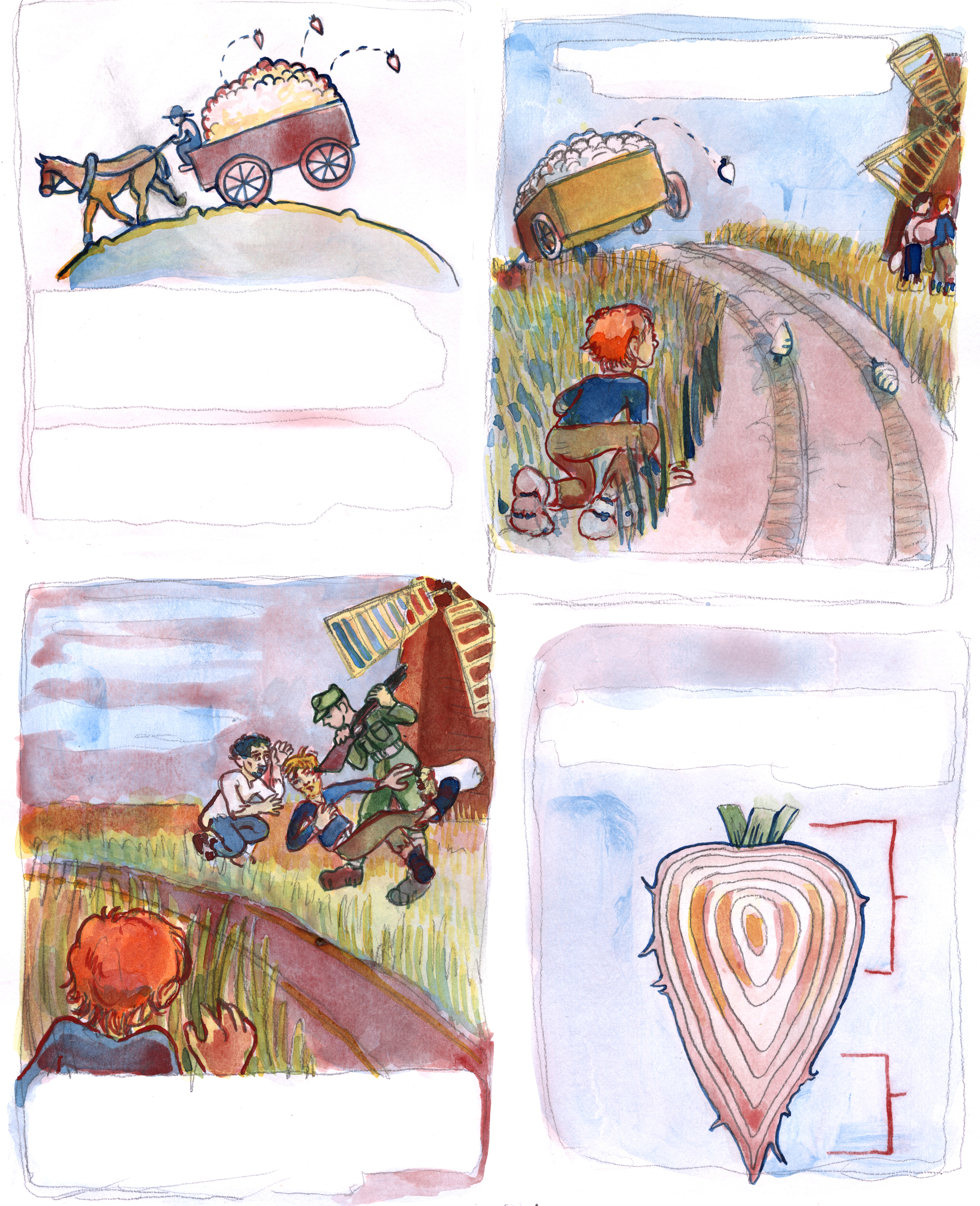
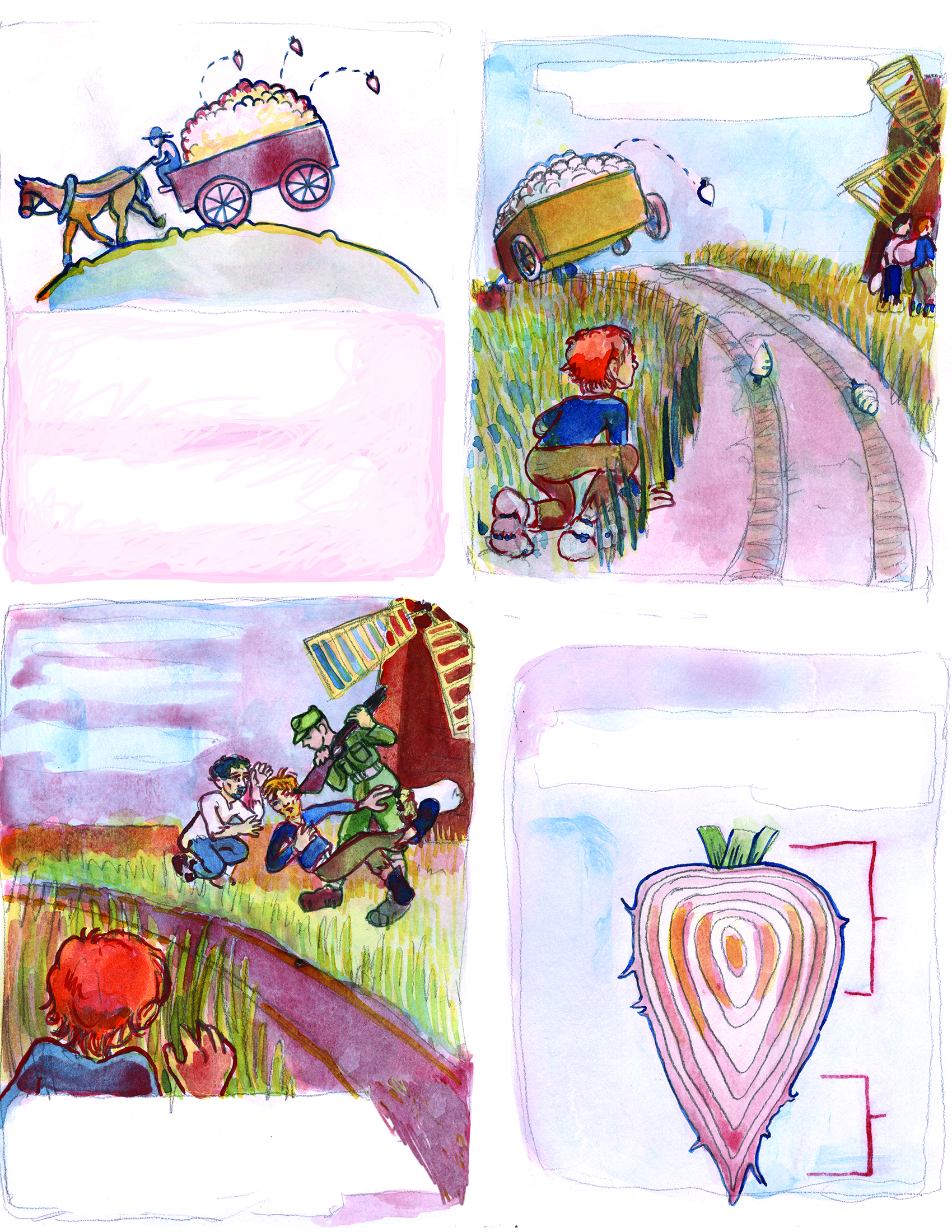
The next set of drafts represent a crucial step towards completion. These drafts consist of full watercolour pages, but exclude any overlaid text elements. As seen below, these scans may vary in quality or include some pencil outlines in places, particularly around the outlines of text bubbles. However, these initial watercolour drafts indicate that the pages are nearly complete, only in need of some final touch-ups and reincorporation of the text elements from the earlier drafts. In reorganizing the files within the archive, I attempted to group each set of drafts by approximate order of when they were completed, but, as many of the drafts past the watercolour stage closely resemble one another, I found it impossible to determine the precise timeline along which these drafts were complied. 

Text-free drafts of page 24, full colour. Image credit: Miriam Libicki.

Final Stage

The final stage of putting each page together was the reincorporation of the text from David’s testimony, now included in a font built from Miriam’s handwriting rather than in plain typed text, as with earlier drafts. For page 24, once the watercolour was complete and the text elements reincorporated, there were virtually no changes, although other pages in the story saw some minor refinements at this stage. With regard to text reincorporation, the first five pages feature drafts that are solely made up of text, in order to correctly position the text on the page and also test out various fonts or styles, but as this page appears fairly late in the story, it does not have a lettering-only page available among the drafts. 

Final drafts for page 24, full colour. Image credit: Miriam Libicki.

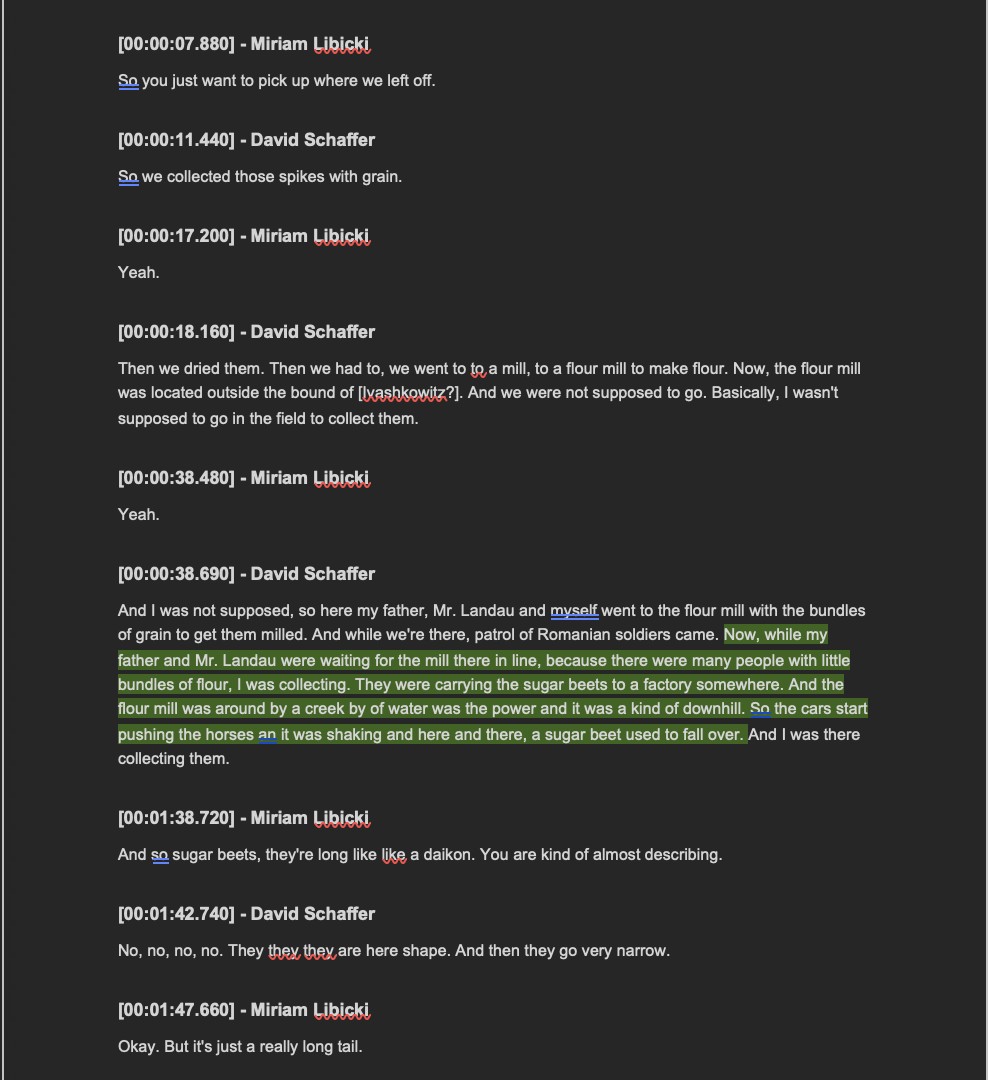
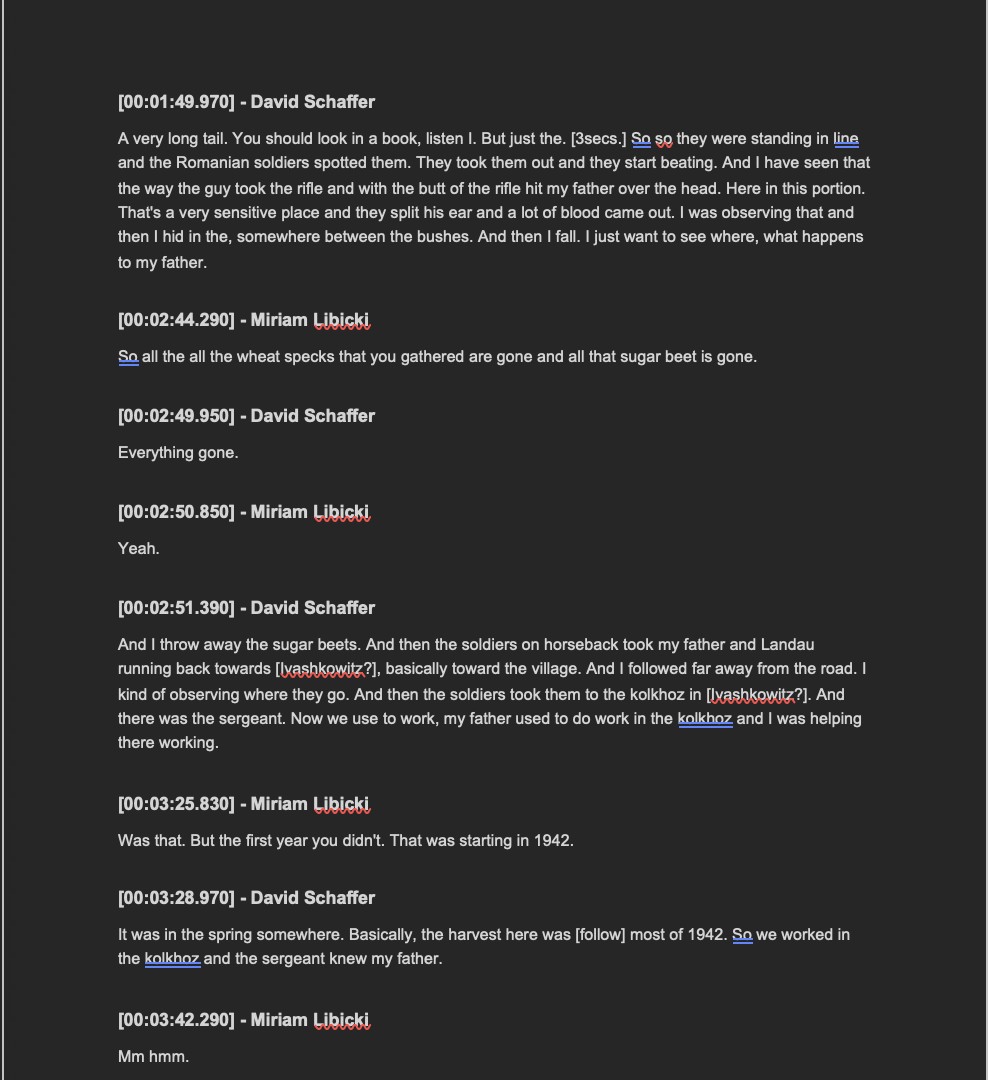
The final drafts of page 24 were not, in fact, the last aspects of the page’s creation I encountered in the archive. Instead, the very last items I looked at were the transcripts from the initial meetings between Miriam and David, which contain the origins of the page in one particular conversation the two had. In this conversation, David describes going to the local mill to make flour from the leftover wheat he and his family gathered after the harvest. He was given the task of collecting the sugar beets that fell off the carts going past the mill while his father and Mr. Landau waited in line. This process was interrupted, however, when a Romanian soldier came and beat both men for being too close to the mill as Jews, splitting David’s father’s ear in the process. David, upon witnessing this, hid in the bushes to ensure his father’s safety while leaving behind the sugar beets he had gathered, but ended up facing his father’s anger upon returning home for leaving behind valuable food when they were in desperate need of sustenance. This conversation was captured by Miriam on the previously mentioned page of sketches that includes the sugar beet illustration, which is evidenced by the fact that the remaining illustrations on the page come from other stories David tells in the course of that same conversation. Thus, in my final encounter with the project archives, the story of page 21/24 at last came full circle. 

Screenshots of the transcript from the conversation between Miriam Libicki and David Schaffer, discussing the appearance of the beets and the attack by the Romanian soldier (2020).

Every page of the story came together slightly differently, though for the most part they all followed a similar path to page 24. The process through which each page moved from initial sketch to final version was one I uncovered only after examining the entirety of the project archives, and perhaps may still be an incomplete picture of the creative process, as I only have what was made available to me in the project archives and a single conversation with Miriam.

Even if my picture of the creative process is an incomplete one, it is still guided by my own expertise in this area, in part as a student archivist who has spent many hours looking at every single item in the project archives and seeking to place them in the context of the complete, published story, and, in part, as a student in the Holocaust Studies Masters program with a substantial basis of knowledge surrounding the events that all three survivors whose stories are captured in But I Live experienced. These two areas of knowledge are what I leaned on when seeking to piece together the creative process, as well as when speaking to Miriam about her work on this project. My sincere hope is that my expertise has allowed me to construct the best possible outline of how this work came together, even though I did not encounter these archives until well after the book had been published. 

Continuing the Story

Page 24 is only one small window into a much larger project. A Kind of Resistance is the first chapter of But I Live: Three Stories of Child Survivors of the Holocaust, a collection that brings together graphic narratives by Miriam Libicki, Gilad Seliktar, and Barbara Yelin, created in close partnership with four child survivors. It was shortlisted for the 2023 Will Eisner Comic Industry Award for Best Reality-Based Work. The book also includes personal words from each survivor and historical essays. Learn more about But I Live.

Miriam’s latest graphic novel, Two Roses: A Story of Deception and Determination in Nazi Germany (2026), is also a product of the Survivor-Centred Visual Narratives project. It tells the story of Holocaust survivor Rose Lipszyc and her aunt Rose Finkielsztajn, who survived the war under false identities as Polish gentile sisters. Learn more about Two Roses.

As this digital exhibit highlights, behind every finished page lie months of conversation, research, and revision. Thank you for taking a look inside the archive.

Thank you to the University of Victoria’s Libraries and Art Collections for supporting the development of our archival materials.

The Survivor-Centred Visual Narratives project is supported in part by funding from the Social Sciences and Humanities Research Council of Canada and the Government of Canada. We are grateful for their support in making this work possible.