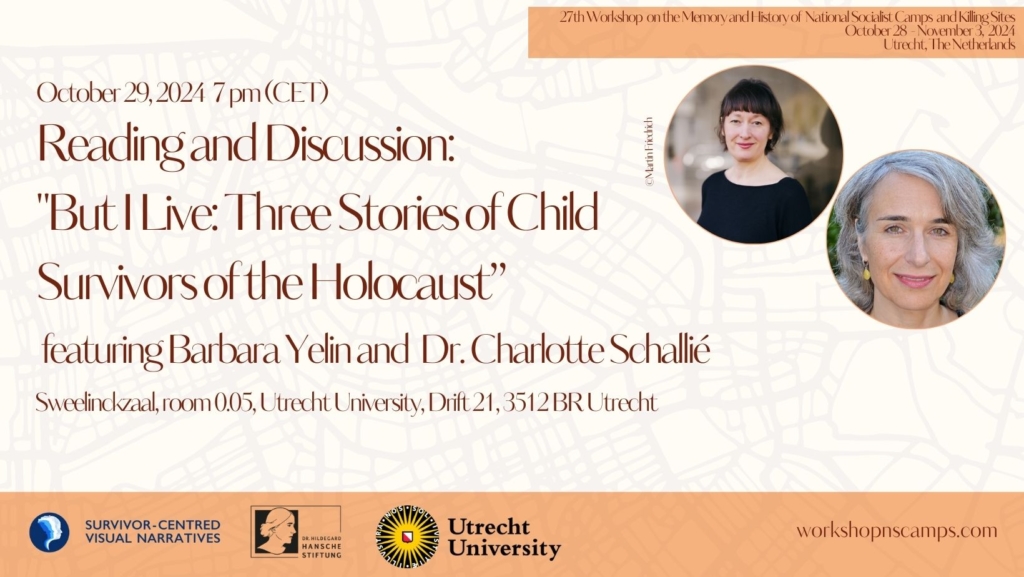
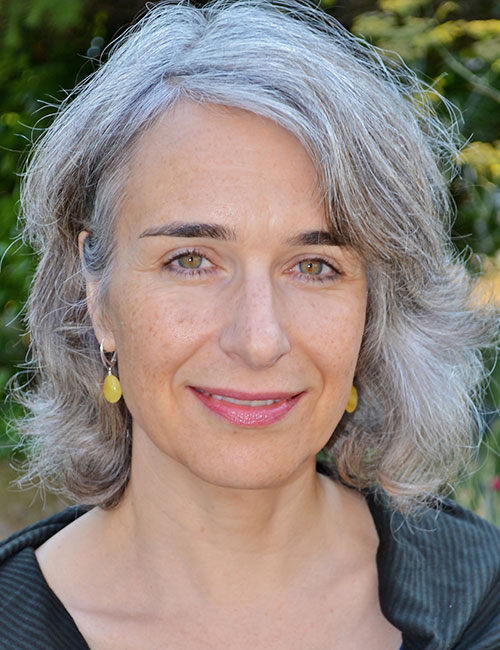
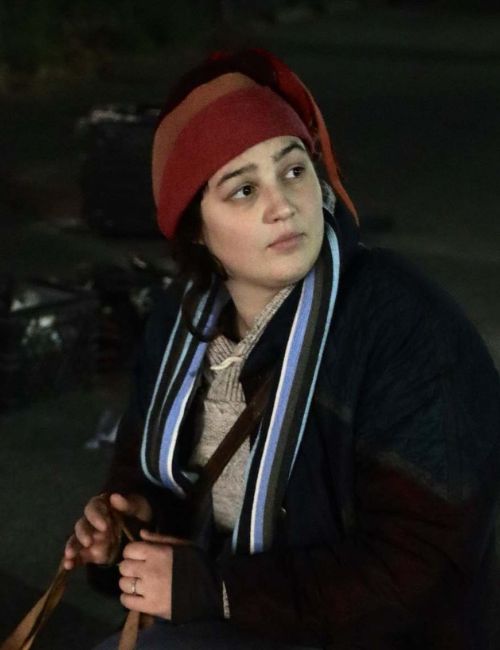
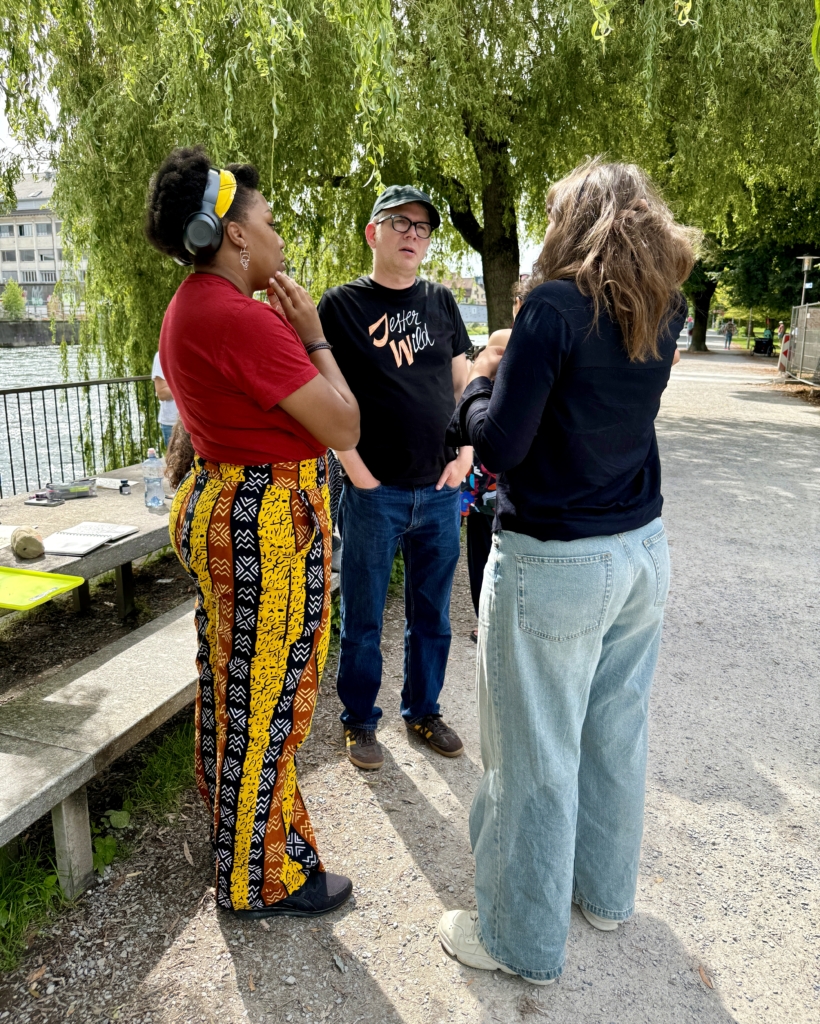
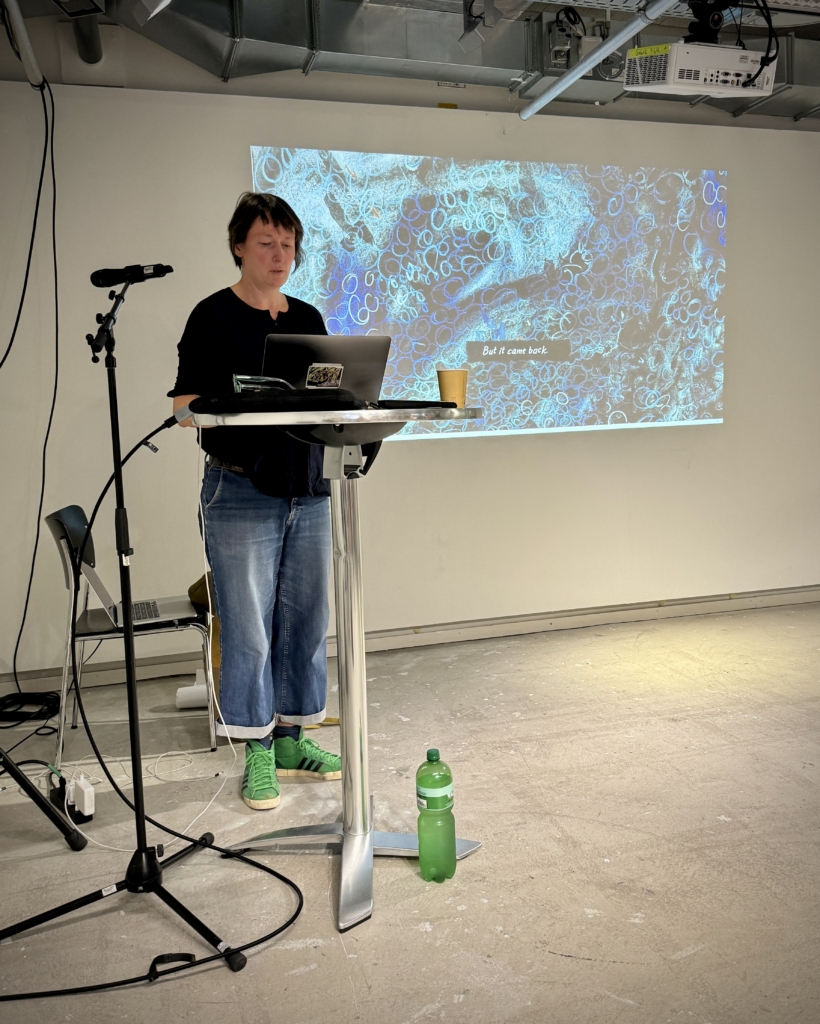
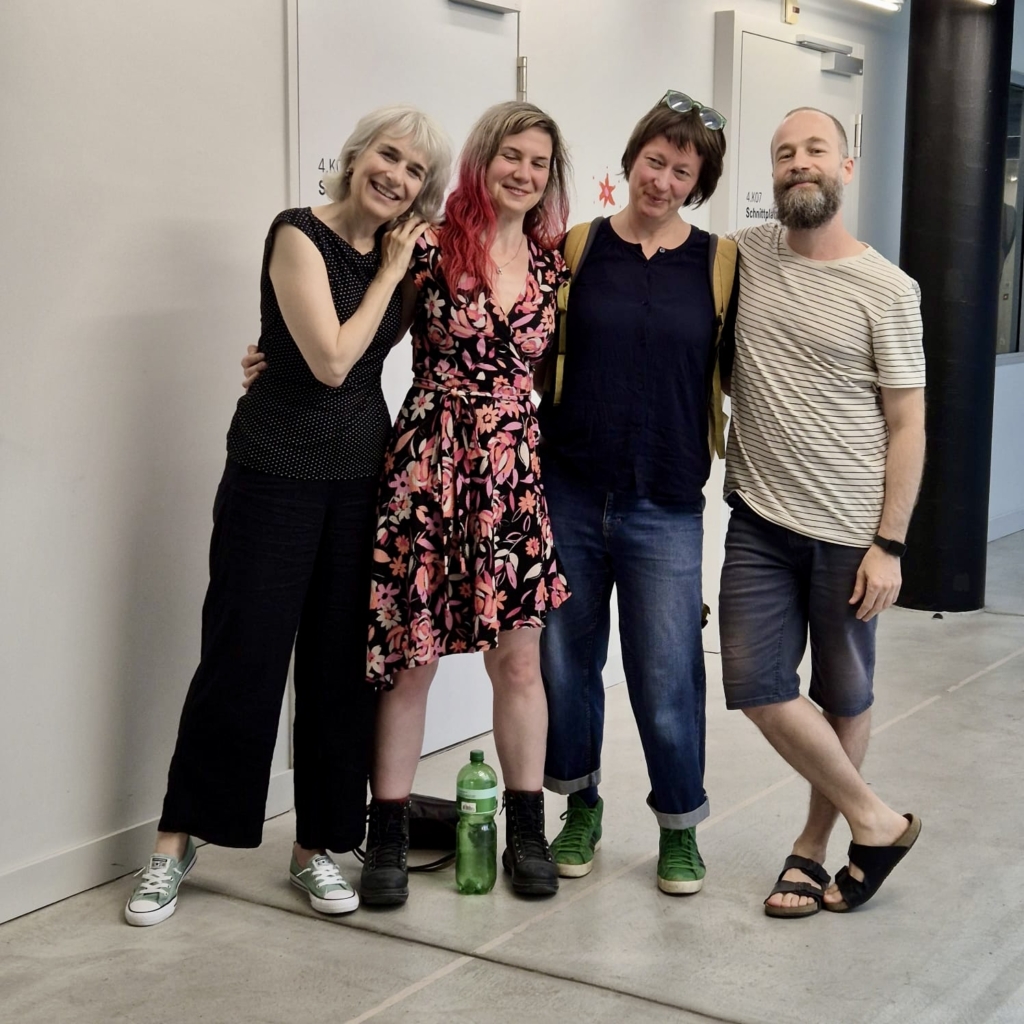
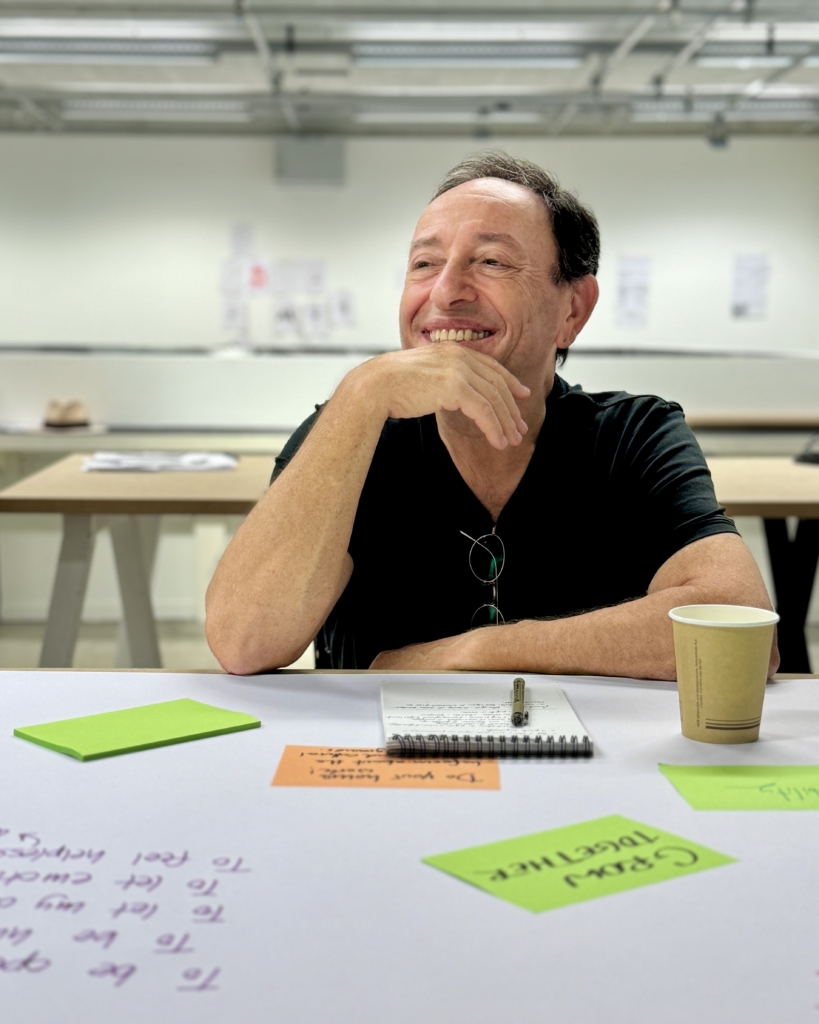
On October 29, graphic artist Barbara Yelin and SCVN Co-Director Dr. Charlotte Schallié will be featured in a public online webinar as part of the 27th Workshop on National Socialist Camps and Killing Sites. Barbara and Charlotte will be reading from the publication ‘But I Live: Three Stories of Child Survivors of the Holocaust.’ This webinar and the other workshop activities are geared towards young scholars who are interested in working with stories and histories of camps and killing sites associated with genocide and mass atrocity worldwide.
In addition to reading from ‘But I Live,’ Charlotte and Barbara will engage in a dialogue about trauma-informed storytelling and the compelling power of drawing as a language to communicate about stories of memory, trauma, and resilience. The visual testimony of Holocaust child survivor Emmie Arbel, collected in ‘But I Live’ by Barbara Yelin is one example of how visual arts can be engaged in Holocaust education and communication.
Event Details:
Tuesday, October 29, 2024
5:00 pm CET /11:00 am PDT
Sweelinckzaal, Room 0.05, Utrecht University, Drift 21, 3512 BR Utrecht or online via zoom
Charlotte Schallié is a professor of Germanic Studies in the School of Languages, Linguistics and Cultures at the University of Victoria. Her areas of interest include memory studies, visual culture studies, Holocaust education, care ethics, and arts-based research. She also edited the award-winning collection of graphic novels “But I Live. Three Stories of Child Survivors of the Holocaust.”
Andrea Webb
PROJECT CO-DIRECTOR
Andrea Webb (PhD) spent a decade as a classroom teacher and department head before returning to higher education as a teacher educator in her role as Associate Professor at the University of British Columbia. Her research interests lie in teaching and learning in higher education and she is involved in research projects related to Threshold Concepts, the Scholarship of Teaching and Learning (SoTL), and Social Studies Teacher Education.
Jennifer Sauter
PROJECT MANAGER
Jennifer Sauter is the Project Manager on the SSHRC Partnership Grant, overseeing the finances, Research Cluster logistics, partnership contracts, event coordination, social media and student engagement. She is currently based at the University of Victoria. Although she has a Master’s degree in Environmental Studies, she is drawn to project based work with a focus on environmental, social, or visual arts research.
J. Matthew Huculak
DATA DIRECTOR
Matt Huculak (PhD) is the Director of Kula: Library Futures Academy at the University of Victoria Libraries. He holds a PhD in English Language & Literature and an MLIS with a concentration on archives and preservation. He was technical director and founding Managing Editor of Modernism/modernity’s Print Plus platform, which won the Association of American Publishers 2019 PROSE Awards for “Innovation in Publishing.” His current work focuses on Human Rights and archiving.
Artists
Tobi Dahmen
GRAPHIC ARTIST – IRAQ & SYRIA RESEARCH CLUSTER
Tobi Dahmen, born 1971 in Frankfurt/Main, is a German illustrator and comic artist living in Utrecht, the Netherlands. He is working for various clients and has published a few comic books. He is currently working on a graphic novel about the story of his family in WWII.
Natasha Donovan
GRAPHIC ARTIST – TURTLE ISLAND RESEARCH CLUSTER
Natasha Donovan is an illustrator who works primarily on children’s books and graphic novels. She illustrated the graphic novel adaptation of Thomas King’s short story, Borders, which received a Horn Book award honor and was shortlisted for the TD Canadian Children’s Literature Award. She is also the illustrator of Brett Huson’s award-winning Mothers of Xsan series and Traci Sorell’s Classified: The Secret Career of Mary Golda Ross, Cherokee Aerospace Engineer, among other titles. Natasha is Métis (her Métis family are the Delarondes and Morins on her mother’s side) and white settler (on her father’s side). She grew up in Vancouver, Canada, and currently lives in Bellingham, Washington, with her partner and their dog.
Elyon’s (Joëlle Ebene)
GRAPHIC ARTIST – RWANDA RESEARCH CLUSTER
Elyon’s (Joëlle Ebene) is a graphic designer, comic book author, and curator. She has co-curated various comics exhibition including the South African virtual exhibition, “Afropolitan Comics.” Her publications include the comic series “La vie d’Ebène Duta.”
Anneli Furmark
GRAPHIC ARTIST – YUGOSLAV WARS RESEARCH CLUSTER
Anneli Furmark is a painter and comic artist from North Sweden, who has published ten graphic novels, many of them translated and award winning. Her latest book “Walk me to the Corner” was published at Drawn&Quarterly, Montreal, in 2021.
Photo credit Anna Drvnik.
Michel Kichka
GRAPHIC ARTIST – RWANDA RESEARCH CLUSTER
Michel Kichka is a graphic novelist and political cartoonist. He was born in Belgium in 1954 in a family of Holocaust survivors and emigrated to Israel in 1974. He graduated the Graphic Design Department at Bezalel Academy of Jerusalem in 1978 where he teaches since 1984. He is a member of Cartooning for Peace Association since 2006. Kichka has published three graphic novels at Dargaud Publishers in Paris that were translated to several languages. “Second Generation- Things I did not tell my father” (2012), “Falafel with hot sauce” (2018), “The other Jerusalem” (2023). All of them are autobiographic.
Photo credit Elie Max Kichka.
Nora Krug
GRAPHIC ARTIST – HOLOCAUST RESEARCH CLUSTER
Nora Krug is the author of “Belonging: A German Reckons with History and Home,” a visual memoir about WWII and her German family history, and of “Diaries of War: Two Visual Accounts from Ukraine and Russia,” a book of graphic journalism about Russia’s invasion of Ukraine. She is also the illustrator of the graphic edition of “On Tyranny” by Timothy Snyder.
Miriam Libicki
GRAPHIC ARTIST – HOLOCAUST RESEARCH CLUSTER
Miriam Libicki is an Inkpot and Vine award winning creator of nonfiction graphic novels and graphic essays, including “jobnik!” “Toward A Hot Jew,” “But I Live,” and “Who Gets Called an Unfit Mother.” Miriam lives in Vancouver, Canada and teaches Humanities and Illustration at Emily Carr University.
Joshua Mangeshig Pawis-Steckley
GRAPHIC ARTIST – TURTLE ISLAND RESEARCH CLUSTER
Joshua Mangeshig Pawis-Steckley is an Anishinaabe Illustrator/artist from Barrie, Ontario and a member of Wasauksing First Nation.
Photo credit Meg Wallace.
Jared Muralt
GRAPHIC ARTIST – YUGOSLAV WARS RESEARCH CLUSTER
Jared Muralt, born in Bern in 1982, is a Swiss illustrator and comic artist. Jared Muralt’s comic series “The Fall” was awarded the Atomium Award “Le Soir de la BD d’actualité” for current contemporary comics in 2020, and Muralt himself received the Bernese Literature Prize in 2021.
Gilad Seliktar
GRAPHIC ARTIST – HOLOCAUST RESEARCH CLUSTER
Gilad Seliktar is a graphic novelist, illustrator and illustration lecturer. Seliktar wrote and illustrated “Tsav 8” (2014), “The Demons of Mongols” (2008) and “Who Are You Anyway” (2005). The book “Farm 54” (2009), written by his sister Galit Seliktar, was part of the Angoulême Festival’s official selection and was included in Publisher Weekly’s top ten graphic novels in 2011. In 2018, Seliktar received an honourable mention in the Israel Museum Ben-Yitzhak Award competition for the category of Illustration of a Children’s Book.
Photo credit: Rami Shllush.
Birgit Weyhe
GRAPHIC ARTIST – IRAQ & SYRIA RESEARCH CLUSTER
Birgit Weyhe is a comic book artist. She was born in 1969 in Munich and achieved a Master’s Degree in German Literature and History, as well as a Diploma in illustration. Weyhe‘s Graphic Novels have been nominated for various prizes in Germany, France and Japan. Her books focus on research-based historical and political themes. In 2022 she was honoured the ‘Best German-language Comics Artist’ at the International Comic-Salon in Erlangen. And she was the first comic artist ever to receive the prestigious ‘Hamburg Lessing Grant’. Her latest Graphic Novel “Rude Girl” was shortlisted in 2022 for the Hamburg Literature Prize as Book of the Year and in 2023 the first comic ever to be nominated for the Leipzig Book Fair Prize. She lives and works in Hamburg.
Photo credit Vera Drebusch.
Barbara Yelin
GRAPHIC ARTIST – HOLOCAUST RESEARCH CLUSTER
Barbara Yelin is a graphic novelist and illustrator. She was born in 1977 in Munich and studied illustration at the Hamburg University of Applied Sciences. Yelin has worked as a comics artist for newspapers and international anthologies, but her work largely focuses on research-based, historical, and biographical graphic novels, mainly about women. In 2014, Yelin published the award-winning graphic novel “Irmina.” In 2016, she was declared the ‘Best German-language Comics Artist’ at the International Comic-Salon in Erlangen. She lives and works in Munich.
Community Liaisons & Staff
Ajnura Akbaš
COMMUNITY LIAISON - YUGOSLAV WARS RESEARCH CLUSTER
Ajnura Akbaš works as an archivist and research coordinator at the War Childhood Museum in Sarajevo (Bosnia and Herzegovina), where she is involved in the museum’s research-documentation projects dedicated to the experience of growing up during armed conflict. She is also a Doctoral candidate in Gender Studies at the London School of Economics (LSE). She is supporting local activities, interviews, research and filming with the SCVN team.
Leyla Ferman
COMMUNITY LIAISON – IRAQ & SYRIA RESEARCH CLUSTER
Dr. Leyla Ferman is a political scientist based in Germany and focusing on human rights, genocides and the Middle East. She is currently leading FERMAN, a documentation and education project an the Yazidi genocide of Lower Saxony Memorials Foundation. She is supporting Jilan, SCVN’s anonymous Yezidi survivor.
Creative Consultants
Suzanne Snizek
MUSIC ADVISOR
Suzanne Snizek is an Associate Professor in Music at the University of Victoria. Her performance-based research and academic scholarship focusses on twentieth century music that was suppressed under Nazism and/or Communism.
Eva Bradávková
MUSICIAN
Eva Bradávková earned Masters of Music degree from University of Victoria in 2024. Currently, Eva serves as a flutist in Janáček Philharmonic International Orchestral Academy in Czech Republic.
Jakob Hoffmann
CURATOR
Based in Germany, Jakob Hoffmann works at a youth organization facilitating comic events and children’s comic festivals. He is also publishing a comic magazine and curating exhibitions for artists and illustrators. He co-curated and toured the previous project’s exhibit But I Live: Remembering the Holocaust from 2022-2024. For SCVN, he is developing a curatorial concept for an exhibition of the upcoming graphic novels.
Filmmakers, Videographers & Photographers
Marc Ellison
FILMMAKER – RWANDA RESEARCH CLUSTER
Marc Ellison is an award-winning video- and photojournalist currently based in Scotland. He has worked across the African continent producing documentaries and multimedia projects since 2011 on topics ranging from female child soldiers to female genital mutilation. Marc is also the co-author of the award-winning photo/graphic novel ‘House Without Windows’.
His work can be viewed at www.marcellison.com.
Bojan Hadžiabdić
FILMMAKER – YUGOSLAV WARS RESEARCH CLUSTER
Graduated in 2007 from the Faculty of Political Sciences in Sarajevo, Bojan worked as a video journalist, editor, and producer in the Documentary-Contemporary Program Department of Bosnia and Herzegovina Radiotelevision from 2006 to 2022. Since 2022, he has been working as an independent filmmaker, and he is the founder and owner of Video Production POP DOC. He shoots, edits, and produces documentary films, TV shows, and reportages. He also frequently collaborates with Zoran Kubura, with whom he jointly signs dozens of titles.
Chorong Kim
FILMMAKER – HOLOCAUST RESEARCH CLUSTER
Chorong Kim is a Canadian Screen Award-nominated filmmaker and photographer. Born in Berlin, raised in Seoul, and now living across Canada, she experienced distinct cultural landscapes as a hybrid and transversal nomad.
Olaf Markmann
FILMMAKER – IRAQ/SYRIA RESEARCH CLUSTER
Olaf Markmann is a freelance Director of Photography and filmmaker for over 25 years. He works across the field of commercials, features and documentaries. Through his long time collaborations with the Bergen-Belsen and JVA Wolfenbüttel Memorial he came to the work of the Yezidi genocide project.
Olaf also enjoys teaching cinematography at the university of applied sciences in his hometown Hannover in northern Germany.
Andy Rutter
FILMMAKER - TURTLE ISLAND RESEARCH CLUSTER
Andy Rutter is a Senior Lecturer in multimodal learning with over two decades of experience in visual storytelling and digital innovation. Born in Saskatoon and having lived and worked globally, he now resides in Vancouver. Andy showcases a versatile portfolio, creating and contributing to an array of creative storytelling projects, from commercials and documentaries to interactive video and Cross-media Storytelling.
Chen Wang
VIDEOGRAPHER – HOLOCAUST RESEARCH CLUSTER
Chen Wang was born in Mainland China and moved to Victoria in 2013 and worked on film and video productions since 2014. He is currently working on his PhD program focusing migration history and documentary films, teaching film courses at the University of Victoria.
As a director, cinematographer, and writer, Chen has worked on over 60 commercials, music videos, and documentary films, as well as on short and feature films screened at film festivals internationally.
Peter Wollring
VIDEOGRAHER – HOLOCAUST RESEARCH CLUSTER
Peter Wollring is a videographer based in Berlin and Amsterdam. He provided on-site filming at the Jewish Museum Berlin and the Jewish Hospital Berlin for the Klaus Zwilsky documentary ‘The Apothecarian’s Boy’.
Lidija Zelovic
FILMMAKER - IRAQ/SYRIA RESEARCH CLUSTER, FOCUS ON SYRIA
Lidija Zelovic is a filmmaker. She grew up in Sarajevo, Bosnia, Yugoslavia until she fled the war. Since 1993, she has lived in the Netherlands. Zelovic’s heart was broken but she found a way out through film. Her films, almost all about war, have won many international awards.
Photo credit: Barbara Raatgever
Researchers
Alemna Aluguro
RESEARCH ASSISTANT
Alemna Alurugo is Ghanaian and currently in a master’s program at the French and Francophone unit of the School of Languages, Linguistics and Culture. His research focuses on Francophone African literature, and is currently exploring the Intersection between Politics and Religion in La Grève des Bàttu (The Beggars’ Strike) by the Senegalese writer, Aminata Sow Fall. He supported the French translations of SCVN’s educational resources and film subtitles.
Kjell Anderson
RESEARCH CLUSTER CO-LEAD – IRAQ & SYRIA
Kjell Anderson (PhD) is a social scientist and jurist whose interdisciplinary research examines mass atrocities and international crimes. He is an Associate Professor at the University of Manitoba n the Faculty of Law.
Anna Ball
RESEARCH FELLOW - RWANDA RESEARCH CLUSTER
Dr. Anna Ball is a socially engaged researcher, creative practitioner and curator specialising in narrative co-creation with survivor communities, particularly those who have experienced displacement, trafficking and/or passage through asylum / immigration detention systems. She is an Advanced Research Fellow at the University of Aberdeen, where she serves as Research Fellow to the Rwanda Research Cluster.
Nevaeh Bitzer
RESEARCH ASSISTANT
Nevaeh graduated from the University of Victoria with a Bachelor of Science in Psychology and Anthropology. Her work on the SCVN team is focused on archiving and transcribing materials generated by the project.
Jessica Botts
RESEARCH ASSISTANT
Jessica Botts is a US Navy Veteran who’s lived in and deployed to several countries. Currently she is a Graduate student pursuing a Master’s Degree in Environmental History at University of Nebraska at Omaha, with a minor focus in Native American Studies. She provided archival research support and interview transcription for SCVN.
Mark Celinscak
RESEARCH CLUSTER CO-LEAD – HOLOCAUST
Mark Celinscak (PhD) is the Leah and Paul Lewis Chair of Holocaust Studies and the Director of the Ackerman Center for Holocaust Studies at the University of Texas at Dallas.
Mary Chapman
RESEARCHER
Mary Chapman is a Professor of English Literatures at the University of British Columbia. Her research spans U.S., Asian American, and women’s literature, as well as Digital Humanities. She has published five books and numerous articles on American women writers, and her scholarship has received major awards from the SSAWW, the Canadian Association of American Studies, and the American Popular Culture Association. She is currently collaborating with Sydney Lines on a graphic memoir by Chinese Canadian author Achuen “Grace” Amoy Eaton (1846–1921).
Meghna Chatterjee
RESEARCH ASSISTANT – TURTLE ISLAND RESEARCH CLUSTER
Meghna is completing her Master’s degree in English at the University of British Columbia. Her research focuses on the intersection of formalist comics studies, critical race and gender studies, and migration studies. She looks closely at the expressions of decolonial timespaces in comics, specifically how bodies in borderlands dream, imagine, and speculate new futures.
Tim Cole
RESEARCHER
Tim Cole (PhD) is Professor of Social History at the University of Bristol where he specialises in Holocaust Studies, environmental histories and digital humanities. He was the founding director of the Brigstow Institute that seeks to develop equitable research relationships between academics from different disciplines and community and creative partners. Tim is also Academic Advisor to the Dan David Prize, and since 2020 has been Chair of the History Commission set up by the Mayor of Bristol in the wake of the toppling of the Colston statue.
Raey Costain (they/them)
RESEARCHER
Raey Costain is a PhD student in the anthropology department at the University of Victoria. Their work engages graphic anthropology, comics-led research, digital media, and graphic design. Raey was SCVN’s Media Lead for 2023.
Drawing by Raey Costain.
Inanna Cusi
RESEARCH ASSISTANT – TURTLE ISLAND RESEARCH CLUSTER
Inanna Cusi is pursuing a critical ecological practice MFA at the Emily Carr University of Art + Design aiming to combine her interdisciplinary arts with a sustainable, renewable, and recyclable approach to materials and media. She is working on the design of the Hockey Survivor Stories website.
Aidan Dalton
SOCIAL MEDIA COORDINATOR
Aidan Dalton is a Master’s student in the English Department at the University of Victoria. He is involved in the project as a research assistant supporting SCVN’s media and communications, and a special edition of the Malahat Review featuring interviews with survivors and artists.
Sophie Daschuk
SOCIAL MEDIA COORDINATOR
Sophie Daschuk is a first-year MA student in Visual Anthropology and Materiality at the University of Victoria. As part of the SCVN project, she serves as the Social Media Coordinator, developing social media content and blogs, while providing support to the Communications Manager.
Éléonore Goldberg
RESEARCHER– TURTLE ISLAND RESEARCH CLUSTER
Eléonore Goldberg is assistant professor of 2D/Experimental Animation at the Emily Carr University of Art + Design in Vancouver, Canada on the unceded territories of Musqueam, Squamish, and Tsleil-Waututh Nations. Her novel Maisons fauves (Éditions Triptyque) was a shortlisted finalist for the Governor General’s Award for French-language fiction at the 2019 Governor General’s Awards. Her animated short films are screened in international festivals. Her last animated short film Hibiscus Season (La saison des hibiscus) won the Prix Iris for Best Animated Film at the Quebec Cinema Awards in 2021. Eléonore published her last graphic novel, La fiancée, in October 2023 with Éditions Mécanique générale.
Eléonore is leading the development of the interactive website Hockey Survivor Stories. Photo Credits: Stéphane Calce.
Tatia Gruenbaum
RESEARCHER
Tatia Gruenbaum (PhD) is a visiting researcher at the Department of English & American Studies at TU Braunschweig, Germany. Her work focuses primarily on the inclusion of pictorial Holocaust literature in English Language Teaching to support Global Citizenship Education, and she regularly contributes to international projects involving teacher education and the development of educational materials. She is a member of the advisory group for the UCL Centre for Holocaust Education’s Kindertransport Educational Programme and co-founder of the interdisciplinary Centre for Pictorial Holocaust Narratives.
Keerti Gupta
RESEARCH ASSISTANT – TURTLE ISLAND RESEARCH CLUSTER
Keerti Gupta (she/her), a settler and UBC IMES Scholar in Vancouver is graduating with a Film Studies major and Creative Writing minor. Her contributions to the UBC Comics Studies Cluster include working on the Homalco Comics Project and the EUA Graphics Project, where she enhanced visibility and streamlined project coordination. Keerti is currently a Channel Manager at RHEI, aiming to blend her passion for performance and digital media with social impact.
Grace Hennebery
RESEARCH ASSISTANT
Grace Hennebery is in her final year completing her BA in Anthropology and Film Studies at the University of Vicotira. She was raised in the unceded territory of the Musqueam, Squamish and Tsleil-Waututh Nations, and now resided as a guest in Lekungeun territory. Grace is a proud Metis woman with roots in the Red River Settlement and Ile-a-la-Crosse and interested in the intersection of identity and place.
Iain Higgins
RESEARCHER AND TRANSLATOR
Iain Higgins (PhD) is a member of the English Department and the Medieval Studies Program at the University of Victoria and the current Editor of The Malahat Review working on a special edition featuring the survivor and artist collaborations. He has also worked extensively as a translator for the SCVN project in the Holocaust Research Cluster. Drawing by Raey Costain.
Cindy Holder
RESEARCHER
Cindy Holder (PhD) is Professor of Philosophy at the University of Victoria. Her research focuses on human rights (including the human rights of Indigenous peoples), international ethics, transitional justice and the philosophy of international law.
Erin Jessee
RESEARCH CLUSTER CO-LEAD – RWANDA
Erin Jessee (PhD) is a Senior Lecturer in History at the University of Glasgow in Scotland. Her primary research focuses on the 1994 genocide in Rwanda, during which Hutu Power extremists attempted to exterminate the nation’s ethnic Tutsi minority. She also researches earlier periods of Rwandan history with the goal of drawing attention to women historical actors who have been largely overlooked in written accounts about Rwanda.
Lucie Kotesovska
RESEARCH ASSISTANT
Lucie Kotesovska is a recent PhD graduate from the Department English at the University of Victoria. In her research and publication, she focused mainly on British and Irish literature of the 20th and 21st centuries. She is equally passionate about teaching and professional collaboration within the field of SoTL. Her dissertation examined renegotiation of the boundaries between private and public worlds in Irish poetry from the 1960s until now. She supported SCVN’s media and communications.
Olivia Kozlovic
RESEARCH ASSISTANT
Olivia Kozlovic is a Master’s student in the Holocaust Studies stream at the University of Victoria. Her research is focused on the intersection of Holocaust memory and the violent legacy of the breakup of Yugoslavia in the former Yugoslav nations.
Shannon Leddy
RESEARCH CLUSTER CO-LEAD – TURTLE ISLAND
Shannon Leddy (PhD) is a Métis writer and educator, originally from Saskatoon, Saskatchewan, Treaty Six territory. She has lived on Musqueam land in Vancouver since 1994, and works as an Associate Professor of Art Education at the University of British Columbia.
Catherine Léger
RESEARCHER
Catherine Léger is a professor at the School of Languages, Linguistics and Cultures at the University of Victoria, where she teaches French language and linguistics courses. Her research focuses on French in North America and French in minority settings. She is supporting SCVN by supervising the French translations of the educational resources.
Maya Wei Yan Linsley
RESEARCH ASSISTANT
Maya Wei Yan Linsley is an MA graduate from the English department at the University of Victoria. Her research applies critical archival theory to online fanfiction communities. She is interested in the ways in which memory work, critical theory, and human realities overlap, especially when it comes to community storytelling and archiving.
Alyssa Logie
DIGITAL COMMUNICATIONS & WEBSITE LEAD
Alyssa Logie (MA Media Studies) is a PhD student in History at the University of Victoria, researching public history, memory studies, and the politics of representing genocide and political violence. Before her doctoral studies, Alyssa was a faculty member in Columbia College’s Communication Department. As Digital Communications & Website Lead, Alyssa oversees SCVN’s website and social media, working with the project manager and social media team to share survivors’ stories with care.
Fransiska Louwagie
RESEARCH CLUSTER CO-LEAD – RWANDA
Fransiska Louwagie (PhD) works on survivor narratives and the representation of the Holocaust in contemporary Francophone fiction and bande dessinée. Her research also focuses on issues of migration, bilingualism and translation. Her work has involved various research collaborations in the field of drama and the visual arts, particularly graphic novels, post-Holocaust art and political cartooning.
Andrea Löw
RESEARCHER – HOLOCAUST
Andrea Löw (PhD) is Deputy Director of the Center for Holocaust Studies at the Institute for Contemporary History in Munich. She also teaches at the University of Mannheim.
Michael Mahkwa Auksi
RESEARCHER
Mike is a doctoral candidate at McGill University’s Department of Kinesiology and Physical Health. His study on ice hockey in his home community of Lac Seul First Nation is a perfect complement to the graphic novel, Indians Do Cry. The story, which centres on his father’s hockey-playing years at Pelican Lake Indian Residential School, also celebrates Mike’s hockey career as a defender for Lac Seul Tomahawks and Team Estonia. Mike also served as a research assistant to the project.
Leonor Martinez
RESEARCH ASSISTANT – TURTLE ISLAND RESEARCH CLUSTER
Leonor Martinez is entering her fifth and final year in the New Media and Sound Arts program at Emily Carr University of Art and Design, she is set to receive her Bachelor of Media Arts in 2027. Leonor is an interdisciplinary artist and musician who has focused her practice on larger-than-life soft sculptures and electronic computing for live performance and sound design. Framed against the backdrop that is their Colombian heritage, Leonor’s work is in conversation with childhood, queerness, feminism and the colonial history of Latin America.
Duncan McCue
RESEARCH CLUSTER CO-LEAD – TURTLE ISLAND
Duncan McCue is a Professor of Indigenous Journalism and (Story)telling at Carleton University’s School of Journalism. He is the author of “Decolonizing Journalism: A Guide to Reporting in Indigenous Communities” and “The Shoe Boy,” a memoir of his time spent on a trapline with a Cree family in northern Quebec. Duncan is a proud Anishinaabe, from the Chippewas of Georgina Island First Nation in southern Ontario.
Stephen Naron
RESEARCHER – HOLOCAUST
Stephen Naron (PhD) has worked as an archivist/librarian since 2003, and has worked at Yale University with the Fortunoff Archive for more than 12 years, starting as an archivist and now, as director. Stephen works within the wider research community to share access to the collection through the access site program. Stephen is also responsible for spearheading initiatives such as preservation and digital access to the collection; cooperative projects with other testimony collections; oversight of fellowship and research programs; and the production of the podcasts, ethnomusicological recordings, and the Archive’s documentary film series.
Elizabeth “Biz” Nijdam
RESEARCH CLUSTER CO-LEAD – TURTLE ISLAND
Elizabeth “Biz” Nijdam (PhD) is an Assistant Professor and settler scholar in the Department of Central, Eastern, and Northern European Studies at UBC in Vancouver, Canada on the unceded territories of Musqueam, Squamish, and Tsleil-Waututh Nations. She is currently completing her manuscript “Graphic Historiography: History & Memory through Comics and Graphic Novels.” Biz’s research and teaching includes history, migration, intersections between Indigenous and European studies, and feminist methodologies in relation to comics and graphic arts.
Laura Oakley
SOCIAL MEDIA COORDINATOR
Laura Oakley is a first-year PhD student in the Department of English and completed her master’s degree in English Literature at the University of Victoria in December 2025. She previously obtained a bachelor’s and master’s degree at the University of British Columbia. She is interested in medieval English literature with an emphasis on text, texture and textiles and the haptic way these imbue a literary landscape with layered meanings.
Aubrey Pomerance
RESEARCHER – HOLOCAUST
Aubrey Pomerance (PhD) is the Head of Archives at the Jewish Museum Berlin. Born in Calgary, Canada, he studied Jewish Studies and History at the Freie Universität Berlin. There he was a research assistant at the Institut für Judaistik in 1995 and 1996 and thereafter at the Salomon Ludwig Steinheim Institut for German Jewish history in Duisburg. In April 2001, he took up his position at the Jewish Museum Berlin, being responsible for the establishment of a branch of the Archives of the Leo Baeck Institute and for the museum’s archival collection.
Photo credit Jacobia Dahm.
Anton Rey
RESEARCHER
Anton Rey is the head of the Institute for the Performing Arts and Film (PF) at Zurich University of the Arts where he is also a professor. His main fields of research focus on practice-based art beyond the ephemeral event, and their comparative perspectives, debates, and dissemination.
Jacqueline Rutherford
RESEARCH ASSISTANT
Jacqueline Rutherford is a Master’s student in the School of Languages, Linguistics and Cultures at the University of Victoria. Her current research, which is being conducted in French, aims to explore the language practices and linguistic representations of French-speaking immigrants in Greater Vancouver. She supported the French translations of SCVN’s educational resources.
Kees Ribbens
RESEARCH CLUSTER CO-LEAD – IRAQ & SYRIA RESEARCH CLUSTER
Kees Ribbens (PhD) is a historian working at NIOD Institute for War, Holocaust and Genocide Studies in Amsterdam with a keen interest in the ways in which wars and genocides are remembered and represented. Kees is an avid reader of graphic novels.
Ilse van Rijn
RESEARCHER
Ilse van Rijn (PhD) is Head of Third Cycle Research at the Institute for the Performing Arts and Film, Zurich University of the Arts. Her research focuses on embodied writing, storytelling, and feminist legacies in a more-than-human world.
Sabine Rutar
RESEARCH CLUSTER CO-LEAD – YUGOSLAV WARS
Sabine Rutar (PhD) is Editor-in-Chief and Managing Editor of Comparative Southeast European Studies and Senior Researcher at the Leibniz Institute of East and Southeast European Studies in Regensburg, Germany.
Cal Smith
RESEARCH ASSISTANT
Cal Smith is a Ph.D. student in UBC’s English Language and Literatures Department. His doctoral research explores queer comics/zines in Canada in the 1980s and 90s. He’s also a Graduate Research Assistant at SCVN.
Leonie Solomons
RESEARCH ASSISTANT
Leonie Solomons is a Master student in the Holocaust Studies stream at the University of Victoria. Her research focuses on the regretful memory as a mechanism of political accountability under the ‘Age of Apology’. Her research specifically interrogates the exposed contradictions of apologetic statecraft, seen through Germany’s declaration of Staasträson and foreign policy commitment to Israeli security post-October 7th. Leonie is supporting the SCVN project through archiving materials from the Holocaust and Syrian research clusters.
Hannah Strocel
RESEARCH ASSISTANT – TURTLE ISLAND RESEARCH CLUSTER
Hannah Strocel is an emerging Métis illustrator and storyteller currently completing her BFA at Emily Carr University of Art and Design on the unceded traditional territories of the Musqueam, Squamish, and Tsleil-Waututh Nations. Her work is heavily inspired by the natural beauty she grew up around, old folklore stories, and a use of traditional materials. Aiming for a career in picture book illustration, she hopes to hone a balance between history, place, and nature.
Wafiya Thoba
RESEARCH ASSISTANT
Wafiya Thoba is a Syrian law student at the University of Manitoba. She holds an Honours Bachelor of Arts (HBA) from the University of Toronto, where she studied history, classical civilizations, and ethics. Wafiya supports SCVN’s educational initiatives by researching human rights law and developing educational resources, including student and teacher handouts. Her work focuses on making complex legal and human rights issues more accessible to students.
Uğur Ümit Üngör
RESEARCH CLUSTER CO-LEAD – IRAQ & SYRIA
Uğur Ümit Üngör (PhD) is Professor of Holocaust and Genocide Studies at the University of Amsterdam and the NIOD Institute. His main areas of interest are genocide and mass violence, with a particular focus on the modern and contemporary Middle East.
Marc Marín Webb
RESEARCHER
Marc Marín Webb is an architect and researcher focused on post‑conflict heritage preservation in the Middle East, with particular attention to Yezidi communities in Iraq. He holds a Ph.D. in Near Eastern Languages and Civilizations from the University of Pennsylvania and has contributed to archaeological and cultural‑heritage projects in Syria, Iraq, and the Kurdistan Autonomous Region. In the Survivor‑Centred Visual Narratives Project, he serves as a researcher on the Iraq & Syria cluster, supporting fieldwork, archival work, and community‑engaged documentation initiatives.
Anna Wohlgemuth
RESEARCHER
Anna Wohlgemuth is a stage designer, and researcher focusing on visual storytelling in theater, film, visual media as Comics and exhibition spaces. She is a doctoral candidate at the University of Arts Linz in collaboration with the Institute for the Performing Arts and Film at Zurich University of the Arts where she also works as a research assistant in the early career research program 3rd, with Dr. Ilse van Rijn as the head. For her practice-based research, she engages in dialogue with the research project Survivor-Centred Visual Narratives, the exploration of the representability of historical events in terms of their political aesthetics, ranging from documentary storytelling to fantastical visual worlds, between fact and fiction.
Photo credit Flavio Karrer
Janine Wulz
RESEARCH ASSISTANT
Janine Wulz is a PhD candidate and instructor at the University of Victoria. She is a Research Assistant on the project and works with survivor interviews.
Franziska Zaugg
RESEARCH CLUSTER CO-LEAD – YUGOSLAV WARS
Franziska Zaugg (PhD) has been a Lecturer at the Department of Contemporary History at the University of Fribourg since February 2022 and an Associate Researcher at the University of Bern. Her research interests include conflict and war, resistance and collaboration, commemoration and reconciliation, youth cultures, and the relationship between archives and society. She is co-founder of the working group “History-Society-Violence” (Geschichte-Gesellschaft-Gewalt).
Mohammed Zogbey
RESEARCH ASSISTANT
Mohammed Zogbey is pursuing an MA in French and Francophone Studies in the Department of Languages, Linguistics and Cultures at the University of Victoria. His current research project focuses on “The prejudices linked to the mixed-race identity of the character Cathy that led to her exclusion from both her paternal and maternal homelands in Monique Ilboudo’s novel Le Mal de Peau”. He is a translator for the Survivor-Centred Visual Narratives Project.
Project Advisors
Nathaniel Brunt
RESEARCH ADVISOR
Nathaniel Brunt is an interdisciplinary scholar and documentary photographer whose work explores how armed conflict is represented through visual culture. He holds a PhD in Communication and Culture from Toronto Metropolitan University and York University and is a postdoctoral fellow at the University of Victoria Libraries and Centre for Global Studies. His internationally exhibited research focuses on photography, archives, and the visual histories of war in Kashmir and Iraq.
Alan Goldman
ADVISOR - TURTLE ISLAND RESEARCH CLUSTER
Alan began his career in radio with the award-winning team behind the CBC Radio documentary series A Matter of Survival, hosted by Dr. David Suzuki, before moving into documentary filmmaking. His films include Finding Freedom, Who The Jew Are You? and Glowing in the Dark, which has received both the Heritage Society of BC Award and the Heritage Vancouver Advocacy Award. He earned his MA from Emily Carr University of Art + Design, focusing on the role of 3D technology in documentary film and currently serves as an Industry Liaison for Research at Emily Carr, managing employer-driven service projects and student internships.
Orly Lael Netzer
RESEARCH ADVISOR
Orly Lael Netzer (PhD) is a scholar of life stories, cultural studies, and memory studies. Her research interlaces Indigenous, diasporic, and settler perspectives, exploring how the dynamics between survivor agency and audience implication shape ideas and models of bearing witness in literary, visual, and performance-based testimony on Turtle Island. Her pedagogic, editorial, and consulting work extend her research into a practice that fosters socially responsible and care-full spaces for difficult conversations on national narratives, histories of injury, movements of redress, and discourses of reconciliation.
Rachel Perry
Consultant
Dr. Rachel Perry received her doctorate in Art History at Harvard University, specializing in art in France during the Occupation and Reconstruction. She teaches Holocaust Studies at the University of Haifa and Gratz College. Her research focuses on the representation and memory of the Holocaust and the Second World War in visual culture. A recipient of fellowships from institutions such as the Getty Foundation, the Dedalus Foundation, Yad Vashem Institute and others, she has published widely on Holocaust-related visual media. She is currently a Scholar in Residence at the Hadassah-Brandeis Institute writing a manuscript on early graphic narratives created by survivors in the immediate postwar period. She is also curating an exhibition titled, “Who Will Draw Our History?”.
Véronique Sina
ADVISOR – HOLOCAUST RESEARCH CLUSTER
Véronique Sina (PhD) is a film and media studies scholar at Goethe University Frankfurt. She is the Principal Investigator of the DFG funded project “Queering Jewishness – Jewish Queerness. Discursive Constructions of Gender and ‘Jewish Difference’ in (Audio-)Visual Media” and specialises in Gender/Queer Studies, Intersectionality, Intermediality, Comics Studies, Media Aesthetics, Holocaust Studies and Jewish Visual Culture Studies.
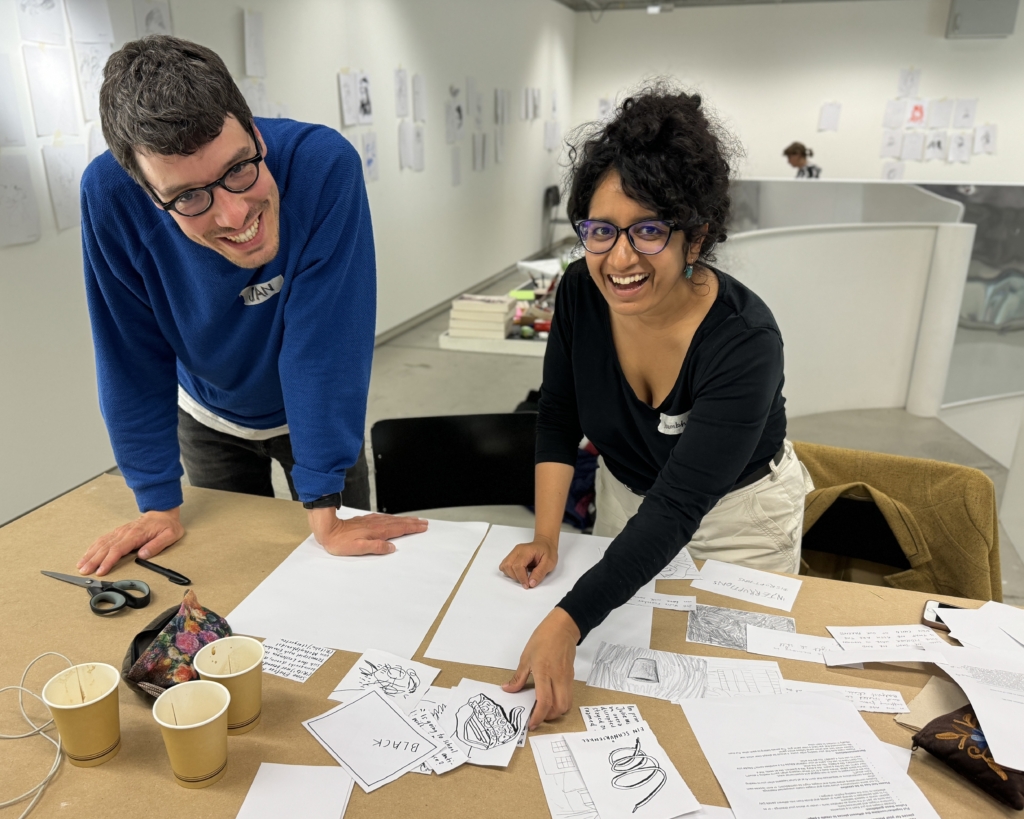
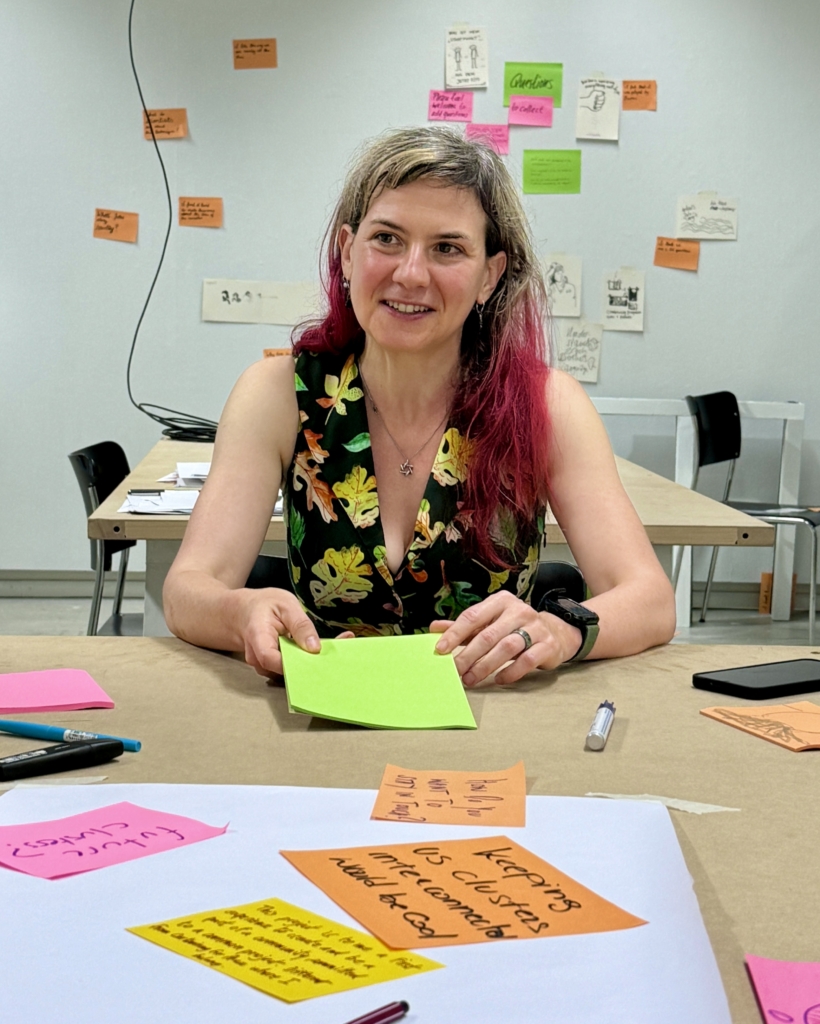
From July 4-6, our project partners at the Institute for the Performing Arts and Film at the Zurich University of the Arts (ZHdK) hosted an interdisciplinary arts-based research incubator for scholars, artists, storytellers and educators who joined us from Canada, Austria, Germany, the Netherlands, Finland, Israel and Cameroon. This interdisciplinary exchange included graphic artists from the Survivor-Centred Visual Narratives (SCVN) Project, who were invited to share insights from their ongoing collaborative memory work with survivors of genocide.
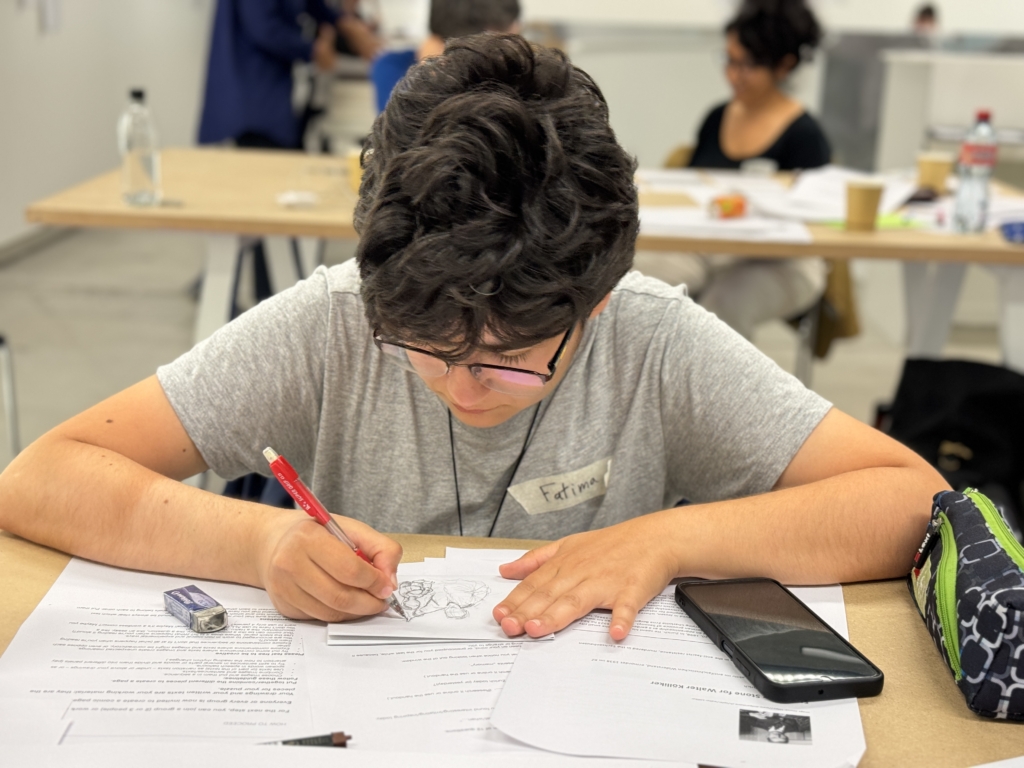
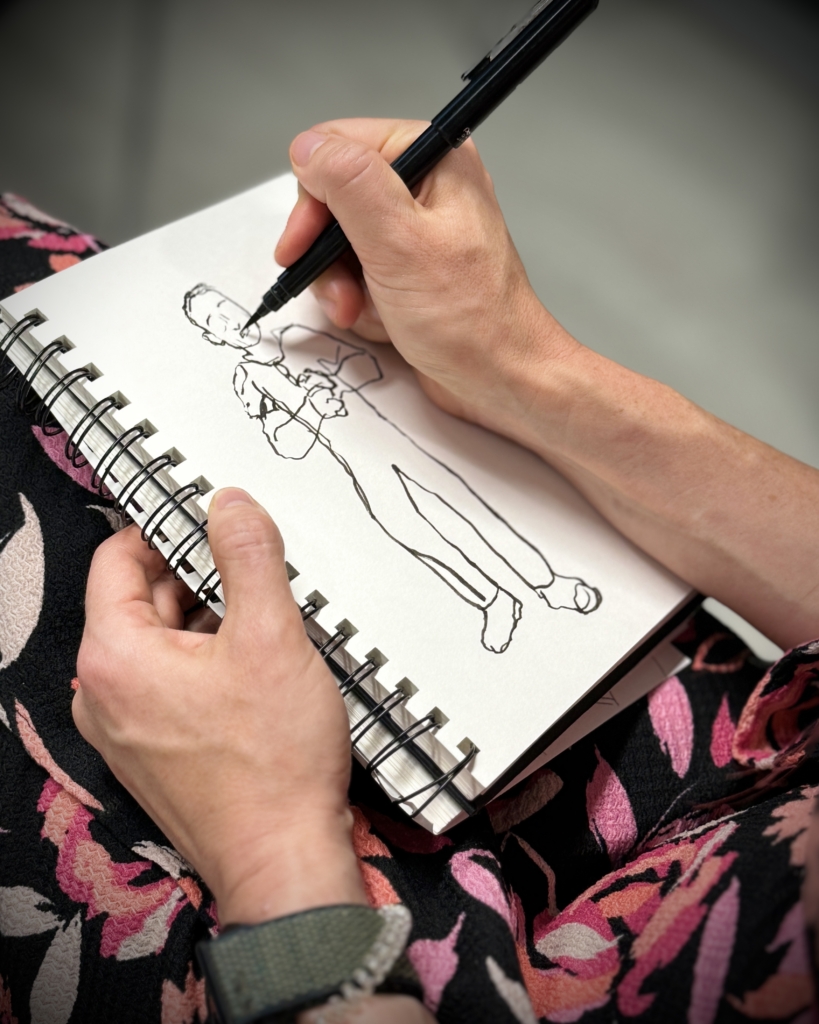
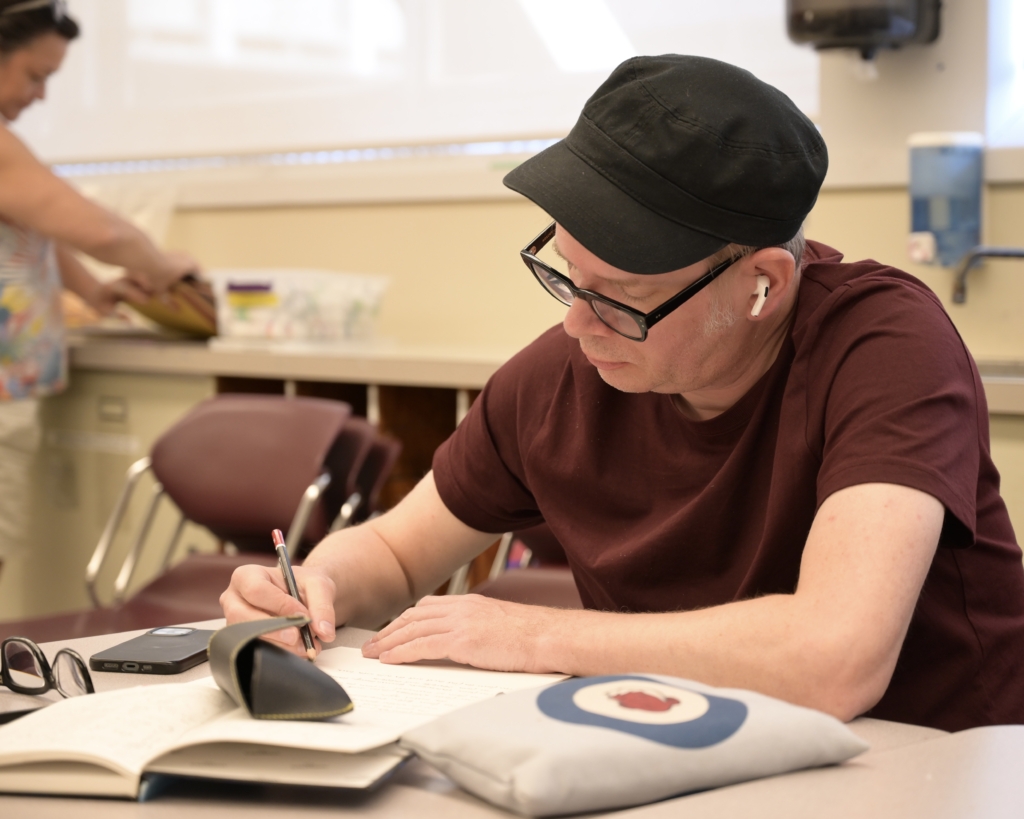
Participant sketching. Image credit Charlotte Schallié.
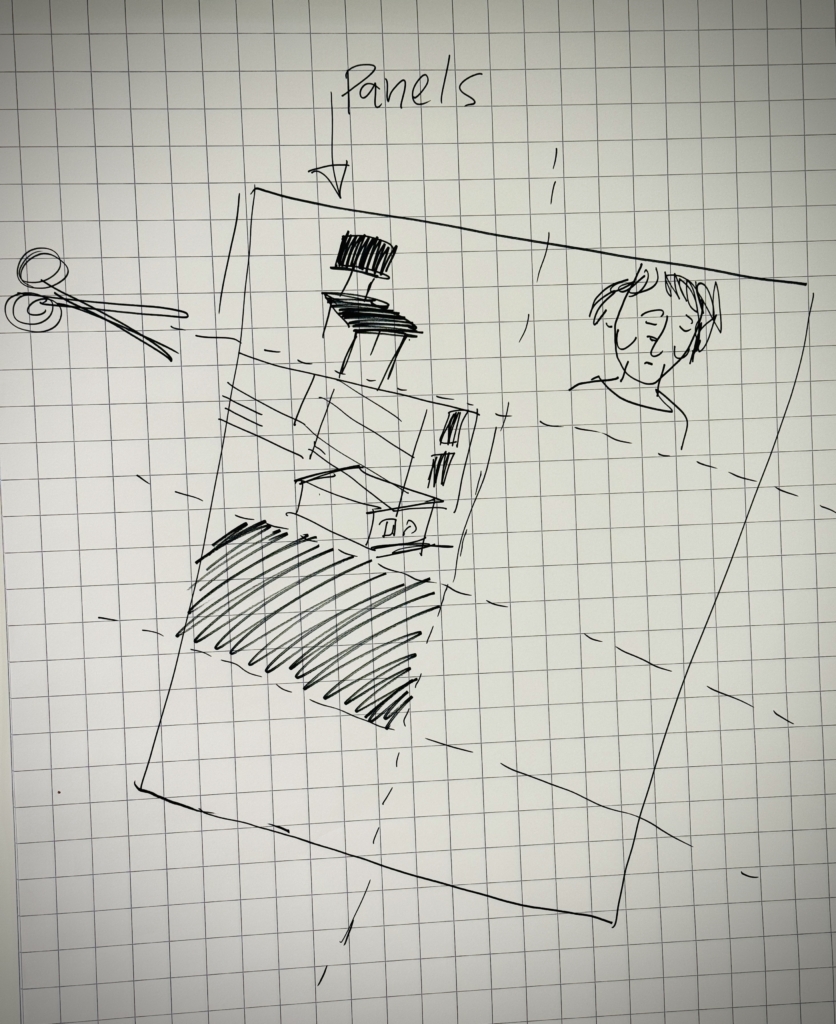
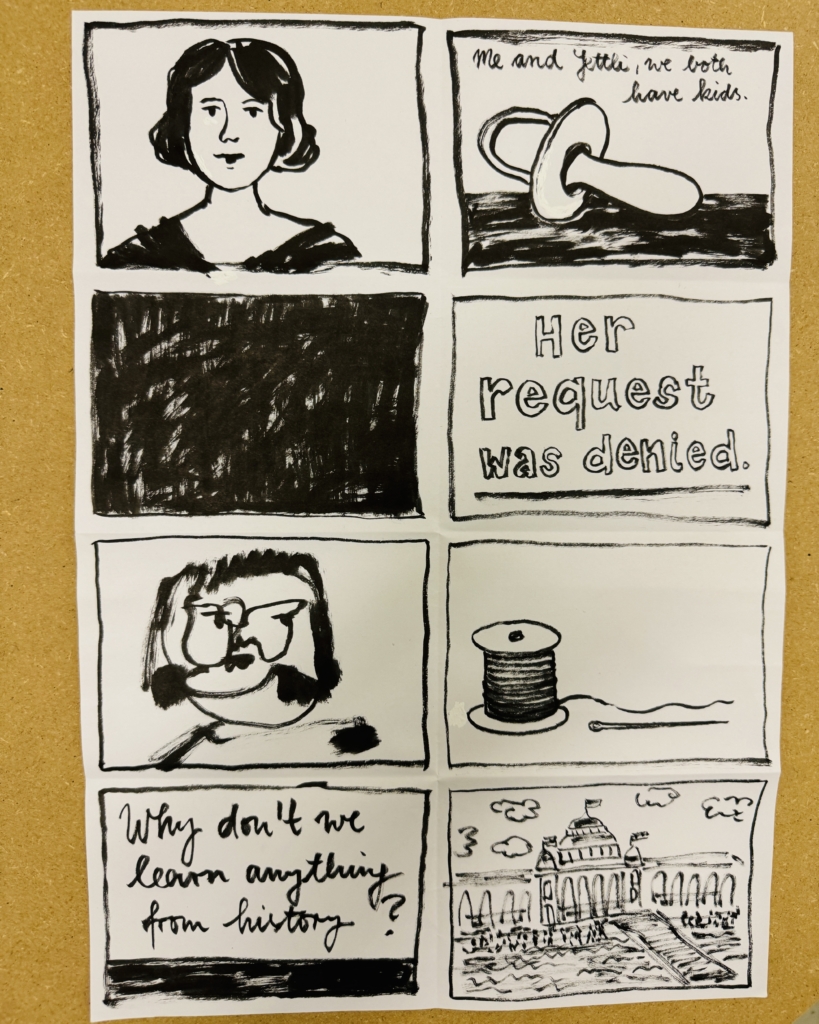
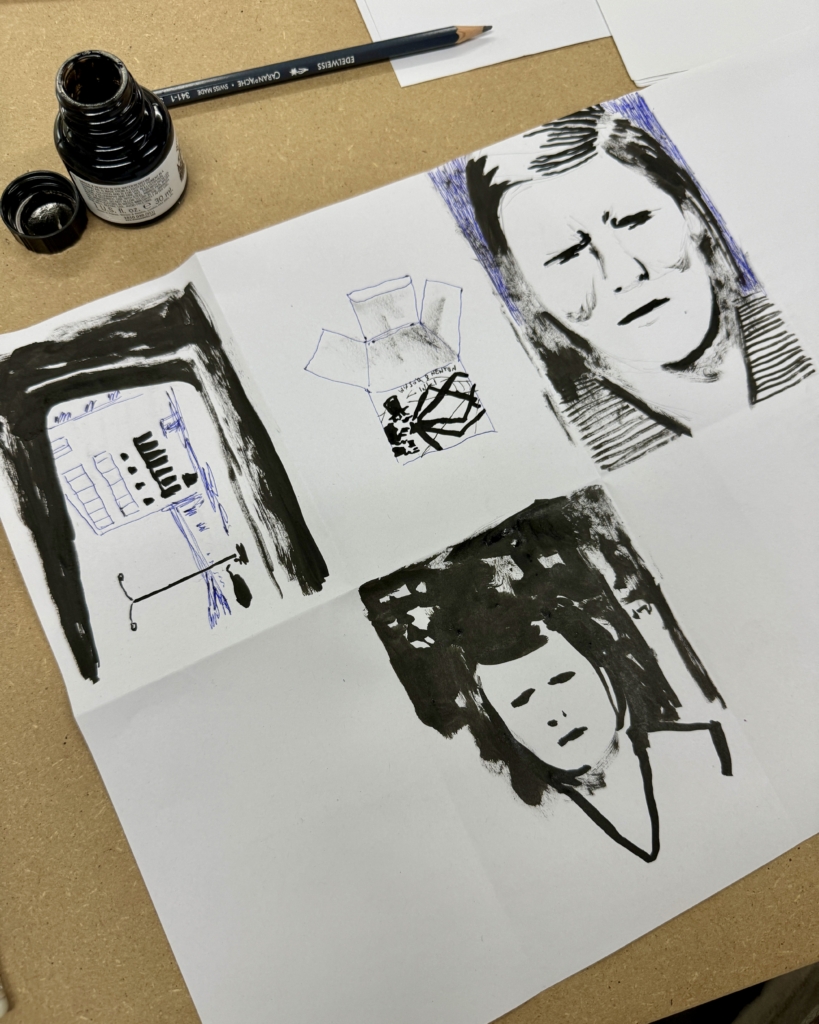
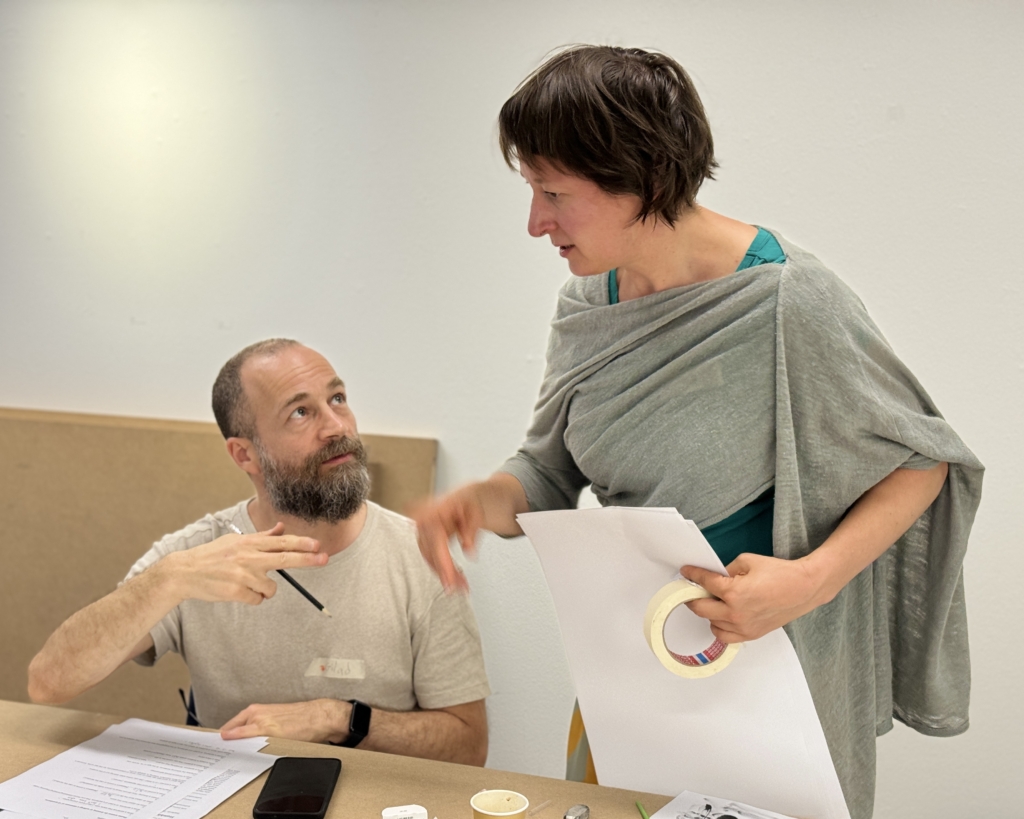
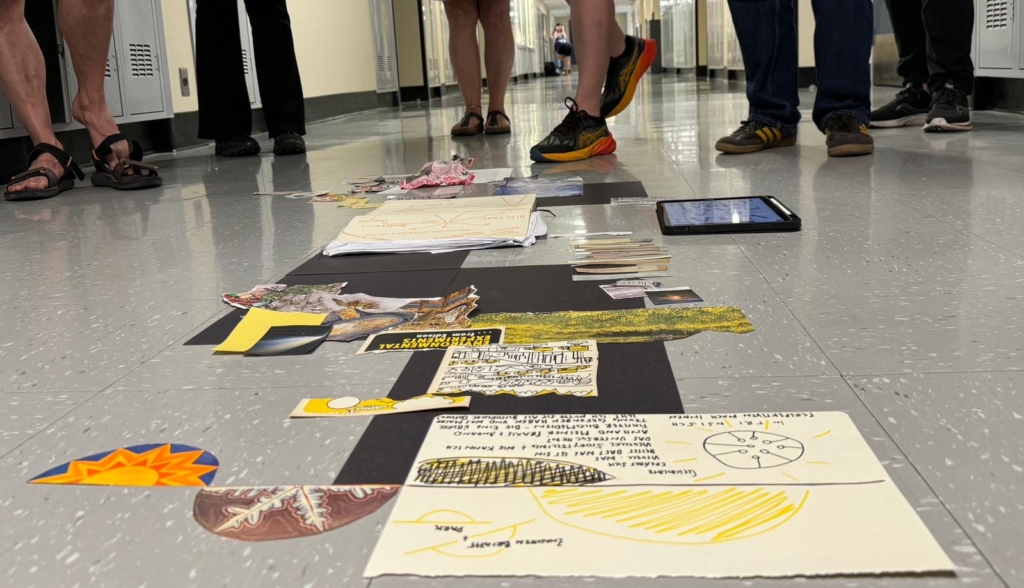
Day 1 began with a presentation by SCVN co-director Dr. Charlotte Schallié titled ‘Developing an Ethics of Care Framework in Arts-based Research with Genocide Survivors.’ Following this, a comic drawing workshop, co-facilitated by graphic novelist Barbara Yelin and Charlotte Schallié, guided participants through weaving their artistic practice with visual storytelling and historical research. Throughout the day, participants drew, collaborated, and discussed the role of memory, dialogue, responsibility, and reciprocity in artistic practice and research. Many questions emerged. For example, how can drawing as a research practice and creative tool of scientific inquiry encourage new ways of retelling histories and life narratives? What stories surface when drawings and text elements enter a space of dialogue? How can we envision the empty space in-between panels as sites of fragmented or disjointed memory?
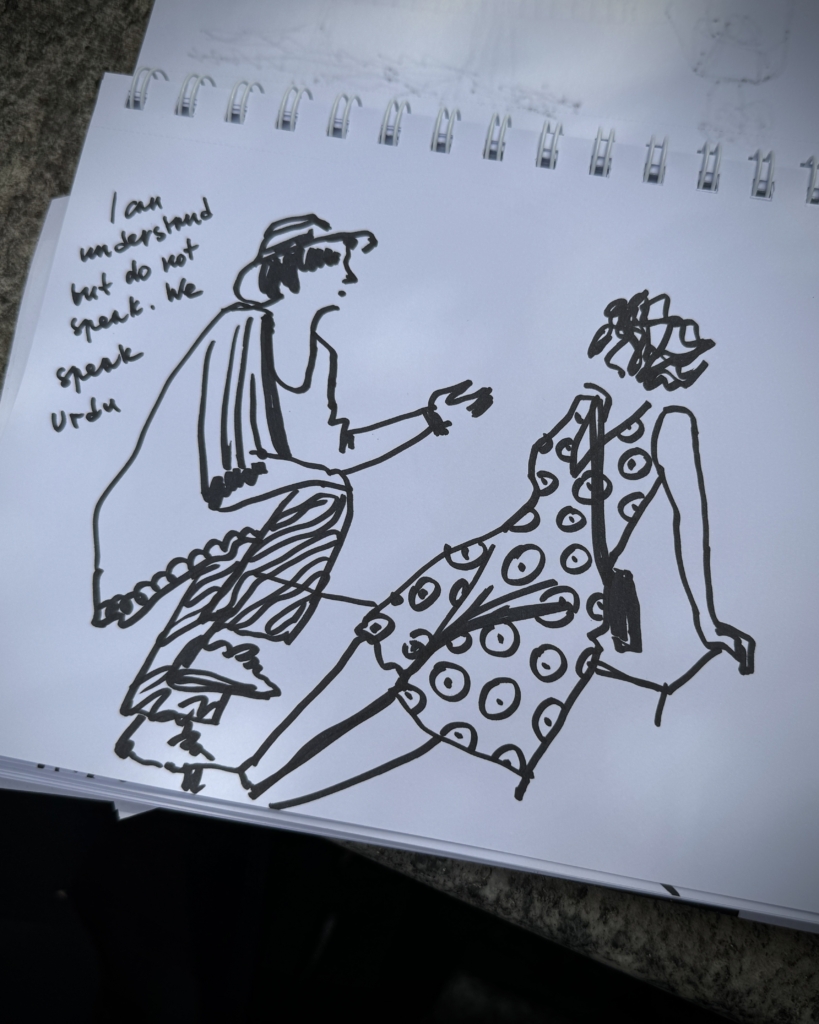
Sketches from Zurich workshops. Image credit Charlotte Schallié.
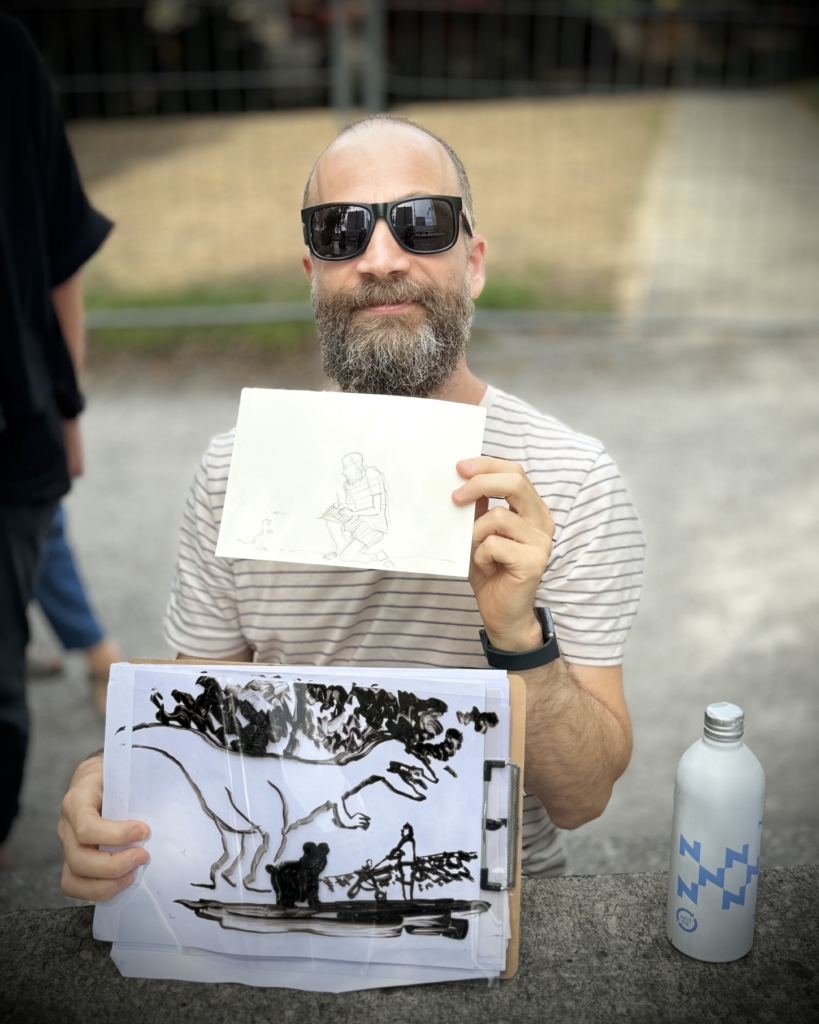
On Day 2, workshop participants gained insights into the practices, approaches, and questions emerging from the SCVN project. An urban drawing session—led by Miriam Libicki—and a reading by Barbara Yelin from her book ‘Emmie Arbel. The Colour of Memory’ brought forward ways to incorporate arts-based research methods into scholarship, teaching, creative practice, and community-based care work.
Barbara Yelin and Gilad Seliktar. Image credit Charlotte Schallié.
“What stories surface when drawings and text elements enter a space of dialogue? How can we envision the empty space in-between panels as sites of fragmented or disjointed memory?”
Day 3 held space for SCVN graphic artists to discuss how team members can continue to facilitate a community of mutual care and support across all five project-based research clusters. It served as a platform to address unresolved questions. Given the collaborative nature of the working relationships and the diverse realities and circumstances of the internationally based artists, it was invaluable to meet in person and develop a dialogue around the archiving of memory.
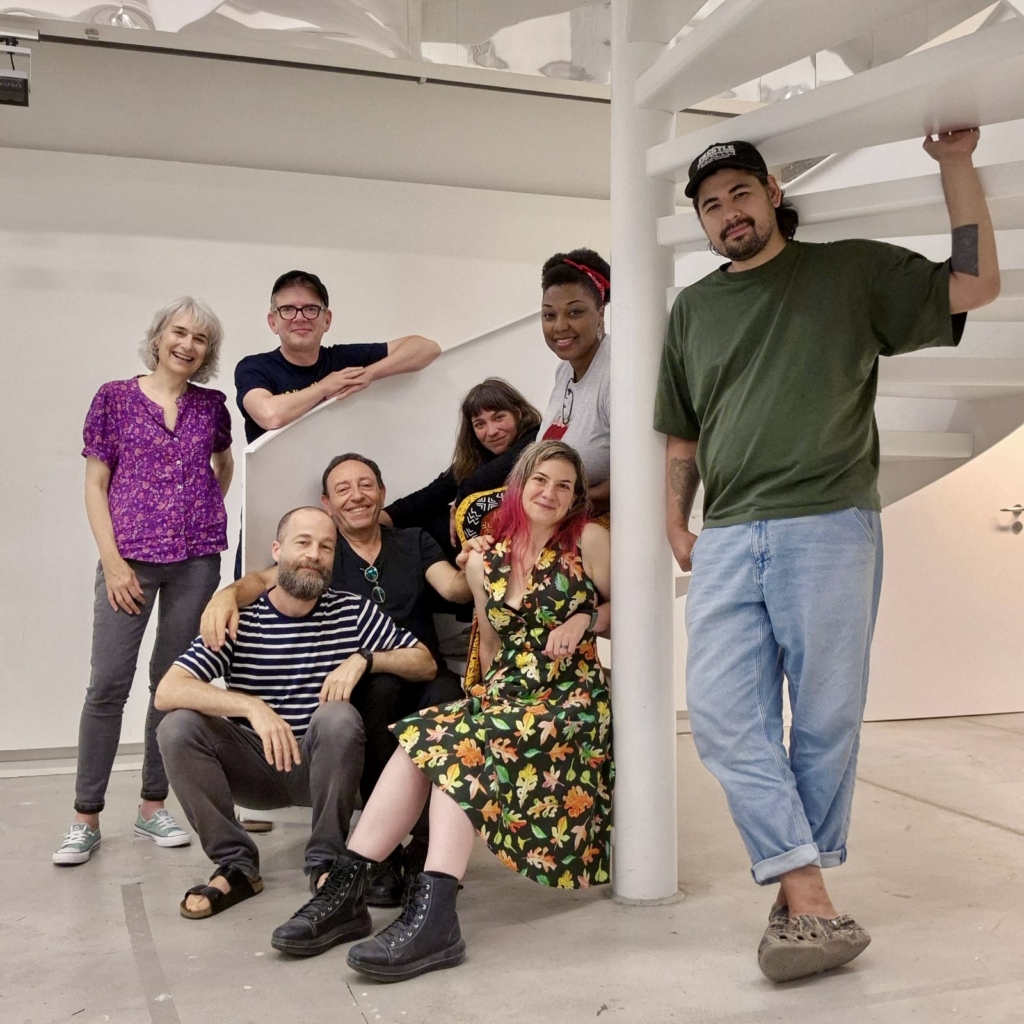
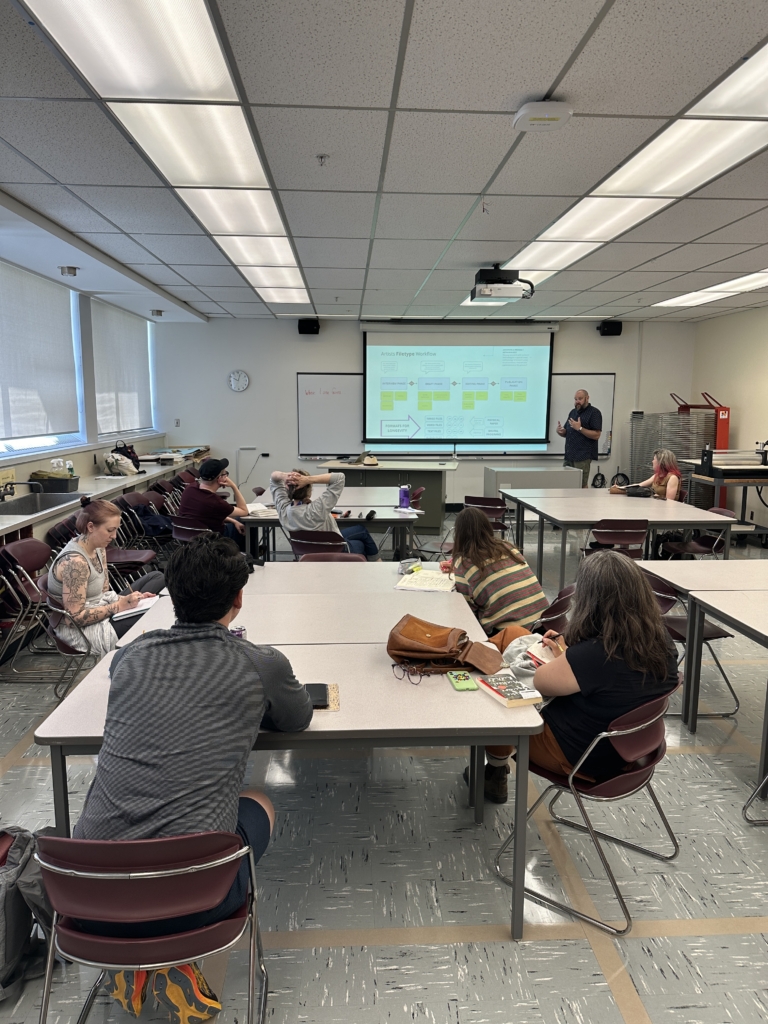
Participants at Zurich workshop. Image credit Charlotte Schallié.
A key insight from the conference and workshop was the recognition that action of gathering in a designated space for mutual learning is crucial and should be institutionalized on an annual basis. This approach is essential for fostering a dialogic relationship and establishing a solid foundation for the Community of Care needed by the SCVN project. The questions posed to the artists on the third day, such as “What does a Community of Care mean to you?” and “What resources or support do you need to continue contributing to the project?” were systematically recorded and documented. Notably, it emerged that listening and allowing space for expression are inevitable components of research projects engaging genocide and mass atrocities. Based on the responses and the comprehensive documentation from the three days, the SCVN research project can refine and optimize the design and structure of future meetings to enhance the collaborative experience.
We would like to thank to all participants who joined us to share a diversity of perspectives, experiences, and creative approaches to engage with histories and life narratives.
From June 18-20, our project partners from the University of British Columbia (UBC) and the Turtle Island Research Cluster hosted a three-day Annual General Meeting around the theme of ‘Landed Learning and Indigenous Ways of Knowing’. Artists and team leadership from Canada, Austria, Germany, the Netherlands, Sweden, and the United States, gathered with us on the unceded territory of the xʷməθkʷəy̓əm (Musqueam) people. At a pre-meeting event hosted by the German Consulate, artist Tobi Dahmen presented his recent publication, Columbusstrasse, to an engaged and enthusiastic audience. Artist Anneli Furmark also spoke to students in the UBC Nordic Studies program about her work with comics and graphic novels.
Anneli Furmark presenting to UBC students. Image credit Charlotte Schallié.
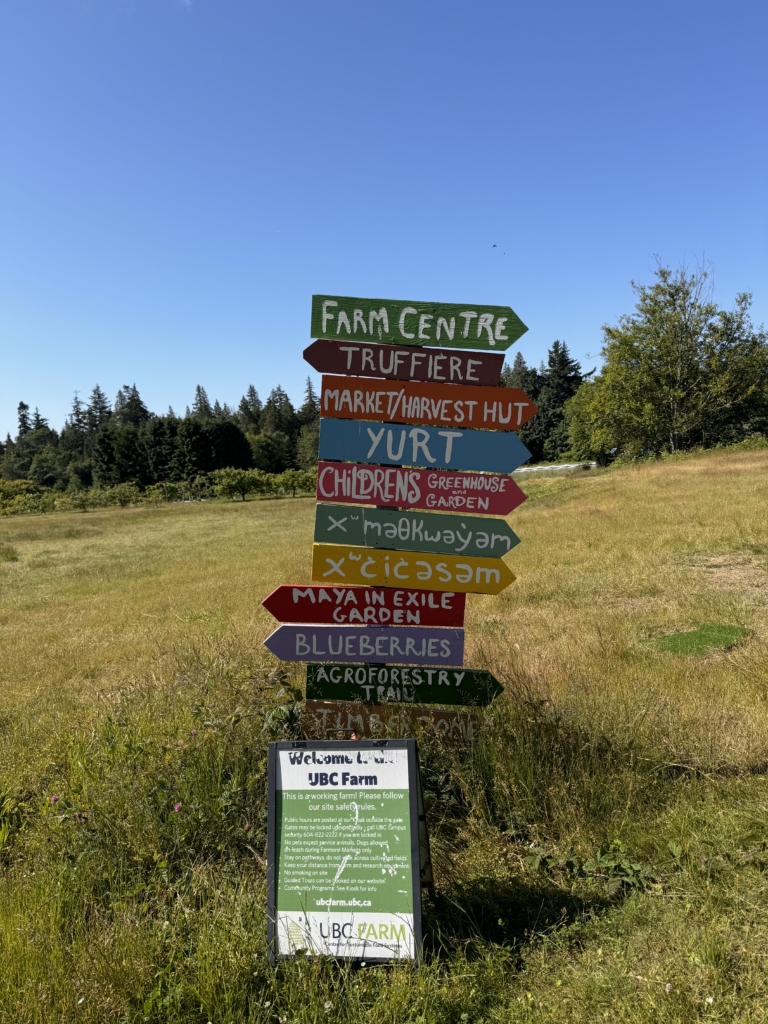
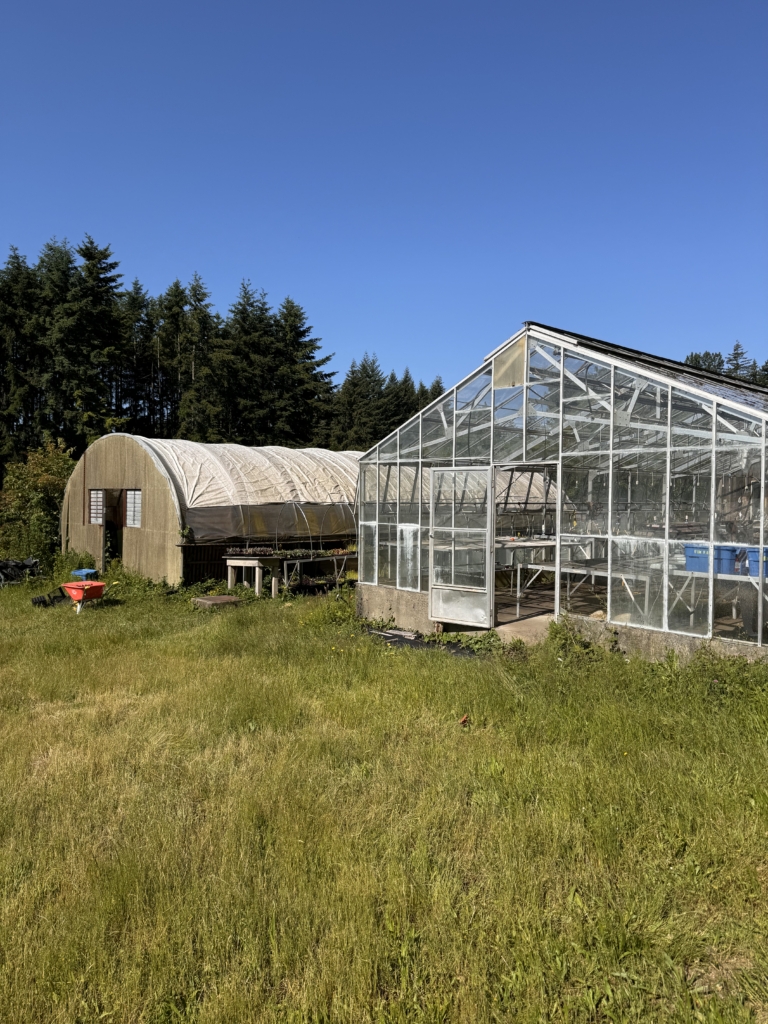
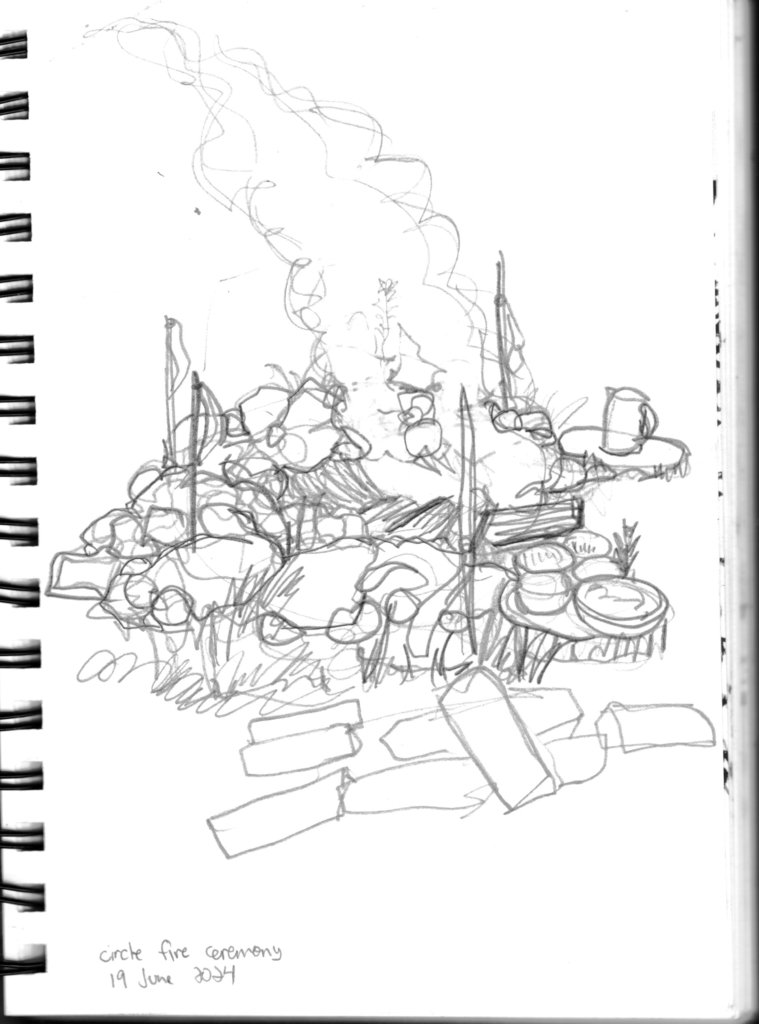
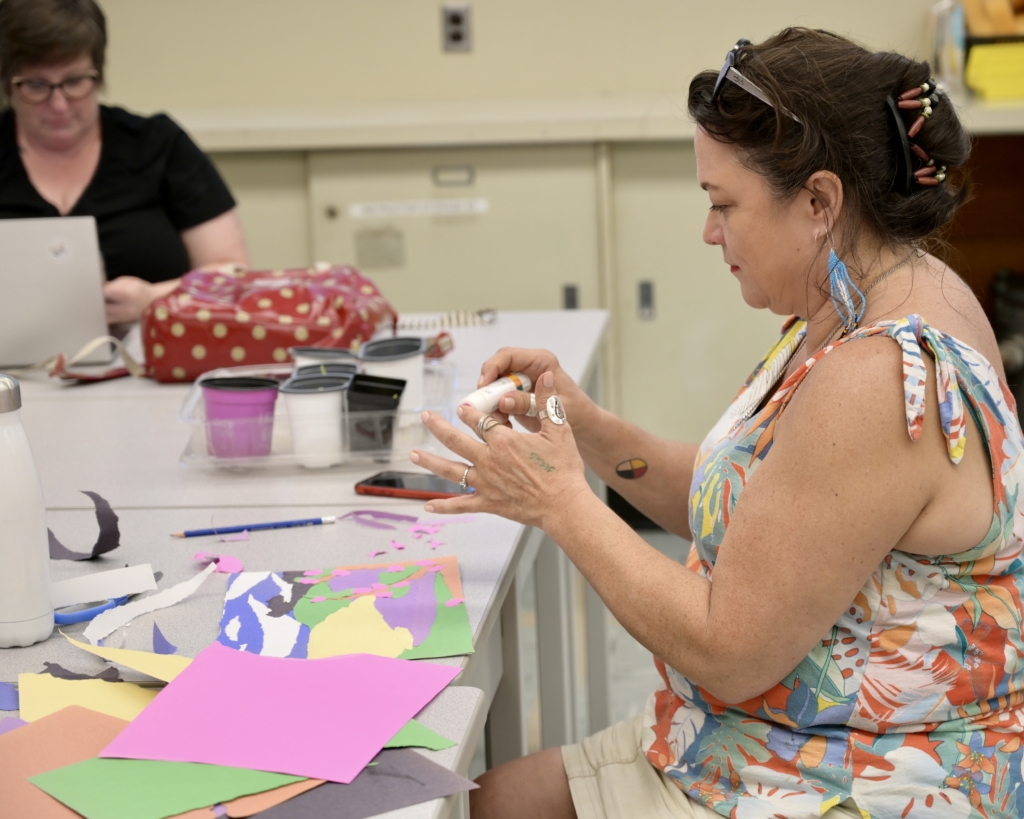
On Day 1 of the AGM, participants joined Dr. Eduardo Jovel for a presentation on Landed Learning at the xʷc̓ic̓əsəm Garden in the UBC Farm. With an emphasis on teaching, learning, and research, xʷc̓ic̓əsəm Garden serves educational and research needs related to Indigenous knowledge and its intersections with other ways of knowing; our group learned about land as teacher and food as medicine. In the afternoon, Dr. Shannon Leddy guided participants through an art-making workshop, reflecting on visual storytelling and land-based approaches to learning. SCVN data director, Dr. Matt Huculak also gave a presentation on archiving arts-based research to the project artists.
xʷc̓ic̓əsəm Garden. Image credit Raey Costain.
xʷc̓ic̓əsəm Garden. Image credit Raey Costain.
Sketch at xʷc̓ic̓əsəm Garden. Image credit Miriam Libicki.
Art making workshop with Andrea Webb (left) and Shannon Leddy (right), June 19, 2024. Image credit Charlotte Schallié.
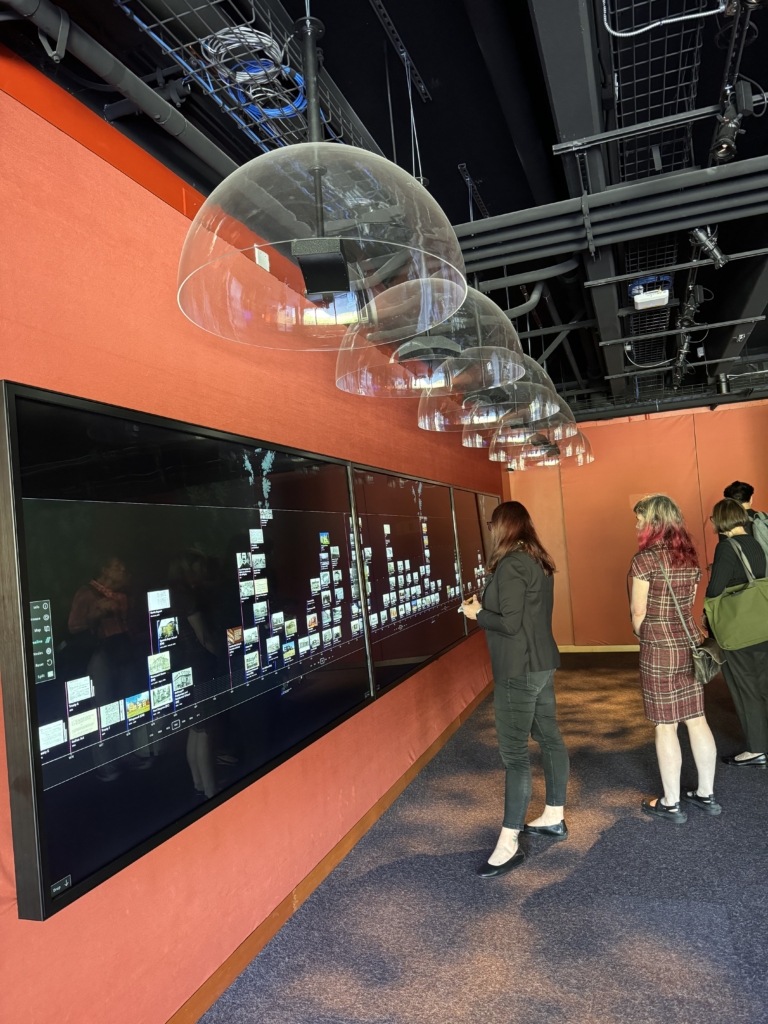
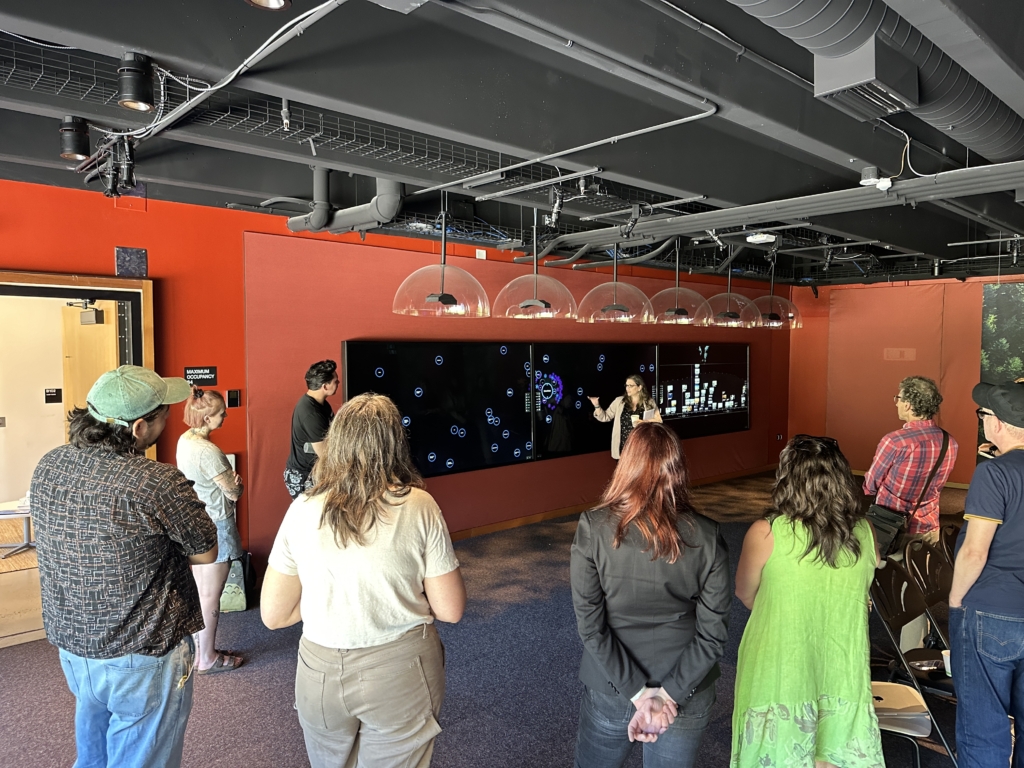
Participants exploring the interactive database at the Indian Residential School History and Dialogue Centre. Image credit Raey Costain.
On Day 2, participants gained insights into the practices and approaches of Indigenizing testimony collection and Indigenous data sovereignty with a presentation from Kristin Kozar, director of the Indian Residential School History and Dialogue Centre. Following this, Duncan McCue facilitated a reflection on traumatic testimony and survivor-centred engagement, providing the opportunity for project members to share their experiences and learn from one another.
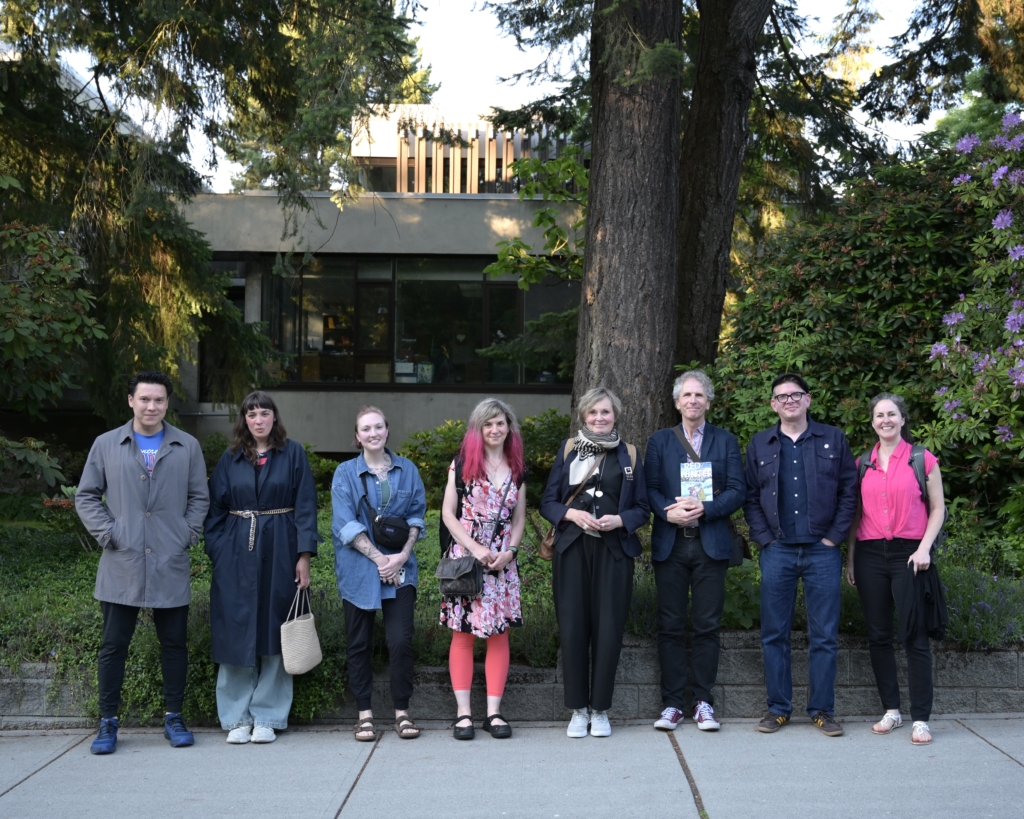
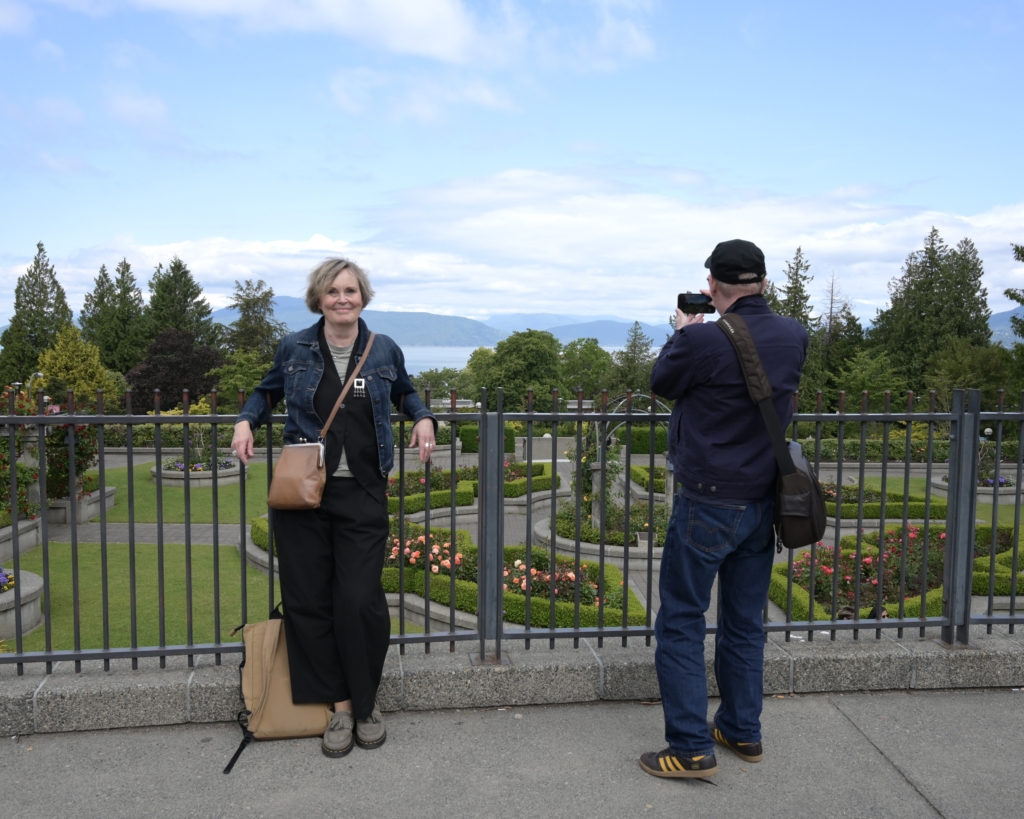
Though not scheduled activities, the artists and scholars who gathered for the AGM took frequent opportunities to spend time on the beautiful beaches and walkways that surround UBC. They also attended graphic artist Mangeshig Pawis-Steckely’s exhibit opening at the Slice of Life gallery on June 20, 2024.
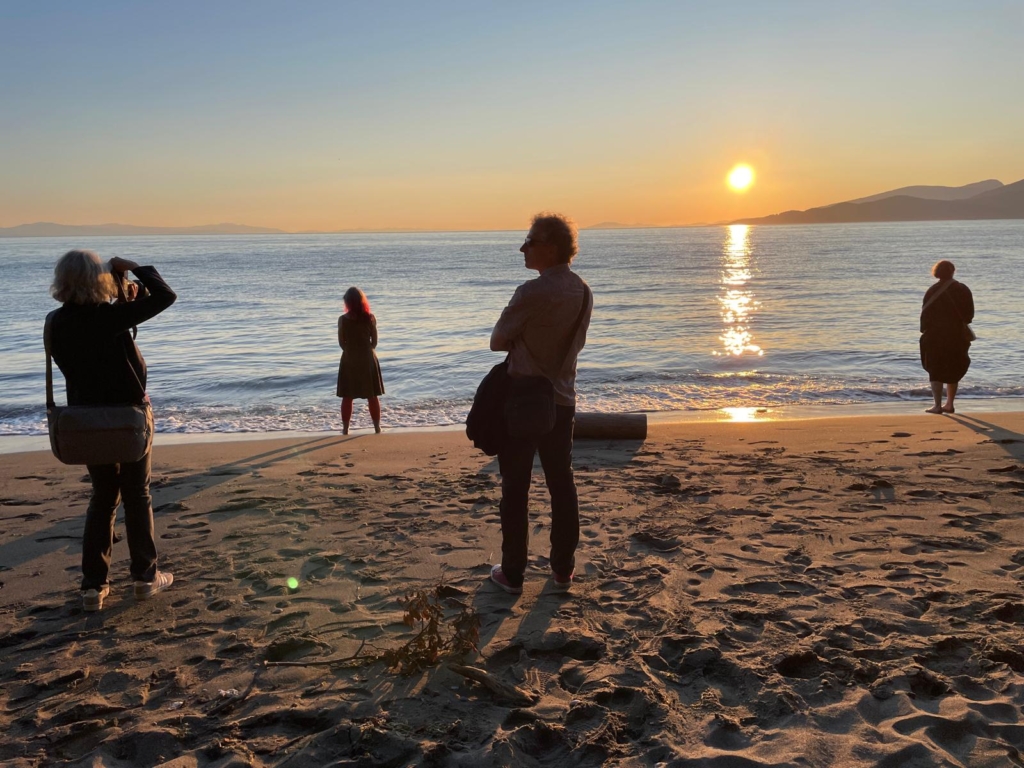
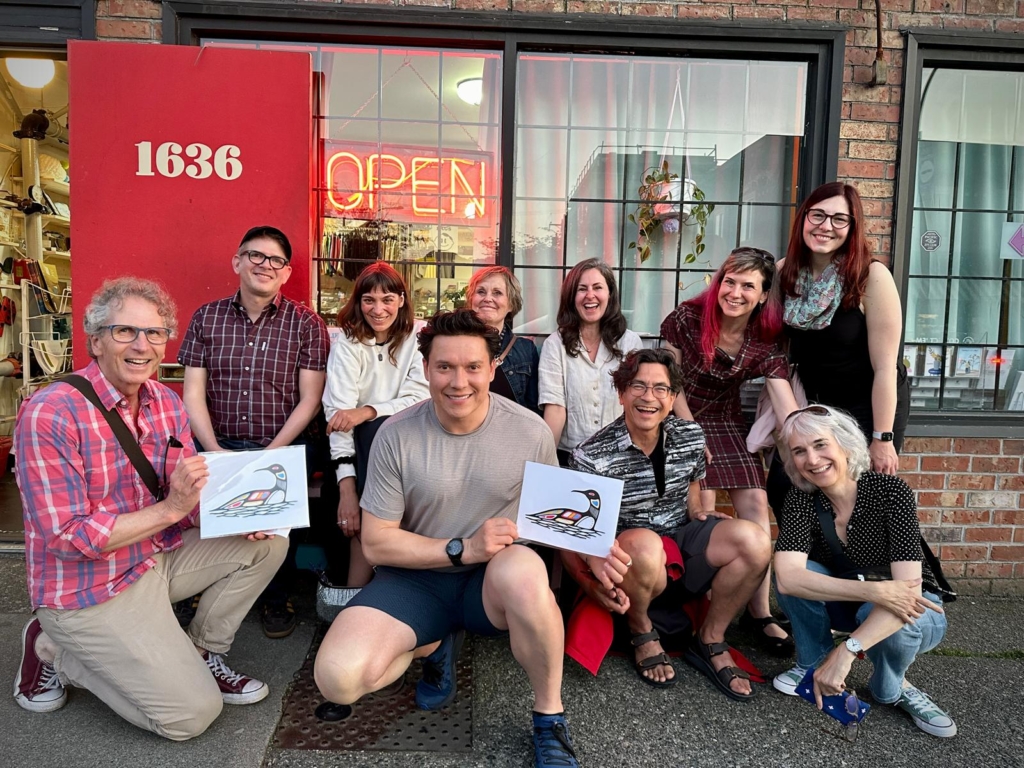
Project members gathered on the beach. Image credit Matt Huculak. Project members attending Mangeshig Pawis-Steckely’s gallery opening at Slice of Life on June 20, 2024. Image credit Jennifer Sauter.
We would like to express our deep gratitude to all participants for their willingness to experience land-based approaches and share their diverse perspectives as they continue to work with survivors in creating visual narratives of testimony. We hope that our annual meetings provide opportunities for community and connection, supporting future arts-based research and acknowledging the important work created thus far.
“Our perspectives of the past are largely shaped by the stories of those who experienced it.”
On May 28, 2024 a panel of researchers, artists, and witnesses will gather to reflect on the ways in which graphic novels can be used to gather stories violence and genocide. These stories are not universal or encompassing of every detail of these atrocities, but rather they present the individual narratives of those who survived them.
Views around the Ezidi shrine of Shebl Qasim atop Shingal mountain (Wikimedia Commons).
The panel includes Tobi Dahmen, Charlotte Schallié, Akram al-Saud, Leyla Ferman, Kees Ribbens and Uğur Ümit Üngör. We are grateful to be hosted by our project partner NIOD Institute for War, Holocaust and Genocide Studies at SPUI25 in Amsterdam for this event.
Date: May 28, 2024 – 5:00pm CEST Location: SPUI25, Amsterdam
From April to November 2023, the Public Humanities Hub at the University of British Columbia co-hosted with the University of Victoria’s Survivor-Centered Visual Narratives project a webinar series on the Ethics of Trauma-Informed Research. The series of zoom conversations featured researchers, educators, journalists, artists and other professionals focusing on trauma in their work. The toolkit is accessible on the UBC’s Public Humanities Hub website and builds on the experience, practice, and resources shared by these experts during the six webinars of the series.
The speakers’ experiences and perspectives regarding trauma in the aftermath of genocide, mass atrocities, war, and other events vary considerably, but, as this toolkit documents and emphasizes, the central focus remains the same. According to Ying Han and Sydney Lines, the authors of the toolkit, it is “overcoming the ‘trust’ gap between community and researchers, and approaching the research with ethics of care” which represents the main concern shared by all guests in the webinar series regardless the variable terminology they might use when they talk about their research and professional practice. ‘Survivor-centered approach’, ‘people-centered approach’, ‘grassroots approach’, ‘participatory research’, and ‘co-produced research’ are used in the toolkit to refer to the central concern and methodology.
The toolkit contains the recordings of the original webinars as well as the transcript of each of the sessions and is organized into four thematic clusters: Trauma-Informed Research as Witnessing, Trauma-Informed Research as Pedagogy, Trauma-Informed Methods of Public Scholarship, and Trauma-Informed Research and Arts-based Methods. Each of these clusters introduces and explores a particular method of trauma-informed research discussed in the webinar conversations via brief summaries of the key points and the experts’ own words. Further, each cluster points to resources available at the UBC and beyond that might be of help to those who wish to explore and apply the given methodology in their own trauma-informed research.
Infographics by Raey Costain.
Rather than “mapping out trauma on a diagnostic level”, the main focus and motivation of this toolkit is documenting the variety of experience-based research approaches to trauma. This emphasis allows its readers to consider how this type of research can help open up pathways to post-traumatic growth and resilience, and it also draws attention to the fact that this type of research often causes emotional or psychological discomfort or distress for subjects, participants, collaborators, and researchers alike. As the authors emphasize, “it is incumbent upon researchers and practitioners to build in ways to cultivate an awareness of the possible trauma responses that participants may experience, anticipate the risks of re-traumatization, and to learn how to hold space for recovery and care for all parties involved”. The Trauma-Informed Research Toolkit is exactly the place where to start when looking for possible guidance and inspiration.
From April 13 to July 31, 2024 the Ravensbrück Memorial is hosting an exhibition of ‘But I Live. Three Stories of Child Survivors of the Holocaust’ in cooperation with the International Comic Salon Erlangen and the Stadtmuseum Erlangen.
‘But I Live’ (2022) edited by SCVN Co-Director Charlotte Schallié was an important publication because of the way the stories it contains were created. Graphic artists Miriam Libicki, Gilad Seliktar, and Barbara Yelin, worked closely with (respectively) David Schaffer, Nico and Rolf Kamp, and Emmie Arbel to gather their memories and experiences of surviving the Holocaust as children. This collection of graphic narratives set the tone for the broader SCVN project and many of the relationships that began with ‘But I Live’ continue on in the current work.
For the SCVN project, this new exhibition at Ravensbrück represents a commitment to learn about and remember the stories that have been so carefully gathered – in a way that does not reduce survivors to their moment of pain but instead honours their life experiences before, during, and after the events they endured.
Photographs by Eberhard Schorr. Ravensbrück exhibition opening, April 2024.
On March 20, 2024 join SCVN co-director Charlotte Schallié and illustrator Barbara Yelin for the next instalment of the Art & Testimony webinar series.
In this webinar session, Barbara Yelin will discuss her collaborative memory work with Holocaust child survivor Emmie Arbel for ‘But I Live’ (2022) and ‘Emmie Arbel. The Colour of Memory’ (2023). In conversation with Charlotte Schallié, Barbara Yelin will reflect on how drawing can be used as a language to gather memories in trauma-informed storytelling. Yelin and Schallié will explore how the relationships they have formed with Emmie and with the research team guide the work and yield many insights, including the importance of emotion and subjectivity in witnessing survivor-centred testimony sharing. Yelin will begin with a reading from select pages of ‘The Colour of Memory’, grounding the conversation in Emmie’s story and the visual arts-based methodology of the Survivor-Centred Visual Narratives (SCVN) project.
Hosted by Dr. Andrea Webb, Associate Professor of Teaching, UBC Curriculum & Pedagogy.
Wednesday, March 20, 2024 1:00-2:30 PM Pacific Time Online via Zoom
We are pleased to announce the launch of a new webinar series on the theme of Art and Testimony. In collaboration with UBC-V Public Humanities Hub this series has been developed as a critical exploration of contemporary arts-based research. The first webinar session with Dr Hank Greenspan will take place on January 25, 2024. Find the registration link below.*
This webinar series is an opportunity to engage with scholars of many backgrounds as they reflect on arts-based methods and relational processes of working with testimony.
In this first session, Dr Greenspan will discuss how his work as a theatre artist is interconnected with his decades-long research and teaching as a Holocaust scholar.
“Listening, Telling, Showing (and back): The Practice of a Holocaust scholar-teacher-playwright-actor”
Thursday, January 25, 2024 9:00-10:30 AM Pacific Time Online via Zoom
*Registration will not be confirmed via email. Simply fill out and submit the form to secure a spot. Email reminders are sent out ahead of the scheduled session.
Interested in our past webinars? Find the Ethics of Trauma-Informed Research webinar recordings here.