We are delighted to share that the SCVN project has been selected as a finalist in the Social Sciences and Humanities Research Council (SSHRC) of Canada’s Storytellers Challenge for 2026! This challenge is open to postsecondary students, inviting them to show Canadians, in up to three minutes or 300 words, how social sciences and humanities research is impacting our lives, our world and our future for the better.
For SCVN’s entry, research assistant Ghada Youssef produced a 3-minute video summarizing the project’s goals and outputs. She will be participating in the second phase of the challenge by presenting the project in front of a jury at a conference in Montreal, Quebec this June 2026, where five winners will be announced.
Ghada’s selection has also been featured in the UVic News and the VPRI Bulletin article ‘Storytellers on screen’ where she shared that SCVN was among her motivations to pursue her doctoral studies:
“I was very excited that the project uses visual mediums to approach social justice topics—it felt like it sat squarely within what I’m already passionate about.”
Congratulations to Ghada and the media and communications team on this achievement! You can watch the submission video on the SSHRC YouTube below:
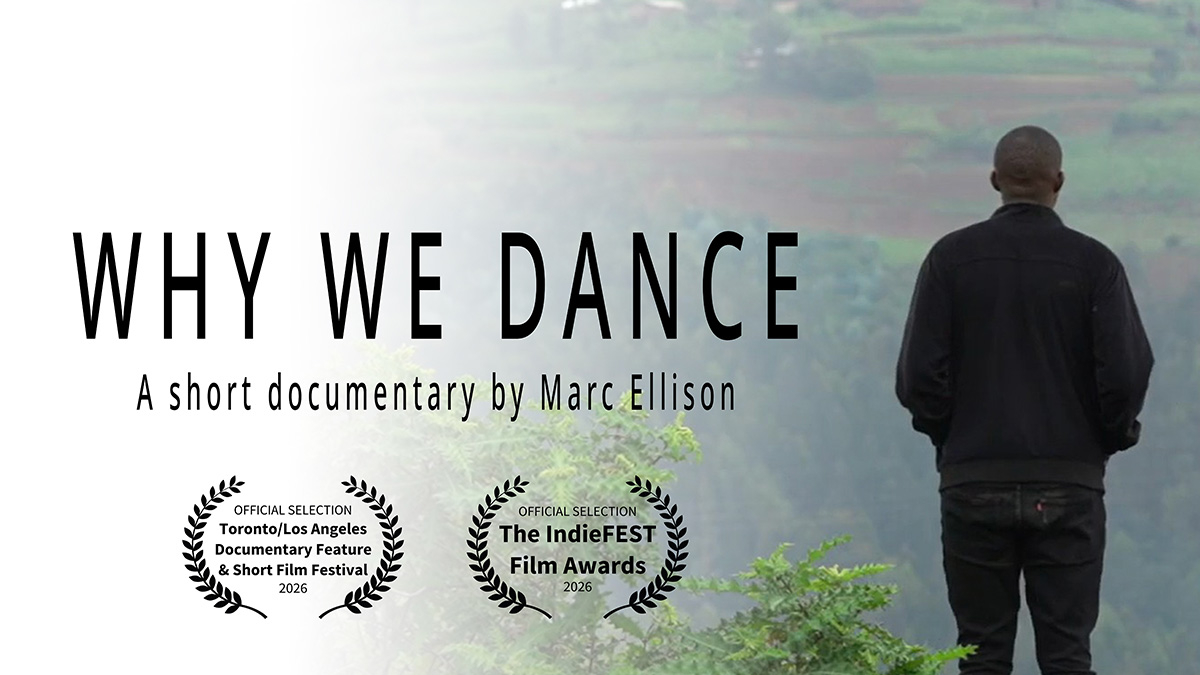
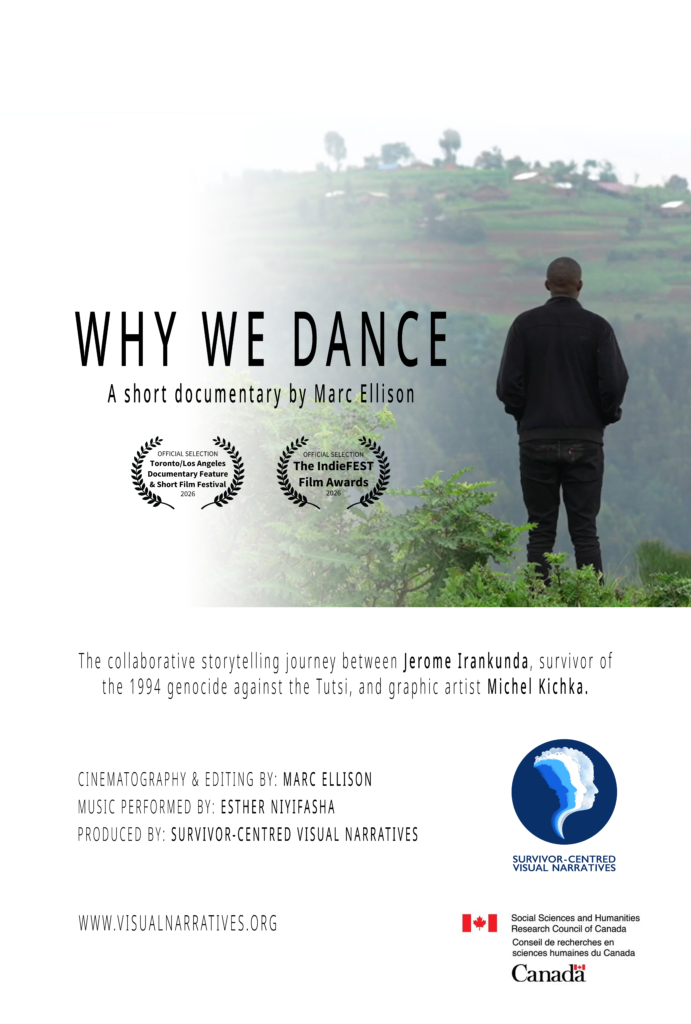
We are thrilled to share that the documentary short film ‘Why We Dance’ by filmmaker Marc Ellison, part of the Rwanda Research Cluster, has received its first two official selections and an award at film festivals. The film features Jerome Irankunda, a survivor of the 1994 genocide against the Tutsi in Rwanda, and graphic artist Michel Kichka, who interviewed Jerome to create a graphic novel about his life and experiences during and after the genocide.
The second is the IndieFEST Film Awards, an international competition that does not include a live screening component.
The film is currently awaiting further award announcements from both festivals, where selections are judged by panels of award-winning industry experts and filmmakers.
We are delighted to announce that the Toronto Holocaust Museum will host the book launch of our graphic novel Two Roses: A Story of Deception and Determination in Nazi Germany on March 25, 2026. Developed by graphic artist Miriam Libicki, Two Roses depicts the story of Holocaust survivor Rose Lipszyc and her aunt Róza Finkielsztaj in Nazi Germany.
The program will include a panel conversation with Rose Lipszyc, Miriam Libicki, and co-editors Mark Celinscak and Charlotte Schallié. The discussion will be moderated by Professor Sara R. Horowitz (York University). Copies of the book will be available for purchase, and be purchased online at the University of Toronto Press.
Registration is free of charge, and guests may explore the galleries and engage with Rose’s testimony as part of the museum experience before the event.
We sincerely thank the dedicated team at the Toronto Holocaust Museum for their coordination of the book launch and making this a special event to honour Rose and her legacy of Holocaust education.
We would also like to acknowledge this event was made possible with additional funding support from the Government of Canada’s Multiculturalism and Anti-Racism Program’s new initiative, the National Holocaust Remembrance Program (NHRP). This program supports initiatives that seek to preserve the memory of the Holocaust and help improve Canadians’ understanding and awareness of the Holocaust and contemporary antisemitism.
Please register in advance, as space is limited, and we look forward to seeing you there!
On March 14, 2026, Jared Muralt will join a panel discussion at the Stuttgarter Comic Days in Germany, where he will discuss several of his projects, including the graphic novel he is developing as part of our SCVN project.
Jared is the graphic artist behind Ružica’s Last Summer, the graphic novel which explores the lived experience of Ružica, a survivor of the Yugoslav wars. We are delighted that Jared will be sharing this work in the comics scene in Germany!
Visit the festival’s website here to know more about the programme and Jared’s contribution.
You can also check out the Yugoslav Wars Research Cluster page here to learn more about the research and creation process of Ružica’s Last Summer.
On February 9, Dr. Charlotte Schallié, co-director of SCVN, will take part in a roundtable discussion focused on the ethical considerations and protocols of arts-based research with trauma survivors.
Organized by the Emily Carr University Research Ethics Board (ECU-REB), the event will take place in person at the Emily Carr University, Boardroom (D2315) and online via Microsoft Teams (registration required).
Charlotte will be joined by Dr. Alla Gadassik, an animation scholar and curator whose work focuses on media materiality, creative labour, and animation exhibition practices. You can find more details about the speakers here.
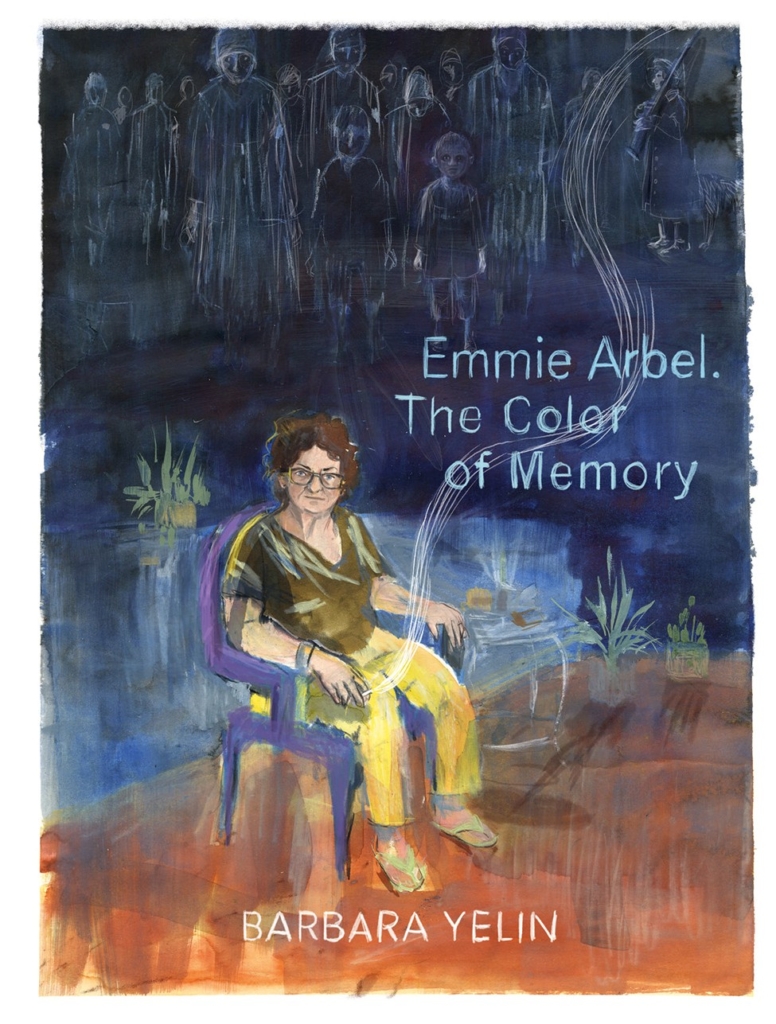
We are pleased to announce that both Barbara Yelin and Emmie Arbel have been awarded the prestigious “Against Forgetting – For Democracy” prize for 2025 by Gegen Vergessen – Für Demokratie e. V. (Against Forgetting – For Democracy). The prize honours their collaborative work on the graphic novel Emmie Arbel. The Colour of Memory.
The award recognizes individuals, initiatives, and/or projects whose outstanding work aligns with the association’s goals of developing appropriate forms of engagement with the past and/or right-wing extremism, and clearly demonstrating democratic values.
Barbara Yelin is being honoured for her artistic achievement and Emmie Arbel for her courage in revisiting and sharing her memories through a four-year creative collaboration. The recognition of this work underlines the power of graphic storytelling in keeping memory alive and fostering democratic awareness.
The award jury, chaired by former President of the Federal Constitutional Court Andreas Voßkuhle, shared this statement as part of the reasons for awarding Barbara and Emmie the prize:
“Barbara Yelin’s drawings convey history vividly and accessibly, in a way that text alone could not. At the same time, they do justice to the multifaceted nature of Arbel’s biography. 80 years after the end of the war, the book thus speaks to people of very different generations.”
Thank you to Gegen Vergessen – Für Demokratie e. V. for this recognition and congratulations to Barbara Yelin and Emmie Arbel for this well-deserved honour. The award ceremony will take place on 22 November 2025 in Berlin. Stay tuned for further updates!
Barbara YelinEmmie Arbel
Find more information on Against Forgetting – For Democracy e.V.’s website here.
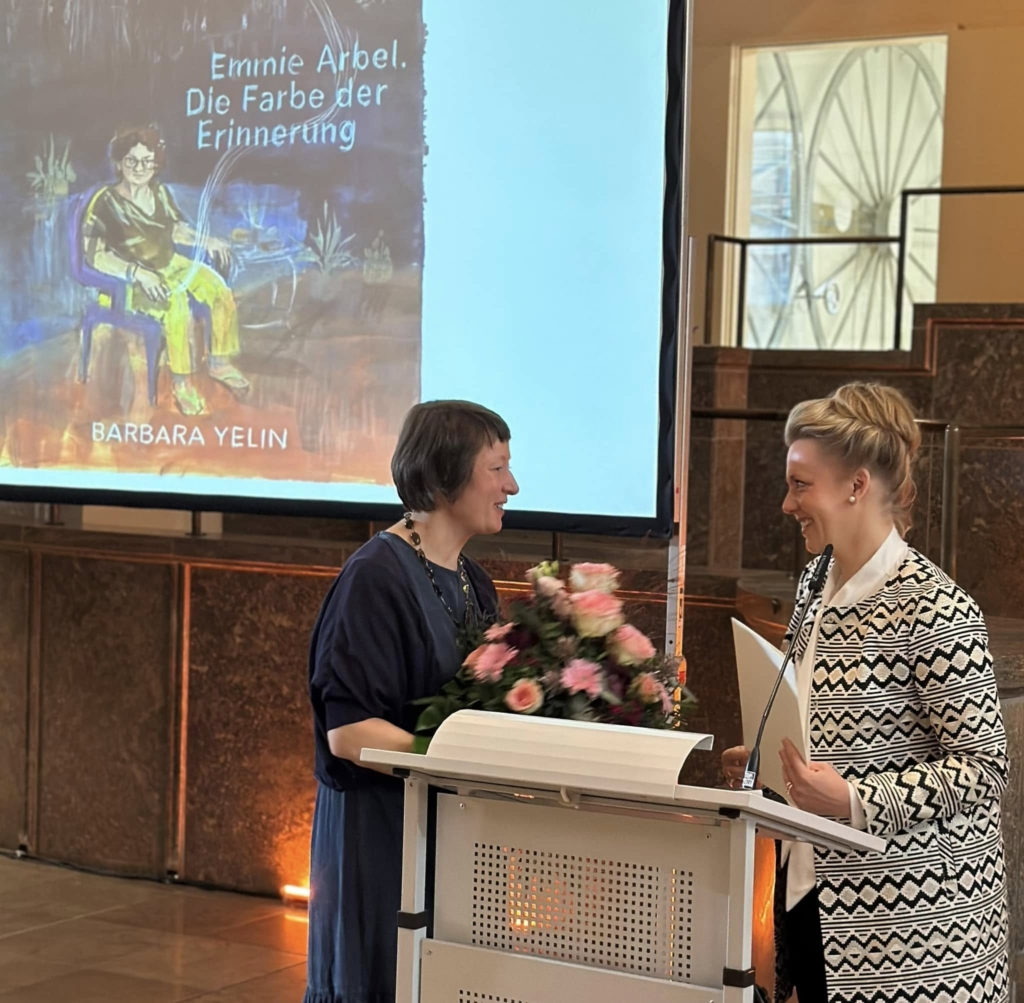
We are delighted to announce that graphic artist Barbara Yelin is the winner of the 2025 annual Grand Prize of the German Academy for Children’s and Young Adult Literature (Deutsche Akademie für Kinder- und Jugendliteratur), granted in recognition for outstanding achievements in children and young adult literature.
Barbara Yelin
Grand Prize poster from the German Academy for Children’s and Young Adult Literature (Deutsche Akademie für Kinder- und Jugendliteratur), and Barbara Yelin. Photo credit: Martin Friedrich.
The award highlights her “multifaceted storytelling in the medium of comics – in drawing, dialogue and narrative text” and recognizes the culmination of her SCVN collaboration with Holocaust survivor Emmie Arbel in their initial graphic narrative, ‘But I Live’ and the expanded collaboration ‘Emmie Arbel. The Colour of Memory’.
Through translation, the academy outlines Barbara’s achievements as:
[Her] exceptional gift for biographical storytelling shines through once again – her keen powers of observation, her empathetic approach, and her richly atmospheric imagery. In addition to her artistic talent, Yelin is distinguished, among other things, by her profound social understanding and civic engagement.
Thus, she not only champions biographical remembrance work but also engages in art projects against the exploitation of refugees, antisemitism, hatred, and racism. With her artwork, Yelin makes unseen life stories and tragic events visible to us all.
The award ceremony will take place on November 21st, 2025 in Volkach, Germany, facilitated by Dr. Winfried Bausback on behalf of the Bavarian State Ministry for Science and Art.
Originally published in German in 2023, Emmie Arbel. The Colour of Memory is a graphic memoir based on the personal conversations and trust-based relationship between Holocaust survivor Emmie Arbel and graphic artist Barbara Yelin.
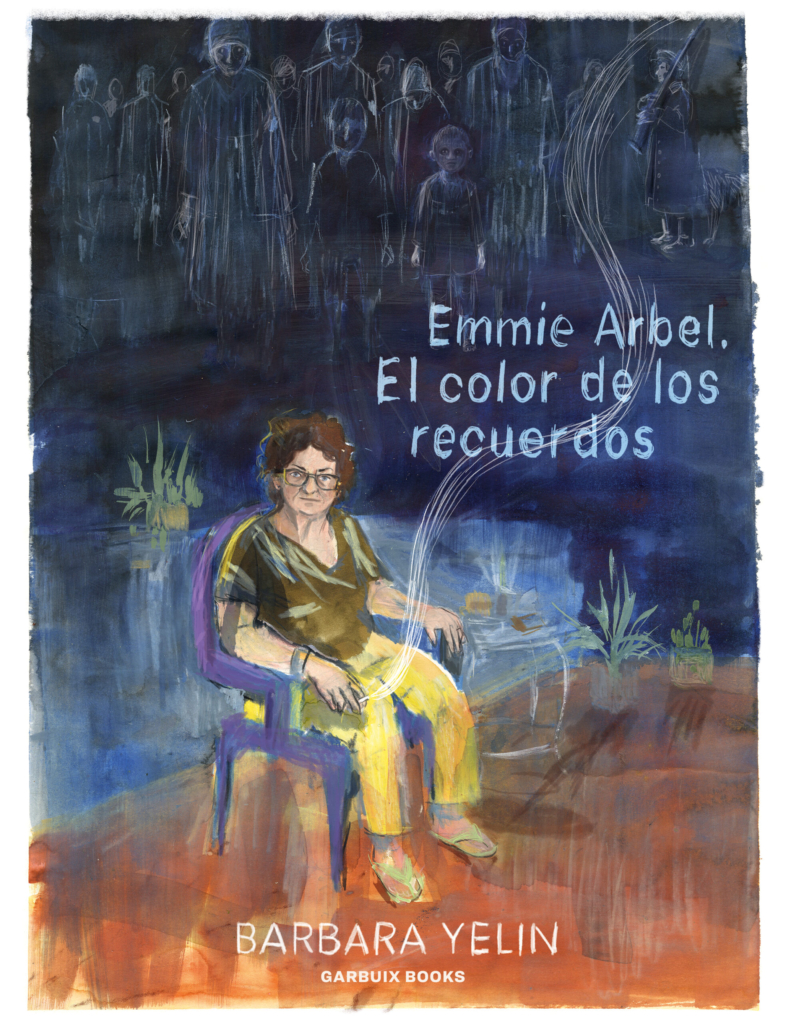
The book is now available in four language editions: German, English, French, and Spanish. It was translated into French by Thierry Groensteen and Olivier Mannoni, and published with Actes Sud in April 2024. The English translation was produced by Helge R. Dascher and published by Reprodukt in December 2024. These two publications were followed in March 2025 by a Spanish version translated by Julia Gómez Sáez and published by Garbuix Books.
Translating Emmie’s memoir into multiple languages is vital for broadening access to Holocaust testimony, as it allows a global audience of educators, students, and researchers to engage with her story.
Many thanks to the translators for their dedication and to the publishers for their support. Their efforts continue to bring Emmie’s story to life so that it can be introduced to new audiences.
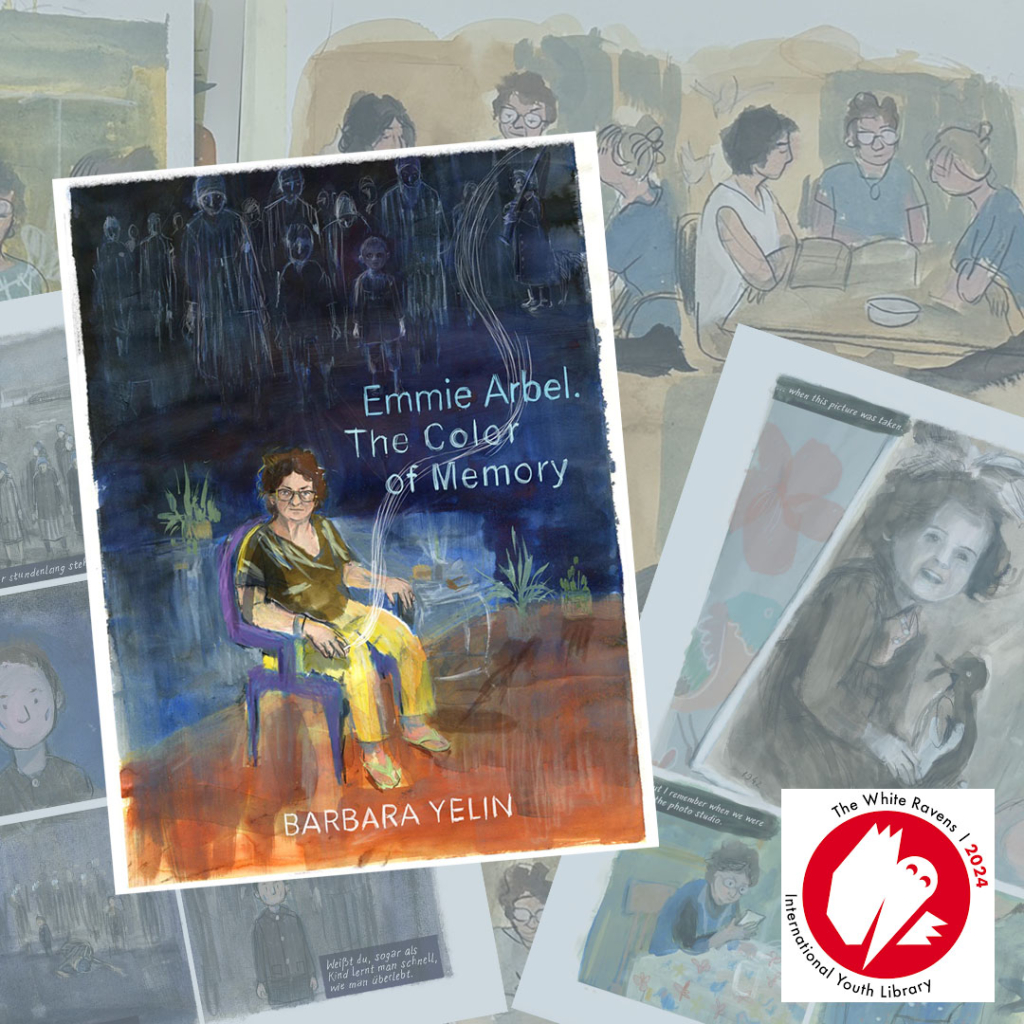
In 2024, Yelin’s graphic novel was selected for the prestigious 2024 White Ravens Catalogue. More about this prestigious recognition can be found here.
Also in 2024, Barbara Yelin was awarded the Gustav Heinemann Peace Prize for Children’s and Young People’s Books by the North Rhine-Westphalia State Agency for Civic Education for Emmie Arbel. The Colour of Memory. Read more about the award ceremony here.
Further information about Emmie Arbel. The Colour of Memory can be found here.
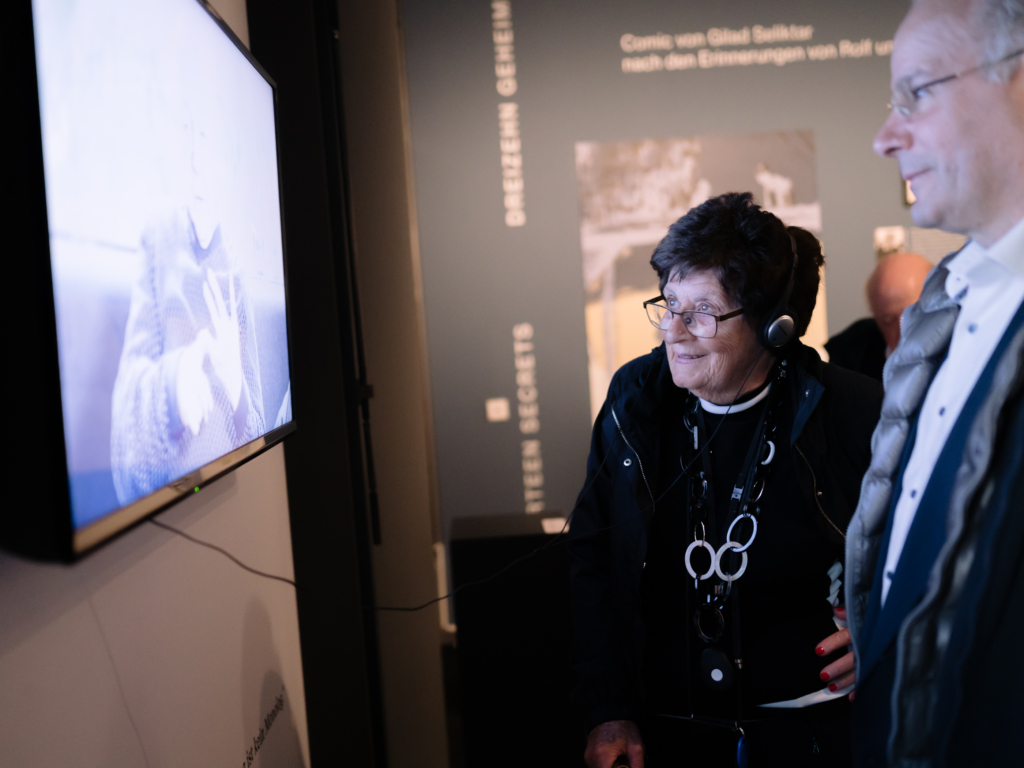
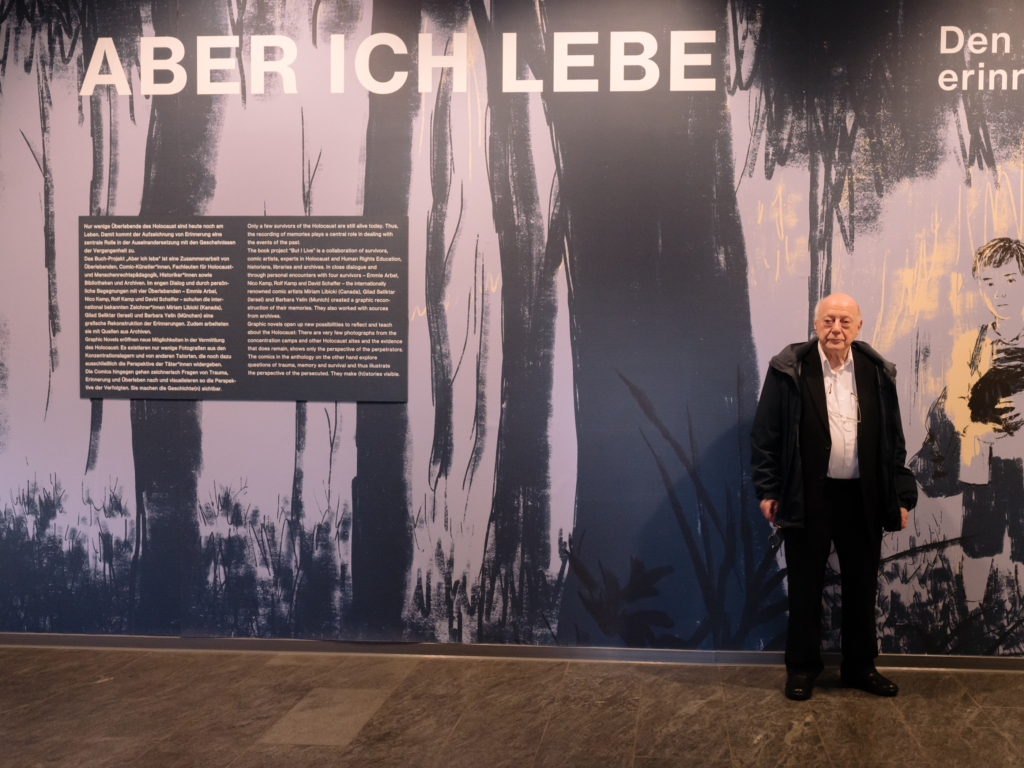
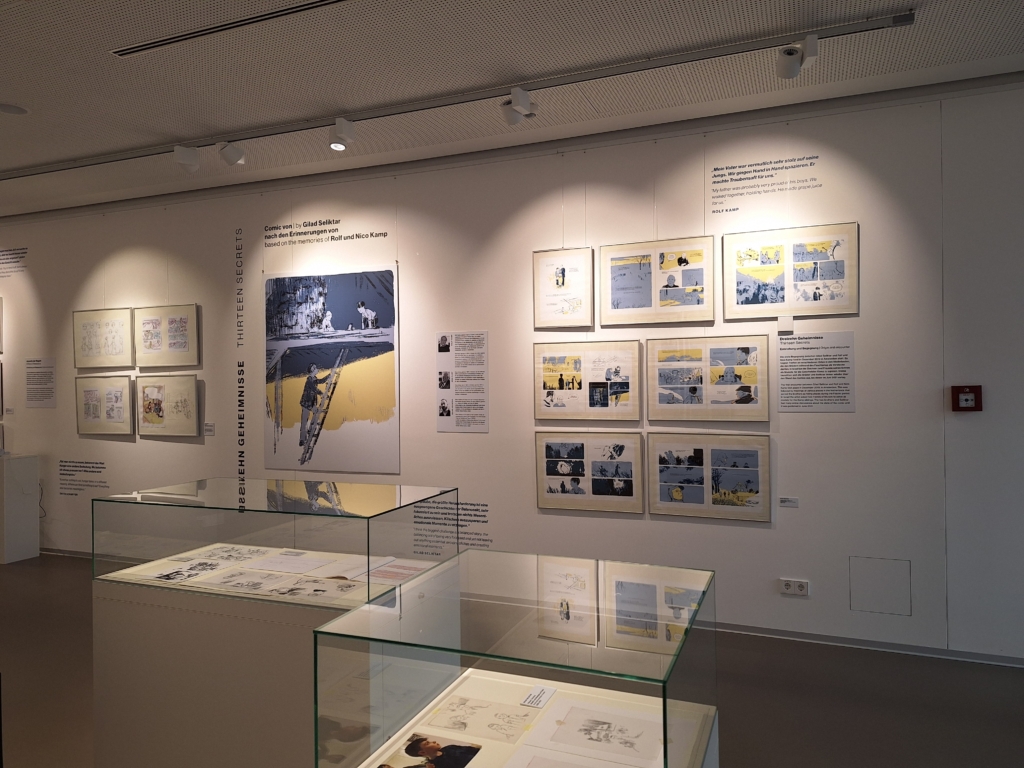
On February 27, SCVN research assistant Ghada met with curator Jakob Hoffmann to discuss the exhibition journey of But I Live. Remembering the Holocaust. The exhibition, co-curated by Jakob Hoffmann and Barbara Yelin, features the process of co-creation and original artwork by artists Barbara Yelin, Miriam Libicki, and Gilad Seliktar, produced for the graphic novel But I Live: Three Stories of Child Survivors of the Holocaust, edited by Dr. Charlotte Schallié and based on interviews with Holocaust survivors Emmie Arbel, David Schaffer, and Nico and Rolf Kamp. Displaying original drawings, sketches, archival materials, and interviews with participants, the exhibition illuminates the process by which the book came into existence.
The interview with Jakob offers a closer look into his life and work, while inviting reflection on the concepts and challenges that arise at the intersection of first, artistic media such as graphic novels and film; second, social phenomena such as collective memory and mass atrocities; and third, human experience, particularly through the lens of survivors.
Ghada: Hello Jakob, thank you for taking the time to have this conversation today. Before getting into the details of the project, can you tell us a little bit more about yourself? What do you do? Where are you based? What is the scope of your work?
Jakob: Yes, what can I say about myself? Well, I live here in Frankfurt am Main. I’m 60 years old, and I’ve got a proper regular job, which is working in the Scout movement. This is maybe a little bit unique, because most of the people who are involved in Scout are volunteers and young people. And I’m an old man, and I’m doing it as a job, but you could say I’m kind of a trainer doing projects with young people in the area around Frankfurt. This is my steady job that brings me some income and a lot of joy.
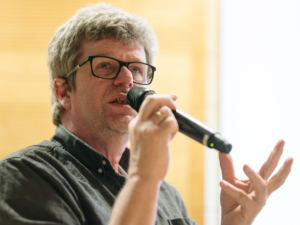
Jakob Hoffmann during the exhibition of ‘But I Live: Remembering the Holocaust’ exhibition in Dortmund, Germany, May 6, 2023. Photo credit: Max Mann.
My job does not have really anything to do with how I’m involved in SCVN, but maybe there are some parallels, because I’m always thinking about how to transfer certain political or cultural topics to young people and students.
I don’t know how exactly that happened, but maybe ten or fifteen years ago, I started getting interested in comics and graphic novels. And since I’m definitely not an artist or someone who can draw a straight line, it was very clear to me that if I want to get involved in this scene, I can do it by organizing things. So, I created a little series of events where I invited comic artists from all over the world.
I’m also into curating exhibitions. I started with a side project for contemporary art and then got the chance to do a bigger exhibition with Art for Children in the Museum of Modern Art in Frankfurt. This was a huge step forward, because, as a non-professional, it’s quite unique to get this chance. But I got it, and it was great, and I worked together with illustrators. Since then, I have done it from time to time.
I don’t know exactly when it was, but I did some exhibitions with comic artists, and that’s how Barbara asked me one day if I wanted to curate an exhibition on But I Live.
Ghada: I will use your last point to ask you to elaborate a little bit on your contribution to SCVN. Between 2022 and 2024, you co-curated and toured an exhibition of But I Live: Remembering the Holocaust. How did you first connect with the project? What inspired the creation of this exhibition?
Jakob: The comic scene in Germany, maybe the comics scene in most of the countries in the world except for perhaps France or Japan, is very well-connected and everybody knows each other. You don’t need an agent to get in contact with somebody else, and there is a strong interest in each other’s work. I’m not a comic artist, but since I invited a lot of people and published a comic magazine for kids, I’m in contact with many people, so it’s very hard to say when some things get started, because you always talk about projects, “Oh, let’s do this, let’s do that”.
In this case, I was talking quite frequently to Barbara Yelin. We had several events together , we met at festivals, and through our private friends. I don’t know exactly when she first told me about this project, about the life of Emmie Arbel, but I remember it was in the middle of COVID, when she called me in January 2022… No, no. It should be before then, maybe 2020, if it was at the beginning of COVID. No, it was 2022. But there was no COVID anymore. Well, you see, I’m very bad at remembering things.
Ghada: Maybe that’s why we need exhibitions, novels, and tangible materials? Because we need better memories? I’m just like you, it’s so hard for me to remember dates and names of people!
Jakob: Yeah, 2022. It was in January 2022, because we had a very short time to prepare this exhibition, so maybe I mixed things up. But Barbara called me—it was five or six months before that one big comic festival in Germany—and asked me: what do you think about offering an exhibition about But I Live for the Erlangen International Comic Salon? And I said, yeah, send me a PDF.
Then I saw the story, and other stories by Miriam and Gilad, and I was overwhelmed. We called Katja Rausch, from the festival in Erlangen, who gave us one of the best spots we could have there. However, we said let’s not limit it to the short exhibition during the festival. Let’s make it a little bigger, a little more durable, so that we have three months to show this beautiful artwork. This was the start. Then everything went very quickly from there.
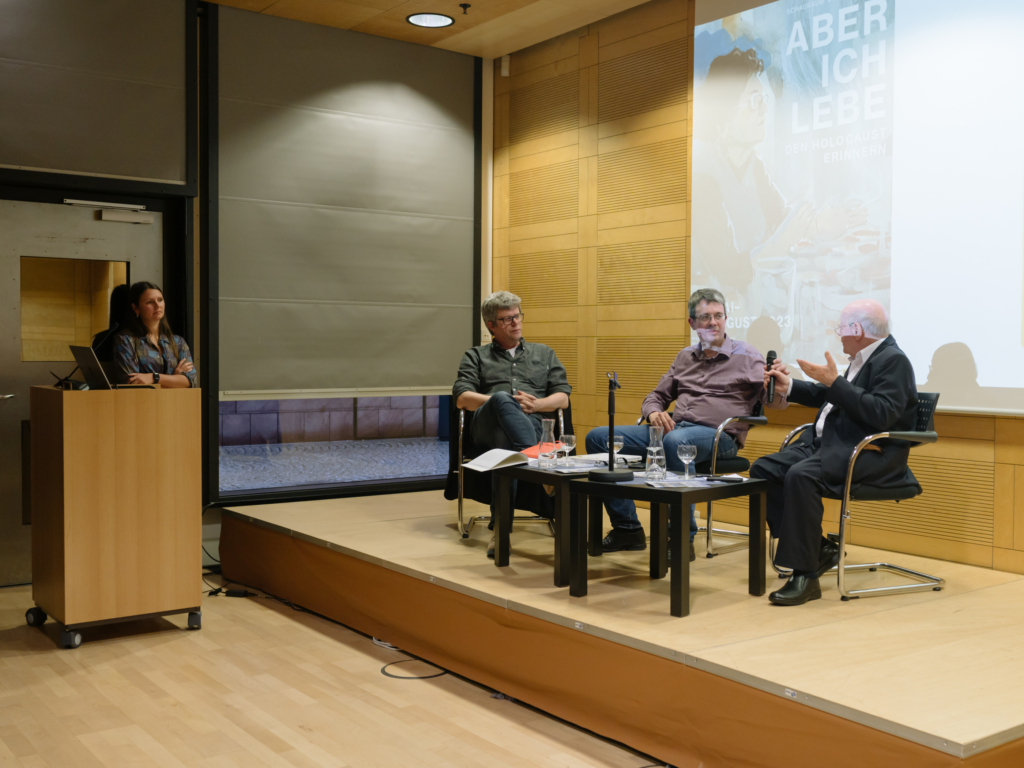
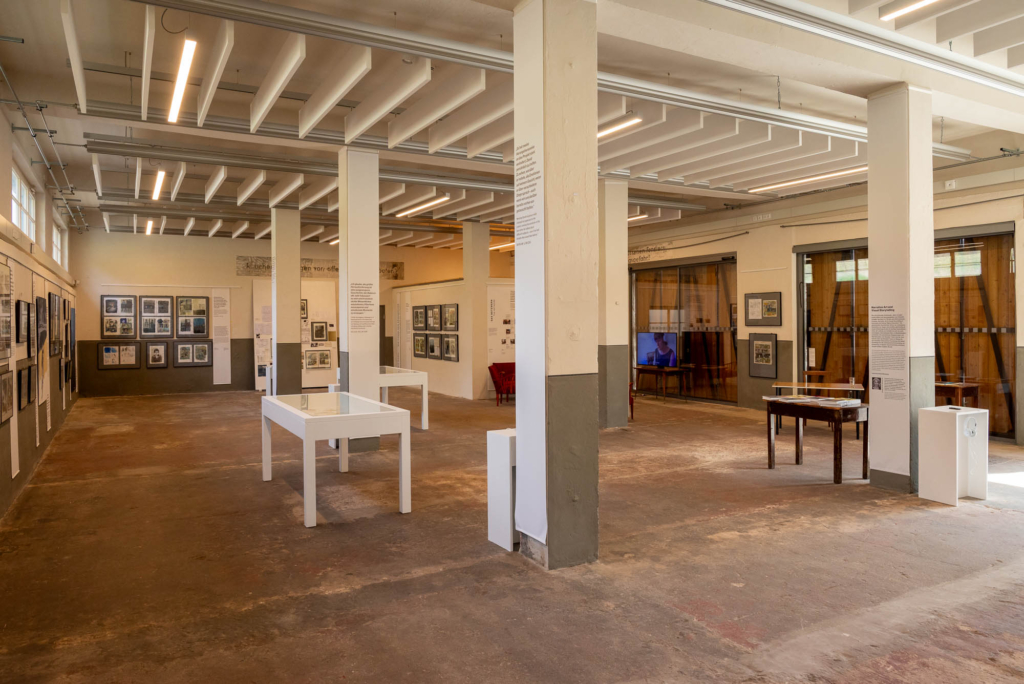
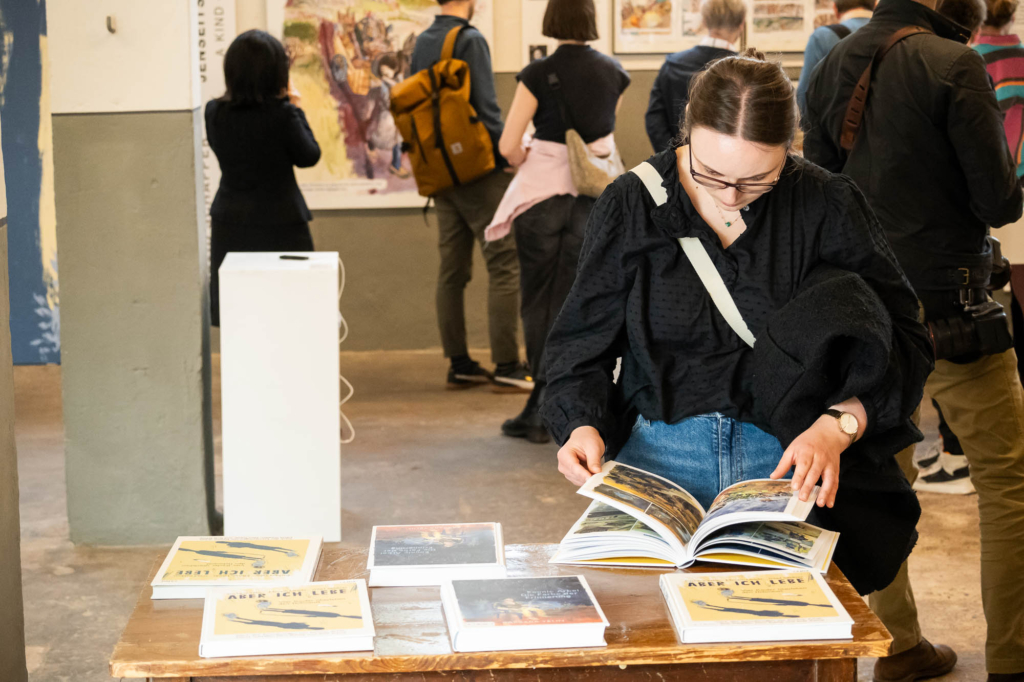
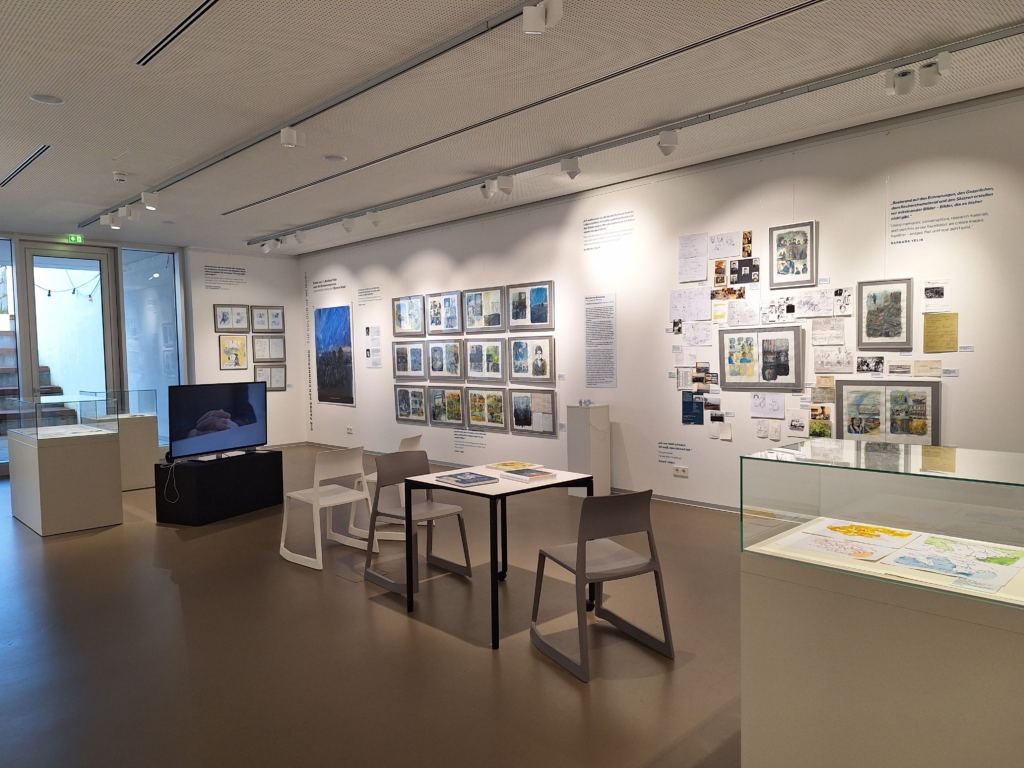
Photos from opening of the “But I Live” exhibition in Dortmund, Germany, May 6, 2023. Photo credit: Max Mann.
Ghada: Can you give us a quick brief of what the exhibition consisted of content-wise for our readers who might not necessarily be familiar with previous posts and information that we’ve shared?
Jakob: Yeah, that’s a very good question, because, you know, it’s always the question, What? What would you show if you were doing an exhibition about a comic? What would you display? Because a comic is happy with itself as a book, and it doesn’t need an exhibition.
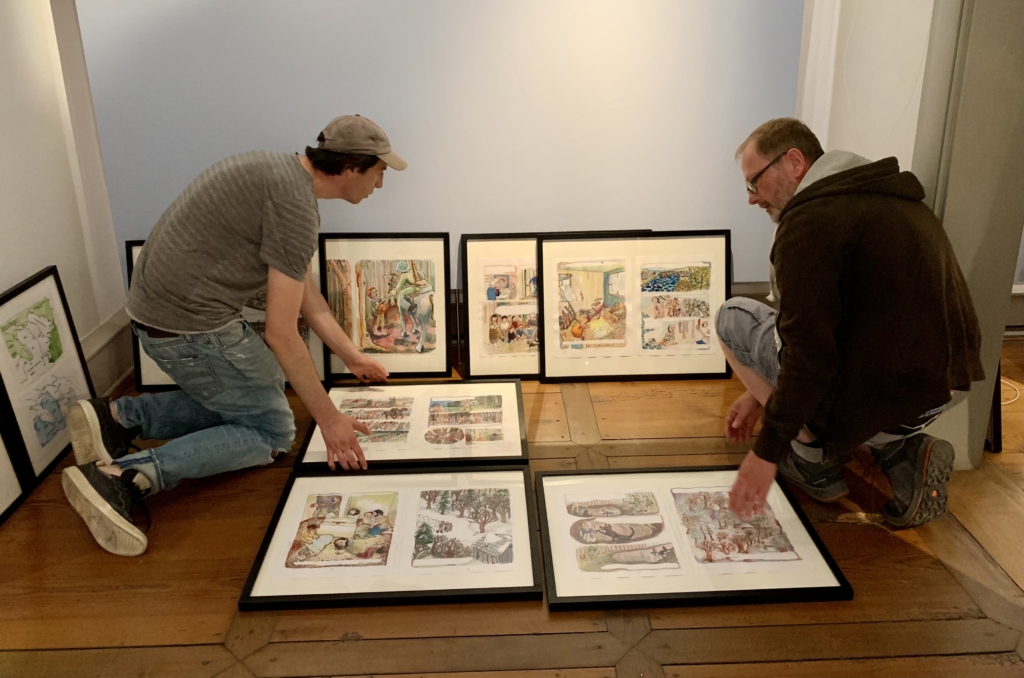
We first considered a traditional approach of showing original artwork. Yet, this is another tricky thing, because original artwork is not necessarily something that is done analog by hand. We got a beautiful mix in But I Live, because Gilad works strictly digitally, but Miriam and Barbara do analog studies. They work nearly completely with analog techniques, including watercolours, which is special. So, it was clear from the beginning that the exhibition had different components, but the main thing was to show original artwork that would give the visitor a strong impression regarding the three stories of the child survivors of the Holocaust.
We also decided to display studies, scribbles, sketchbooks, interviews, and research materials. At the time, the project had already produced three wonderful short films about the artists, and so the films were also shown. Of course, it’s very important to offer the audience some comics as well, a place where they can encounter the book, because it’s all about the book. The aim of the show is that people buy this book, take it home, and read it whole with all its strong components, especially since it’s not a traditional comic book. It also features very interesting essays from historians and so on.
Ghada: You mentioned the audience, and that’s precisely what I have been thinking about as well! Knowing that the exhibition has been in multiple cities, and I will not attempt to say their names because I will not pronounce them correctly. My question is, were there different conceptions for the different exhibits as they went to different places? Did you encounter any differences in public engagement? And finally, did you make any changes or specific adjustments?
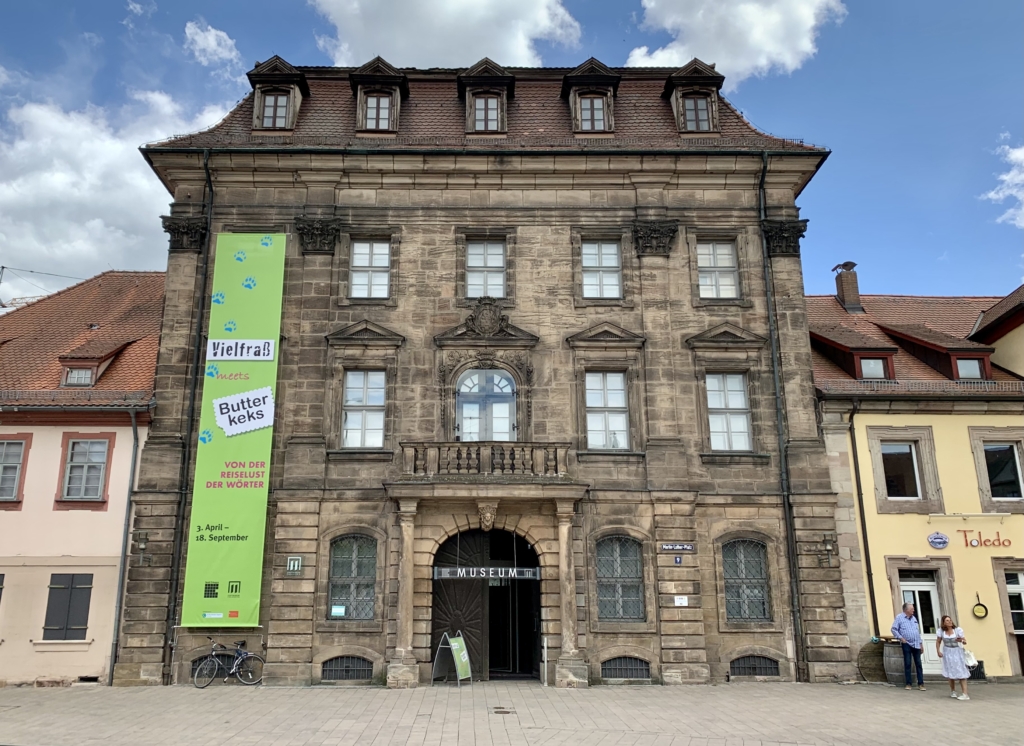
Jakob: Yeah, I can tell there’s a lot to say about that, but I will try to keep it short. When we started planning for the exhibition, it was absolutely customized to the museum in Erlangen, which is a very special but limited place in a 200- or 300-year-old building. We had six very small rooms, and, in total, the space was not more than sixty square meters, which is very small for such an amount of material. But we grabbed the opportunity to classify the different materials accordingly: three rooms went to showcasing the three stories, one for introduction and orientation, another hosted screens to showcase portraits of artists and witnesses along a big map that displayed the itineraries of the survivors, and the last room displayed the network of the project, the epilogue and physical copies of the book.
And at that moment, we still hadn’t even thought about taking the exhibition to another place. But there was an important journalist from Germany, Andreas Platthaus, who wrote about it and said, “This is really something, this exhibition should travel”.
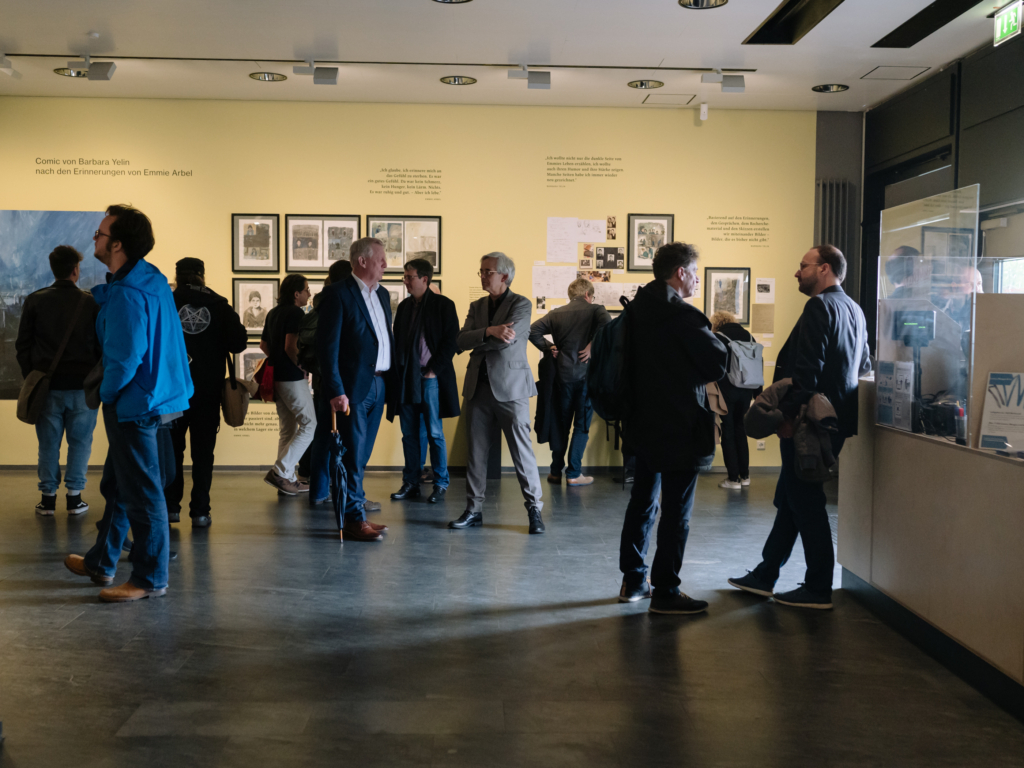
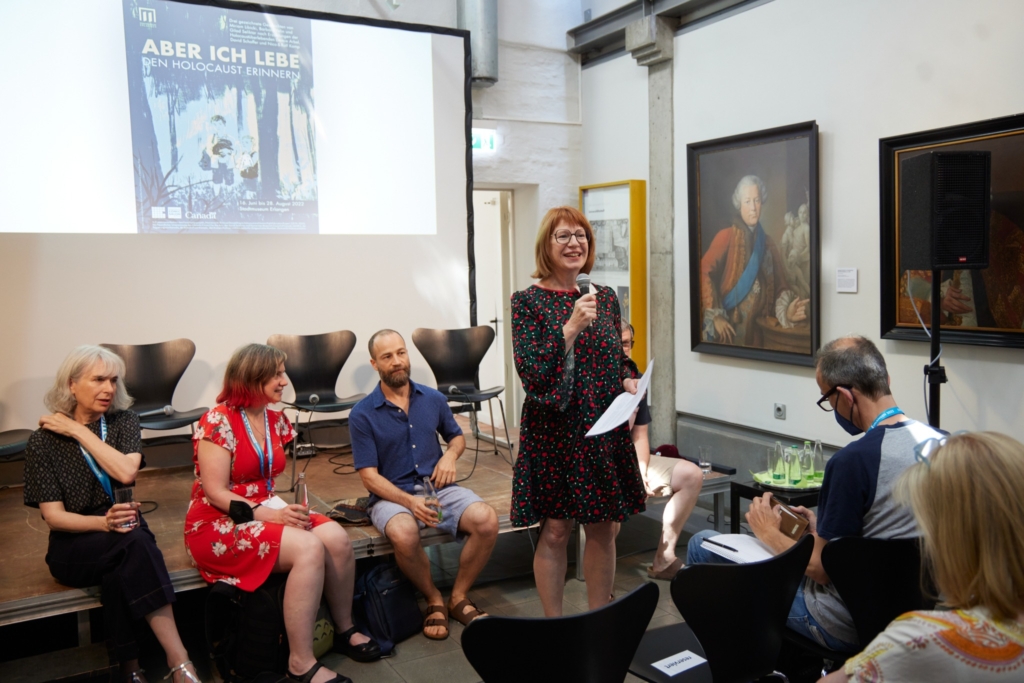
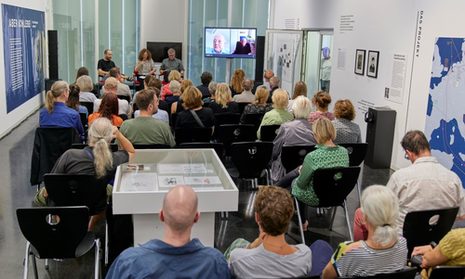
“But I Live” exhibition at the Stadtmuseum Erlangen in Germany, June 16 – August 28, 2022. Photos courtesy of the Stadtmuseum Erlangen and Barbara Yelin.
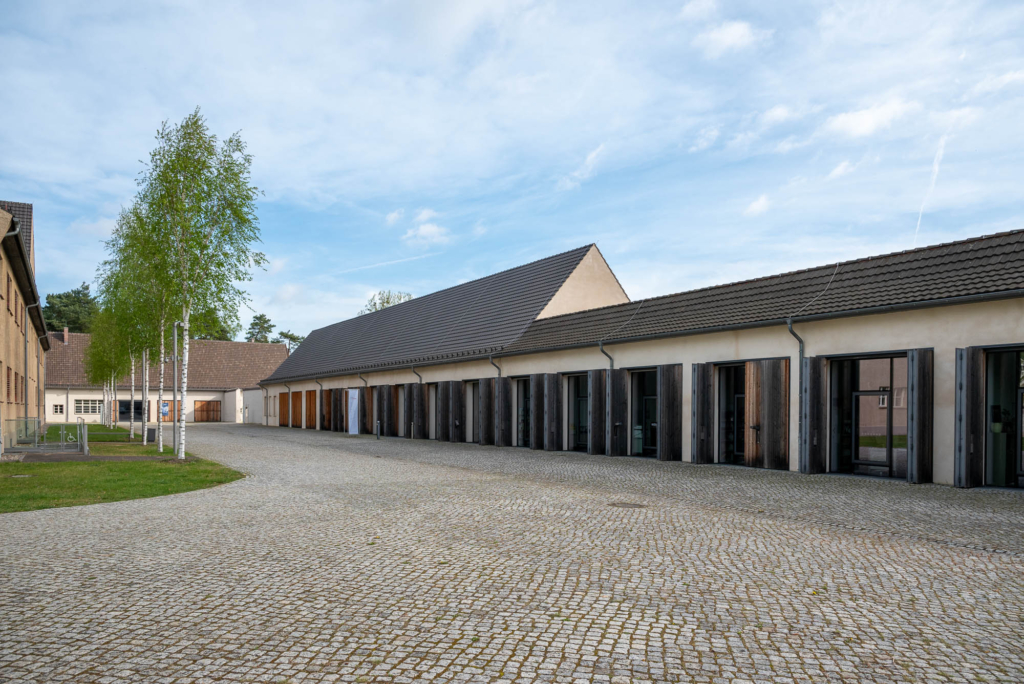
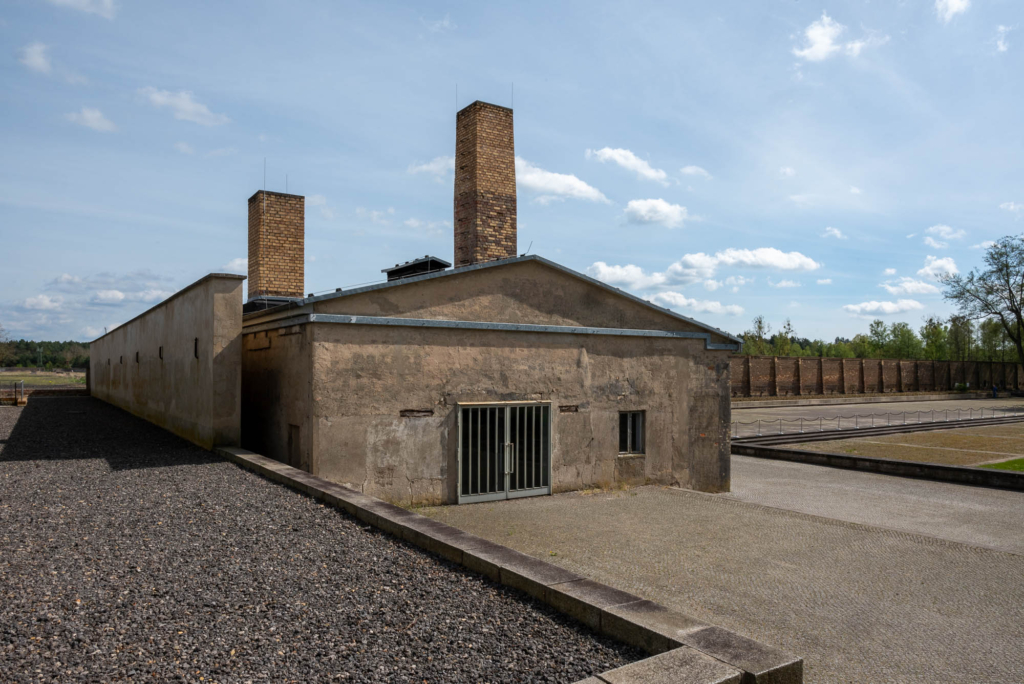
As such, before we even finished the first exhibition, we got two really good requests to show it in other places, and that’s what we did. We showed it in a small comic museum in Dortmund, then in Wiesbaden, which is close to Frankfurt, in a classical museum site. Later, we were asked to display the exhibition at the Gedenkstätte Ravensbrück, a former concentration camp and the very place where Emmie Arbel was imprisoned. This was really something. Then the exhibition was displayed in another comic museum in Bavaria, Erika- Fuchs-Haus in Schwarzenbach.
And now, sharing new information, it will go to Bergen Belsen, the place where Emmie Arbel was liberated. This was the concentration camp where her mother died, and they decided to show it as well. So, as you can imagine, these are two totally different situations—showing the exhibition in a comic museum in the middle of a town with no certain historical background, versus a former concentration camp that was the setting of one of the stories in the book.
Ghada: Very interesting, it somehow gains a new meaning, doesn’t it? When you put the place in the context of the story, you feel that it takes on a new dimension.
Jakob: Absolutely. The opening in Ravensbrück, the former concentration camp, was on the liberation day of the concentration camp. There were hundreds of people, including former prisoners. It was really frightening in a good way. The context is totally different, but we also try to adapt the exhibition to the exhibitions spaces that are quite different as well. You have a classic white cube in Wiesbaden, which is very easy to play with. And then you have very small old rooms in Erlangen. And then you have the memorial space in Ravensbrűck, where you’re not allowed to put anything on walls, and you must hang everything. These are technical challenges that force us to find new solutions which is very interesting. In “Aber ich lebe” [But I Live] in Ravensbrück, Emmie Arbel was there. In Dortmund and Wiesbaden, we had interviews with the twins [Nico and Rolf Kamp] from the Netherlands whose story was told by Gilad. It keeps changing all the time. We also invite other comic artists, because it’s now a very big thing, doing comics in this way about historical issues.
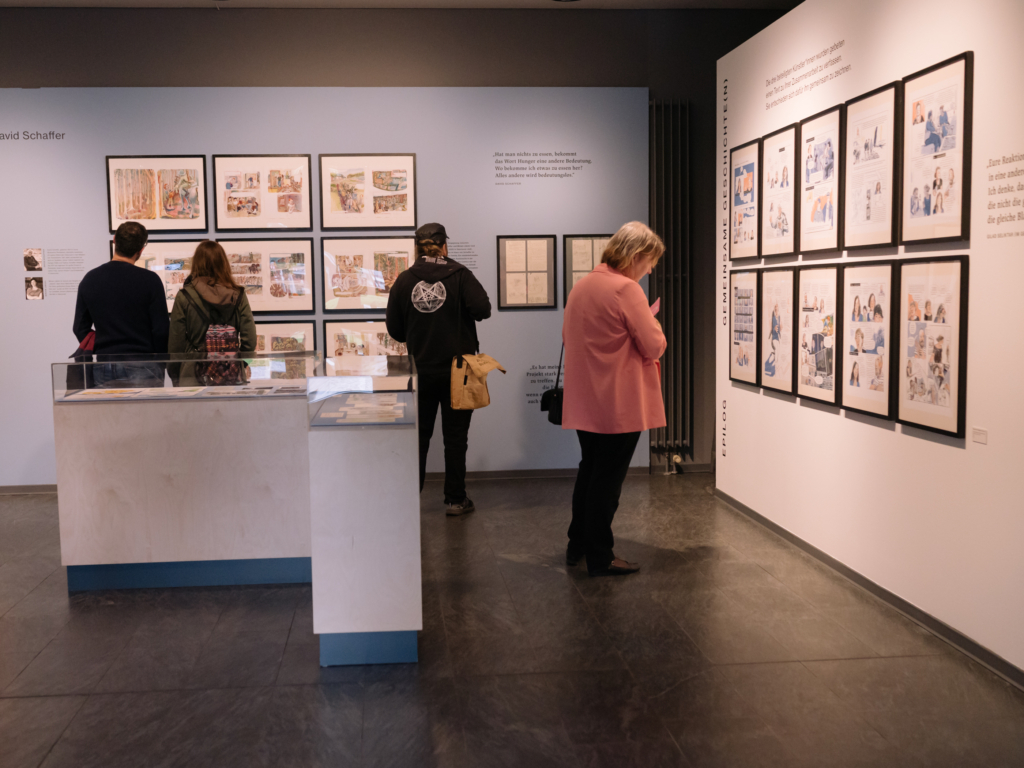
The opening of the exhibition in Wiesbaden, Germany, September 14, 2023. Photo credit: Patrick Bäuml.
Ghada: This is a beautiful transition to my question on how you envision the role of art and graphic storytelling in preserving and conveying memories of mass atrocities. What goals do you believe we achieve when we use art to address big issues such as social memory, history, group identity, and mass atrocities?
Jakob: It’s a big question, a philosophical one, and my opinion about it changes every day. Sometimes I think it’s the perfect medium to carry things that must be remembered—things that would be lost if we didn’t use art to preserve them. Yet, sometimes I think, no, it did not work. It’s always a process full of doubts. But we got very good responses to these exhibitions.
I guess comics have the advantage of allowing people to reflect on a story at their own pace, at their own speed. This is a difference from film, for example. When you watch a film, you’re totally passive.
Another challenging aspect of But I Live is the fact that it creates pictures of the concentration camps that do not exist yet, because we only have the official pictures by the Nazis, and they don’t show people in gas chambers, or all the killing and the atrocities. The pictures we have are only those taken by the perpetrators.
Comics, and maybe art, offer the chance to show what happened, while making it totally clear that this is not the exact way it happened, but that it could. Comics don’t pretend to present historical truth. Rather, they highlight that history always needs reconstruction, and this means there is nothing like objective truth about what happened.
I think that’s what art can do—bring the audience, like the visitors of an exhibition, to engage with the pictures and the story, but they must play their own role in the process. There is always a relation between the visitor and the objects we display.
Ghada: I may have not mentioned, but I am doing my PhD in philosophy, so these kinds of questions are at the core of my interests in participating in and contributing to this project!
Jakob: Yeah, like this idea for example, is informed by Walter Benjamin, who said that history is always in construction, not reconstruction, but construction. I guess art can make that very clear. Another important idea, which is a common notion about art, and especially comics, is that art makes the process easier, more accessible, when you approach history through pictures.
Ghada: I like to reflect on this informational dimension of art, focusing on the difference between getting information from art versus, for example, news or other formats. I tend to think that art speaks to us in the totality of our existence, that is in thinking, but also in feeling, in imagination and creativity. It taps into different aspects of us all at once.
Jakob: That is true on the one hand, but it’s also dangerous to use art to just put some emotion in a material or issue. Of course, this is something one must be careful about. Among the quality points of these comics in But I Live, is that they keep their distance, because the project is survivor-centered, not about manipulating the audience. It’s about keeping everything centered around the survivor, and how we can stay genuine and authentic about that.
Ghada: Beautiful. You spoke earlier about your work with Barbara, and I understand that there was a lot of collaborative work. I am curious about the role of collaboration in the making of projects like this exhibition. How does the collaborative nature of this work help advance the project?
Jakob: It is absolutely necessary. It’s something that can never be enough, because in such projects, there are tons of information you haven’t read or worked with. And it’s the same with the connections to the artists, or with other people who are involved in the project. There you always have the feeling it’s not enough, but it’s absolutely necessary to get in touch with them, to talk to them and to understand what they do on a personal level as well.
What we did for this exhibition—something I will also do in my upcoming exhibition that involves some people from SCVN— is doing interviews with the artists and bringing them into the exhibition so that you hear from them about their processes and struggles, and how they make their decisions. There are a lot of decisions to make as an artist when it comes to showing things, and this is what I’m interested in.
We work together with some graphic designers, so we always have a digital version of the exhibition. We show it to the artists, discuss it with Charlotte, and eventually we must make the final decision as curators. This is a very democratic way to bring in a lot of perspectives. The collaboration is very close, beautiful, and it’s the most interesting thing about the process.
Pictures from “But I Live” exhibition in Ravensbrück, Germany, April 13, 2024. Photo credit: Eberhard Schorr.
Ghada: Wrapping up our conversation and looking forward, what is next for SCVN in terms of exhibitions? I know that you will be creating an exhibition for the new SCVN project, which moves beyond the Holocaust and includes other genocides and mass atrocities from Rwanda, Iraq, Syria, Canada, Bosnia, and Kosovo. Can you speak about any plans for the next exhibits?
Jakob: An upcoming exhibit will take place in Wiesbaden again, opening on May 21. We open this exhibition with four comic artists, three of whom are involved in the SCVN project: Tobi Dahmen, who worked on Akram’s story from Syria and whose work will be shown for the first time; Nora Krug, who’s working on a project about archives in Yale’s Fortunoff Video Archive, and we will display some work from her book; and there is Birgit Weyhe, who is in the working process for an upcoming comic about a young woman from Iraq. Charlotte will also be invited.
In November, the exhibit is set to travel to another museum in Constance, in the very south of Germany. We have a current discussion about whether it will also go to Erlangen in 2026.
In general, there are eight or nine artists working now on graphic novels about genocides worldwide [on the project]. Fantastic artists dealing with shocking issues. The question is, what will happen to these stories? Will there be anything beyond the fact that they will be published, hopefully in different languages and in different countries? So, Charlotte and the team came up with the idea of creating not a digital exhibition, but a portfolio which can be easily adapted in different places all over the world. Something like a core set of pictures, information, and layouts which can be printed, for example, on location, but in a certain, outstanding quality. The concept aims to, on the one hand, guarantee that there will be a high-profile exhibition or a good-quality exhibition, and on the other hand—the charming argument of course—to enable people and institutions, for example schools which don’t have much money, to display exhibitions in a way that is possible.
I’m very much into organizing events, public readings, and exhibitions, because I love bringing this fantastic artwork to people in a very direct way, to invite the artists and show original artwork. But I also understand the need to make the material more accessible to institutions.
Pictures from “But I Live” exhibition in Erica-Fuchs-Haus, Schwarzenbach an der Saale, Germany | 09.08.2024 (Photos’ credit: Joanna Straczowski)
Ghada: My last question is from a research process perspective. I am wondering how you approach the weight of the material at hand. Despite that we are dealing with comics and artistic material, the content is heavy. How do you deal with this aspect of the project?
Jakob: Oh, that’s hard to say. I usually don’t do it twenty-four hours a day. I have my job, my family, and my nonsense stuff like watching Netflix series or soccer on TV. I also have a lot of friends and family I can talk to throughout the process. This is helpful. I think comics, as I already said, offer you the chance to keep a distance. And the artists I worked with are very considerate not to overwhelm the people they are working with. But to be honest, I cannot answer completely because I don’t know how much impact it [this work] has on me. And I think there is some kind of professional distance I try to keep. Sometimes I distract myself and do other things. Actually, there is a beautiful picture about this in But I Live, in the story of Emmy Arbel, who worked with Barbara. After telling her the most horrible stuff you can think of, she says: “Now it’s time to stop, and I must go to the computer and play my solitaire game.” So, the question is much more an issue for the victims of these tough stories. We are in a comfortable position in not having experienced what they did.
Ghada: These were the questions that I had. Did I miss any question that you wanted to address?
Jakob: Not now. Thank you for these questions. It has been a pleasure. As I already said, it’s not so easy for me to answer in English, because sometimes some words are missing, and you try to paraphrase in an awkward way.
Ghada: It’s also my everyday struggle, so I understand!
Jakob: What is your first language?
Ghada: It’s Lebanese Arabic, which is my first language. Then we learn French as a second language, and English as a third. You can imagine me trying to phrase all those philosophical ideas in English but getting the words in Arabic first. Then I have to translate, but that is not always a practical thing to do.
Jakob: Well, you are into at least two other beautiful languages. I always envy people who can speak French. It’s very hard for me not to be able to speak French, because France is really the best country for comics. Yeah, and Arabic. I don’t understand Arabic, but it sounds very nice. Is it complicated?
Ghada: It is… It is usually considered harder to learn than some other languages, especially let’s say English, French, and Spanish, which share some vocabulary and grammatical structures, whereas Arabic has a completely different structure and a different alphabet. But that’s the beauty of diversity among people and languages!
Jakob: That’s a very good last word, I guess, that beauty of diversity.
Thank you so much for sharing your time and expertise, Jakob, and we look forward to your next exhibit with the project!