Survivor-Centred Visual Narratives

Category: events

Doodling and Sketching as Artistic Practice: The Art of Comics-Engaged Research Webinar with Raey Costain and Cal Smith

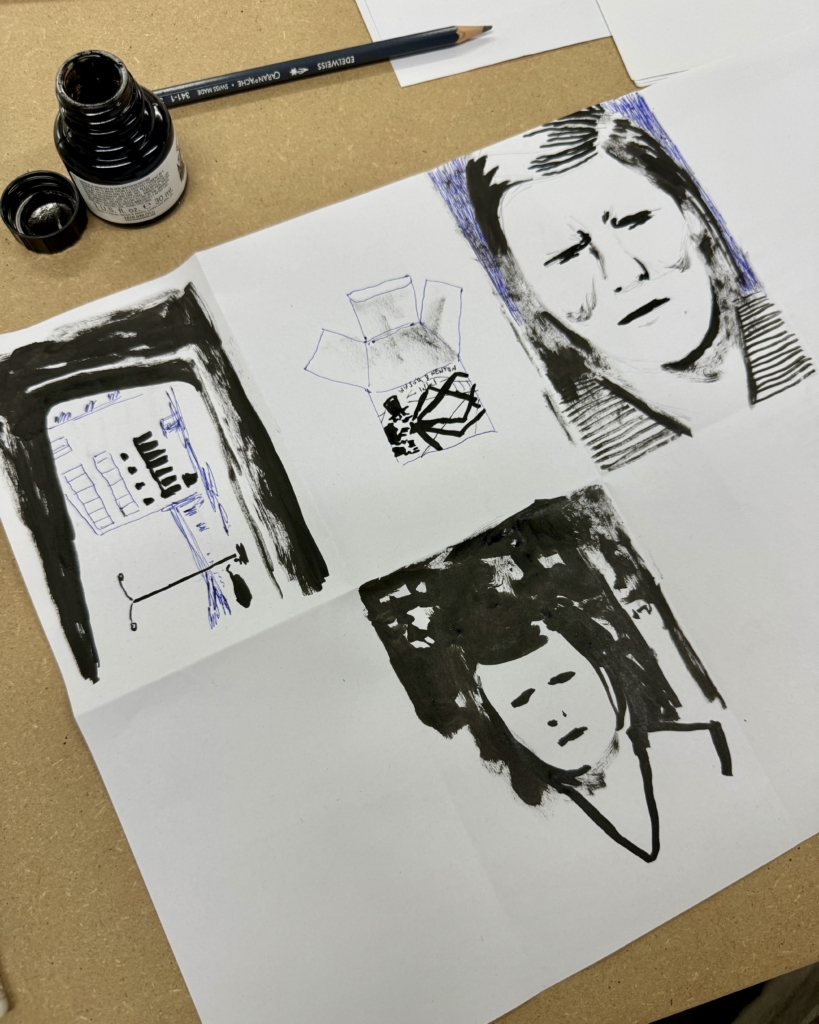
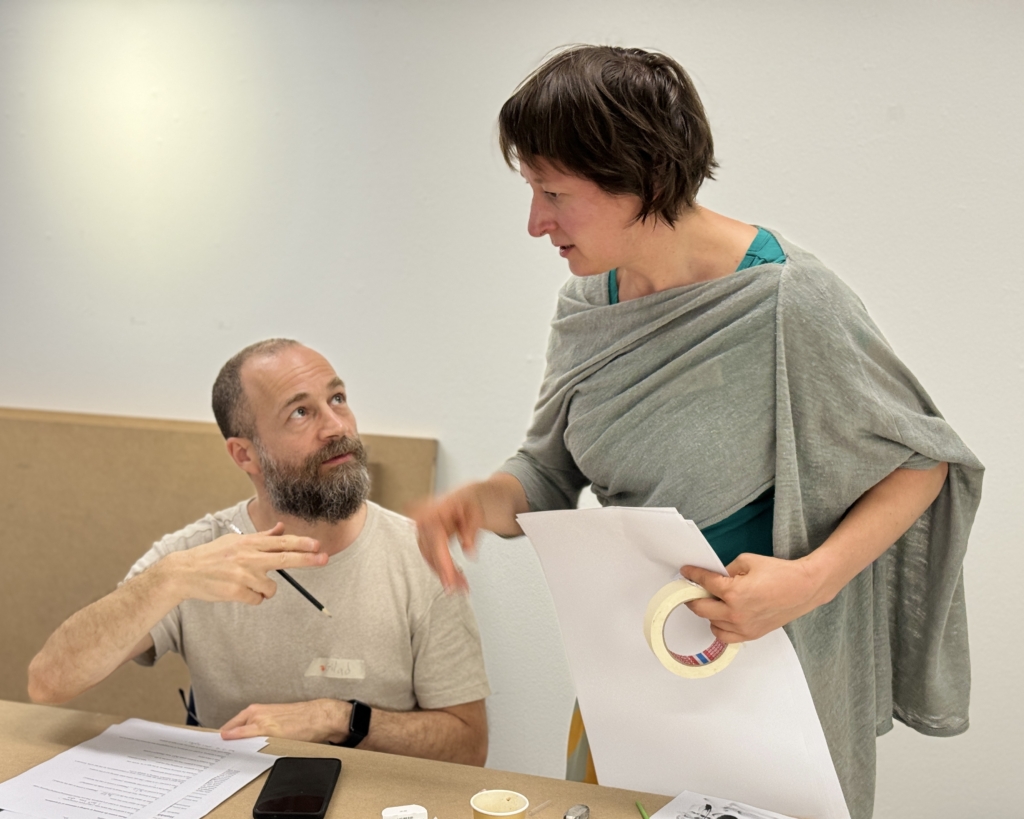
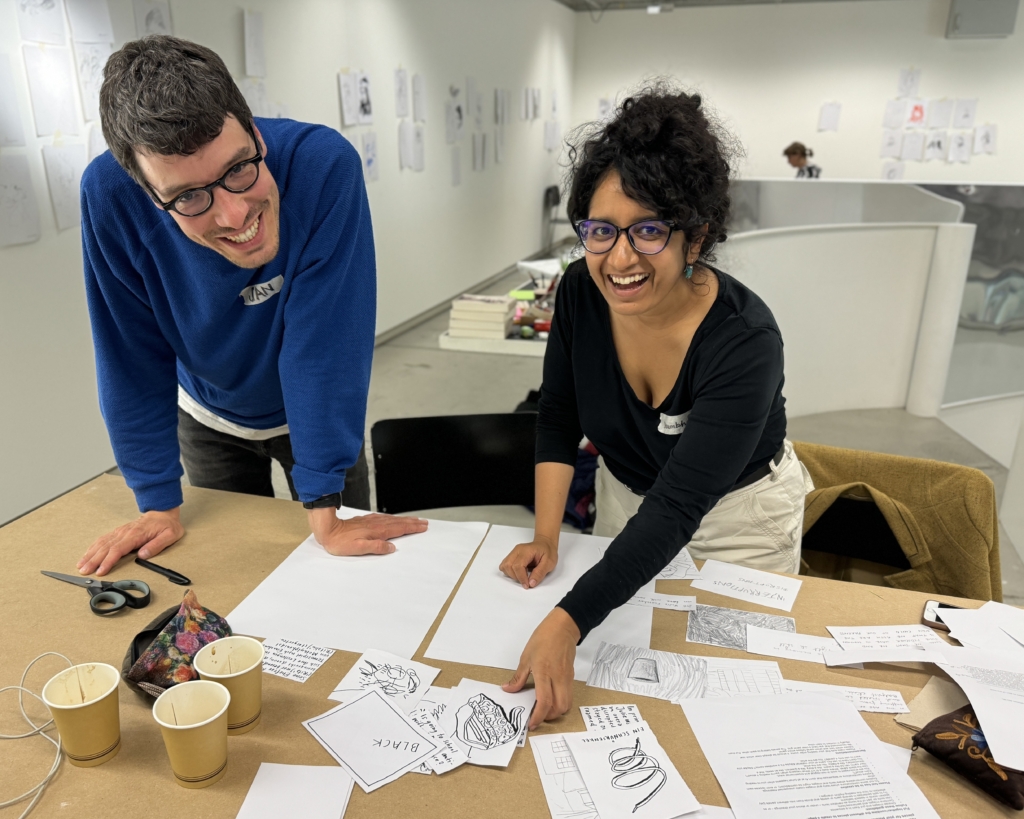
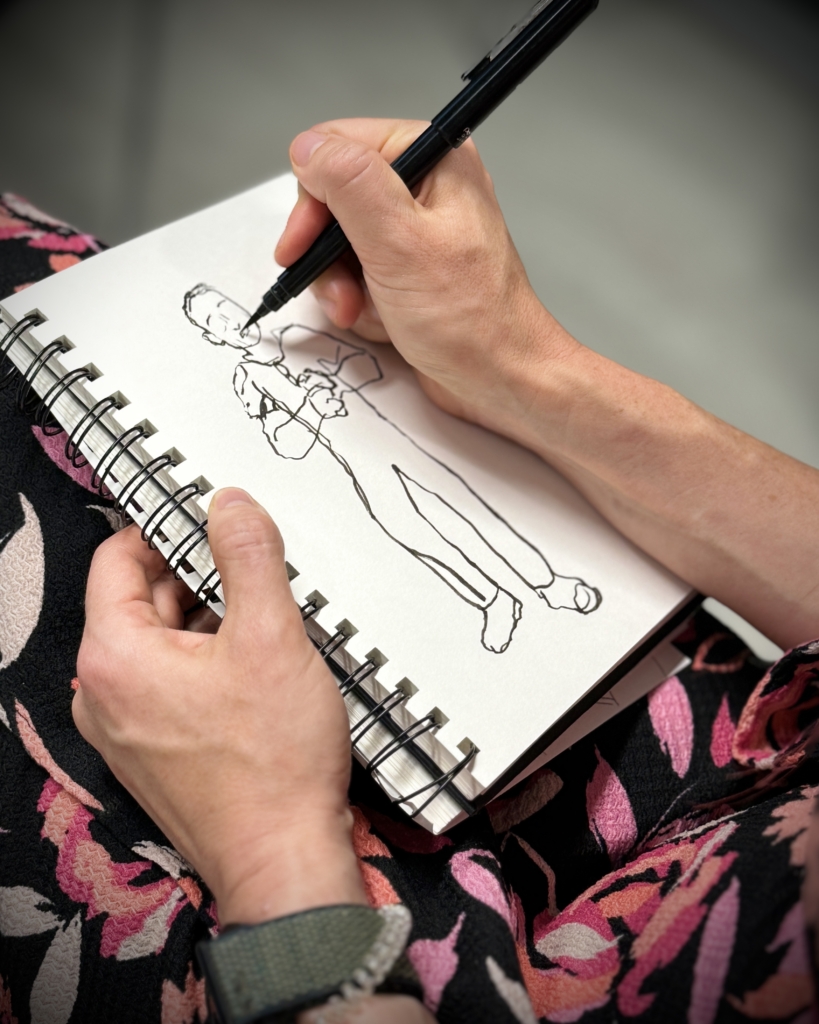
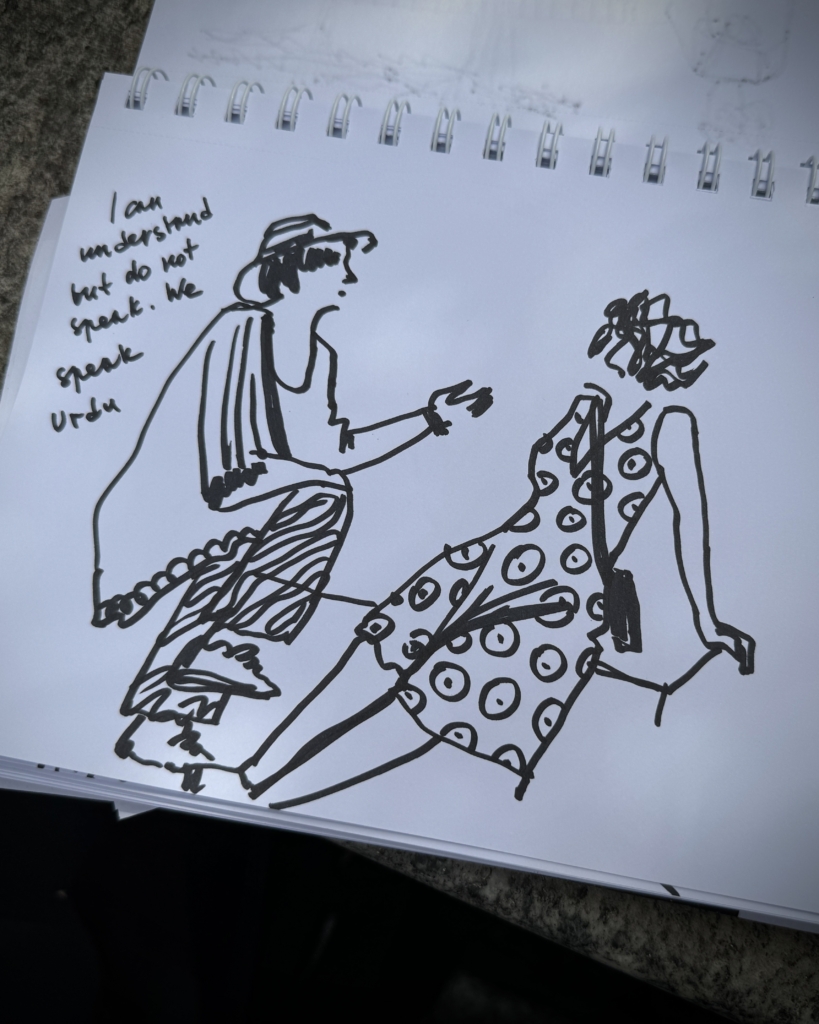
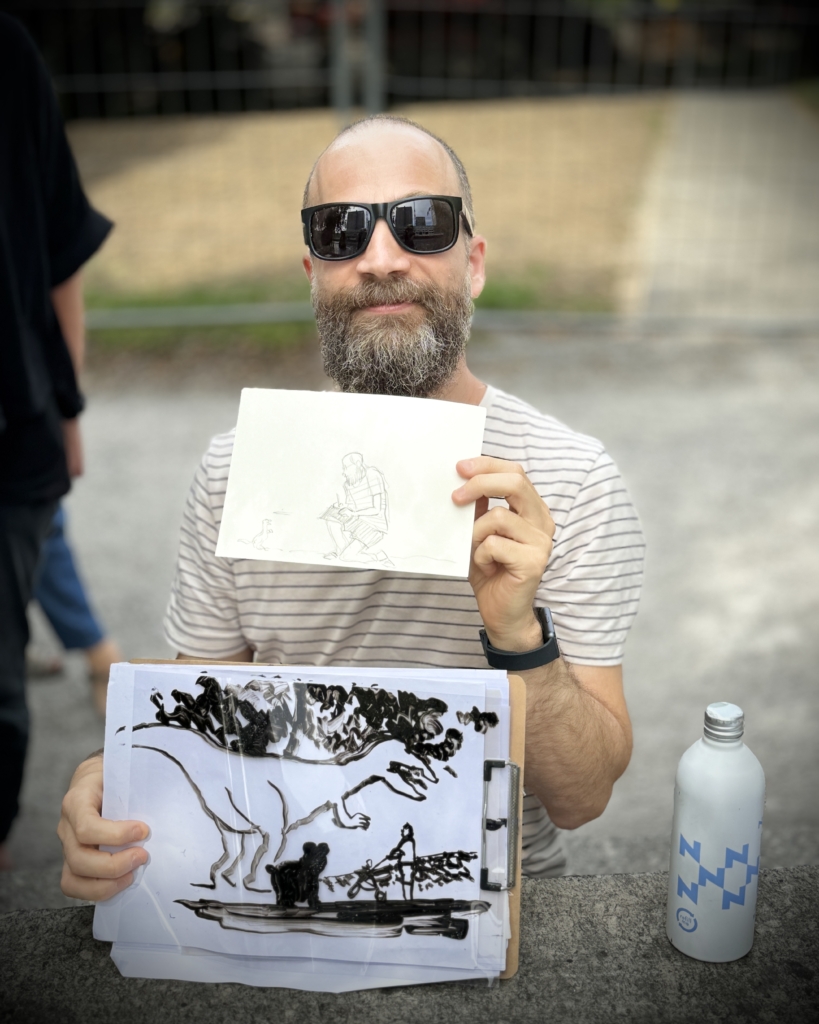
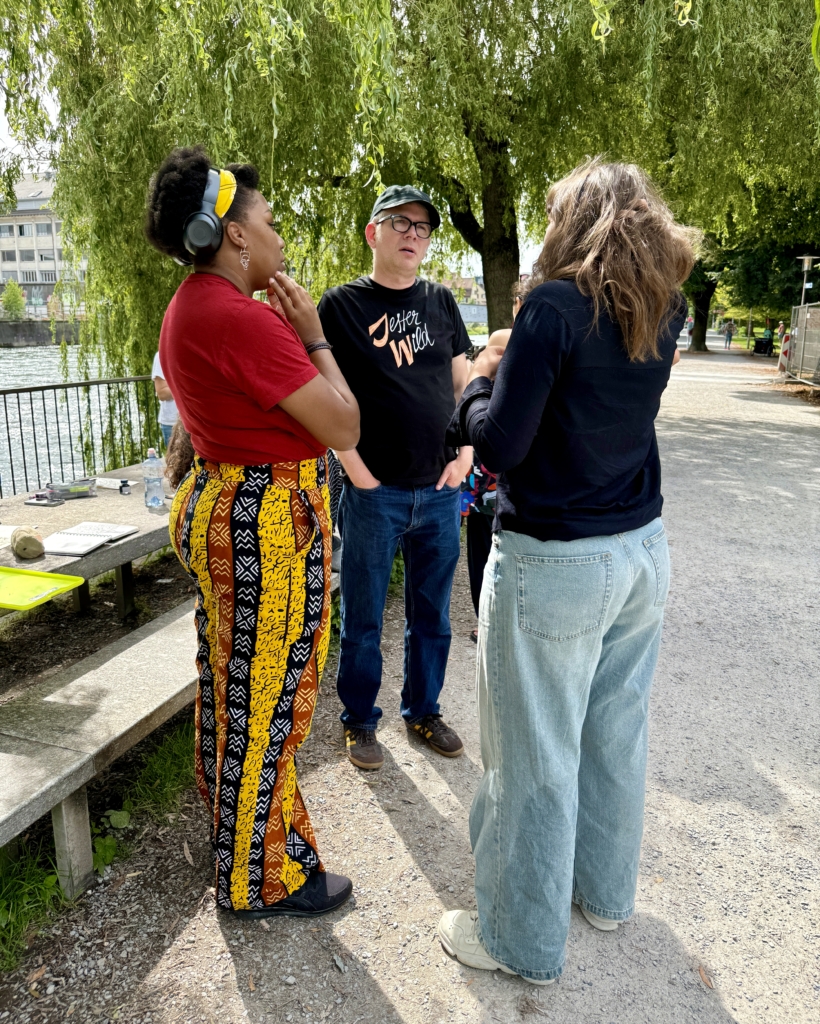
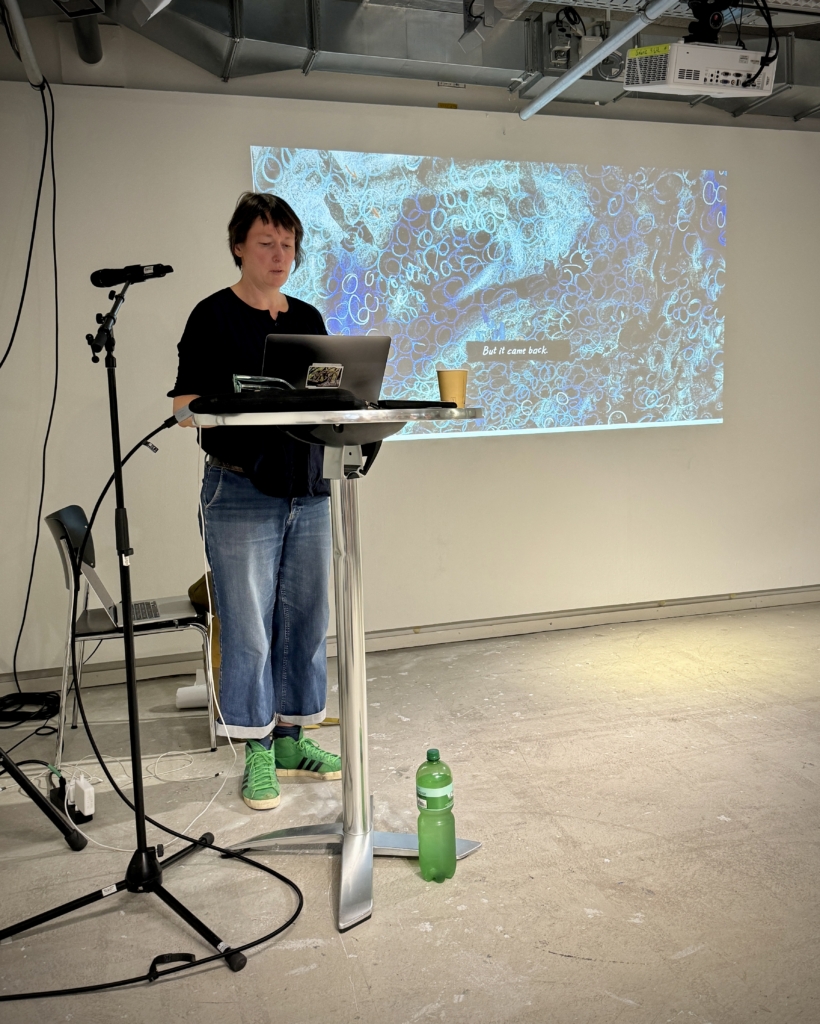
In the SCVN webinar series, Art and Testimony, Ph.D. students Cal Smith and Raey Costain presented their research on how visual methods such as comic drawing have a unique capacity to explore and document human stories in the past and present. The webinar, The Art of Comics-Engaged Research, was moderated by Dr. Mary Chapman and involved active engagement by the attendees. The session began with a drawing exercise, lead by Raey, where they asked participants to doodle material related to what’s in front of them, what’s behind them, and where they’re sitting. The activity was designed to situate speakers and participants. Instructions for hosting or participating in the activity can be found below.

The webinar continued with Raey presenting on drawing as an artistic practice, both related to their personal drawings and the act of researching drawings done by others. After that, Cal shared part of his potential Ph.D. research on queer comics in Canada in the 1980s and 90s. He focused on the practice of research that has defined his early relationship with his Ph.D. Both speakers were intensely interested in what stories a doodle or a sketch can illuminate and the power of paying attention to the infinitesimally small details in such unassuming graphic narratives.

Link to the webinar can be found here.

Raey Costain’s Drawing Activity Instructions:

                  Raey’s activity is designed to situate speakers and participants. This activity is for everyone, no matter their drawing “talent” or experience!  We would recommend underlining the sensations that go into drawing. Ask, “What does it feel like to pick up a pen and draw? What goes into finding inspiration? Where does your mind wander?” Mention that it’s ok to just breadth and reflect before putting the pen to the page.

  1. Ask participants to grab something to draw with.
  2. Draw three squares that are roughly the same size on a piece of paper. They can be vertical or horizontal.
  3. In the first square, ask everyone to draw something ahead of you, i.e. something you can see in your environment. Maybe it’s the computer monitor or a coffee cup!
  4. In the second square, ask everyone to draw something behind them. This can be physically behind them in their environment, or it can be understood more metaphorically as something behind them; something you’ve moved through, or someone, say, standing behind you.
  5. In the final square, ask everyone to draw something related to where their feet are. This can also be taken literally or metaphorically. Maybe consider the territory you’re physically on, or, where your standing in life.
  6. In a large group, the activity leader might say a few words reflecting on the activity. In a smaller group, you might invite others to reflect.
  7. Finally, you may choose to invite people to share their work if they’re comfortable. There’s no pressure to do this, as the activity is principally a moment of personal reflection.

Link to the activity document can be found here.

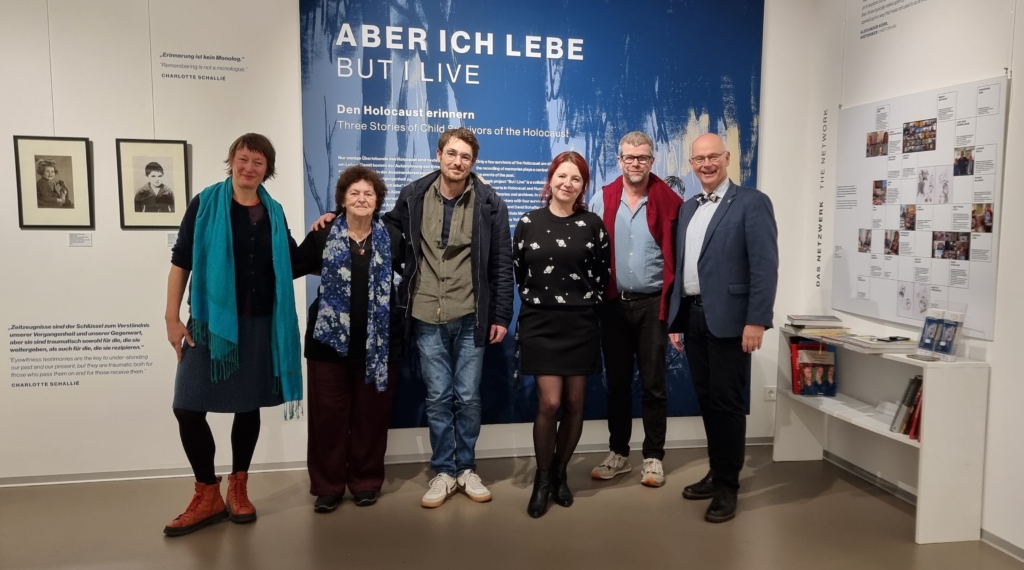
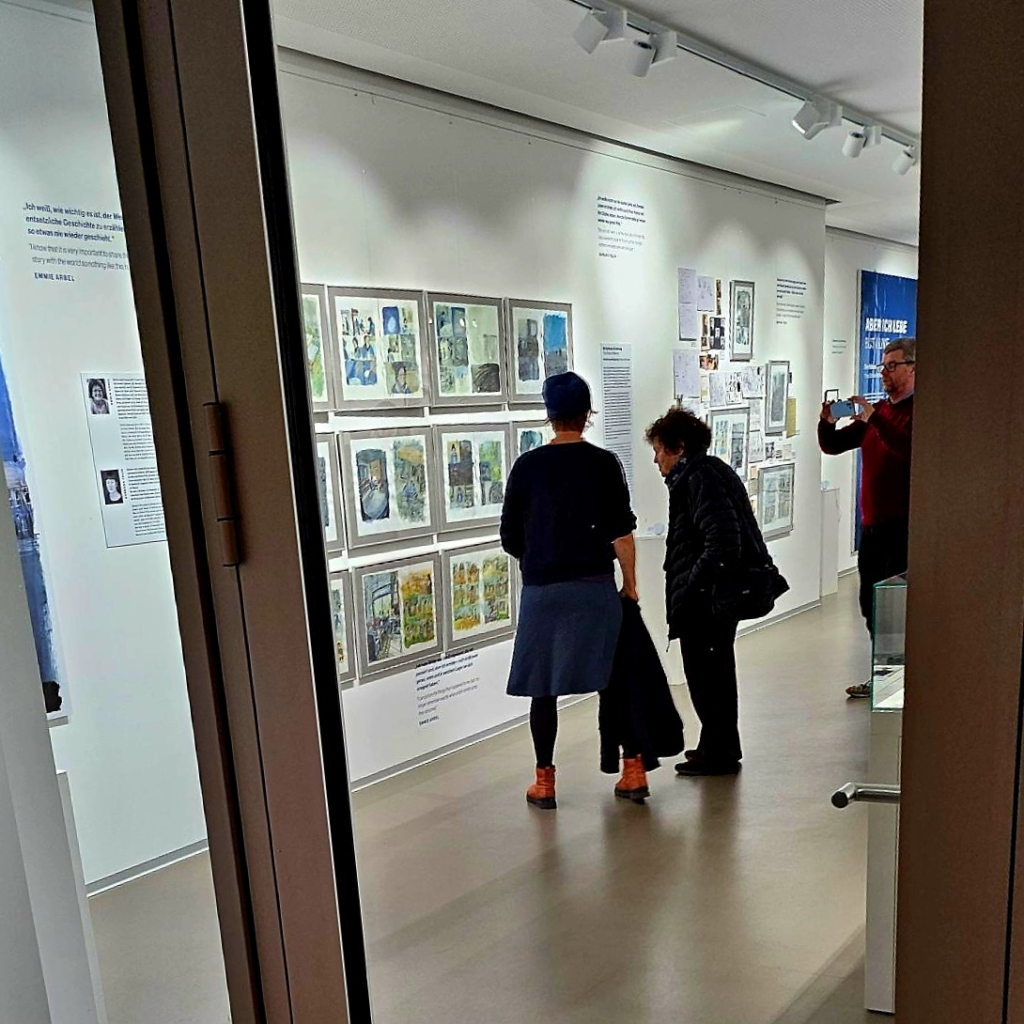
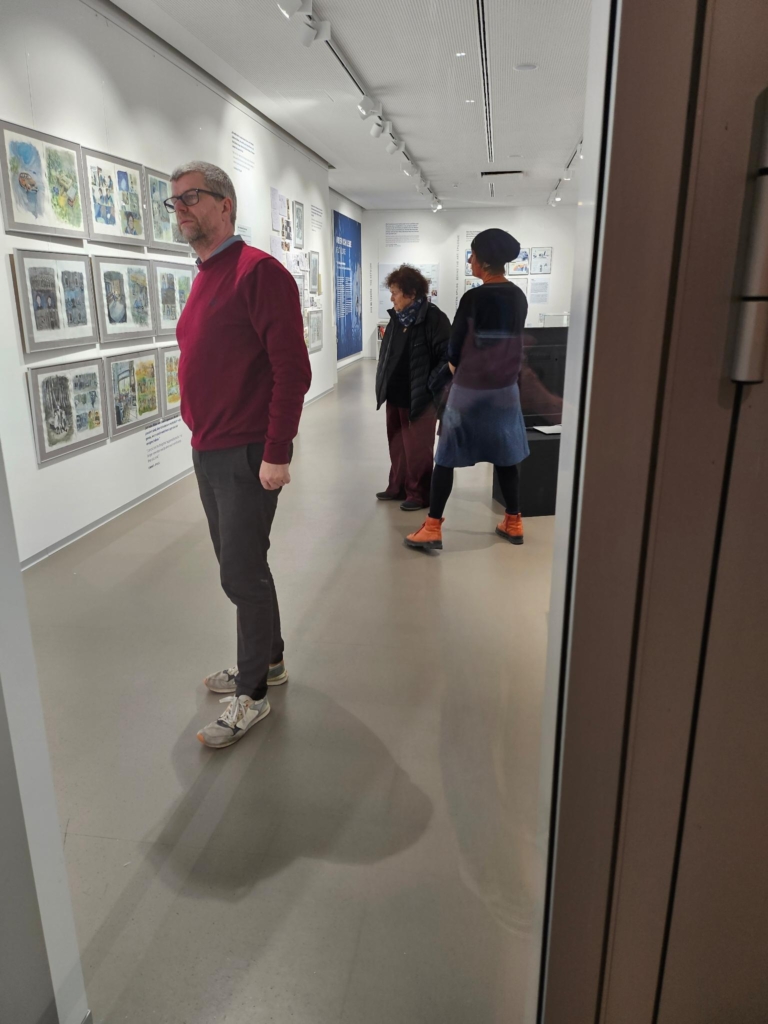
Erika-Fuchs-Haus Museum hosts “But I Live. Remembering the Holocaust” exhibit, Aug 9 – Nov 12, 2024

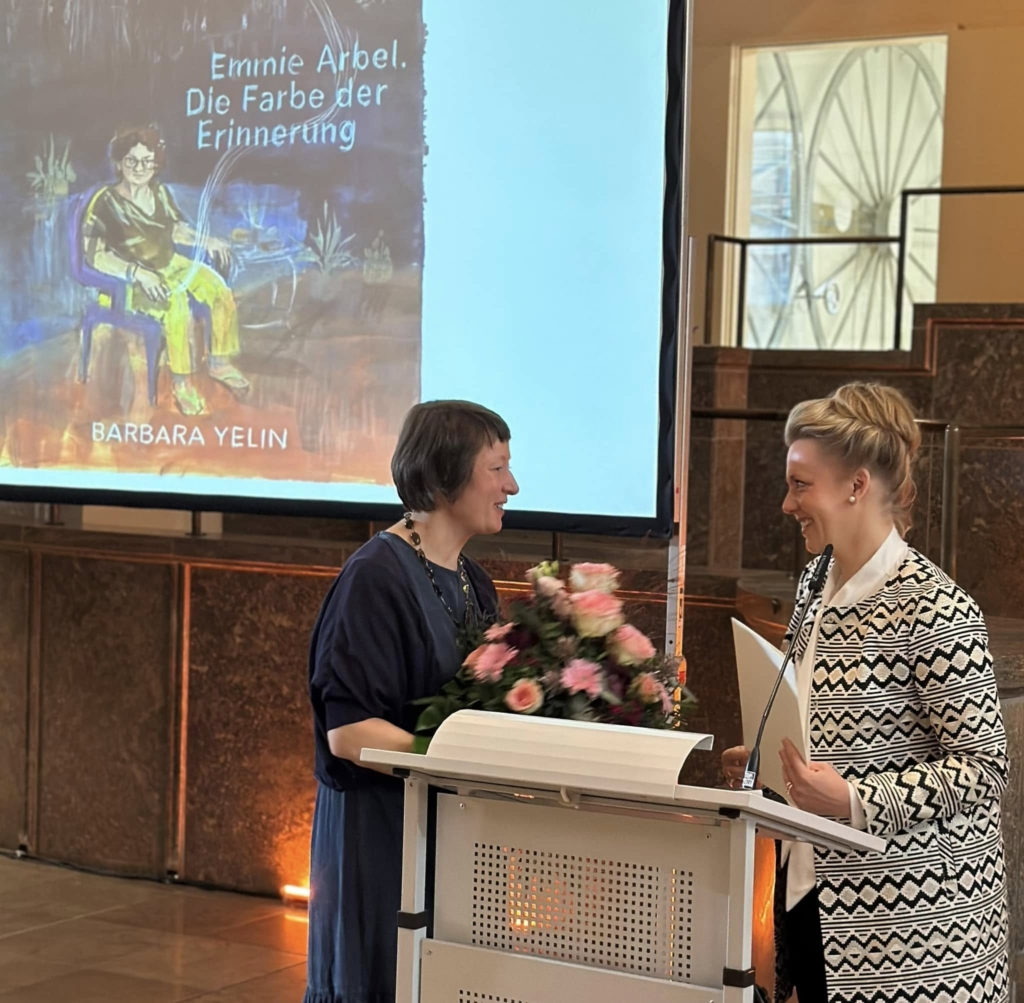
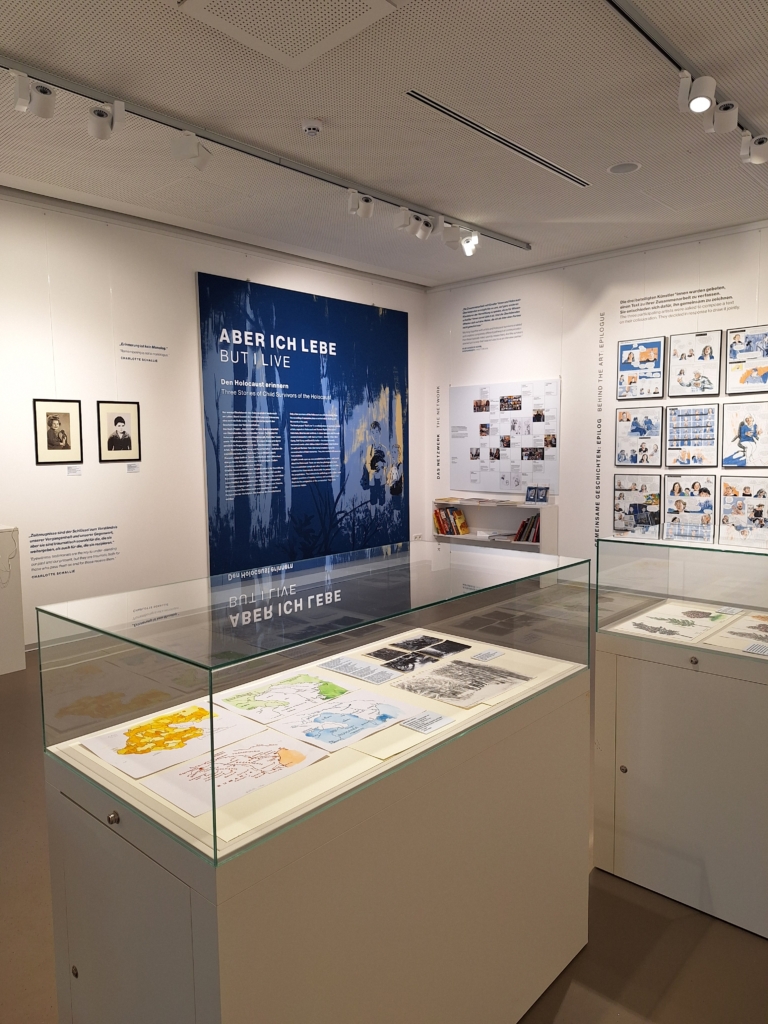
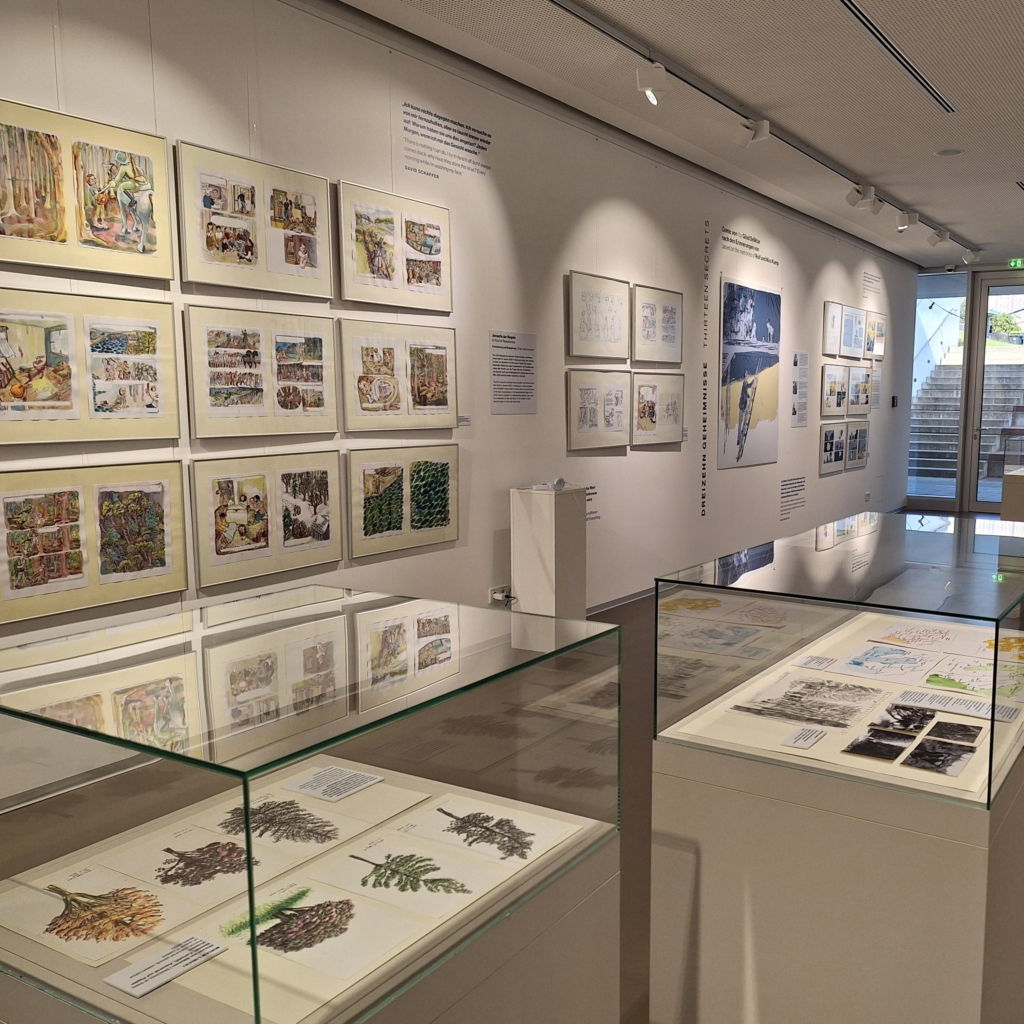
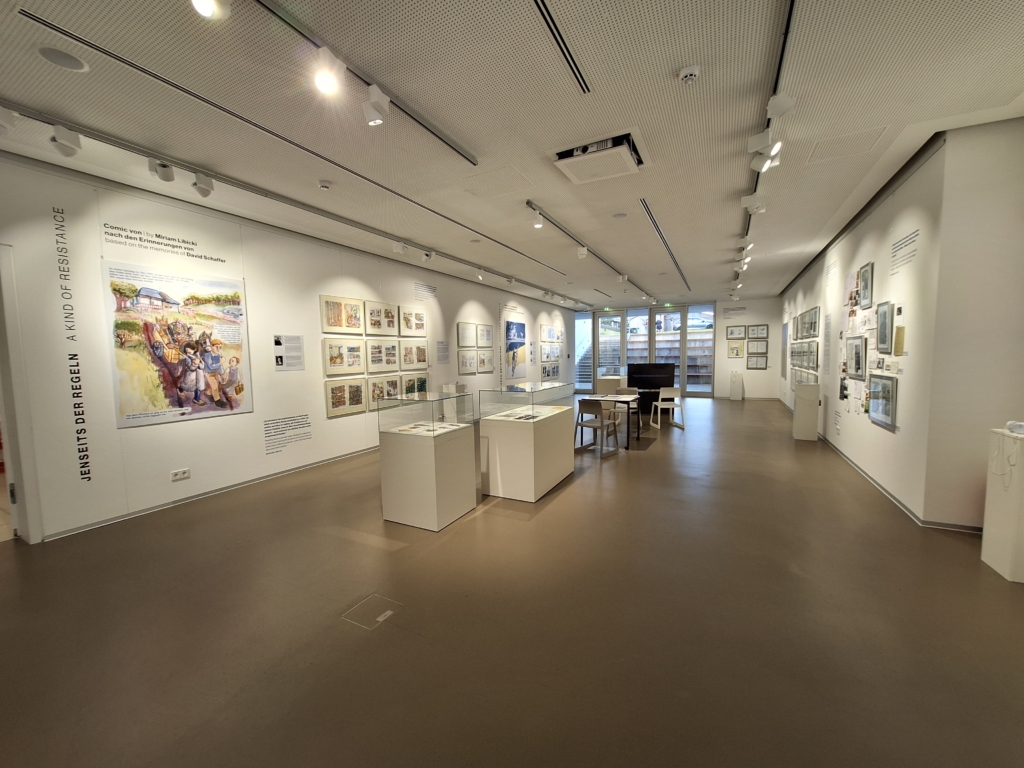
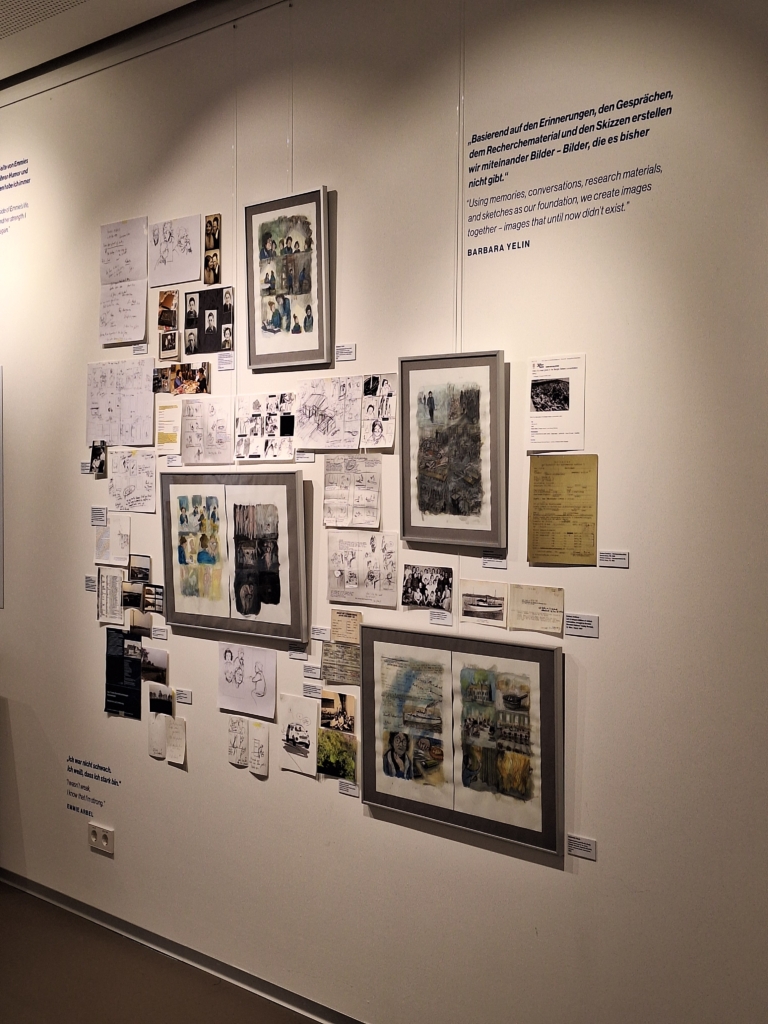
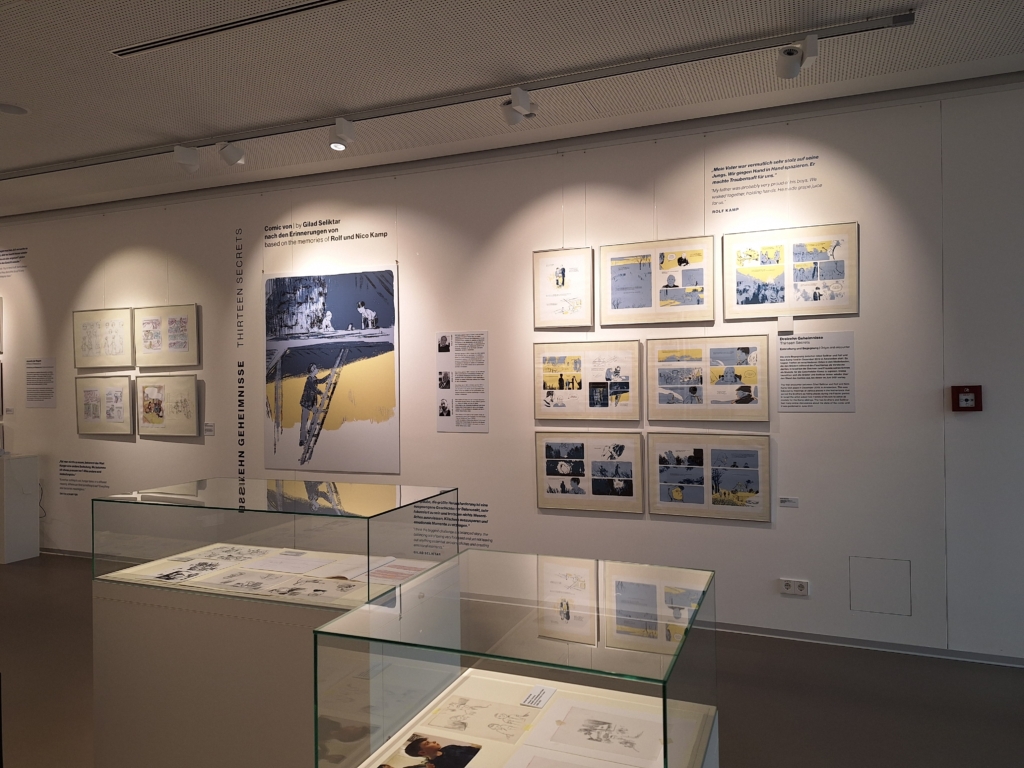
After a successful two-year run and exhibiting at four institutions, including the Stadtmuseum Erlangen, Dortmund schauraum comic + salon, Wiesbaden Kunsthaus, and Ravensbrück Memorial, the exhibition of “But I Live. Remembering the Holocaust” was hosted at it’s final location, the Erica-Fuchs-Haus Museum for Comics and the Art of Language, in Schwarzenbach a.d. Saale, Germany, from August 10 to November 17, 2024.

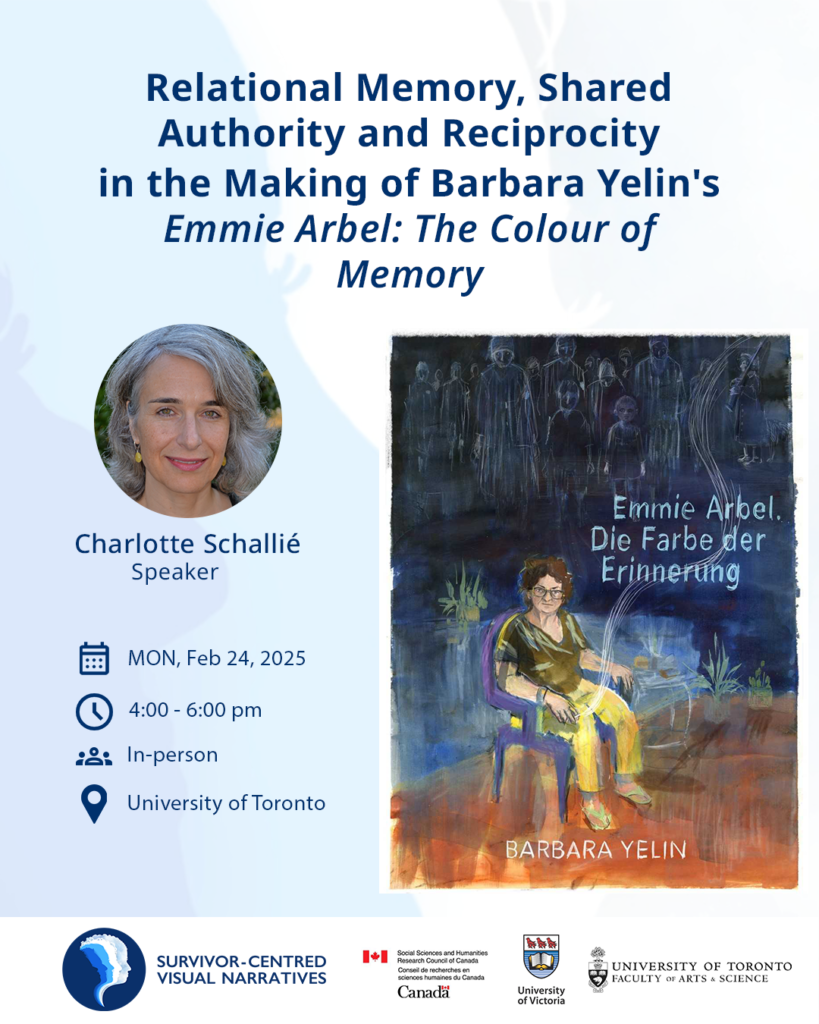
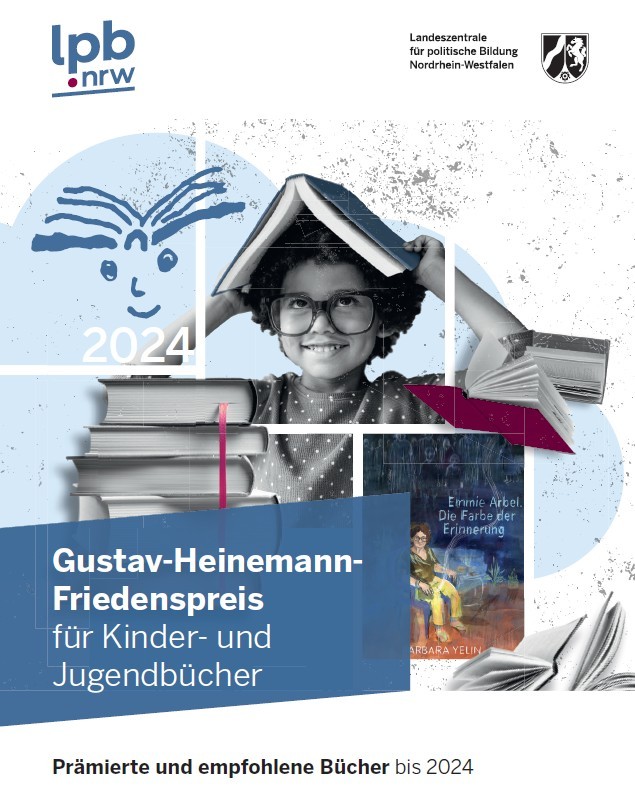
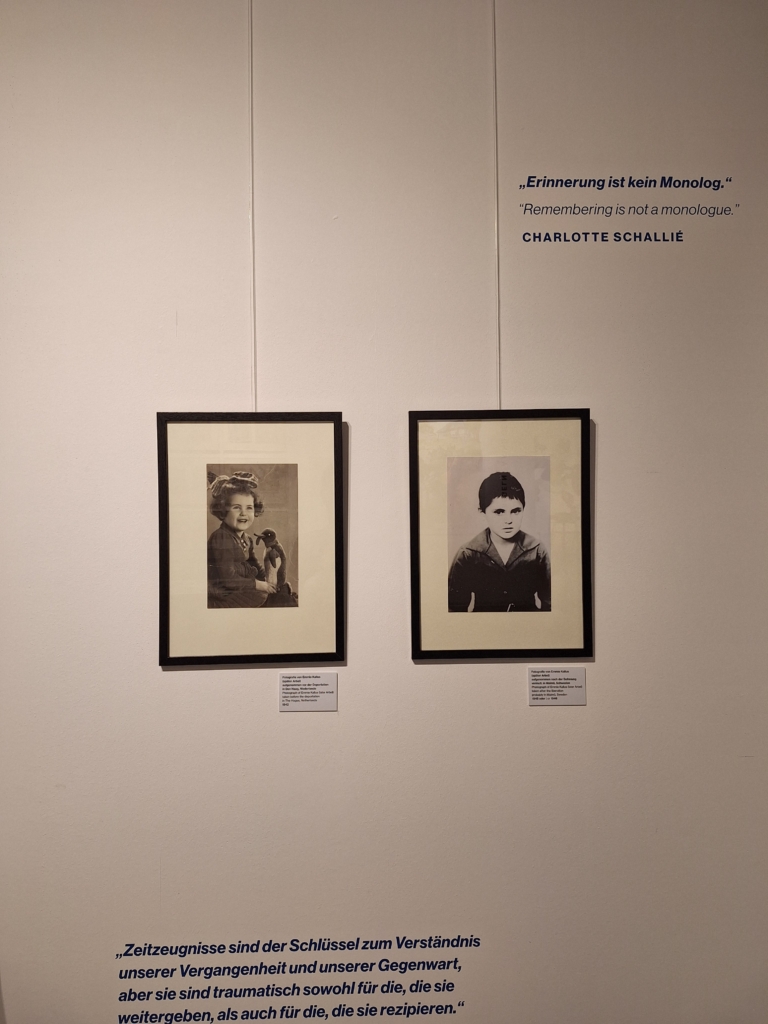
The exhibition was curated by Jakob Hoffmann and Barbara Yelin, and features the process of co-creation and original artwork by artists Barbara Yelin, Miriam Libicki, and Gilad Seliktar from the graphic novel But I Live: Three Stories of Child Survivors of the Holocaust, based on interviews with Holocaust survivors Emmie Arbel, David Schaffer, and Nico and Rolf Kamp. The exhibit also includes sketches, reference materials, and quotes, with audio interviews and documentary films available in both German and in English.

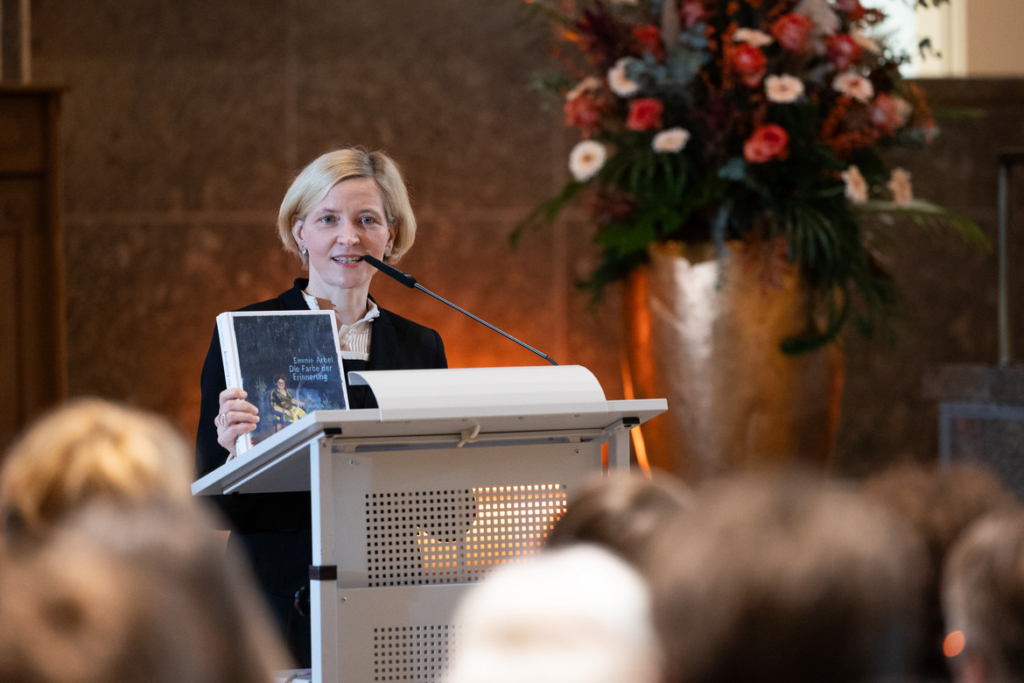
On August 9, the exhibit officially opened with a presentation by graphic artist and exhibit co-curator Barbara Yelin presenting on the international visual narrative project and graphic novel. Travelling from Vancouver, Canada, on a research trip in Germany, graphic artist Miriam Libicki was also hosted by the museum for an in-person reading of But I Live on August 16.

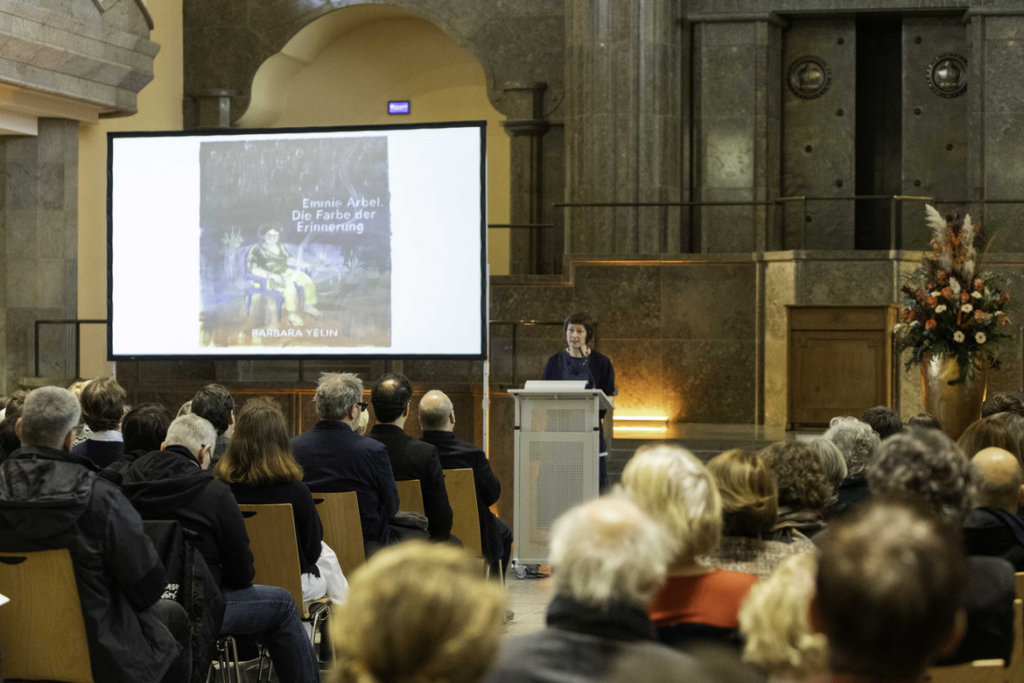
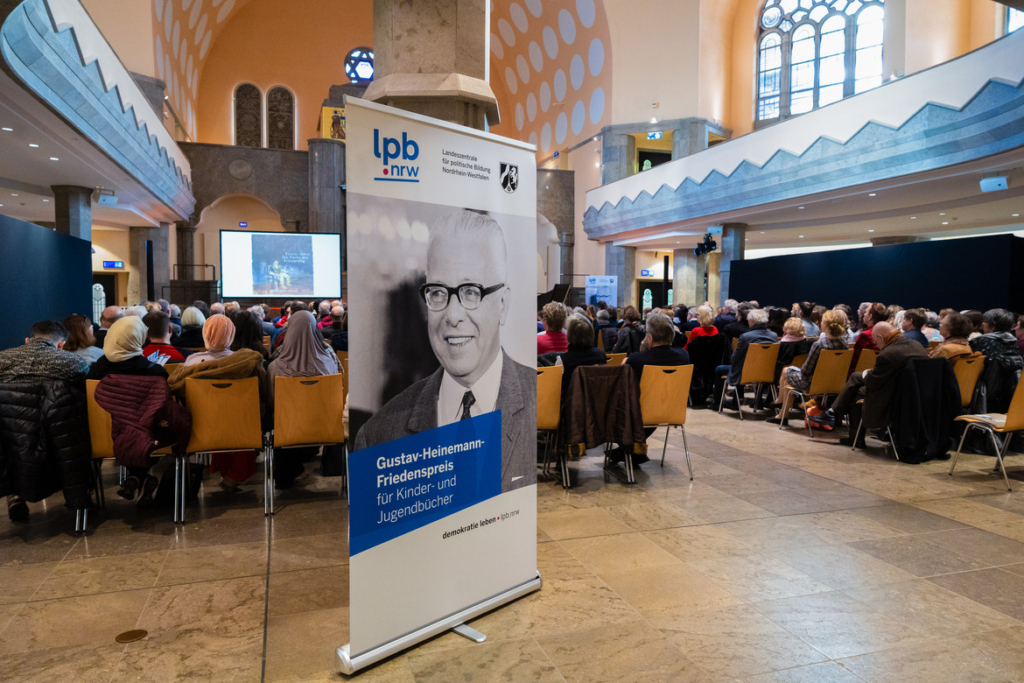
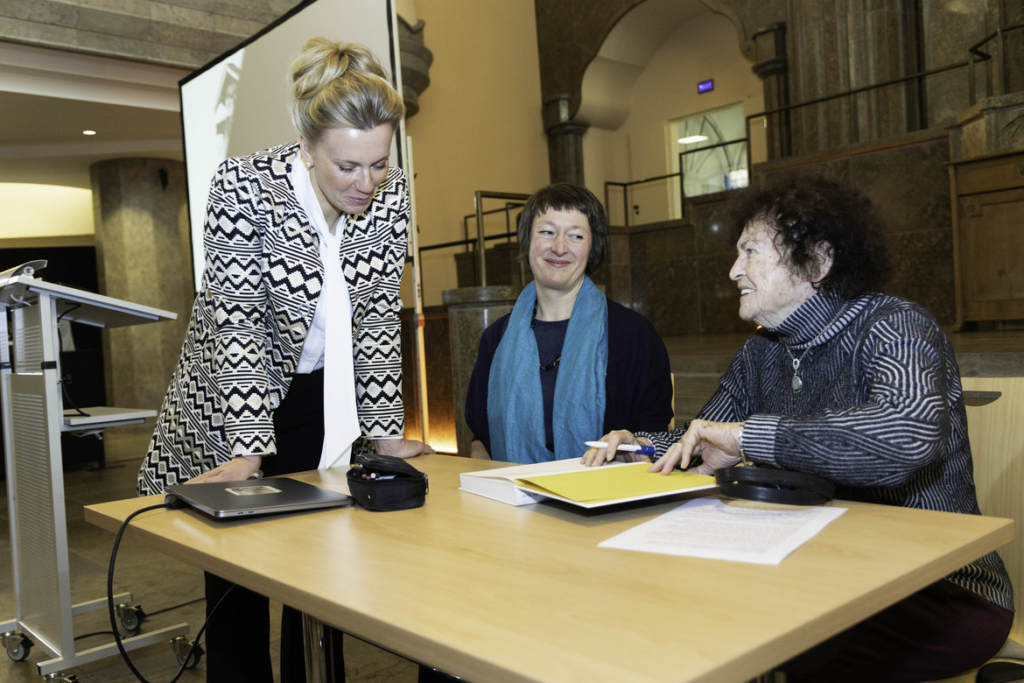
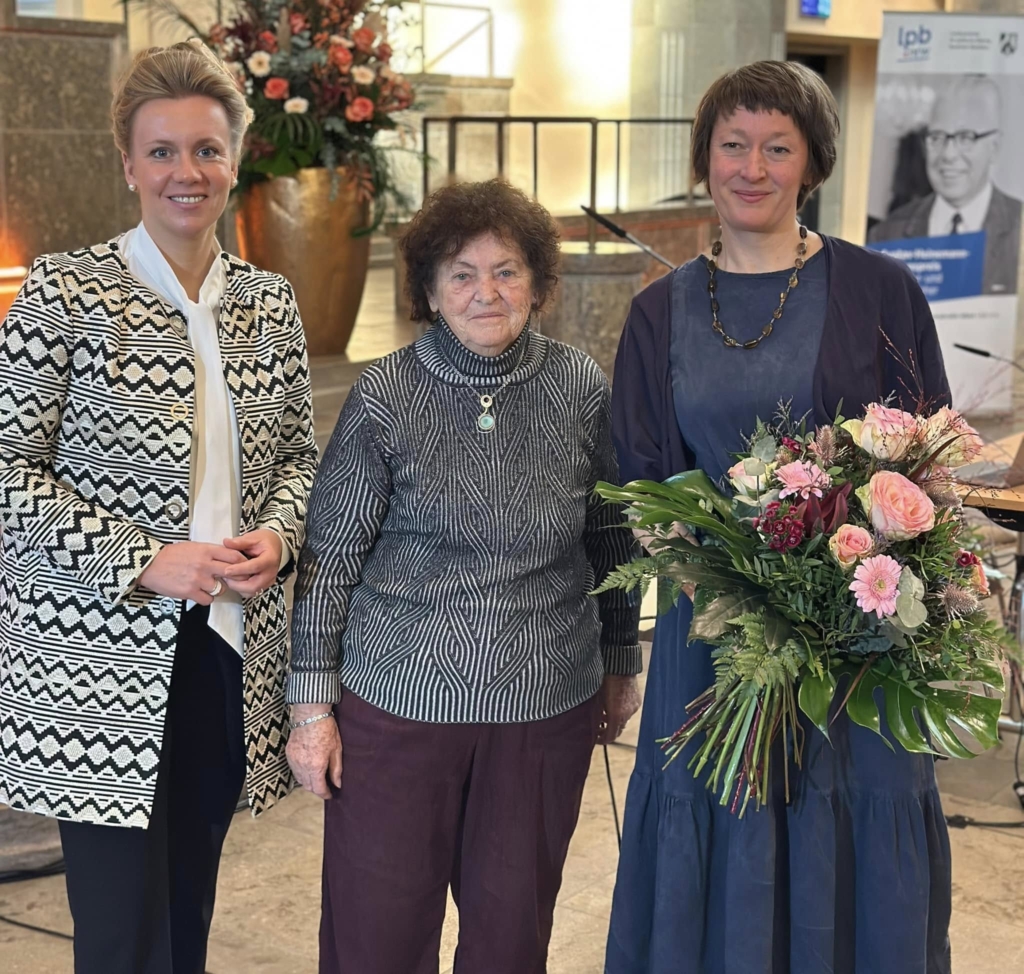
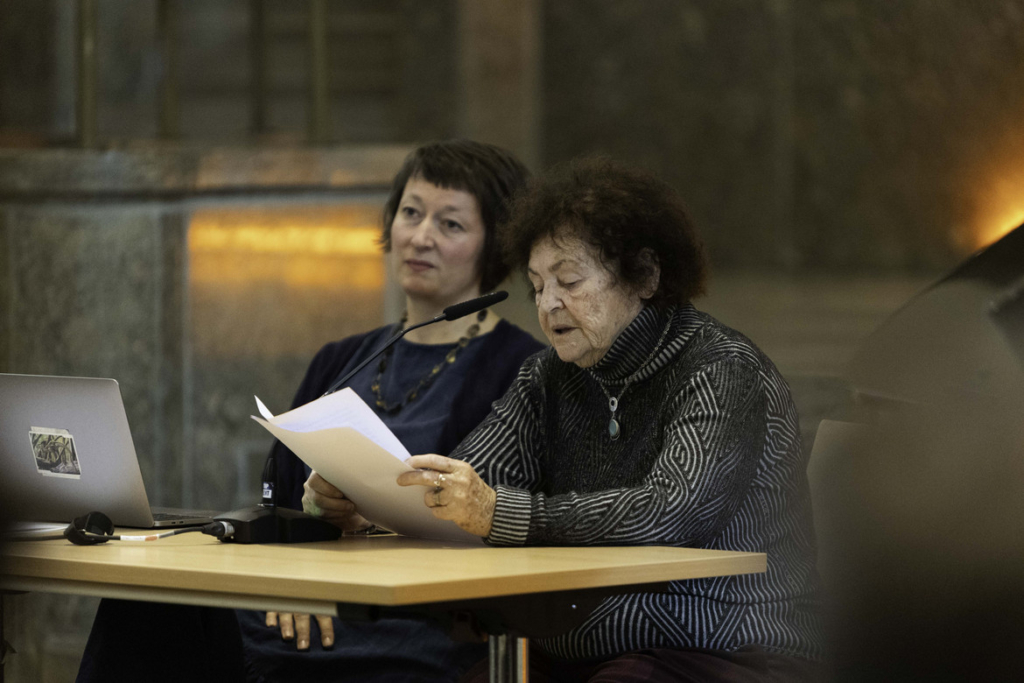
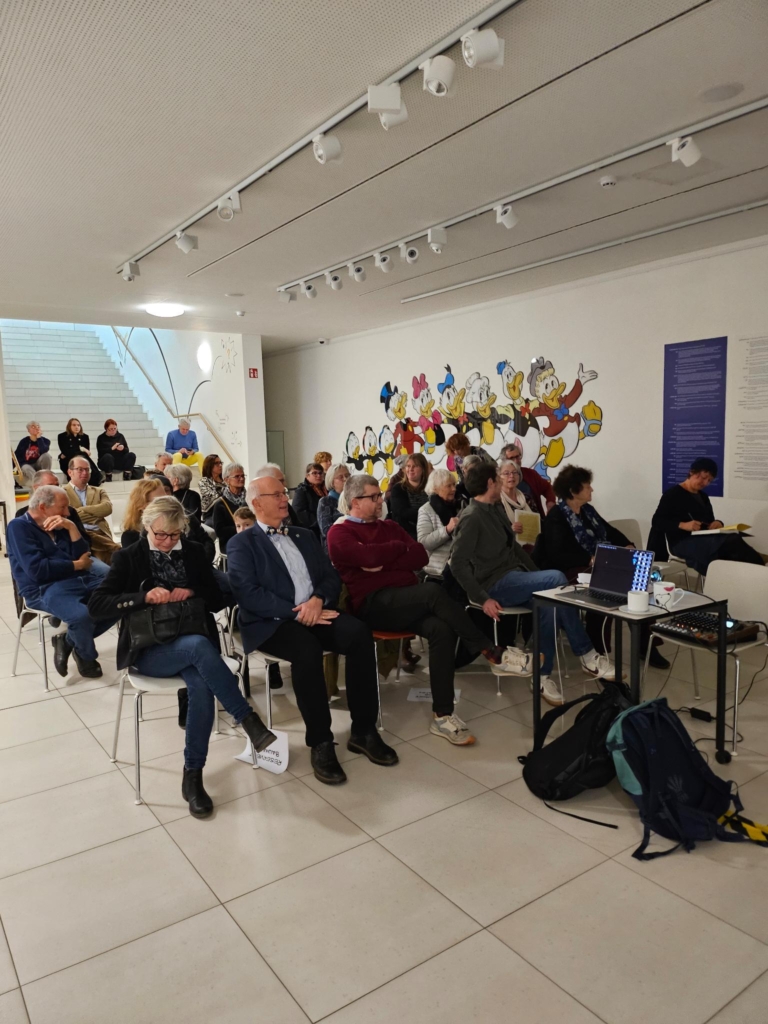
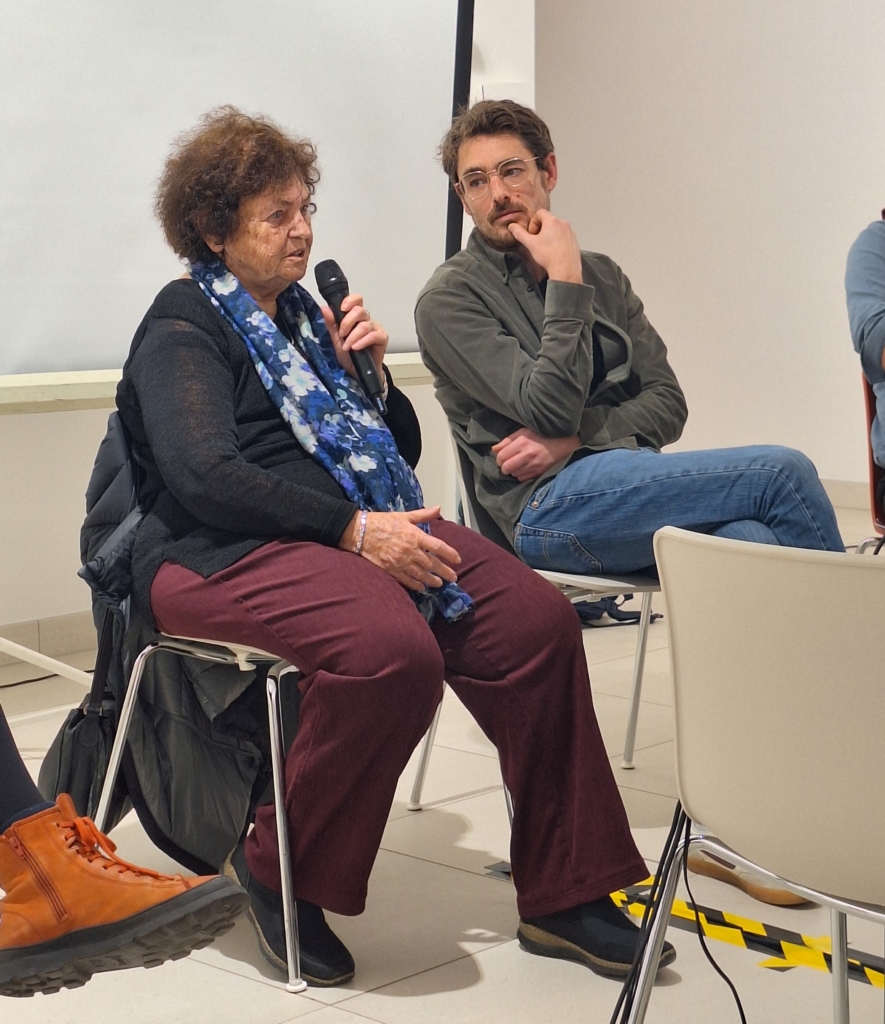
Lastly, the Erica-Fuchs-Haus also welcomed Emmie Arbel, one of the Holocaust survivors sharing her story in the graphic novel, and her nephew, film director Pablo Ben Yakov, for a special screening of “Three Siblings” on November 16. Directed by Yakov, the film follows the stories of his uncle Menachem, aunt Emmie, and father Rudi as they each navigate their life after the Holocaust.

Thank you, Erica-Fuchs-Haus, for hosting this exhibition and the accompanying events!  

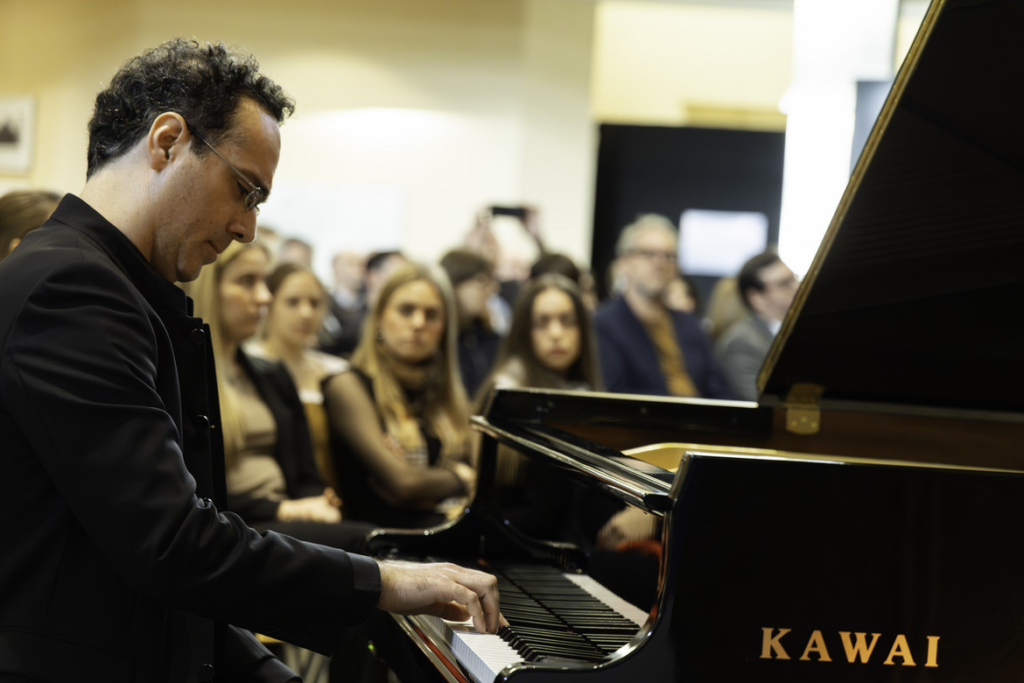
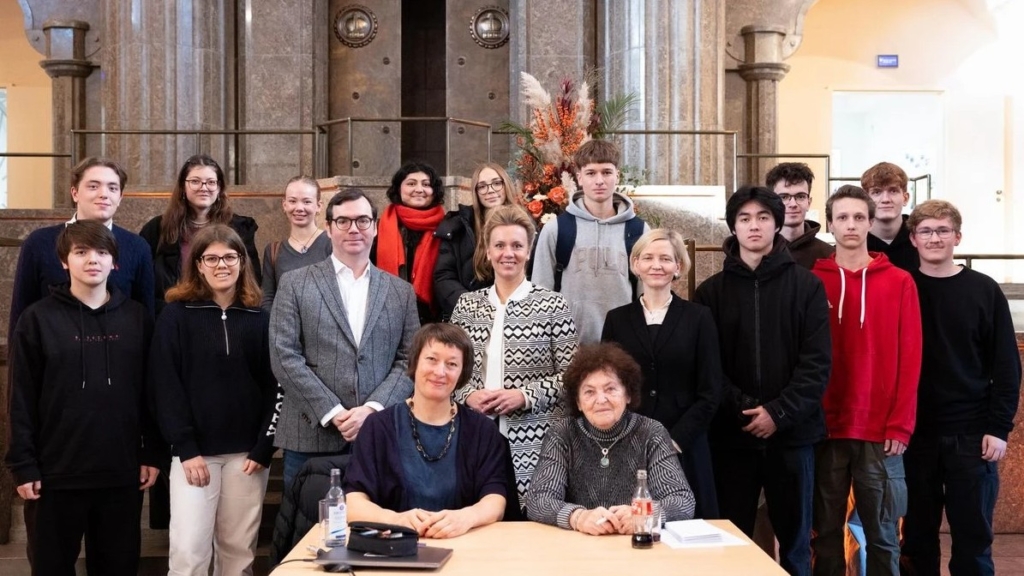
Photographs by Dr. Joanna Straczowski, from the screening of “Three Siblings” on November 16, 2024.

Learning about the Holocaust at Vic High: Reading and Workshop by Dr. Charlotte Schallié

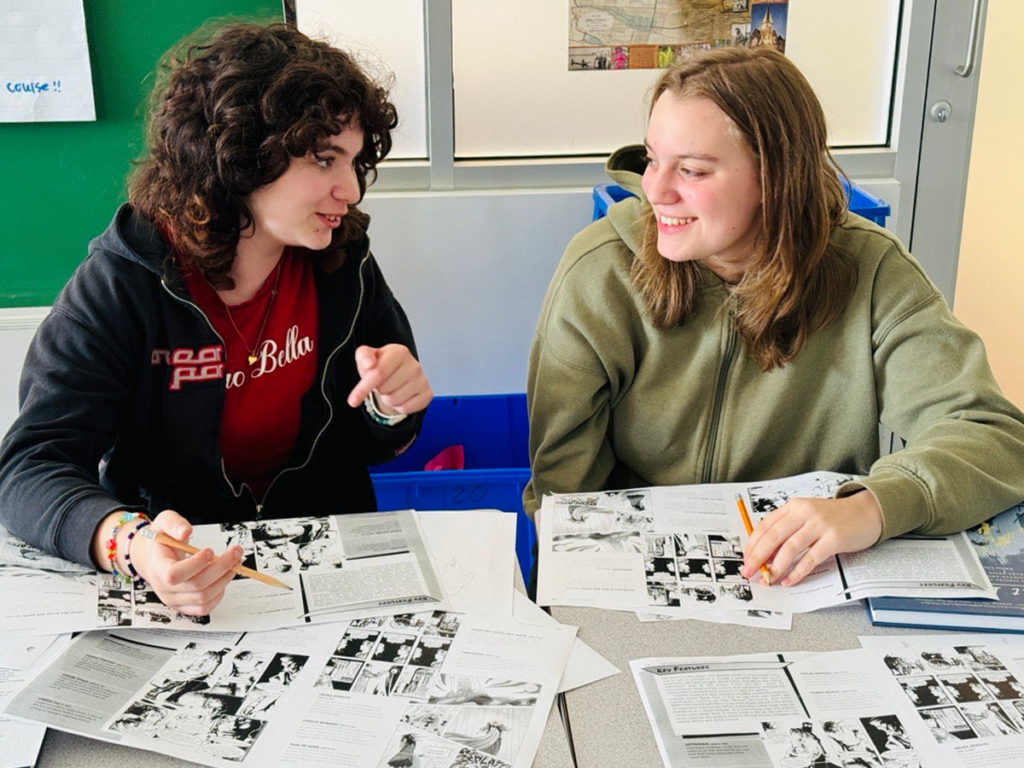
On October 2 & 3, SCVN Co-Director Dr. Charlotte Schallié visited a ninth/tenth creative writing class at Victoria High School (Vic High). The students, guided by their creative writing teacher, Georgina Hope, participated in an interactive lesson that brought the testimonies from ‘But I Live: Three Stories of Child Survivors of the Holocaust’ into the classroom. Through discussion of the book, Charlotte introduced the students to the ways that graphic novels can support learning by creating an emotional connection to the material.

Students at Vic High participating in a graphic narrative exercise. Image credit Charlotte Schallié.

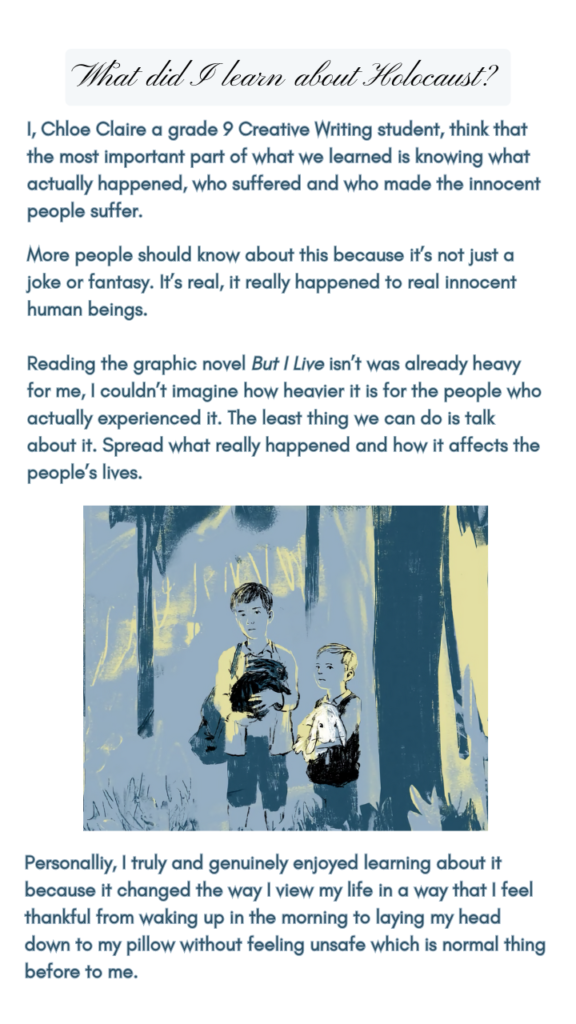
‘But I Live’ brings together three graphic narratives that share the personal life journeys of Holocaust child survivors. These stories provide young readers with accessible and emotional insights into historical events, illuminating what it meant to survive the Holocaust as a child. By connecting with individual experiences, students were encouraged to see beyond facts and figures and understand history on a personal level.

This visit also incorporated a lesson plan from the educator’s resource created by Dr. Andrea Webb. This resource package is designed to support teachers in engaging a difficult topic such as the Holocaust, using graphic narratives as an entry point to explore context, events, and the consequences of historical trauma. This approach doesn’t simply inform—it empowers students and teachers to reflect on history and develop critical skills, such as empathy and historical awareness, which remain relevant to current societal challenges.

Some of the students later shared what they learned in their own words.

I think reading the book opened my eyes and I really felt the emotion of the book. The book was definitely a great read and I’m sure it broadened my understanding. The drawings were so well done, and the mute colours really make you feel the emotion in the book. I feel what Charlotte was talking about with the graphic novels is true. We definitely should be reading more graphic novels in high schools, because they’re easy to read, but get the point across right. I don’t feel graphic novels should be seen as childish most of the time because they carry deeper stories with good morals.  

A person named Charlotte Schallié came to my class, she is a professor at UVic, and an author. She talked about how graphic novels are just as valuable as normal books. I would agree with this, I think that the pictures help portray a better story than words do. She also showed us some stuff on the holocaust. It was a graphic novel, and more specifically the process of making it. They talked to multiple holocaust survivors and had them tell their stories, in their own words and only what they wanted to say. I thought that was cool, because it seems more respectful to the holocaust survivor. 

I have learned that the Holocaust has killed 6 million Jews. The injustices before, during, and after the Holocaust are innumerable. It’s sad to see such hate grow for so long and so intensely. I’ve had fun with the graphic novel project, and I enjoyed the Survivors theatre production. It’s awesome to see the Holocaust explained in a compelling way, in a way that encourages readers and viewers to be in the experiences of those we read about or watch. 

I have never learned about the Holocaust until this project. I found it fascinating but also so emotional to learn about. I can’t imagine what it would have been like in that time. When Charlotte Schallié came into the classroom and told us more facts and stories about the Holocaust it was fascinating. My favourite part about this project though, was the play. I enjoyed watching the good acting, and it was a more fun way to learn about this devastating event in history.  People need to know. I think that this should be learned about in class more and it was a good way to learn about it through graphic novels. The Anne Frank graphic novel, I found personally, is really hard to read, but it was good all the same. 

The students participated actively, exploring graphic narratives as a storytelling medium and recognizing the power of personal narrative within historical contexts. Charlotte’s visit demonstrated how art and personal testimony can bridge generations, creating a meaningful connection to the past. Thank you to Georgina and class for your engagement with ‘But I Live.’ Experiences such as this class visit emphasize the potential wide-ranging impact of the graphic novels created by the SCVN project.

Reading and Discussion of ‘But I Live’ with Dr. Charlotte Schallié and Barbara Yelin at Utrecht University

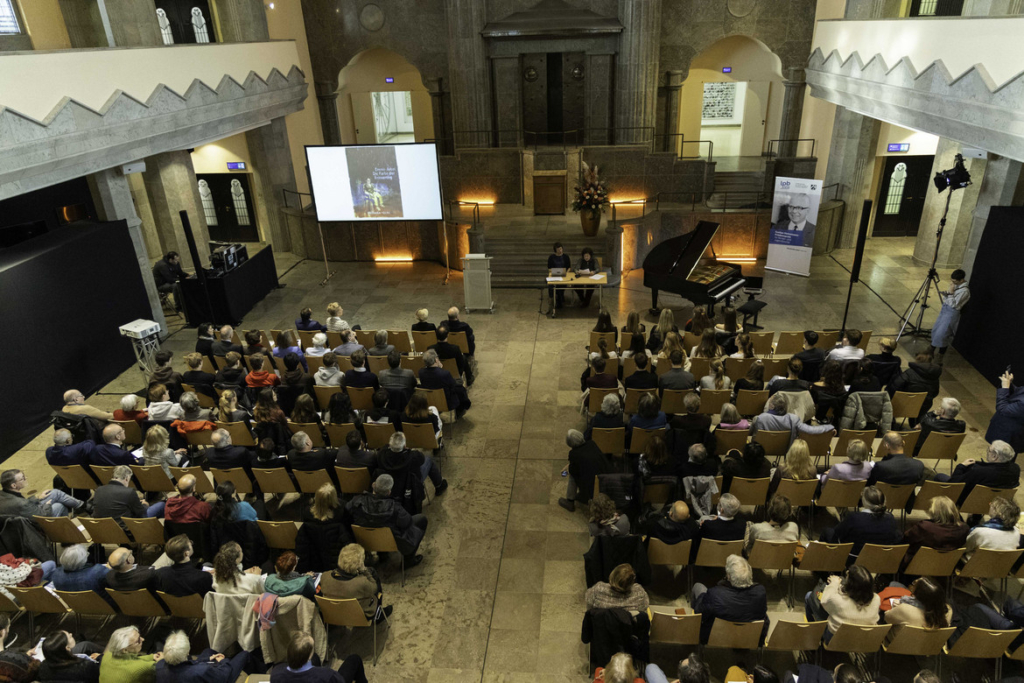
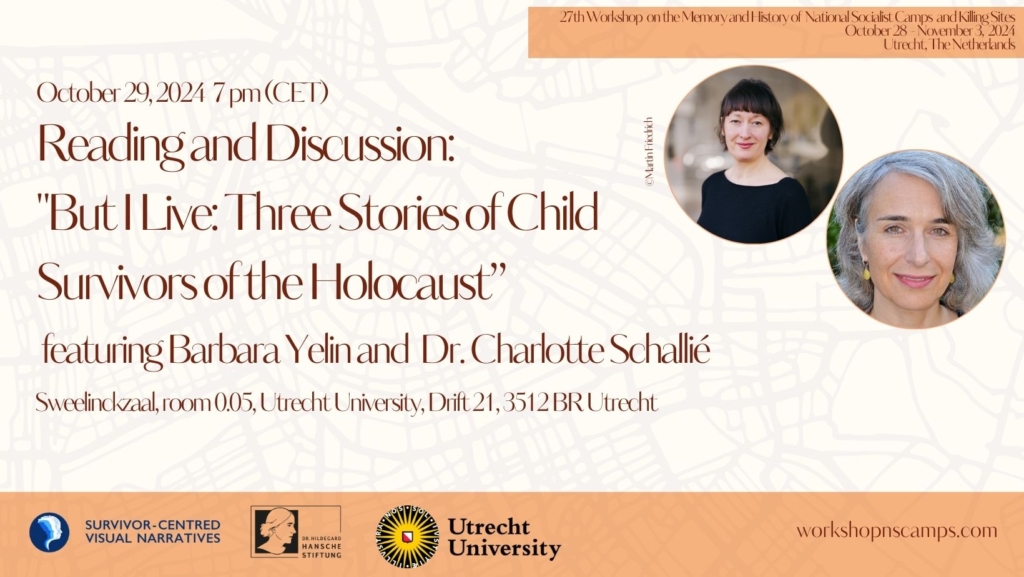
On October 29, graphic artist Barbara Yelin and SCVN Co-Director Dr. Charlotte Schallié will be featured in a public online webinar as part of the 27th Workshop on National Socialist Camps and Killing Sites. Barbara and Charlotte will be reading from the publication ‘But I Live: Three Stories of Child Survivors of the Holocaust.’ This webinar and the other workshop activities are geared towards young scholars who are interested in working with stories and histories of camps and killing sites associated with genocide and mass atrocity worldwide.

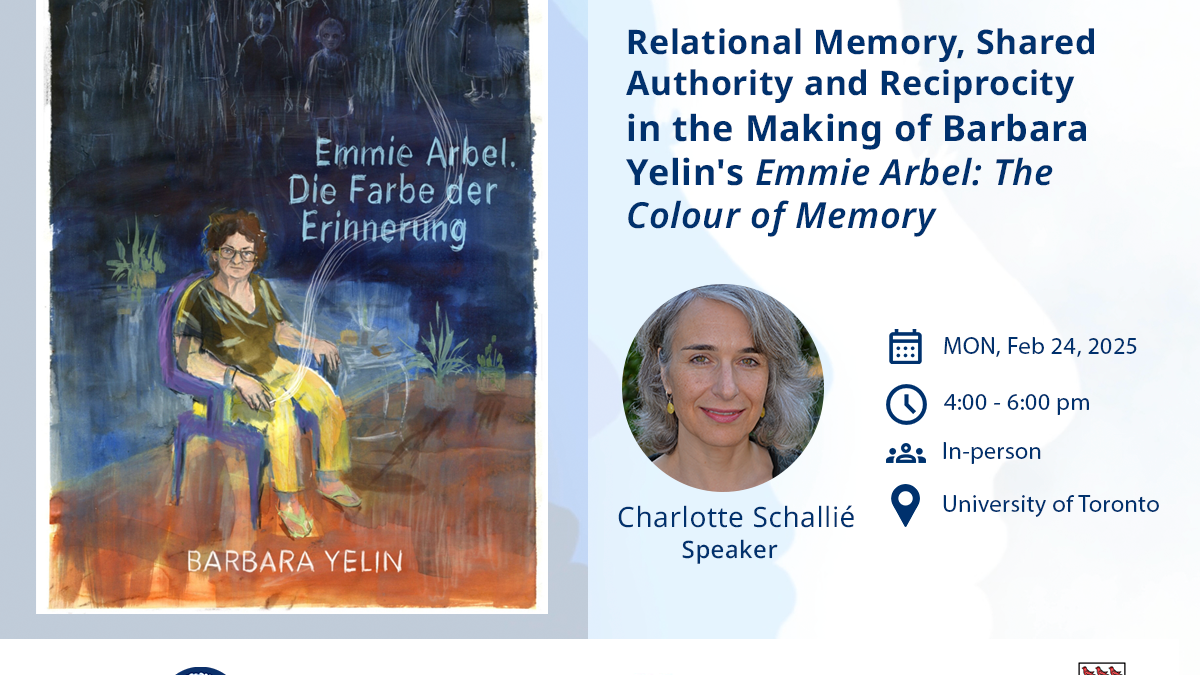
In addition to reading from ‘But I Live,’ Charlotte and Barbara will engage in a dialogue about trauma-informed storytelling and the compelling power of drawing as a language to communicate about stories of memory, trauma, and resilience. The visual testimony of Holocaust child survivor Emmie Arbel, collected in ‘But I Live’ by Barbara Yelin is one example of how visual arts can be engaged in Holocaust education and communication.

Event Details:

Tuesday, October 29, 2024

5:00 pm CET /11:00 am PDT

Sweelinckzaal, Room 0.05, Utrecht University, Drift 21, 3512 BR Utrecht or online via zoom

Register online to join at here.

Our thanks to the Utrecht University, the University of Toronto Press, and the Dr. Hildegaard Hansche Stiftung for supporting this event.
Archives of Memory: Research Incubator and Comic Drawing Workshop at the Zurich University of the Arts

From July 4-6, our project partners at the Institute for the Performing Arts and Film at the Zurich University of the Arts (ZHdK) hosted an interdisciplinary arts-based research incubator for scholars, artists, storytellers and educators who joined us from Canada, Austria, Germany, the Netherlands, Finland, Israel and  Cameroon. This interdisciplinary exchange included graphic artists from the Survivor-Centred Visual Narratives (SCVN) Project, who were invited to share insights from their ongoing collaborative memory work with survivors of genocide. 

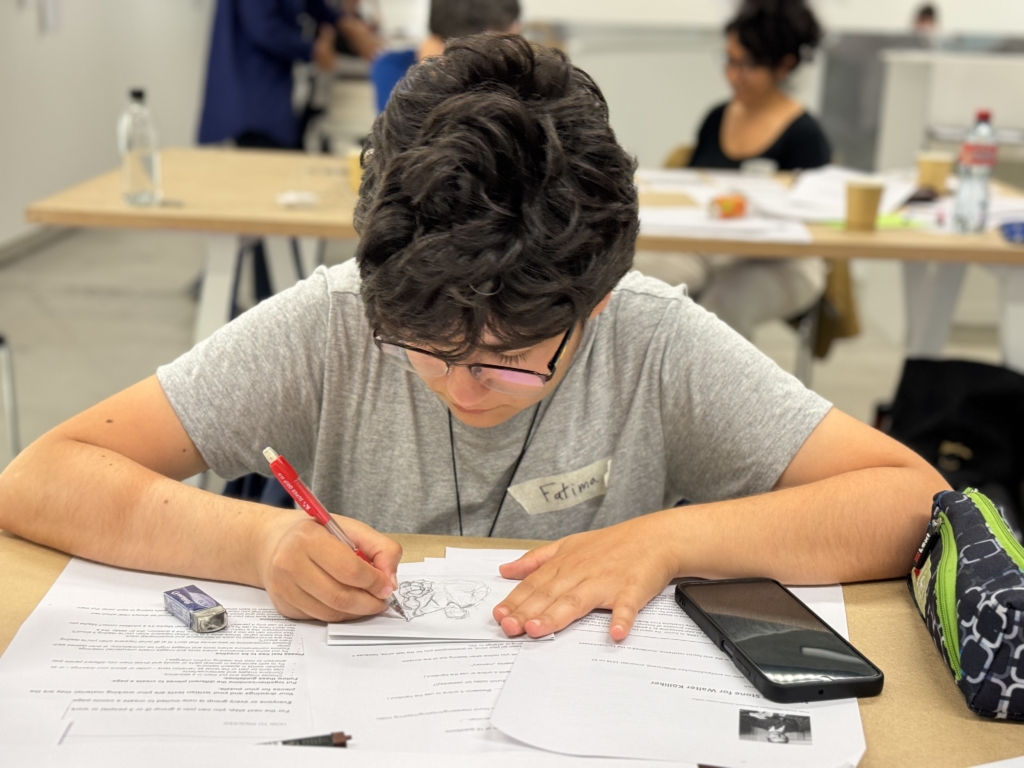
Participant sketching. Image credit Charlotte Schallié.

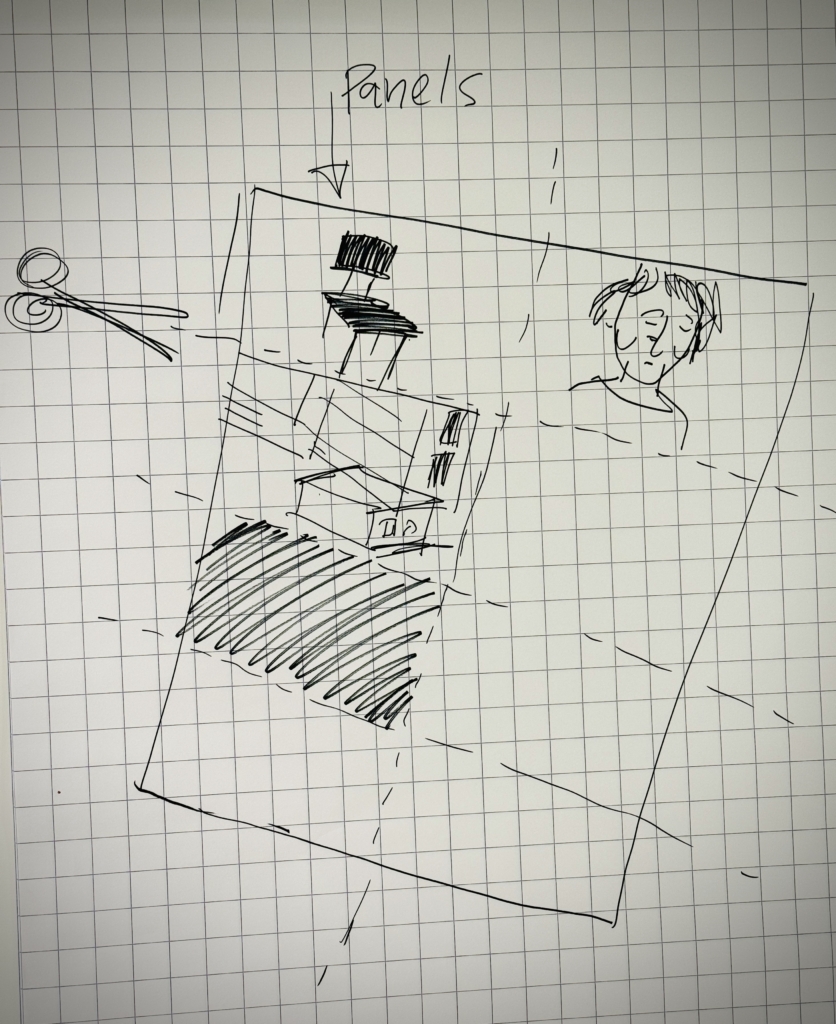
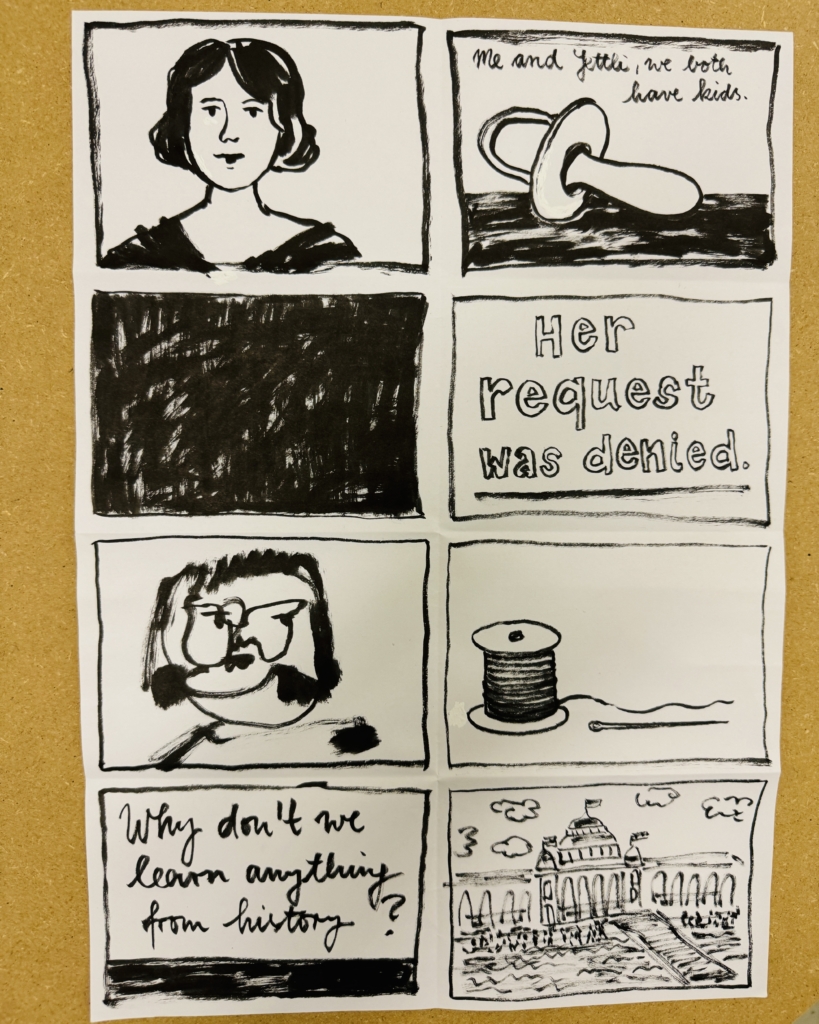
Day 1 began with a presentation by SCVN co-director Dr. Charlotte Schallié titled ‘Developing an Ethics of Care Framework in Arts-based Research with Genocide Survivors.’ Following this, a comic drawing workshop, co-facilitated by graphic novelist Barbara Yelin and Charlotte Schallié, guided participants through weaving their artistic practice with visual storytelling and historical research. Throughout the day, participants drew, collaborated, and discussed the role of memory, dialogue, responsibility, and reciprocity in artistic practice and research. Many questions emerged. For example, how can drawing as a research practice and creative tool of scientific inquiry encourage new ways of retelling histories and life narratives? What stories surface when drawings and text elements enter a space of dialogue? How can we envision the empty space in-between panels as sites of fragmented or disjointed memory?  

Sketches from Zurich workshops. Image credit Charlotte Schallié.

On Day 2, workshop participants gained insights into the practices, approaches, and questions emerging from the SCVN project. An urban drawing session—led by Miriam Libicki—and a reading by Barbara Yelin from her book ‘Emmie Arbel. The Colour of Memory’ brought forward ways to incorporate arts-based research methods into scholarship, teaching, creative practice, and community-based care work. 
Barbara Yelin and Gilad Seliktar. Image credit Charlotte Schallié.

“What stories surface when drawings and text elements enter a space of dialogue? How can we envision the empty space in-between panels as sites of fragmented or disjointed memory?”  

Day 3 held space for SCVN graphic artists to discuss how team members can continue to facilitate a community of mutual care and support across all five project-based research clusters. It served as a platform to address unresolved questions. Given the collaborative nature of the working relationships and the diverse realities and circumstances of the internationally based artists, it was invaluable to meet in person and develop a dialogue around the archiving of memory.

Participants at Zurich workshop. Image credit Charlotte Schallié.

A key insight from the conference and workshop was the recognition that action of gathering in a designated space for mutual learning is crucial and should be institutionalized on an annual basis. This approach is essential for fostering a dialogic relationship and establishing a solid foundation for the Community of Care needed by the SCVN project. The questions posed to the artists on the third day, such as “What does a Community of Care mean to you?” and “What resources or support do you need to continue contributing to the project?” were systematically recorded and documented. Notably, it emerged that listening and allowing space for expression are inevitable components of research projects engaging genocide and mass atrocities. Based on the responses and the comprehensive documentation from the three days, the SCVN research project can refine and optimize the design and structure of future meetings to enhance the collaborative experience. 

We would like to thank to all participants who joined us to share a diversity of perspectives, experiences, and creative approaches to engage with histories and life narratives.

2024 AGM at the University of British Columbia: Centring Indigenous and Arts-Based Approaches to Testimony

From June 18-20, our project partners from the University of British Columbia (UBC) and the Turtle Island Research Cluster hosted a three-day Annual General Meeting around the theme of ‘Landed Learning and Indigenous Ways of Knowing’. Artists and team leadership from Canada, Austria, Germany, the Netherlands, Sweden, and the United States, gathered with us on the unceded territory of the xʷməθkʷəy̓əm (Musqueam) people. At a pre-meeting event hosted by the German Consulate, artist Tobi Dahmen presented his recent publication, Columbusstrasse, to an engaged and enthusiastic audience. Artist Anneli Furmark also spoke to students in the UBC Nordic Studies program about her work with comics and graphic novels. 

Anneli Furmark presenting to UBC students. Image credit Charlotte Schallié.

On Day 1 of the AGM, participants joined Dr. Eduardo Jovel for a presentation on Landed Learning at the xʷc̓ic̓əsəm Garden in the UBC Farm. With an emphasis on teaching, learning, and research, xʷc̓ic̓əsəm Garden serves educational and research needs related to Indigenous knowledge and its intersections with other ways of knowing; our group learned about land as teacher and food as medicine. In the afternoon, Dr. Shannon Leddy guided participants through an art-making workshop, reflecting on visual storytelling and land-based approaches to learning. SCVN data director, Dr. Matt Huculak also gave a presentation on archiving arts-based research to the project artists.

xʷc̓ic̓əsəm Garden. Image credit Raey Costain.
Sketch at xʷc̓ic̓əsəm Garden. Image credit Miriam Libicki.
Art making workshop with Andrea Webb (left) and Shannon Leddy (right), June 19, 2024. Image credit Charlotte Schallié.
Participants exploring the interactive database at the Indian Residential School History and Dialogue Centre. Image credit Raey Costain.

On Day 2, participants gained insights into the practices and approaches of Indigenizing testimony collection and Indigenous data sovereignty with a presentation from Kristin Kozar, director of the Indian Residential School History and Dialogue Centre. Following this, Duncan McCue facilitated a reflection on traumatic testimony and survivor-centred engagement, providing the opportunity for project members to share their experiences and learn from one another. 

Though not scheduled activities, the artists and scholars who gathered for the AGM took frequent opportunities to spend time on the beautiful beaches and walkways that surround UBC. They also attended graphic artist Mangeshig Pawis-Steckely’s exhibit opening at the Slice of Life gallery on June 20, 2024.

Project members gathered on the beach. Image credit Matt Huculak.
Project members attending Mangeshig Pawis-Steckely’s gallery opening at Slice of Life on June 20, 2024. Image credit Jennifer Sauter.

We would like to express our deep gratitude to all participants for their willingness to experience land-based approaches and share their diverse perspectives as they continue to work with survivors in creating visual narratives of testimony. We hope that our annual meetings provide opportunities for community and connection, supporting future arts-based research and acknowledging the important work created thus far.

Witnesses of Violence: Stories of Genocide Survivors in Graphic Novels

“Our perspectives of the past are largely shaped by the stories of those who experienced it.”

On May 28, 2024 a panel of researchers, artists, and witnesses will gather to reflect on the ways in which graphic novels can be used to gather stories violence and genocide. These stories are not universal or encompassing of every detail of these atrocities, but rather they present the individual narratives of those who survived them.

Views around the Ezidi shrine of Shebl Qasim atop Shingal mountain (Wikimedia Commons).

The panel includes Tobi Dahmen, Charlotte Schallié, Akram al-Saud, Leyla Ferman, Kees Ribbens and Uğur Ümit Üngör. We are grateful to be hosted by our project partner NIOD Institute for War, Holocaust and Genocide Studies at SPUI25 in Amsterdam for this event.

Date: May 28, 2024 – 5:00pm CEST
Location: SPUI25, Amsterdam

Trauma-Informed Research Toolkit: Contextualizing Trauma and Cultivating Ethics of Care

From April to November 2023, the Public Humanities Hub at the University of British Columbia co-hosted with the University of Victoria’s Survivor-Centered Visual Narratives project a webinar series on the Ethics of Trauma-Informed Research. The series of zoom conversations featured researchers, educators, journalists, artists and other professionals focusing on trauma in their work. The toolkit is accessible on the UBC’s Public Humanities Hub website and builds on the experience, practice, and resources shared by these experts during the six webinars of the series.

The speakers’ experiences and perspectives regarding trauma in the aftermath of genocide, mass atrocities, war, and other events vary considerably, but, as this toolkit documents and emphasizes, the central focus remains the same. According to Ying Han and Sydney Lines, the authors of the toolkit, it is “overcoming the ‘trust’ gap between community and researchers, and approaching the research with ethics of care” which represents the main concern shared by all guests in the webinar series regardless the variable terminology they might use when they talk about their research and professional practice. ‘Survivor-centered approach’, ‘people-centered approach’, ‘grassroots approach’, ‘participatory research’, and ‘co-produced research’ are used in the toolkit to refer to the central concern and methodology.

The toolkit contains the recordings of the original webinars as well as the transcript of each of the sessions and is organized into four thematic clusters: Trauma-Informed Research as Witnessing, Trauma-Informed Research as Pedagogy, Trauma-Informed Methods of Public Scholarship, and Trauma-Informed Research and Arts-based Methods. Each of these clusters introduces and explores a particular method of trauma-informed research discussed in the webinar conversations via brief summaries of the key points and the experts’ own words. Further, each cluster points to resources available at the UBC and beyond that might be of help to those who wish to explore and apply the given methodology in their own trauma-informed research.  

Infographics by Raey Costain.

Rather than “mapping out trauma on a diagnostic level”, the main focus and motivation of this toolkit is documenting the variety of experience-based research approaches to trauma. This emphasis allows its readers to consider how this type of research can help open up pathways to post-traumatic growth and resilience, and it also draws attention to the fact that this type of research often causes emotional or psychological discomfort or distress for subjects, participants, collaborators, and researchers alike. As the authors emphasize, “it is incumbent upon researchers and practitioners to build in ways to cultivate an awareness of the possible trauma responses that participants may experience, anticipate the risks of re-traumatization, and to learn how to hold space for recovery and care for all parties involved”. The Trauma-Informed Research Toolkit is exactly the place where to start when looking for possible guidance and inspiration.

To access the toolkit on the UBC Public Humanities Hub website, please click here: https://sites.google.com/view/trauma-informed-research

To learn more about the project’s webinar series “Ethics of Trauma-Informed Research” and “Art and Testimony”, please click here.

‘But I Live’ exhibits at the Ravensbrück Memorial

From April 13 to July 31, 2024 the Ravensbrück Memorial is hosting an exhibition of ‘But I Live. Three Stories of Child Survivors of the Holocaust’ in cooperation with the International Comic Salon Erlangen and the Stadtmuseum Erlangen.

‘But I Live’ (2022) edited by SCVN Co-Director Charlotte Schallié was an important publication because of the way the stories it contains were created. Graphic artists Miriam Libicki, Gilad Seliktar, and Barbara Yelin, worked closely with (respectively) David Schaffer, Nico and Rolf Kamp, and Emmie Arbel to gather their memories and experiences of surviving the Holocaust as children. This collection of graphic narratives set the tone for the broader SCVN project and many of the relationships that began with ‘But I Live’ continue on in the current work.

For the SCVN project, this new exhibition at Ravensbrück represents a commitment to learn about and remember the stories that have been so carefully gathered – in a way that does not reduce survivors to their moment of pain but instead honours their life experiences before, during, and after the events they endured.