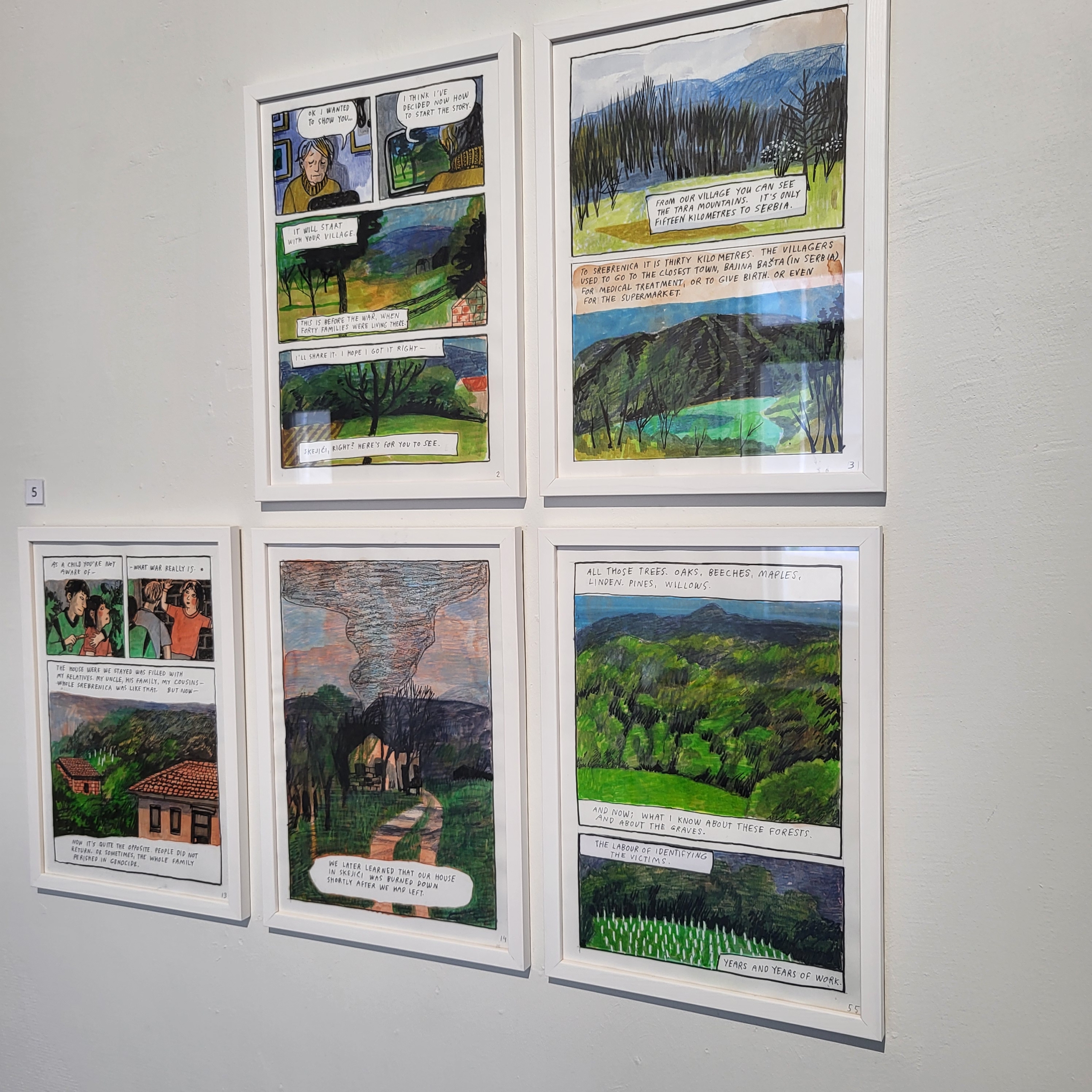
The ‘Landscape in Comics’ exhibition opens on May 21 in Galleria 5 in Oulu, Finland. It will be the first public presentation of Anneli Furmark’s original art from her untitled graphic novel created in collaboration with a survivor of the Srebrenica Genocide within the frame of the Yugoslav Wars Research Cluster. The exhibition focuses on the presence and place of landscape in graphic narratives.
In comics, landscapes often play a secondary role by providing background to the main story. The ‘Landscapes in Comics’ exhibition challenges this convention by exploring the narrative potential of landscapes and their capacity to reveal hidden details and additional layers of meaning in graphic storytelling. In addition to landscape, the exhibition deals with themes such as time, temporality, perception, sensory perception, memory, scale, living conditions and ecosystems.
Furmark’s work is featured alongside artists Juliana Hyrri (Estonia) and Hanneriina Moisseinen (Finland). The exhibition hosted by Galleria 5 in Oulu, Finland is open from May 21 until June 16, 2025.
Thank you Kulturfonden för Sverige och Finland, Grafia and Sortavala – Säätiö for supporting this exhibition.
For more detailed information on Galleria 5 website, please click here.
We are pleased to announce that our funding application to the National Holocaust Remembrance Program has been successful.
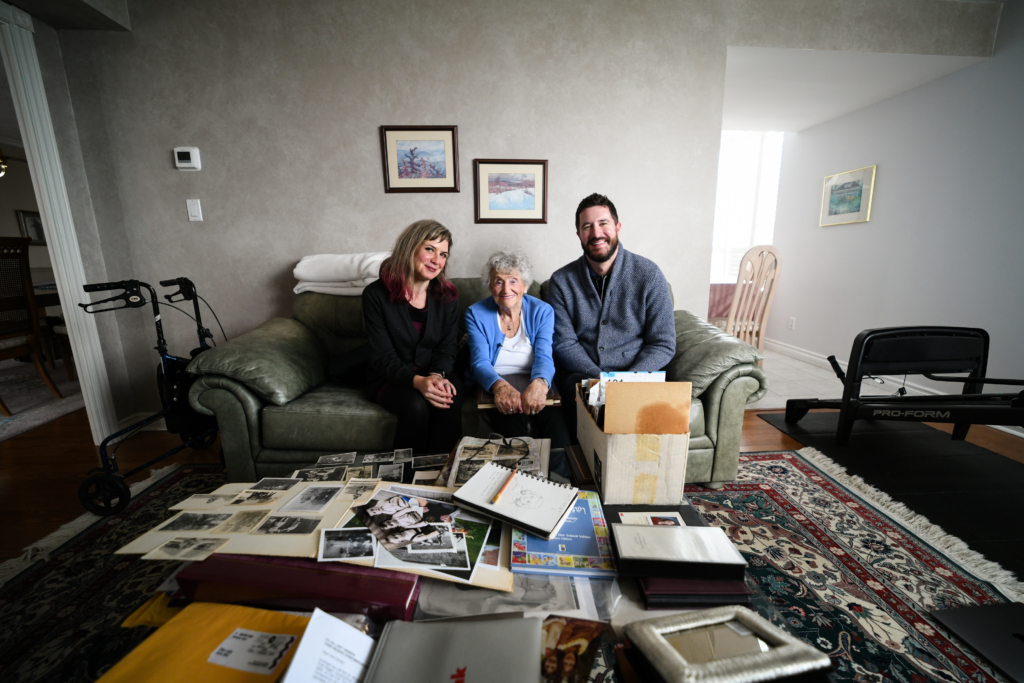
From left to right: Graphic artist Miriam Libicki, Holocaust survivor Rose Lipszyc, and Research Cluster Co-lead Mark Celinscak meeting for interviews and the documentary film at Rose’s home in Toronto, Ontario in the summer 2023. Photo credit: Chorong Kim.
Charlotte Schallié and her team have been awarded the Multiculturalism and Anti-Racism Program (MARP)’s National Holocaust Remembrance Program funding from Heritage Canada for their project, Developing Trauma-Informed Teaching Resources and Outreach Activities for Arts-Based Survivor Testimonies. The application was developed by Drs. Charlotte Schallié, Andrea Webb, Mark Celinscak, and Project Manager Jennifer Sauter with support from the following partners: Toronto Holocaust Museum Azrieli Foundation, Vancouver Holocaust Education Centre, Canadian Museum for Human Rights, Memorial University of Newfoundland, University of British Columbia, University of Victoria, Sam and Frances Fried Holocaust and Genocide Academy, University of Nebraska at Omaha, and Facing History and Ourselves.
The funding totals $129,769, and will be granted over a 5-year period. It will support the development of open-access educational resources, learning activities (in-person and online) and an art exhibition to accompany two non-fiction graphic novels by award-winning artist Miriam Libicki: A Kind of Resistance (published in the anthology But I Live: Three Stories of Child Survivors of the Holocaust, New Jewish Press, 2022) and Two Roses (New Jewish Press, 2025). Created in close partnership with David Schaffer (Vancouver) and Rose Lipszyc (Toronto), respectively, Libicki’s graphic narratives shed light on child survivors’ lived experiences before, during, and after the Holocaust in Poland, Germany, and Romania. The target audience for these books is students in Grades 9-12.
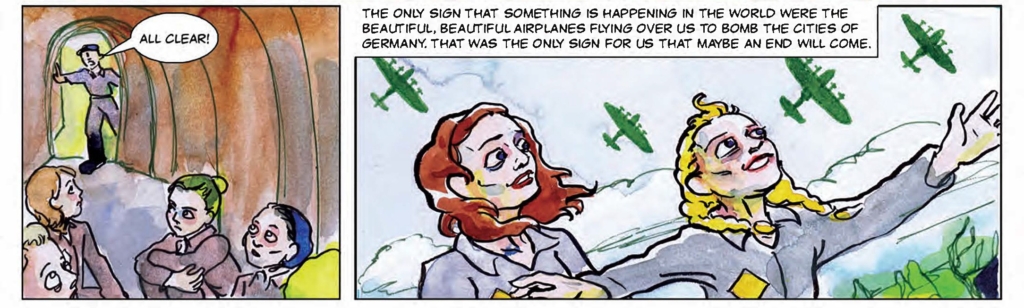
An excerpt from Two Roses (New Jewish Press, 2026), the story of Holocaust survivor Rose Lipszyc, by Miriam Libicki.
These two graphic novels have been conceived and co-created as part of two SSHRC-funded projects: Narrative Art and Visual Storytelling in Holocaust and Human Rights Education (2019-2022; https://holocaustgraphicnovels.uvic.ca/) and our Survivor-Centred Visual Narratives (2022-2029).
The funding from the National Holocaust Remembrance Program will allow us to deepen and expand our current teaching resources (which also include two open-access short documentaries). Our goal is to create innovative evidence-based educational tools to help Canadian high school teachers apply a human rights framework and integrate Holocaust education into the secondary school curriculum.
We would like to thank all the partners who supported our vision and helped make this application a success!
We are delighted to announce that Dr. Andrea Webb (University of British Columbia), SCVN Project Co-director, has won an Honourable Mention at the 2025 Open Scholarship Awards for creating the But I Live Educators’ Resource.
Recognized by the Canadian Social Knowledge Institute and its partners, including the Implementing New Knowledge Environments project, Open Scholarship Award recipients demonstrate exemplary open scholarship via research, projects, or initiatives. Open scholarship incorporates open access, open data, open education, and other related movements that have the potential to make scholarly work more efficient, more accessible, and more usable by those within and beyond the academy. By engaging with open practices for academic work, open scholarship shares that work more broadly and more publicly.
In collaboration with UBC’s Bachelor of Education Program teacher candidates, Dr. Andrea Webb developed the online educational resources to accompany the graphic novel But I Live: Three Stories of Child Survivors of the Holocaust.
This work was completed as part of their Community Field Experience (CFE) and was created by educators for educators. It draws on current classroom practices, pedagogy, and curriculum, and is designed for flexible implementation by teachers in a variety of classrooms.
For the complete list of 2025 Open Scholarship Awards recipients and honourable mentions, please click here.
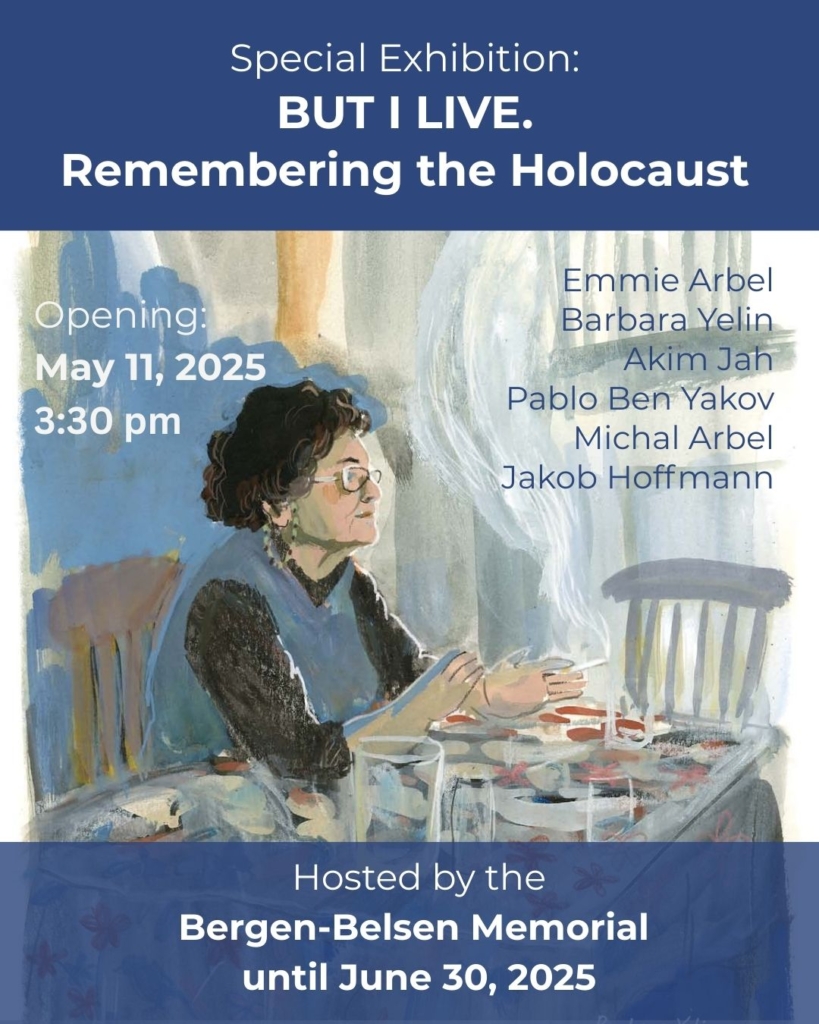
On Sunday, May 11, 2025, the exhibition ‘But I Live. Remembering the Holocaust’ opens at the Bergen-Belsen Memorial.
The exhibition, curated by Jakob Hoffmann and Barbara Yelin, features the process of co-creation and original artwork by artists Barbara Yelin, Miriam Libicki, and Gilad Seliktar produced for the graphic novel But I Live: Three Stories of Child Survivors of the Holocaust, edited by Dr. Charlotte Schallié and inspired by the narratives of Holocaust survivors Emmie Arbel, David Schaffer, and Nico and Rolf Kamp. Displaying original drawings, sketches, archival materials, and interviews with participants, the exhibition illuminates the process by which the book came into existence.
Pages from each of the graphic narratives in ‘But I Live’, from left to right: ‘A Kind of Resistance’ by Miriam Libicki, ‘Thirteen Secrets’ by Gilad Seliktar and ‘But I Live’ by Barbara Yelin.
After a successful three-year run and exhibiting at institutions such as the Stadtmuseum Erlangen, Dortmund schauraum comic + salon, Wiesbaden Kunsthaus, Ravensbrück Memorial, and Erica-Fuchs-Haus Museum in Schwarzenbach a.d. Saale, Germany, the Bergen-Belsen Memorial is now the sixth institution to host the exhibition. The location of the exhibition also has personal and historical significance, as Emmie Arbel survived the concentration camps at Bergen-Belsen when she was just a little girl.
With the publication of Barbara Yelin’s graphic novel Emmie Arbel: The Colour of Memory, more of Emmie’s story has since been shared. In response to its arrival, the exhibition has been expanded to include new original materials.
Exhibitions only come to life through collaborative team efforts. Thank you to Barbara Yelin and Jakob Hoffmann for their leadership, their creative vision, and dedication, and thank you to Dr. Akim Jah and the educational team at the Bergen-Belsen Memorial for making this exhibition possible.
‘But I Live. Remembering the Holocaust’ will be hosted by Bergen-Belsen Memorial from May 11 until June 30, 2025.
Building on the success of the Survivor-Centred Visual Narratives project, Drs. Shannon Leddy and Biz Nijdam have been successful in applying for additional funding to include genocide survivors from Greenland, Denmark, Norway, Sweden and Finland. Joined by Drs. Tim Frandy (Sámi, UBC) and Asta Mønsted (Kalaallit, formerly at UC Berkeley), and Frederik Byrn Køhlert (Edinburgh Napier University), this extension of the original Partnership Grant has received additional funding for three years through SSHRC’s Partnership Development Grant competition.
Background photo by Visit Greenland.
The Partnership Development Grant, Visual Storytelling in the Indigenous North, is an Indigenous-led project that connects storytellers, artists, and scholars from across the Circumpolar North to share stories of Indigenous survivance through comics, documentary film, podcasts, and digital media. Spanning Canada, Kalaallit Nunaat (Greenland), Sápmi (Norway, Sweden, Finland), and Denmark, the project brings together First Nation, Métis, Inuit, and Sámi knowledge holders to co-create graphic narratives and arts-based public programming that highlight resilience, resurgence, renewal, revival, and resistance, and that amplify Indigenous voices.
The orientation for this work is rooted in Indigenous methodologies and a commitment to two-eyed seeing, focused on relationship-building, memory work, and land-based learning. Hosted by the UBC Comics Studies and Pop Culture Clusters in collaboration with the UBC Circumpolar Indigenous Storytelling Research Cluster and the Centre for Migration Studies, they are collaborating with museums, cultural institutions, educators, and artists to produce multilingual, multimodal storytelling that centre truth and reconciliation across geopolitical lines. Through their work they hope to continue and expand important dialogues about the ongoing cultural and social impacts of colonization and state sponsored efforts at genocide that have long been underexposed in the global North. Furthermore, they want to share stories that look to the future, particularly in the light of climate change, food security, and the need for sovereignty.
The team is excited to begin the first leg of this new research journey in March of 2026, when they will travel with their research team and graphic artists to the Arctic Winter Games in Whitehorse, Yukon. At this important event, which draws athletes and fans from across the circumpolar North, they hope to build on existing partnerships, deepen friendships, and meet plenty of new people, ideas, and experiences along the way. With a plan to produce some exciting new graphic novels and documentary films, they look forward to sharing their work in 2027 and 2028, and to the possibility of expanding their work into the future as well.
Learn more about the Turtle Island Research Cluster here.
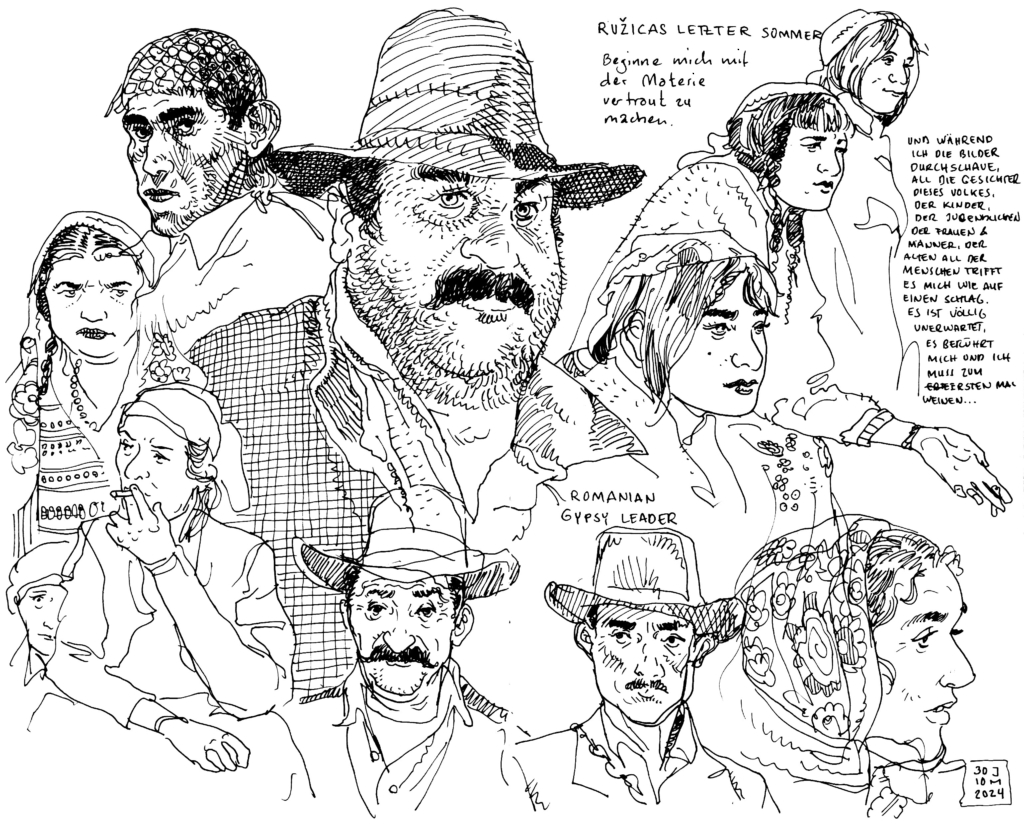
As part of our Yugoslav Wars Research Cluster, Swiss comics artist Jared Muralt has been collaborating with a Roma woman, Ružica (not her real name), retelling her life in Serbia in the 1990s where the discrimination and violence of the Yugoslav Wars shaped Ružica’s childhood.
The concept drawings and character sketches for the graphic novel project “Ružica’s Last Summer” were recently showcased at the Berner Design Foundation’s annual BESTFORM exhibition from March 28 to April 27, 2025. This event represents the first public showing of Jared’s work on the project.
The Berner Design Foundation supports professional designers from the fields of graphic and product design, ceramics, fashion and textile design as well as scenography, while managing the Canton of Bern’s collection of applied arts.
In addition to hosting Jared’s work, the Berner Design Foundation has generously supported Jared’s graphic novel through additional funding. We gratefully acknowledge their contribution to our project, and their support in expanding the graphic narrative to bring Ružica’s story to life.
Photo and image credit: Lea Moser and Jared Muralt, May 2025.
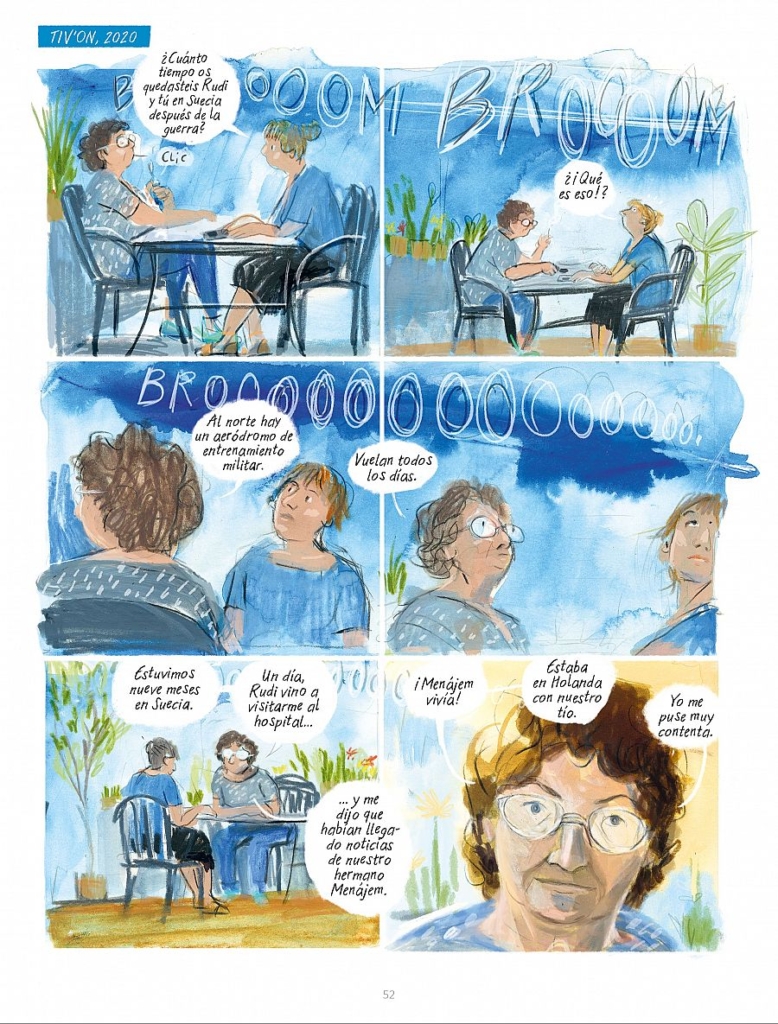
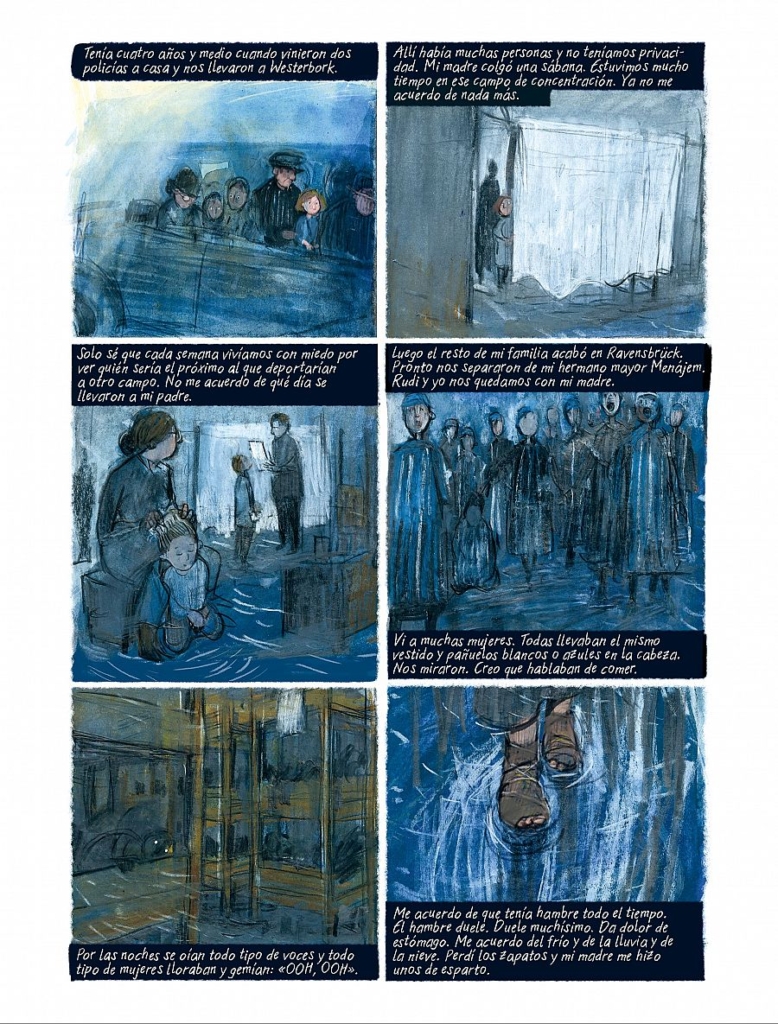
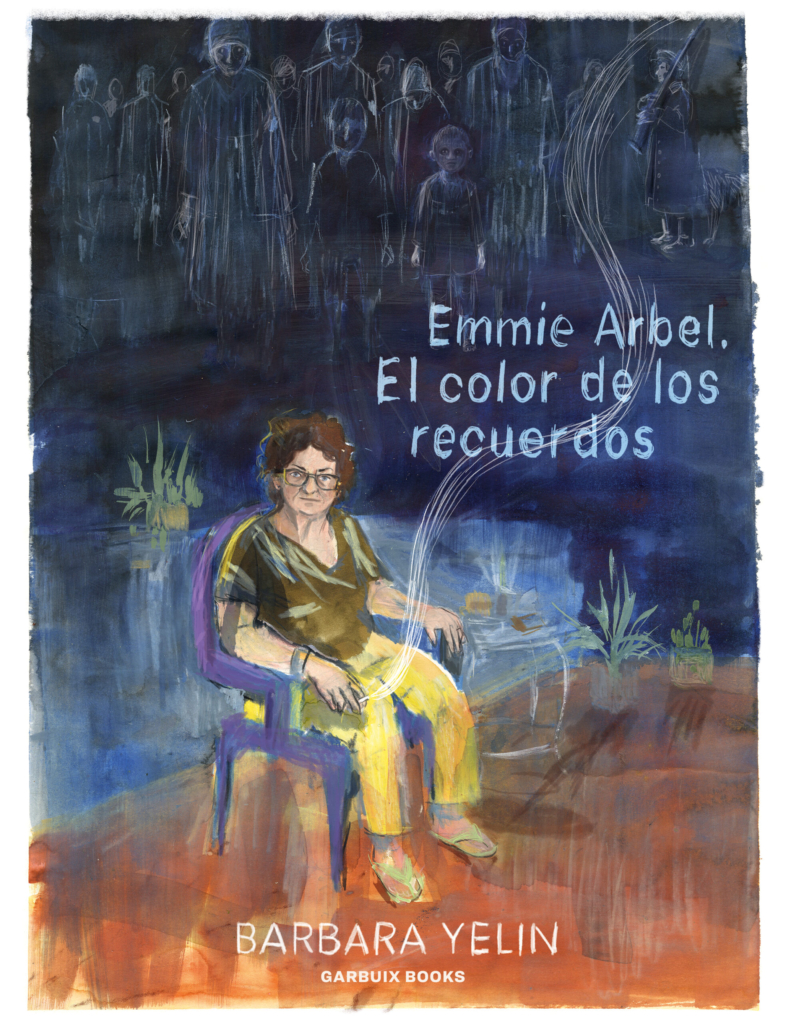
On April 16, 2025, the Spanish RTVE (Radiotelevisión Española) published a feature on Barbara Yelin’s Spanish translation graphic novel Emmie Arbel.The Colour of Memory on its website. The article brings a brief biography of Emmie Arbel, a child survivor of the Holocaust and the narrator of Yelin’s book, as well as the story of the meeting of the two and their collaboration on the graphic narrative. Talking to RTVE, Yelin also reflects upon the instrumental role of the SCVN project and its emphasis on visual testimony in prompting her to tell Emmie’s story in the format of a graphic narrative:
“The motivation for my work is, of course, also political,” she tells us. “Now, when we see dangerous fascists emerging and growing in Germany, in Europe, and around the world , we need—in order to understand and combat this enormous danger—to learn, be aware of, and reflect on the fascist past of Nazi Germany .”
“”But my motivation has also been much more than that. I’m so happy to have been able to talk with Emmie, who is such a special, rebellious, humorous, outspoken, kind, and young person . I was very lucky that Emmie dedicated her time and trust to me. Only on that basis could this book be developed.”
“And I was also very happy to collaborate with so many researchers, historians, experts… on this great international project, which allowed me to meet and exchange ideas with other great international artists.”
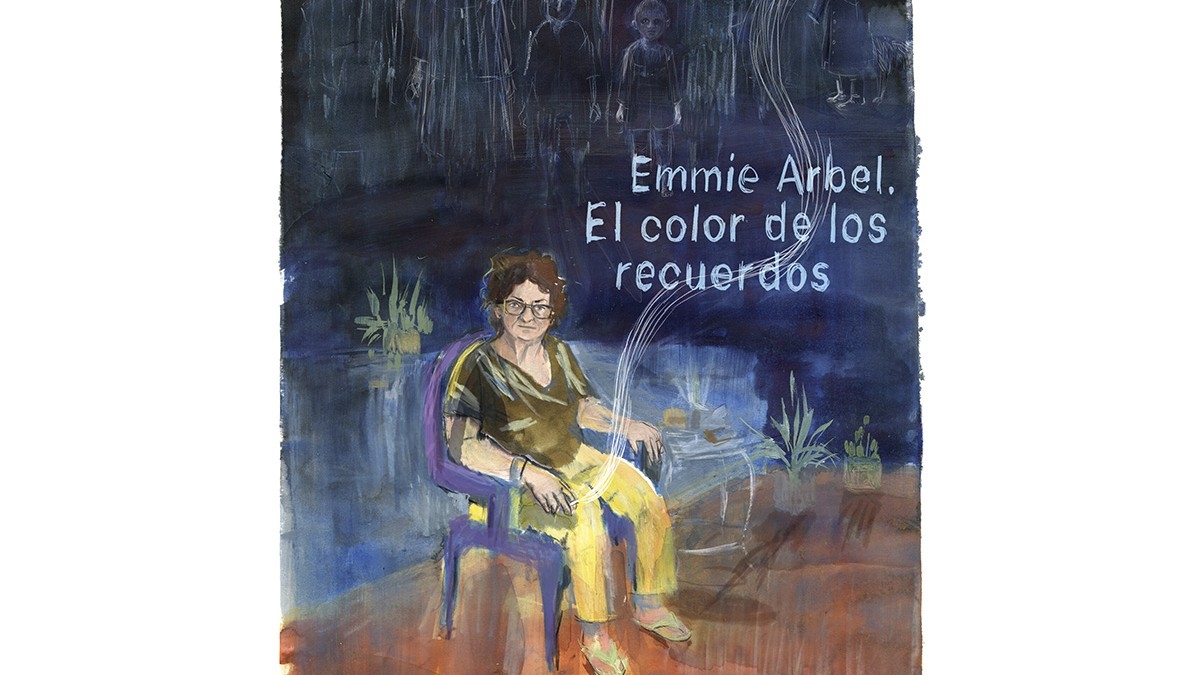
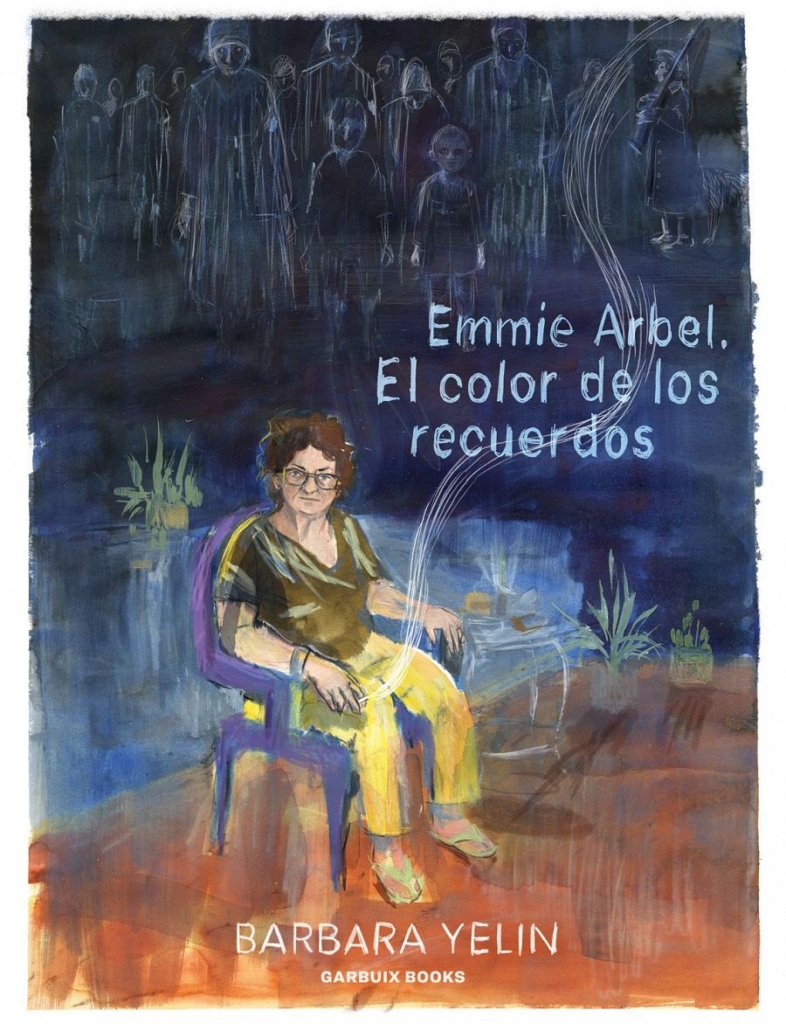
Emmie Arbel. El colour de los recuerdos was translated into Spanish by Julia Gómez Sáez and published by Garbuix Books in March 2025. For more details, please click here.
For the original feature on RTVE: El Cómic, please click here.
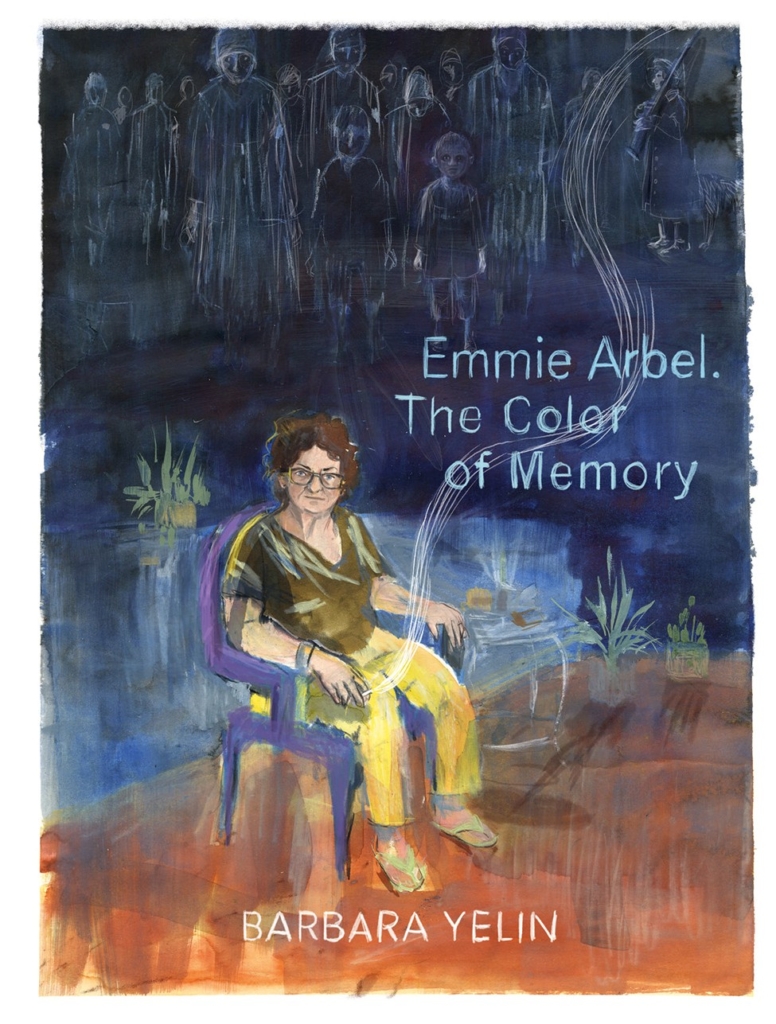
Originally published in German in 2023, Emmie Arbel. The Colour of Memory is a graphic memoir based on the personal conversations and trust-based relationship between Holocaust survivor Emmie Arbel and graphic artist Barbara Yelin.
The book is now available in four language editions: German, English, French, and Spanish. It was translated into French by Thierry Groensteen and Olivier Mannoni, and published with Actes Sud in April 2024. The English translation was produced by Helge R. Dascher and published by Reprodukt in December 2024. These two publications were followed in March 2025 by a Spanish version translated by Julia Gómez Sáez and published by Garbuix Books.
Translating Emmie’s memoir into multiple languages is vital for broadening access to Holocaust testimony, as it allows a global audience of educators, students, and researchers to engage with her story.
Many thanks to the translators for their dedication and to the publishers for their support. Their efforts continue to bring Emmie’s story to life so that it can be introduced to new audiences.
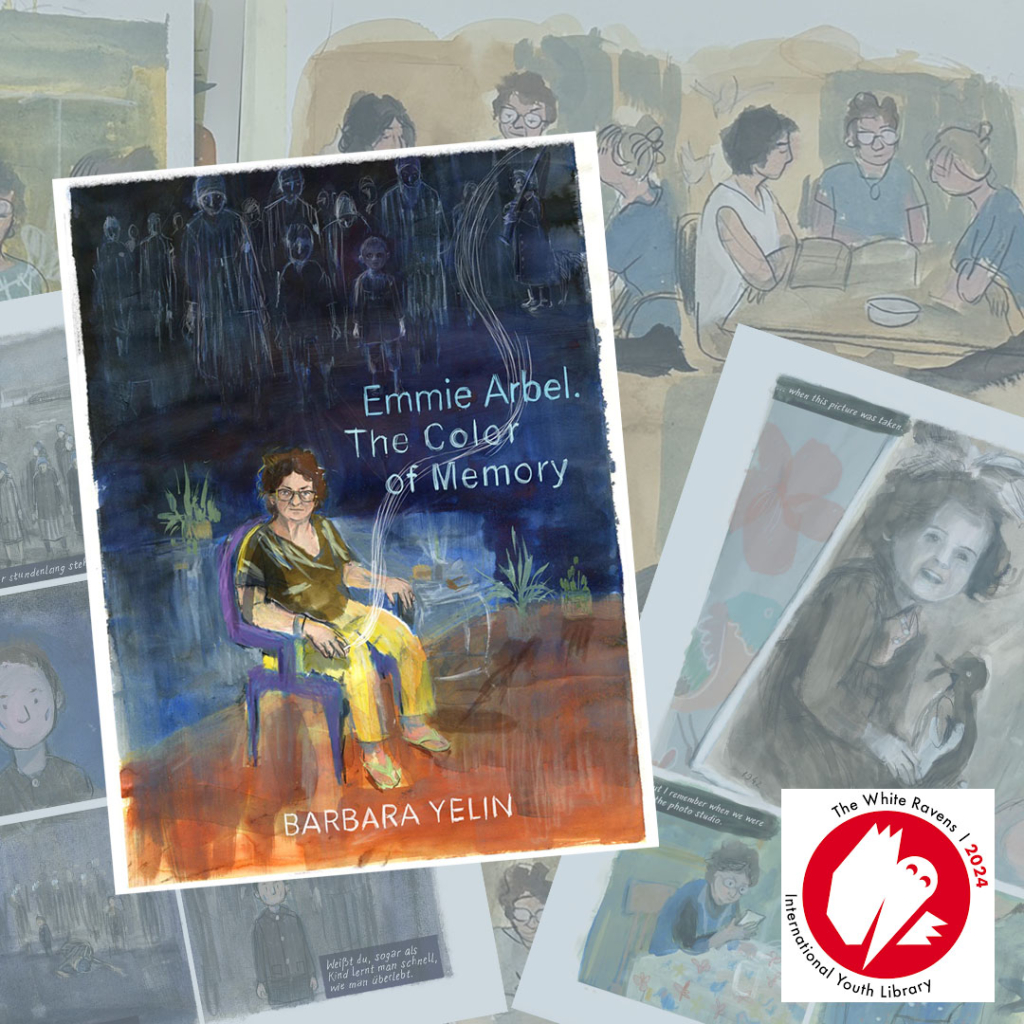
In 2024, Yelin’s graphic novel was selected for the prestigious 2024 White Ravens Catalogue. More about this prestigious recognition can be found here.
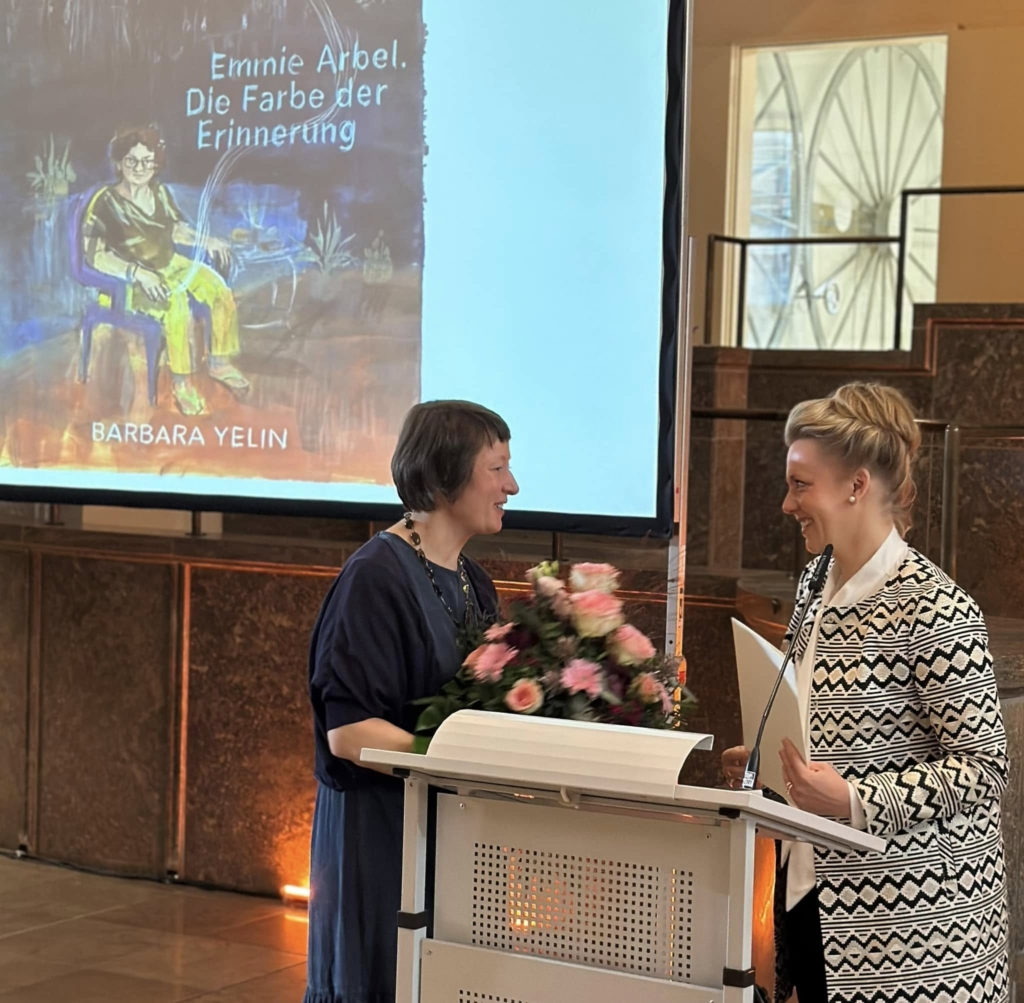
Also in 2024, Barbara Yelin was awarded the Gustav Heinemann Peace Prize for Children’s and Young People’s Books by the North Rhine-Westphalia State Agency for Civic Education for Emmie Arbel. The Colour of Memory. Read more about the award ceremony here.
Further information about Emmie Arbel. The Colour of Memory can be found here.
On March 26, the upper level seminar GRMN 3262 Representations of the Holocaust, taught by Dr. Stephan Jaeger at the Department of German and Slavic Studies of the University of Manitoba, welcomed Project Director, Dr. Charlotte Schallié, as a guest speaker. She presented in the class session titled “Visual Storytelling and Remembrance in Graphic Novels to tell and work through the Holocaust.” The session was based on the students’ reading of the anthology of graphic novels But I Live: Three Stories of Child Survivors of the Holocaust (2022).
Via Zoom, Dr. Schallié shared research insights on the background of the project, the methodology of graphic testimony, and themes of history and memory. She drew the students’ attention to the unique style of each of the three graphic survivor stories included in But I Live through specific examples and detailed analysis. Her presentation was followed by a lively discussion of the book in which the participants had a chance to further explore the concept introduced by Dr. Schallié – that memory of the Holocaust is a two-way road between past and present.
We invited to Dr. Jaeger to contribute to our blog by sharing his reflections and a selection of student engagements from the session, whereby he stated:
“…students gained a much deeper insight into the opportunities of graphic survivor testimonies, into the use of colours, text-image relations, and silences, and into the impact of the collaboration in the present that made the remembering and new or expanded forms of testimony possible.”
After the seminar, all students wrote a weekly journal entry commenting on the session. Dr. Jaeger shared many of their thoughtful reflections, highlighting a few:
“I was especially drawn to Emmie’s story [Barbara Yelin, “But I Live,” based on the memories of Emmie Arbel], which illustrates the lasting effects of the Holocaust on her later in life. The use of minimal text, or at times, empty panels, encouraged reflection, allowing the images to convey meaning rather than simply acting as a supplement for words.”
“My favourite art style is in the first story [“A Kind of Resistance” by Miriam Libicki from interviews with David Schaffer]. I thought the undertones of red paint throughout and the deep lines around the eyes made the characters more expressive and uneasy. I liked the fact that each story had a different but in some aspects similar experiences – which is sad to think about, but sometimes we have to remember that it is the reality for many survivors of the Holocaust.”
Another student saw Charlotte’s talk as a “first-hand account” on the memory process and highlighted that they particularly appreciated “the relational dynamics between the survivors and interviewers / artists.”
Although Dr. Jaeger’s class had discussed Art Spiegelman’s Maus in the previous session, he believed that the insight into the processes of the collaborations clearly contributed to the understanding of the range of representational opportunities that the medium graphic novel provides. Similarly, a student noted that:
“[It] was cool seeing how the artist got paired up with the survivor(s), and in the end created these works, and each story was created and expressed differently […]. From representing it, not to historically record it, these stories show that not every survivor was the same. And a lot of the time I find when the victim is not human but a number, or a name, there is no emotional connection, and we as people tend to see that as less important to us. Often we list off countless numbers on deaths, but a number doesn’t mean much without seeing what that number is.”
Several students wished that the book itself would have included an essay similar to Dr. Schallié’s talk:
“The only addition [….], perhaps to the description of the artists would be to explain why the styles were different, why certain colours would use or (what I personally found most interesting) the research/relationship process. While this may be more interesting for a historian or academic, it does make any reader see the story in a new and more appreciative light.”
Dr. Jaeger also shared with us that several students in the group listed But I Live as one of their favorite and most insightful representations of the Holocaust during the term in the course’s final survey and that they all strongly recommended to invite Dr. Schallié again to the next iteration of the course. He closed with his appreciation:
“Overall, Dr. Schallié’s generous sharing of her time and expertise energized all students in the class to engage more deeply in the challenges and opportunities of representations of Holocaust memories and visual story-telling.”
Thank you to Dr. Jaeger and our project partners at the University of Manitoba for hosting Dr. Schallié online and for this exciting opportunity to connect and engage with students about the project.